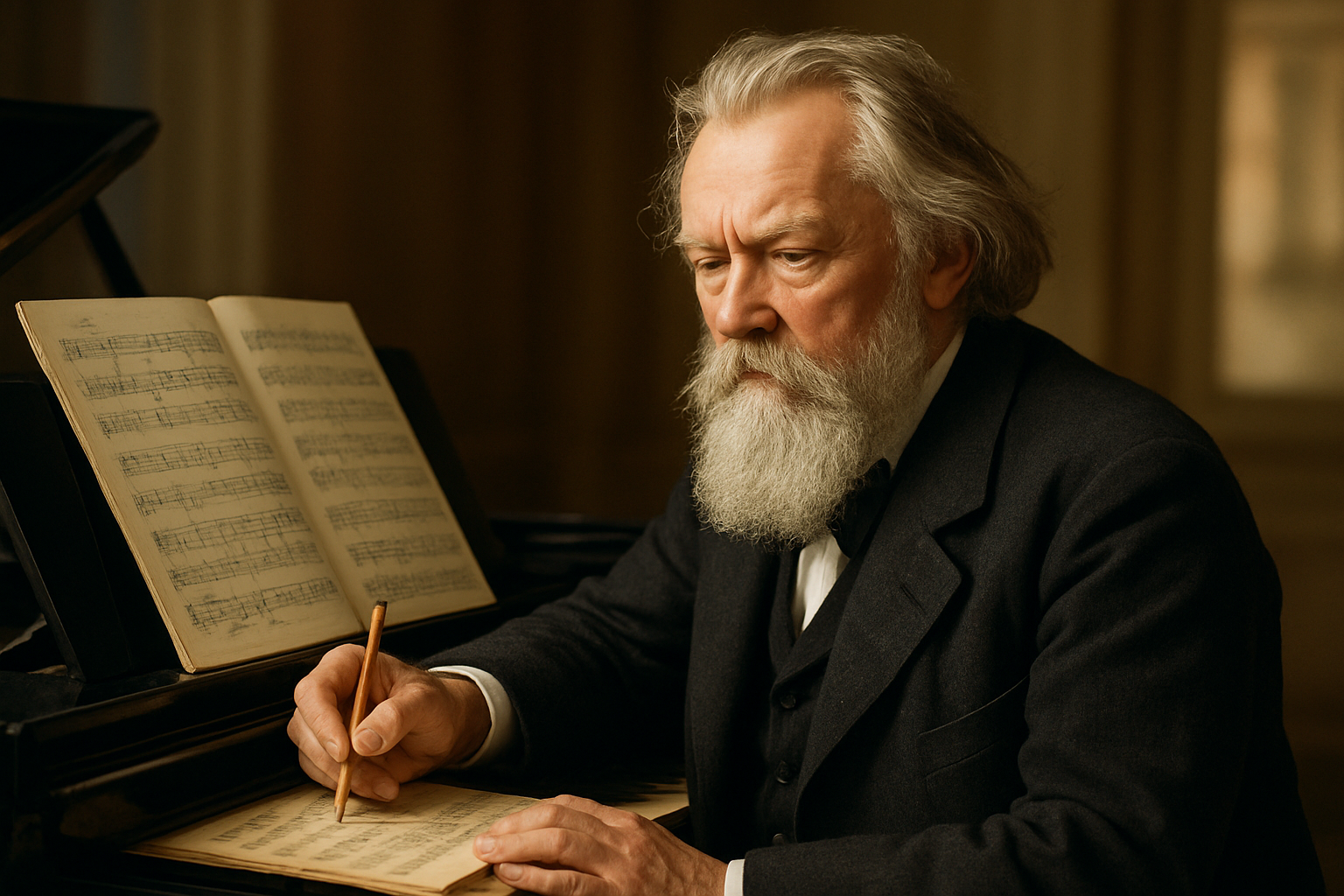
Thematic Variation: Brahms’ Genius in Developing a Single Idea
Johannes Brahms, a stalwart of the Romantic era, is renowned for his ability to create profound complexity from simple musical ideas. This talent is most vividly exhibited in his use of thematic variation—a technique where a single theme is modified and developed in multiple directions while retaining its core identity.
The Art of Thematic Variation
Thematic variation is not merely a repetition of a musical theme with minor alterations; it involves transforming the theme in ways that enhance its expressive potential. As noted by musicologist Jan Swafford, Brahms “was a master of transforming a theme through variations, delving into every emotional and structural possibility.”
Exploring Variations on a Theme
One of the most exemplary works showcasing Brahms’ mastery of thematic variation is his Variations on a Theme by Haydn, Op. 56a. In this piece, Brahms takes a simple chorale melody, thought to be composed by Haydn, and spins out eight distinct variations, each escalating in complexity and emotional depth.
- First Variation: The theme is enriched with contrapuntal textures.
- Second Variation: The tempo and dynamics shift, creating a serene atmosphere.
- Subsequent Variations: Brahms explores various rhythmic and harmonic alterations, evoking a spectrum of moods from playful to somber.
The Intermezzo: A Reflection
An often overlooked element of Brahms’ genius is his ability to transform thematic material within smaller forms, notably in his Intermezzi. These short piano pieces demonstrate his ability to encapsulate an entire emotional journey within a few minutes. For instance, the Intermezzo in A Major, Op. 118, No. 2 is a testament to this skill, where Brahms crafts a lyrical melody into various expressive states.
“Brahms succeeded in endowing his music with an aura of constant evolution, making the concept of development itself the central theme of his compositions.” — Gramophone magazine
Legacy of Innovation
Brahms’ approach to thematic variation has influenced countless composers, serving as a bridge between classical structures and modern expression. By honing a single idea into a multidimensional experience, he not only added depth to his own works but also paved the way for future innovations in musical form and development.
Brahms’ genius in thematic variation lies not just in the technical mastery but in the profound emotional journey that he extends to his listeners—a journey that continues to resonate with audiences worldwide.