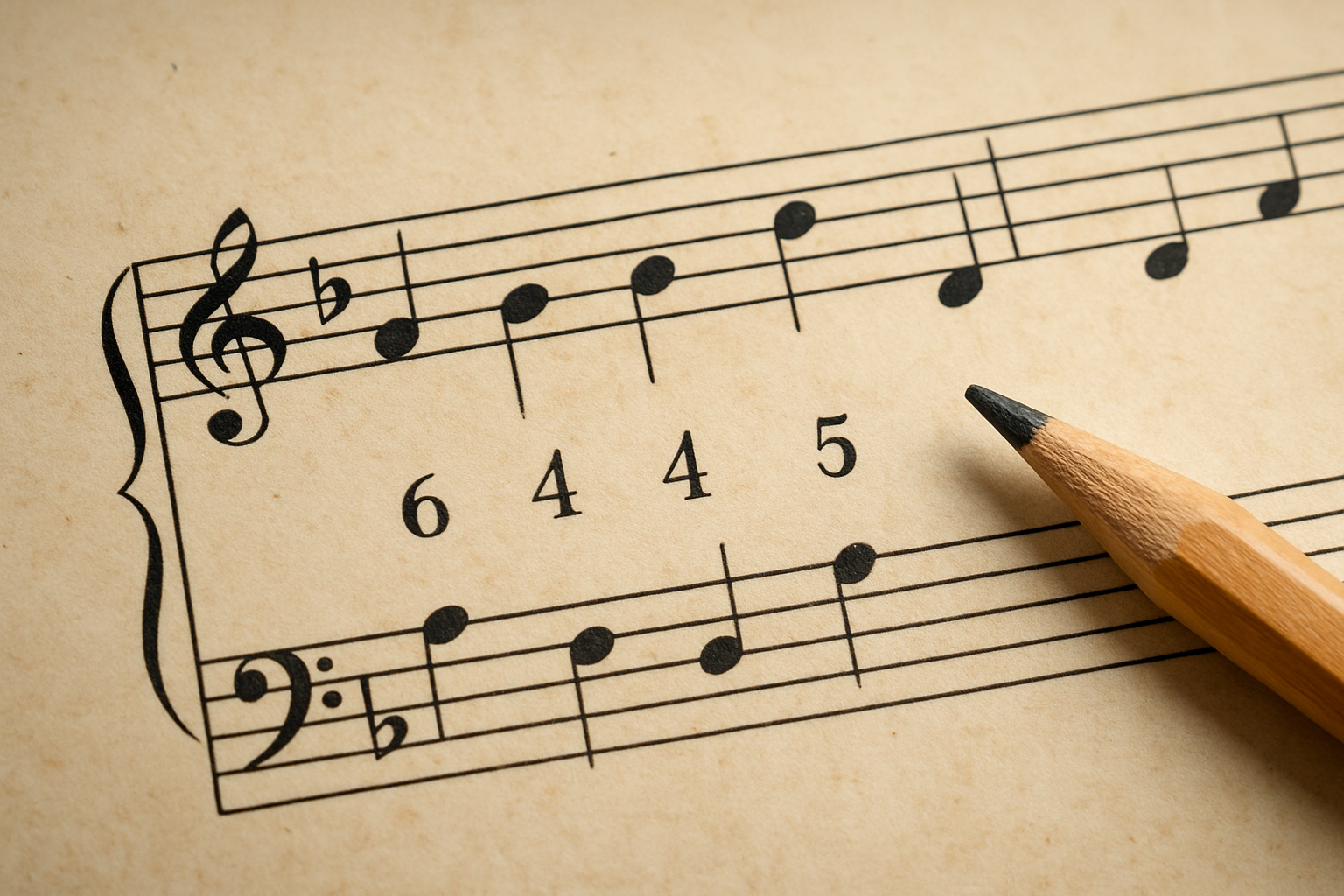
Figured bass, also known as basso continuo, is a musical shorthand used extensively during the Baroque period. It forms the foundation upon which the harmonic structure of a composition is built, providing a framework for instrumentalists to interpret and embellish.
Understanding the Basics
At its heart, figured bass is a system of notation that uses numbers and symbols to indicate chords relative to a given bass note. This system allows keyboardists and other harmonic instruments to improvise the accompaniment based on a suggested harmonic outline. Here’s how it works:
- Bass Note: The bass note is written on the staff, often notated with a letter or a note.
- Figures: Numbers and accidentals written below the bass note indicate intervals above the bass note that form the intended chord. For instance, if a bass note is marked with a “6,” it suggests a chord consisting of a sixth above the bass.
Decoding the Symbols
Although the system might appear complex at first, it is surprisingly efficient once you get the hang of the conventions:
- No Figures: If no numbers appear below a bass note, a triad in root position is implied.
- Accidentals: Sharps, flats, or naturals beneath a note modify the interval above the bass note. A plain “#” means to raise the third note in the chord.
According to musicologist Robert L. Marshall, “Figured bass is not merely an abstract symbol system. It is a practical tool used by musicians for expressing harmony” (Marshall, Robert L. “Baroque Music,” 2001).
The Role in Performance
The brilliance of figured bass lies in its flexibility. It allows performers to incorporate their interpretation, essentially bridging the gap between composition and performance. An informed player might embellish the indicated chords, add ornaments, or alter inversions to suit the mood of a piece, thus bringing the music to life.
“The beauty of figured bass is in its invitation to creativity and expression within a skilled framework.” – Robert L. Marshall
Conclusion
Figured bass is more than just a historical curiosity; it remains a vital part of understanding the Baroque repertoire. By learning to read and interpret its symbols, musicians can tap into the rich vein of creativity that defines Baroque performance practice, enriching their interpretative skills and connecting more deeply with the music of the past.