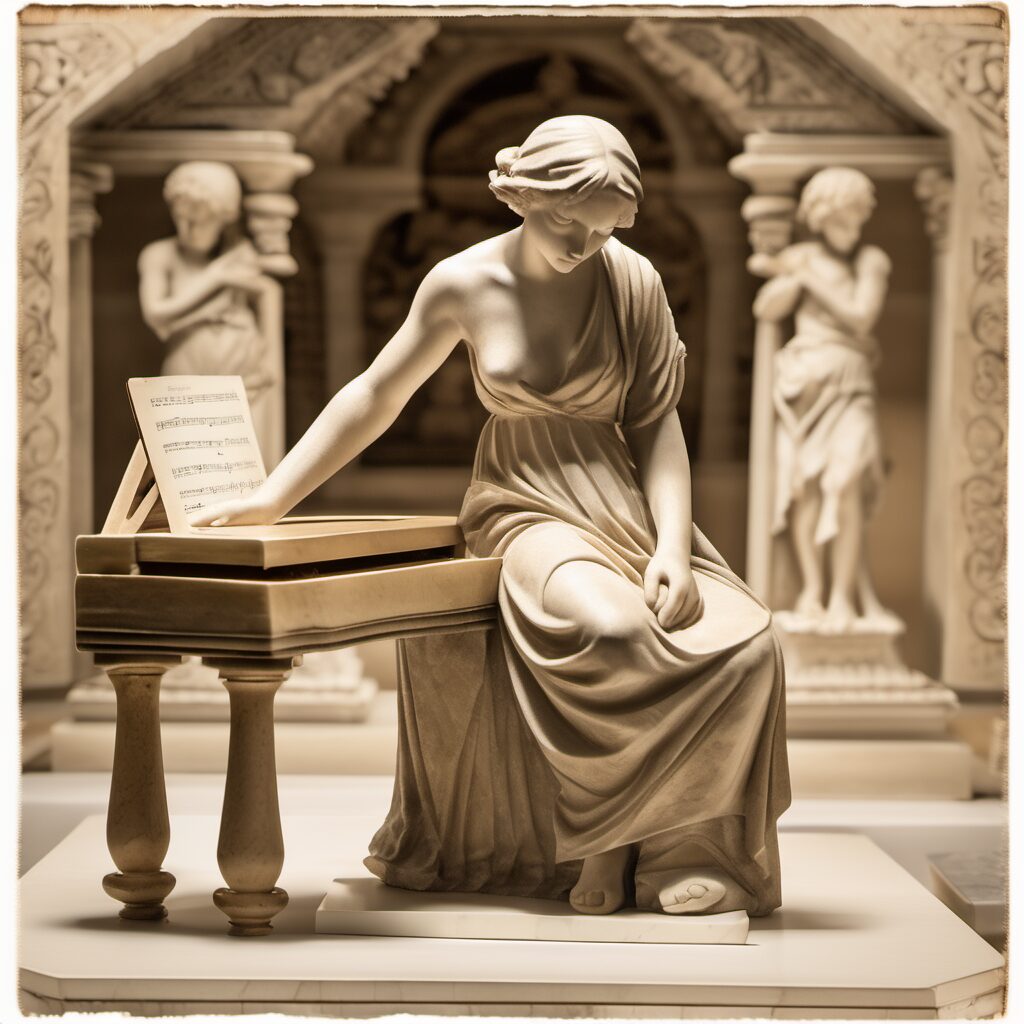
Unpacking the Cultural Significance of Debussy’s Piano Works
Claude Debussy was a pivotal figure in the development of Western classical music, and his piano works are no exception to this notion. From the intricate nuances of Preludes to the dreamlike landscapes of Four Études Dédiées à E. Chausson, Debussy’s piano pieces continue to captivate audiences with their innovative styles and captivating beauty.
- Impressionism and Program Music
- The Rise of Individuality in Piano Works
- Cross-Cultural Influences and Debussy’s Piano Music
Impressionism and Program Music
Debussy’s piano music embodies the spirit of Impressionist art, which sought to evoke a mood or atmosphere rather than depict realistic scenes. This is evident in his Preludes, a set of 12 pieces that explore the emotional and expressive potential of the instrument. The title “Prelude” itself suggests a sense of anticipation and expectation, setting the stage for the emotional journeys that follow.
As Debussy himself said, “The musician must be like an invisible fly on the wall, so as to feel every vibration of the strings or wood. He is the faithful interpreter and his task is to express the composer’s ideas.” (Debussy, in Collections Complete de Désintégnements, 1892)
The Rise of Individuality in Piano Works
In contrast to the traditional piano music of Debussy’s time, which often followed established forms and structures, Debussy sought to break free from these conventions. His innovative approach to melody, harmony, and rhythm paved the way for a new era of individuality in piano music.
Debussy’s Estampes, for example, features unconventional time signatures and rhythmic patterns that challenge the listener’s expectations. As Debussy wrote in his notebook, “The rhythm must be free” (Debussy, Billet de mémorial, 1908).
Cross-Cultural Influences and Debussy’s Piano Music
Debussy was fascinated by non-Western music traditions, particularly those from Japan and China. His piano works often reflect these influences, with the use of unconventional scales, tonalities, and instrumental timbres.
The Feux d’artifice, a Captions et Variations piece, is a notable example of Debussy’s engagement with Asian musical traditions. Its unique soundworld and rhythms owe a debt to the music of Japan, as Debussy himself acknowledged.
Conclusion
Debussy’s piano works continue to captivate audiences with their innovative styles and captivating beauty. Through his Preludes, Estampes, and other pieces, we see the emergence of a new era of individuality in piano music, one that broke free from traditional forms and structures.
As we explore Debussy’s piano works, let us remember the words of the composer himself: “The musician must be like an invisible fly on the wall.” (Debussy, Collections Complete de Désintégnements, 1892)
Reference:
– Claude Debussy Wikipedia page
Image credits:
– Debussy at the composition of Siamese lullaby, by Henri Manguin

Author: [Your Name]