Category: Uncategorized

  • J.S. Bach: The Eternal Source of Counterpoint and Devotion

    J.S. Bach: The Eternal Source of Counterpoint and Devotion

    Johann Sebastian Bach remains a towering figure in the world of classical music, revered not only for his technical mastery but also for the deep spiritual quality that permeates his compositions. Born in 1685 in Eisenach, Germany, Bach’s life and work continue to influence musicians and composers around the globe.

    The Master of Counterpoint

    Bach’s skill in counterpoint, the art of weaving together independent melodies, is unsurpassed. His compositions exemplify this intricate technique, demonstrating his ability to create complex yet harmonious musical tapestries.

    • Fugues: The Bach fugue is perhaps the ultimate expression of counterpoint. Each voice enters successively, building on the previous, a testament to Bach’s architectural prowess in music.
    • Canons: Known for their strict structural discipline, Bach’s canons were exercises in both technical rigor and creative freedom.
    • The Art of Fugue: This collection is often cited as the pinnacle of contrapuntal writing and remains a central study piece for aspiring composers.

    “Bach’s music is the only argument proving the creation of the Universe cannot be regarded a complete failure.” — Anonymous

    The Spiritual Anchor

    Bach’s music was deeply influenced by his Lutheran faith. Much of his work was composed for church services, and his devoutness is evident in the emotive power and structure of his compositions.

    • Sacred Works: His Mass in B Minor and St Matthew Passion are towering achievements, blending theology with musical innovation.
    • Cantatas: Composed for specific Sundays and events in the liturgical calendar, these works were both reflections of personal faith and musical craftsmanship.
    • Chorale Preludes: Bach’s intricate preludes on hymn tunes served as inspirational lessons in both music theory and spiritual reflection.

    As Albert Schweitzer noted, “Bach opens a vista to the universe. After experiencing him, people feel there is meaning to life after all” (Wikipedia).

    Bach’s legacy endures, inspiring countless generations with his inexhaustible creativity and profound devotion. Musicians and listeners alike continue to find in his works endless layers of meaning and beauty, affirming his status as the eternal source of counterpoint and devotion.

  • Beethoven’s Revolution: The Journey from the Eroica to the Ninth Symphony

    Beethoven’s Revolution: The Journey from the Eroica to the Ninth Symphony

    Beethoven’s Revolution: The Journey from the Eroica to the Ninth Symphony

    Ludwig van Beethoven, one of the most influential composers in the history of Western music, brought about a profound transformation in the format and thematic content of symphonic music. This metamorphosis is most dramatically exemplified in two of his masterpieces: the Eroica Symphony and the Ninth Symphony. The progression from the former to the latter marks a significant period of innovation that shaped the future of music.

    The Eroica Symphony: A Bold New Direction

    Beethoven’s Symphony No. 3 in E-flat major, Op. 55, known as the Eroica, represents a bold departure from the musical conventions of the 18th century. Originally intended to be dedicated to Napoleon Bonaparte, the symphony was retitled after Beethoven learned that Napoleon had declared himself emperor. “Beethoven broke with tradition and entrenched the idea of music as an expression of human triumph over adversity,” says musicologist Lewis Lockwood.

    This symphony expanded the scope, size, and ambition of the symphonic form. Its first movement alone is almost as long as entire symphonies by earlier composers like Haydn or Mozart. The second movement, a somber funeral march, introduced an emotional depth previously unseen in symphonic music. As Sir John Eliot Gardiner notes, “This was music as a powerful force, capable of taking its listeners through an epic journey.”

    From Eroica to the Middle Symphonies: Experimentation and Expansion

    In the wake of the Eroica, Beethoven continued to explore new musical ideas through his middle-period symphonies. His Fifth Symphony, with its iconic four-note motif, serves as a testament to his relentless innovation. “Symphonies became platforms for expressing a broader range of human emotions, beyond the purely aesthetic or entertaining,” notes Jan Swafford, author of Beethoven: Anguish and Triumph.

    These works explored the dynamic potential of orchestration and thematic development. They set the stage for Beethoven’s burgeoning genius to fully manifest in his final symphonic masterpiece, the Ninth Symphony.

    The Ninth Symphony: Ode to Joy and Human Unity

    The Symphony No. 9 in D minor, Op. 125, incorporating Friedrich Schiller’s poem “Ode to Joy,” was revolutionary for its inclusion of vocal soloists and a chorus—an unprecedented combination for a symphony of its time. By weaving choral elements into the symphony, Beethoven envisioned a unified human race coming together in a celebration of joy and brotherhood. As Richard Taruskin discusses in The Oxford History of Western Music, “Beethoven’s Ninth represented the apotheosis of his symphonic achievements and a harbinger of things to come in music history.”

    “All men will become brothers,” proclaims Schiller’s text, heralding Beethoven’s message of unity and universal harmony.

    The thematic depth and complexity of the Ninth Symphony went beyond music theory—it engaged with ideas of humanism and political enlightenment. Its premiere in 1824 was not only a musical event but a cultural milestone.

    Beethoven’s Legacy and Continuing Influence

    The influence of Beethoven’s revolutionary approach to the symphony stretched far beyond his lifetime. Composers in the Romantic era like Brahms, Mahler, and Bruckner were deeply inspired by Beethoven’s work. As stated by the conductor Leonard Bernstein, “No composer has influenced the core of symphonic thought and work more than Beethoven.”

    • Johannes Brahms: Often hailed as Beethoven’s successor, Brahms carried the traditions of structural complexity and thematic development established by Beethoven.
    • Gustav Mahler: His symphonies expanded on Beethoven’s operatic qualities, infusing them with lush orchestration and emotional scope.
    • Anton Bruckner: Known for his expansive symphonic architecture, Bruckner’s works reflect Beethoven’s artistic vision of grandeur and spiritual transcendence.

    Today, Beethoven’s symphonies remain at the heart of orchestral repertoire worldwide, embodying a transformative moment in music history that continues to evoke inspiration and awe. His journey from the Eroica to the Ninth Symphony stands as a testament to the power of music to transcend mere entertainment and become a force for human expression and unity.

  • Mozart: The Enigmatic Genius Behind Don Giovanni

    Mozart: The Enigmatic Genius Behind Don Giovanni

    Mozart: The Enigmatic Genius Behind Don Giovanni

    Wolfgang Amadeus Mozart, a name synonymous with musical prodigy, left an indelible mark on the classical music world with his prowess and innovation. Among his remarkable operatic compositions, Don Giovanni stands out as a masterpiece of drama and complexity. Known for his ability to weave emotion and intellect into music, Mozart was more than just a composer; he was an enigmatic genius whose contributions continue to resonate.

    “Mozart is the greatest composer of all.” – Ludwig van Beethoven

    The Genesis of Don Giovanni

    Don Giovanni, an opera in two acts, was composed in 1787 with a libretto by Lorenzo Da Ponte. This “dramma giocoso” blends elements of drama and comedy, bringing to life the infamous Spanish libertine Don Juan. The story navigates themes of seduction, revenge, and morality, brought to life through Mozart’s inventive and expressive score.

    • Act I introduces Don Giovanni’s reckless lifestyle and his manipulative charm, setting the stage for subsequent conflicts.
    • Act II depicts his inevitable downfall, culminating in a dramatic and otherworldly denouement.

    The opera premiered at the National Theatre in Prague and was an instant success. Praised for its depth and dynamism, Don Giovanni has been celebrated for transcending conventional operatic narratives of its time.

    Mozart’s Genius in Composition

    Mozart’s ability to capture the essence of characters through music is particularly evident in Don Giovanni. The overture sets the tone with its dark and foreboding motifs, reflecting the protagonist’s turbulent journey. Throughout the opera, Mozart masterfully uses arias, duets, and ensembles to define the emotional and psychological contours of each character.

    In the words of musicologist Julian Rushton, “Don Giovanni is an opera of extraordinary imagination, combining a wide variety of styles to brilliant effect.” This complexity and ingenuity have cemented Mozart’s reputation as a visionary composer.

    Mozart’s Unfading Legacy

    Mozart’s life, though tragically short, was a testament to prodigious talent and relentless creativity. His ability to craft intricate melodies and harmonies that resonate with audiences is reflected in his extensive body of work. Don Giovanni, with its rich tapestry of human emotion and morality, endures as a testament to Mozart’s genius.

    In exploring Mozart’s enigmatic brilliance, one can’t help but marvel at his capacity to shape the contours of opera. His mastery in Don Giovanni underscores not just the grandeur of his compositions, but also his enduring influence on music and culture.

  • The Power of the Opening: How Composers Set the Stage Musically

    The Power of the Opening: How Composers Set the Stage Musically

    The opening of a piece of music plays an instrumental role in defining the listener’s experience. It is the first impression, the foundation upon which a musical journey is built. From the grandeur of Beethoven’s symphonies to the subtle intricacies of Debussy’s preludes, composers across centuries have used the opening measures to captivate, ground, and prepare their audience for what’s to come.

    The Purpose of Musical Openings

    The opening of a composition does more than capture attention—it establishes the emotional and tonal palette for the entire piece. Through the use of melody, harmony, rhythm, and dynamics, composers can set a stage that conveys anticipation, tension, or tranquility. This introduction is vital for:

    • Establishing a Theme: Often, the first few measures will introduce thematic material that is developed throughout the piece. For instance, the opening bars of Beethoven’s Symphony No. 5 present a motif that recurs, transforming and evolving, from start to finish.
    • Setting the Mood: Debussy’s Clair de Lune opens with a delicate and ethereal motif, immediately transporting the listener to a dreamlike, reflective state.
    • Creating Expectations: An opening can build anticipation for what follows, setting up a narrative that keeps the audience engaged.

    Iconic Openings in Classical Music

    Several pieces throughout music history are renowned not just for their overall structure but for their captivating introductions. These are more than mere notes on a staff; they are cultural touchstones:

    • Beethoven’s Symphony No. 5: The iconic four-note motif is perhaps the most recognizable opening in Western music. As Classic FM explains, the motif is often interpreted as “fate knocking at the door,” setting a dramatic tone that persists throughout the symphony.
    • Wagner’s Tristan und Isolde: The prelude begins with the famous Tristan chord, which defies traditional harmonic resolution and creates a sense of longing and unresolved tension. This groundbreaking opening changed the course of Western harmony and influenced countless composers.
    • Ravel’s Boléro: Beginning with a simple snare drum rhythm, Ravel methodically builds layers of orchestration, creating an almost hypnotic effect that remains captivating from start to finish.

    The Emotional Impact

    Music possesses a unique ability to evoke emotions, and the opening serves as the first emotional contact point between the composition and the listener. As Leonard Bernstein once remarked, “Music can name the unnameable and communicate the unknowable.” The opening moments of a piece of music can speak directly to the human heart, bypassing the need for words entirely.

    “To play a wrong note is insignificant; to play without passion is inexcusable.” — Ludwig van Beethoven

    Beethoven understood the emotional weight that music carries. His emphasis on passion reflects how an opening, however simple, must resonate deeply with an audience.

    Modern Openings and Their Impact

    In contemporary music, the importance of a striking opening remains undiminished. Whether in film scores, popular music, or modern classical compositions, the initial seconds can determine a piece’s success. In the words of renowned film composer Hans Zimmer, “A movie is just waves and images, but put music with it and suddenly it has additional meaning and power.” The opening can transform visual media, setting the emotional tone and engaging viewers from the outset.

    Crafting the Perfect Opening

    For composers, creating an effective opening involves careful deliberation and creativity. It requires a balance of:

    • Innovation and Familiarity: While new sounds and unexpected harmonies can intrigue listeners, elements of familiarity make the music accessible and relatable.
    • Clarity and Ambiguity: A clear opening can firmly establish the musical narrative, while ambiguity can create mysteriousness and invite interpretation.

    The art of crafting opens demands both technical proficiency and emotional insight, guiding the listener not just through the initial moments but encouraging them to linger through the entire composition.

    The power of the opening in music is a testament to the composer’s skill in utilizing sound to create an immersive and emotive experience. From the gallant horns of a symphony to the subdued notes of a nocturne, the first notes are more than an introduction—they are a gateway to a world crafted by sound.

  • The Inner Voice: Analyzing Texture and Counterpoint in a Quartet

    The Inner Voice: Analyzing Texture and Counterpoint in a Quartet

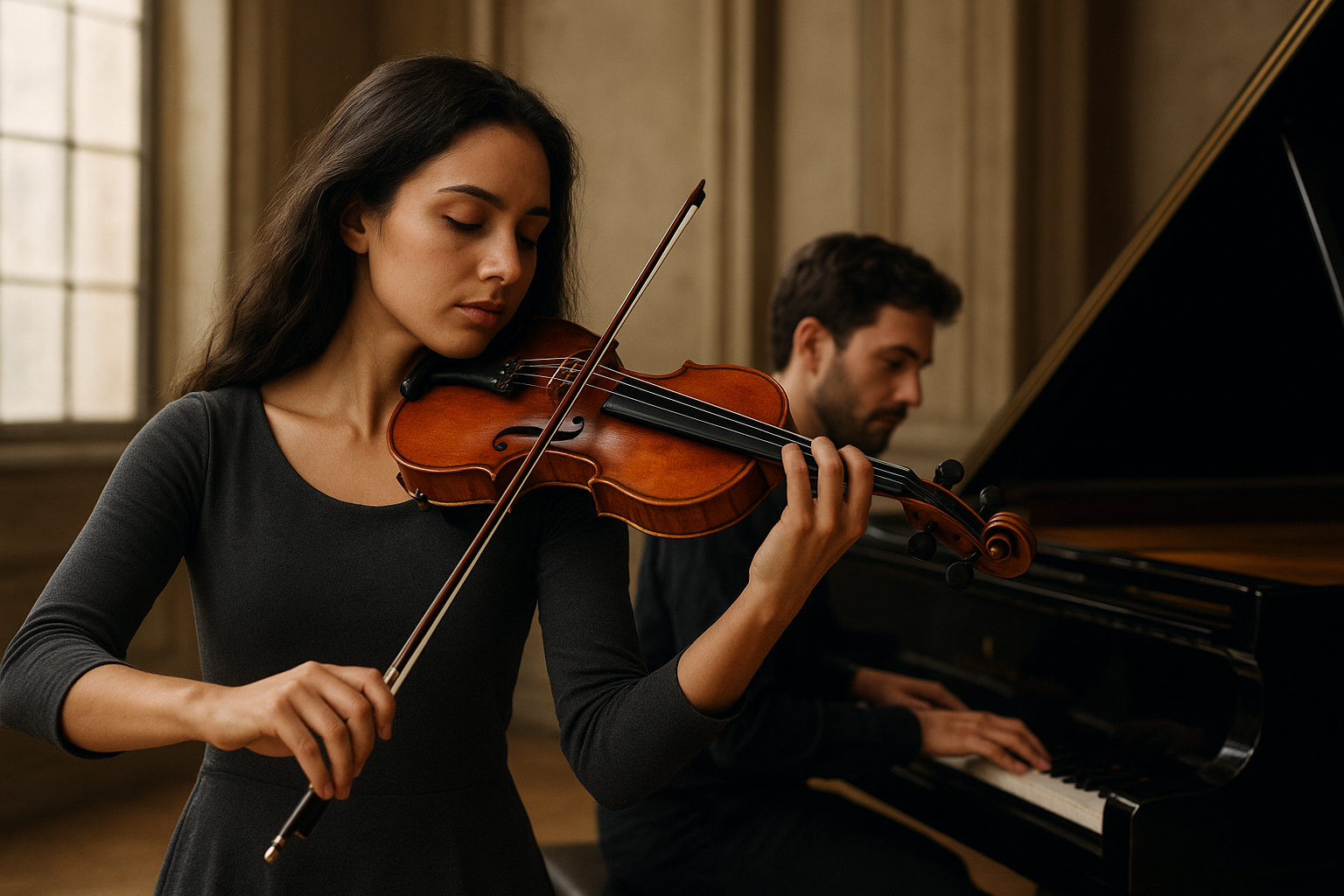
    Music has always been a profound reflection of human emotion and intellect. Among the many styles of musical composition, the string quartet stands out for its intricate interplay of voices. The quartet not only provides a rich tapestry of sound but also challenges both performers and listeners to appreciate the complexity of musical texture and counterpoint.

    The Structure of a Quartet

    A standard string quartet includes two violins, a viola, and a cello. This setup provides a unique opportunity to explore counterpoint—the art of combining distinct melodies in a harmonious manner—and texture, which refers to how these melodies interact to create a complete sound.

    • Melody: The core sequence of notes that provides the primary musical line.
    • Harmony: The combination of different musical notes played or sung simultaneously.
    • Counterpoint: Multiple independent melodies played together.
    • Texture: The overall quality and feel of the music, informed by melody, harmony, and rhythm.

    Exploring Counterpoint

    Counterpoint in a quartet allows each instrument to assert its unique voice within the ensemble. Johann Sebastian Bach, the master of counterpoint, once said, “Music is an agreeable harmony for the honor of God and the permissible delights of the soul.” His words encapsulate the idea that counterpoint is not merely a technical exercise but a form of spiritual and emotional expression.

    “Counterpoint often creates a tapestry where each voice is indispensable, contributing to the overall narrative.”
    BBC Music

    The Role of Texture

    Texture in a string quartet can vary from a homophonic setting, where one voice carries the primary melody with accompaniment, to polyphonic textures where multiple lines intertwine equally. This variation is crucial in evoking different emotions and responses.

    Homophonic Texture

    When composers use a homophonic structure, the melody is supported by harmony, making it more straightforward but still powerful. This was often favored in the Classical period, as seen in the works of Franz Joseph Haydn, known as the “father of the string quartet.”

    Polyphonic Texture

    Polyphonic texture, however, involves weaving multiple independent lines, akin to a musical dialogue. Composers like Ludwig van Beethoven and Wolfgang Amadeus Mozart exploited this style, creating complex emotional landscapes and interwoven narratives.

    Beethoven’s late string quartets, for instance, demonstrate extraordinary polyphonic textures, pushing the boundaries of the form and challenging the conventions of the time.

    Interplay Between Instruments

    Beyond textures and counterpoint, the intimacy of a string quartet lies in the distinct roles each instrument plays. The first violin often carries the melody, with the second violin providing harmonious support. The viola adds depth and warmth, while the cello anchors the music with a robust, resonant foundation.

    “The true art of quartet playing is when each musician must listen intently, adjusting their own contribution to blend and support the group as a whole.”
    The Guardian

    The Emotional Journey

    Analyzing the texture and counterpoint in a quartet offers insights into the complexity of human emotion. Each piece can take the listener on a journey through joy, sorrow, conflict, and resolution. For performers, it’s a dynamic process of collaboration and balance, requiring acute awareness and mutual respect.

    As the listener, engaging with a string quartet becomes a personal exploration. The interaction of voices allows for moments of introspection and revelation, as one becomes attuned to the subtleties of musical dialogue.

    Conclusion: The Lasting Impact

    The string quartet remains a testament to the power of artistic collaboration, a wellspring of innovation and expression. Its emphasis on texture and counterpoint ensures it will continue to captivate and challenge musicians and audiences alike for generations. Whether in a cozy concert hall or an expansive recording, the beloved quartet continually invites us into its intricate conversation.

    As we immerse ourselves in the world of string quartets, we embrace the beauty of musical plurality—a harmonious reminder of our own capacity for creative expression and connection.

  • Figured Bass Explained: Reading the Shorthand of the Baroque

    Figured Bass Explained: Reading the Shorthand of the Baroque

    Figured bass, also known as basso continuo, is a musical shorthand used extensively during the Baroque period. It forms the foundation upon which the harmonic structure of a composition is built, providing a framework for instrumentalists to interpret and embellish.

    Understanding the Basics

    At its heart, figured bass is a system of notation that uses numbers and symbols to indicate chords relative to a given bass note. This system allows keyboardists and other harmonic instruments to improvise the accompaniment based on a suggested harmonic outline. Here’s how it works:

    • Bass Note: The bass note is written on the staff, often notated with a letter or a note.
    • Figures: Numbers and accidentals written below the bass note indicate intervals above the bass note that form the intended chord. For instance, if a bass note is marked with a “6,” it suggests a chord consisting of a sixth above the bass.

    Decoding the Symbols

    Although the system might appear complex at first, it is surprisingly efficient once you get the hang of the conventions:

    • No Figures: If no numbers appear below a bass note, a triad in root position is implied.
    • Accidentals: Sharps, flats, or naturals beneath a note modify the interval above the bass note. A plain “#” means to raise the third note in the chord.

    According to musicologist Robert L. Marshall, “Figured bass is not merely an abstract symbol system. It is a practical tool used by musicians for expressing harmony” (Marshall, Robert L. “Baroque Music,” 2001).

    The Role in Performance

    The brilliance of figured bass lies in its flexibility. It allows performers to incorporate their interpretation, essentially bridging the gap between composition and performance. An informed player might embellish the indicated chords, add ornaments, or alter inversions to suit the mood of a piece, thus bringing the music to life.

    “The beauty of figured bass is in its invitation to creativity and expression within a skilled framework.” – Robert L. Marshall

    Conclusion

    Figured bass is more than just a historical curiosity; it remains a vital part of understanding the Baroque repertoire. By learning to read and interpret its symbols, musicians can tap into the rich vein of creativity that defines Baroque performance practice, enriching their interpretative skills and connecting more deeply with the music of the past.

  • Thematic Variation: Brahms’ Genius in Developing a Single Idea

    Thematic Variation: Brahms’ Genius in Developing a Single Idea

    Thematic Variation: Brahms’ Genius in Developing a Single Idea

    Johannes Brahms, a stalwart of the Romantic era, is renowned for his ability to create profound complexity from simple musical ideas. This talent is most vividly exhibited in his use of thematic variation—a technique where a single theme is modified and developed in multiple directions while retaining its core identity.

    The Art of Thematic Variation

    Thematic variation is not merely a repetition of a musical theme with minor alterations; it involves transforming the theme in ways that enhance its expressive potential. As noted by musicologist Jan Swafford, Brahms “was a master of transforming a theme through variations, delving into every emotional and structural possibility.”

    Exploring Variations on a Theme

    One of the most exemplary works showcasing Brahms’ mastery of thematic variation is his Variations on a Theme by Haydn, Op. 56a. In this piece, Brahms takes a simple chorale melody, thought to be composed by Haydn, and spins out eight distinct variations, each escalating in complexity and emotional depth.

    • First Variation: The theme is enriched with contrapuntal textures.
    • Second Variation: The tempo and dynamics shift, creating a serene atmosphere.
    • Subsequent Variations: Brahms explores various rhythmic and harmonic alterations, evoking a spectrum of moods from playful to somber.

    The Intermezzo: A Reflection

    An often overlooked element of Brahms’ genius is his ability to transform thematic material within smaller forms, notably in his Intermezzi. These short piano pieces demonstrate his ability to encapsulate an entire emotional journey within a few minutes. For instance, the Intermezzo in A Major, Op. 118, No. 2 is a testament to this skill, where Brahms crafts a lyrical melody into various expressive states.

    “Brahms succeeded in endowing his music with an aura of constant evolution, making the concept of development itself the central theme of his compositions.” — Gramophone magazine

    Legacy of Innovation

    Brahms’ approach to thematic variation has influenced countless composers, serving as a bridge between classical structures and modern expression. By honing a single idea into a multidimensional experience, he not only added depth to his own works but also paved the way for future innovations in musical form and development.

    Brahms’ genius in thematic variation lies not just in the technical mastery but in the profound emotional journey that he extends to his listeners—a journey that continues to resonate with audiences worldwide.

  • Harmony and the Human Ear: The Science Behind Classical Pleasure

    Harmony and the Human Ear: The Science Behind Classical Pleasure

    Music has been a profound part of human culture for centuries, capable of evoking powerful emotional responses. Among the most revered forms of music is classical music, celebrated for its harmonious complexities and emotional depth. But what is it about these timeless pieces that resonate so deeply with the human ear? This article explores the intricate science behind our appreciation of harmony in classical music.

    The Anatomy of Hearing

    The journey of sound begins when vibrations in the air enter the ear, a complex anatomical system consisting of the outer, middle, and inner ear. These vibrations are transformed into electrical signals understood by the brain as sound.

    • Outer Ear: Captures sound waves and funnels them through the ear canal to the eardrum.
    • Middle Ear: Contains three tiny bones—malleus, incus, and stapes—that amplify sound vibrations.
    • Inner Ear: The cochlea, a spiral-shaped organ, converts these vibrations into neural signals transmitted to the brain.

    The brain’s auditory cortex then interprets these signals, allowing us to perceive and appreciate music.

    Understanding Harmony

    Harmony, a core element of music, involves the simultaneous combination of different musical notes. According to experts at the Yale School of Music, harmony enriches melody, adding depth and emotion to music. It plays a critical role in differentiating classical compositions from more modern, melodically focused music styles.

    There are several types of harmony, including:

    • Consonant Harmony: Produces stable, pleasant sound combinations often found in classical music elements like chords and intervals.
    • Dissonant Harmony: Creates tension with unstable or harsh sound combinations, often resolved within the framework of a piece to provide contrast.

    Classical composers like Bach, Beethoven, and Mozart masterfully navigated between consonance and dissonance to evoke emotions ranging from tranquility to tension.

    “Without music, life would be a mistake.” – Friedrich Nietzsche

    The Psychological Impact of Harmony

    Music affects the brain by stimulating neurochemical systems and brain structures related to reward, motivation, emotion, and arousal. Classical music, with its rich harmonies and textures, can activate these areas more profoundly than other music genres.

    A study from Cambridge University found that listening to harmonious music can reduce stress, lower blood pressure, and enhance mental clarity. These effects are thought to arise because harmonious sounds activate relaxation responses and the release of dopamine, the neurotransmitter associated with pleasure and reward.

    Harmony and Emotional Expression

    The emotional impact of classical melodies and harmonies is profound. Musicologists argue that harmony can express complex emotions that words fail to convey. Bernstein, in his widely viewed “Young People’s Concerts,” emphasized that music’s emotional impact is universal, cutting across language and cultural barriers.

    Composers use harmonic progressions to evoke specific feelings:

    • Major chords: Often associated with happiness and brightness.
    • Minor chords: Tend to convey sadness or pensiveness.
    • Augmented and diminished chords: Create suspense or feelings of mystery.

    The subtle interplay of these elements can elicit a wide range of emotional responses from listeners.

    The Neuroscience of Musical Harmony

    Neuroscience sheds light on why some people find classical music incredibly rewarding. The brain releases endorphins in response to music, similar to those triggered by taste, creativity, and even exercise.

    Research conducted by Scientific Reports has demonstrated that complex harmonies in classical music cause synchronizations across brain regions. These synchronized brain activities are consistent with states of higher cognitive functioning, such as those experienced during meditation or problem-solving.

    The Cultural Significance of Harmony in Classical Music

    Throughout history, the development of harmony in Western classical music reflected broader cultural and philosophical shifts. In the Baroque period, Bach’s complex fugues mirrored the intricate dance of the cosmos in the age of Newtonian physics. During the Classical period, the balance and formality in Mozart’s compositions were in harmony with Enlightenment ideals of order and clarity.

    Composer Joseph Haydn was instrumental in developing sonata form, a structure that maximized harmonic tension and resolution, akin to narrative storytelling in literature. Even today, classical harmony remains a profound method of cultural expression, often used in films, theater, and concert settings to evoke emotional nuance and depth.

    Conclusion

    The science behind our pleasure in classical music’s harmony is deeply rooted in our biology and profound cultural history. It influences how we process emotions, engage with cultural narratives, and find personal meaning in the soundscape of our lives. Whether in a concert hall or streaming through headphones, the harmonious chords of classical music continue to resonate with the human spirit, a testament to its enduring power and beauty.

  • Thematic Development: How Composers Spin Gold from Simple Ideas

    Thematic Development: How Composers Spin Gold from Simple Ideas

    Throughout music history, composers have fascinated audiences by transforming simple ideas into complex and engaging musical narratives. This art of thematic development is central to many iconic works, allowing a single melody or motif to evolve and sustain an entire composition. In this exploration, we delve into how composers achieve such remarkable transformations and the impact of these techniques on music as a whole.

    Understanding Thematic Development

    Thematic development involves the manipulation of a musical theme—a melodic or rhythmic motif—to create variation and unity within a composition. It’s akin to watching a seed grow into a sprawling tree, each branch and leaf traceable back to a single point of origin. Through techniques such as augmentation, diminution, inversion, and fragmentation, composers breathe life into their works.

    The Building Blocks of Thematic Development

    • Motif: A short, distinctive musical idea, which can be as small as a few notes. It serves as the nucleus for development within a piece.
    • Theme: A longer, more complete musical statement, often serving as the foundation of larger works.
    • Development: The process of exploring and expanding upon motifs and themes to create new and interesting sections.

    A Journey Through Classical Examples

    The use of thematic development has been a defining trait of Western classical music. The following examples highlight how composers masterfully utilized this technique:

    Beethoven’s Fifth Symphony

    Perhaps the most famous instance of thematic development is found in Beethoven’s Symphony No. 5. The symphony’s iconic four-note motif—often described as “fate knocking at the door”—undergoes extensive development throughout the work. According to Encyclopaedia Britannica, Beethoven’s genius lies in his ability to transform this simple rhythm into a powerful and cohesive musical statement that defines the entire symphony.

    Bach’s Inventions

    In the Baroque era, Johann Sebastian Bach excelled in thematic development through his two-part inventions. As Wikipedia notes, these pieces were not only exercises in counterpoint but also studies in thematic transformation. Through techniques such as inversion and retrograde, Bach turned each piece into a sophisticated exploration of its initial idea.

    Techniques of Thematic Development

    Composers employ a range of techniques to develop their themes, each adding a layer of complexity and interest:

    • Augmentation: Extending the length of notes in a motif, creating a slower version of the theme.
    • Diminution: Shortening the length of notes, creating a faster version.
    • Inversion: Flipping the theme’s intervals, essentially turning it upside down.
    • Retrograde: Reversing the order of notes in the motif.
    • Fragmentation: Breaking the theme into smaller pieces and developing each fragment independently.

    These methods allow composers to craft elaborate works, maintaining interest and coherence, as if weaving a tapestry from a single thread.

    Beyond Classical Music: Thematic Development in Modern Genres

    Thematic development is far from exclusive to classical music. It plays a crucial role in jazz, film scores, and even popular music. Composers across genres use this concept to unify elements of their compositions and provide an avenue for virtuosity and expression:

    Jazz and Improvisation

    Jazz musicians often take a theme or “head” and use it as a springboard for improvisation. According to JazzStandards.com, thematic development allows for a coherent narrative within solos, as musicians build upon the original idea, varying it with each chorus while maintaining its identity.

    Film Scores

    In the realm of film scoring, composers like John Williams employ leitmotifs, a technique closely tied to thematic development. Themes associated with characters or ideas appear in various forms throughout a film, reinforcing narrative arcs. Williams’ score for Star Wars is a prime example, with motifs like “The Force Theme” evolving as the story unfolds, creating emotional depth and continuity.

    The Future of Thematic Development

    As music continues to evolve, the potential for thematic development expands. In digital and electronic music, where sound manipulation knows few bounds, thematic development takes on new dimensions. Composers like Brian Eno and artists within the electronic genre utilize software to transform motifs in ways unimaginable in traditional contexts.

    “The digital evolution of music challenges composers to explore thematic development in unprecedented ways, offering fresh perspectives and an array of tools to spin their thematic gold.” — New Music Journal

    Conclusion

    Thematic development stands as a testament to the ingenuity of composers across all musical eras. From Beethoven’s symphonic grandeur to John Williams’ cinematic motifs, this technique remains a crucial element in crafting narratives that captivate and endure. As music evolves, the principles of thematic development promise to guide composers in transforming simple ideas into complex, resounding works of art.

  • Comparing Editions: Why Different Scores Tell Different Stories

    Comparing Editions: Why Different Scores Tell Different Stories

    Music, much like literature, undergoes multiple interpretations, translations, and reproductions throughout its lifetime. This is especially true in classical music, where editions of scores play a crucial role in the work’s performance and subsequent perception. Why do different editions of the same work vary so greatly, and how does this affect the music? Understanding the nuances between editions provides insight into the composers’ intentions, the editor’s interpretations, and the evolving musicology norms.

    The Role of the Editor

    The editor of a musical score has a significant responsibility. According to BBC Culture, editors are tasked with interpreting the often scant details in a composer’s original manuscript. They make decisions on everything from dynamics and phrasing to articulation and tempo.

    “Each version of a musical score tells a different story,” says musicologist Dr. Andrea Milne. “The editor’s job is to decode what the composer might have intended in the absence of detailed instructions.”

    Historical Context and Authentic Performance

    One key reason different scores tell different stories is the pursuit of authenticity. Editions prepared in the early 20th century might reflect a Romantic interpretation of a Baroque work, for instance. Modern editions often strive for historically informed performance (HIP), aiming to replicate how the music might have sounded at the time of its composition. This has led to the publication of historically informed scores, like the Bach Edition by Breitkopf & Härtel, which attempt to strip away modern influences.

    • The introduction of Urtext editions in the 19th century emphasized fidelity to the original manuscripts and first editions.
    • Performing editions often include the editor’s interpretation, which can reflect contemporary performance practices.
    • Facsimile editions present the composer’s own handwriting, offering performers a more personal connection to the music.

    Interpreting the Silence between the Notes

    Composers often left a significant amount of information unnotated, leaving interpretive gaps. These gaps can be filled differently depending on the era, cultural context, or the personal bias of the editor. For instance, Beethoven’s dynamic markings might be approached more forcefully in a modern interpretation than in his own time.

    “The gaps are where the music happens,” said Pianist András Schiff in an interview with The Guardian. “Between the notes, between the measures, those are the spaces where interpretation breathes life into the score.”

    Technological Advances and Accessibility

    Technology has significantly influenced the availability and development of musical scores. Digital platforms and software allow for easy comparison of different editions, providing resources for musicians to understand various interpretations at a glance. Resources like IMSLP offer a treasure trove of scores that are instantly accessible to musicians worldwide, democratizing access to music and its myriad interpretations.

    • Online archives have rendered rare and historical editions more accessible to performers and researchers alike.
    • Technology enables meticulous analysis of scores, allowing musicians to note even the tiniest of variations between editions.
    • Collaborative platforms enable musicians worldwide to discuss and decide upon different interpretations collaboratively.

    The Performer’s Choice

    Regardless of the edition chosen, the final responsibility lies with the performer. It’s the musician’s task to decide which edition aligns best with their interpretation and the context of their performance. No single edition is “correct”; rather, each provides a different lens through which the music can be understood.

    “Each score is a jumping-off point, a blueprint,” noted Conductor Simon Rattle in an illuminating discussion on editions. “It’s up to the performer to fill in the landscape.”

    Conclusion

    Ultimately, the variations across different editions of musical scores encapsulate the diverse landscape of musical interpretation. They reflect changes in scholarly understanding, performance practice, and editorial philosophy. Understanding these variations enriches the musician’s art and deepens the listener’s experience, allowing a single piece of music to offer an infinite array of stories.