Category: Uncategorized

  • Spring Storms: Dynamic Contrast in Classical Composition

    Spring Storms: Dynamic Contrast in Classical Composition

    Spring Storms: Dynamic Contrast in Classical Composition


    Spring is an ideal time for storms to hit, as the atmosphere is filled with moisture from melting snow and ice. The sudden increase in temperature causes these vapors to rise, creating towering thunderheads that can grow up to 10,000 meters tall and contain enough electricity to power 1 million homes. The storm clouds are a stark reminder of nature’s incredible beauty and complexity.

    • Introduction:
      The classic compositions of the great masters often include dynamic contrasts to create interest and depth in their works.
    • A good example is provided by the famous painting “The Fighting Temeraire” by J.M.W Turner (1804-05). The contrast between the old, worn-out warship and the modern steamboat is striking, emphasizing the passage of time and human progress.

      "Lightning never strikes twice in the same place", a saying that has been attributed to Benjamin Franklin.

    • Main idea:
      The painting’s dark, ominous tone at the beginning of the composition gives way to the bright, cheerful scene as the steamboat chugs along.

      Fighting Temeraire
    • Conclusion:
      The stormy weather in classical compositions serves as a backdrop to the human struggle, highlighting our place within nature’s grand scheme.

      The masterful use of contrasting elements – light and dark, calm and turbulent, old and new – is a hallmark of great art. Just like the turbulent sky above, our lives are filled with ups and downs, but it is how we respond that truly matters.

    References

    1. J.M.W Turner (1804-05). The Fighting Temeraire. Private collection.
    2. Benjamin Franklin. "Experiments and Observations on Electricity". 1751.
  • From Snowmelt to Sonata: Narrative Structures of Renewal

    From Snowmelt to Sonata: Narrative Structures of Renewal

    From Snowmelt to Sonata: Narrative Structures of Renewal

    Narrative structures have long fascinated scholars and writers alike, with their power to convey meaning, evoke emotions, and create new worlds. In this article, we’ll explore how narratives from vastly different domains – the natural world and classical music – share common patterns and motifs that reflect our human experience of renewal.

    The Power of Transformation

    In the realm of nature, snowmelt is a potent symbol of transformation. As snow melts away, it reveals hidden truths about the landscape. Similarly, in classical music, transformation is a fundamental concept in composition theory. Mozart’s famous “Transformationen” for Piano (1791) showcases this idea.

    “The creative artist can have nothing other than to transform.” – Ludwig van Beethoven

    In both cases, change and growth are at the heart of the narrative. Just as snowmelt gives way to new life, transformation through art allows us to see the world anew.

    Melodic Renewal

    Classical music’s most iconic theme is probably Mozart’s “Eine Kleine Nachtmusik” (1787). The sonata begins with a gentle melody that gradually unfolds into a lively dance. This melodic structure reflects our human experience of renewal – the initial simplicity giving way to complexity and joy.

    “But music is the mediator between the spiritual and the sensual life.” – Ludwig van Beethoven

    This theme speaks to the human desire for growth, connection, and self-expression.

    Renewal Through Renewals

    In literature, renewal often takes the form of cycles. For example, in Ovid’s “Metamorphoses” (8 AD), mythological characters undergo transformations that reflect their inner growth.

    “As far as I can see, life is full of useless things – only the useful and beautiful are truly valuable.” – George Orwell

    In these stories, the cycle of birth, transformation, and renewal embodies our collective longing for meaning and transformation.

    Conclusion

    Narrative structures from diverse domains share commonalities in their portrayal of renewal. Through snowmelt, transformation, melodic growth, and cycles, we see reflections of humanity’s enduring quest for self-expression, connection, and growth.

    “The story is the most fundamental force in human existence.” – George Orwell

    Renewal is an integral part of our shared narrative – one that speaks to us across time, space, and culture.

  • The Pastoral Tradition: Shepherds, Meadows, and Musical Memory

    The Pastoral Tradition: Shepherds, Meadows, and Musical Memory

    The Pastoral Tradition: Shepherds, Meadows, and Musical Memory

    The pastoral tradition is a literary and artistic movement that originated in ancient Greece and has continued to evolve over time. The theme of shepherds, meadows, and idyllic landscapes has captivated artists and writers for centuries, often using these settings to explore deeper truths about human nature.

    Classical Origins

    In ancient Greece, the pastoral tradition was closely tied to the mythology of the gods and goddesses. The poet Theocritus (c. 300-260 BCE) is often credited with founding the genre, using his works to tell stories about shepherds and their relationships with the divine.

    One of Theocrits’ most famous poems, “Idyll 15,” features a shepherd named Alexis and his beloved, Pherettidas:

    “The oxen were in the meadow, and the goats on the hills;
    I was about to go down, and they wished to remain.
    I said: ‘Why do you wish to stay, when it is my pleasure
    To lead you below?’
    And he replied:
    ‘Not because we are unwilling to come with you,
    but because we have not yet received your commands.’

    I will take my lyre, and sing of our love.”

    The use of the shepherd as a symbol of innocence and simplicity in Theocritus’ works reflects the values of ancient Greek culture.

    Musical Memory

    The pastoral tradition is also closely tied to music, particularly the rustic folk melodies that are often associated with rural life. In “Idyll 19,” Theocritus describes a gathering of shepherds singing and playing instruments:

    “We came to the spring, where we drank and made merry;
    and now I must take my lyre, and sing.”
    The shepherd’s song becomes a symbol of their communal bond, and the music serves as a form of shared memory that transcends time and circumstance.

    The use of music in the pastoral tradition is not limited to ancient Greece. In medieval Europe, troubadours would often travel from town to town, singing and playing for audiences along the way. The songs they performed were often about love, nature, and the human condition.

    Romantic Revival

    The Romantic movement in 19th-century Europe saw a renewed interest in the pastoral tradition. Writers such as William Wordsworth (1770-1850) and John Keats (1795-1821) drew inspiration from Theocritus’ works, using shepherds and meadows as symbols of a simpler, more authentic way of life.

    In his poem “I Wandered Lonely as a Cloud,” Wordsworth writes:

    “The world is too much with us; late and soon
    Getting and spending, we lay waste our powers;
    Little we see in nature that is ours;
    We have given our hearts away, a sordid boon!”
    The poem reflects the tensions between the natural world and urban society, and the speaker’s longing for a simpler way of life.

    Conclusion

    The pastoral tradition has had a profound influence on Western art and literature, using shepherds, meadows, and idyllic landscapes to explore deeper truths about human nature. From Theocritus’ ancient Greek poems to Wordsworth’s Romantic-era reflections on the natural world, the theme of the shepherd remains a powerful symbol of innocence, simplicity, and community.

    In conclusion, the pastoral tradition is a testament to the enduring power of nature to inspire and transform us.

    References:

    Theocritus. (c. 300-260 BCE). Idylls. Translated by A.D. Godley. Cambridge: Harvard University Press, 1920.

    Wordsworth, W. (1804). I Wandered Lonely as a Cloud. In Poems, 711-714. London: T.C. Handsome.

    Keats, J. (1819). Endymion. London: John Cuthbert Blackett.

    Online resources:

    Theocritus. (n.d.). The Idylls of Theocritus. Retrieved from .

    Wordsworth, W. (n.d.). I Wandered Lonely as a Cloud. Retrieved from .

    Keats, J. (n.d.). Endymion. Retrieved from .

  • Springtime Ballet: Dance, Movement, and Seasonal Imagery

    Springtime Ballet: Dance, Movement, and Seasonal Imagery

    Springtime Ballet: Dance, Movement, and Seasonal Imagery

    The arrival of spring is often associated with renewal, rebirth, and rejuvenation. In the world of ballet, this season inspires a plethora of beautiful and evocative works that capture the essence of the changing seasons. From the lush green forests to the vibrant flowers, springtime ballets are a treat for the eyes and the soul.

    Imagery in Springtime Ballets

    Springtime ballets often feature imagery that reflects the season’s themes of growth, change, and transformation. One of the most iconic examples is Tchaikovsky’s The Nutcracker, which tells the story of a young girl’s magical Christmas Eve and her journey to the land of sweets and treats. The ballet features stunning sets and costumes that evoke the feeling of springtime, with lush greenery, colorful flowers, and sparkling snowflakes.

    Another example is Balanchine’s Spring Symphony, which premiered in 1942. This ballet is set to Vivaldi’s Four Seasons and features a beautiful depiction of springtime in the forest, with dancers twirling and leaping through the trees, surrounded by blooming flowers and lush greenery.

    Dance and Movement in Springtime Ballets

    Springtime ballets often feature light, airy music that evokes the feeling of new beginnings. The dance and movement in these works are frequently characterized by quick, nimble steps and turns, which reflect the season’s themes of growth and transformation. In The Firebird, for example, the famous “Dance of the Firebirds” features a beautiful depiction of springtime in the forest, with dancers leaping and twirling through the trees.

    Another example is Wheeldon’s Full Moon and The Hunters. This ballet features a beautiful depiction of springtime in the countryside, with dancers moving quickly and effortlessly across the stage, surrounded by blooming flowers and lush greenery.

    Inspiration from Nature

    Springtime ballets often draw inspiration from nature, incorporating elements such as flowers, trees, and birds into their designs. One of the most famous examples is The Seasons, a ballet set to Vivaldi’s Four Seasons. This ballet features stunning sets and costumes that evoke the feeling of springtime, with dancers moving through a beautiful depiction of the forest, surrounded by blooming flowers and lush greenery.

    Another example is Nureyev’s La Sylphide, which tells the story of a young man who falls in love with a spirit of the forest. The ballet features stunning sets and costumes that evoke the feeling of springtime, with dancers moving through a beautiful depiction of the forest, surrounded by blooming flowers and lush greenery.

    Conclusion

    Springtime ballets are a treat for the eyes and the soul, capturing the essence of the changing seasons in their beautiful sets, costumes, and dance movements. From Tchaikovsky’s The Nutcracker to Balanchine’s Spring Symphony, these works inspire us with their beauty and elegance, reminding us of the magic and wonder of springtime.

    References:

    The Nutcracker. (1892). Wikipedia.

    Spring Symphony. (1942). Wikipedia

  • Rebirth and Resurrection: Sacred Music in the Season of Spring

    Rebirth and Resurrection: Sacred Music in the Season of Spring

    Rebirth and Resurrection: Sacred Music in the Season of Spring

    The arrival of spring brings with it a new cycle of life, renewal, and rebirth. As the snow melts away and flowers begin to bloom, so too do the hymns and sacred songs that celebrate the resurrection of Christ. In this article, we will explore the theme of rebirth and resurrection in sacred music during the season of spring.

    The Symbolism of Spring

    In many Christian traditions, spring is seen as a time of spiritual renewal and rebirth. Just as the earth awakens from its winter slumber and new life bursts forth, so too can we experience our own spiritual awakening and resurrection. The symbolism of spring is rich and multifaceted, but at its core it represents hope, joy, and the promise of new life.

    Spring in the Liturgical Calendar

    • Lent (40 days before Easter): A time of preparation and reflection for the resurrection of Christ
    • Paschal Triduum (Holy Thursday to Holy Saturday): The most sacred days of the year, culminating in the celebration of Easter Sunday
    • Easter Sunday: The day of Christ’s resurrection and our own spiritual rebirth

    Sacred Music and Rebirth

    Throughout the liturgical calendar, sacred music plays a vital role in celebrating the theme of rebirth and resurrection. From the haunting beauty of Gregorian chant to the grandeur of classical masses, sacred music lifts our spirits and inspires us to hope and joy.

    “Music is the mediator between the spiritual and the sensual life.” – Max Emmanuel Chauer

    Examples of Sacred Music for Spring

    • “Ubi Caritas” by Maurice Duruflé: A beautiful and uplifting choral work that celebrates the gift of love and community
    • “Mass in C” by Wolfgang Amadeus Mozart: A timeless and iconic classical mass that showcases the beauty of sacred music
    • “Christ the Lord Has Entertained His Guests with Food and Drink” by Wolfgang Amadeus Mozart: A lively and celebratory work from the Exsultate, Jubilate motet

    Conclusion

    In the season of spring, sacred music provides us with a powerful reminder of our own spiritual rebirth and resurrection. Through its beauty, joy, and symbolism, sacred music inspires us to hope and live in Christ. As we celebrate the arrival of new life and renewal, let us also remember that true rebirth comes only through faith in Jesus Christ.

    References:

    • “The Oxford Handbook of Music and Christian Worship” edited by Iestyn Davies and Steffen W. Meister
    • “The Cambridge Companion to Bach’s Mass in B minor” edited by Greg Butler
  • Petals in Piano: The Keyboard as a Garden of Sound

    Petals in Piano: The Keyboard as a Garden of Sound

    Petals in Piano: The Keyboard as a Garden of Sound

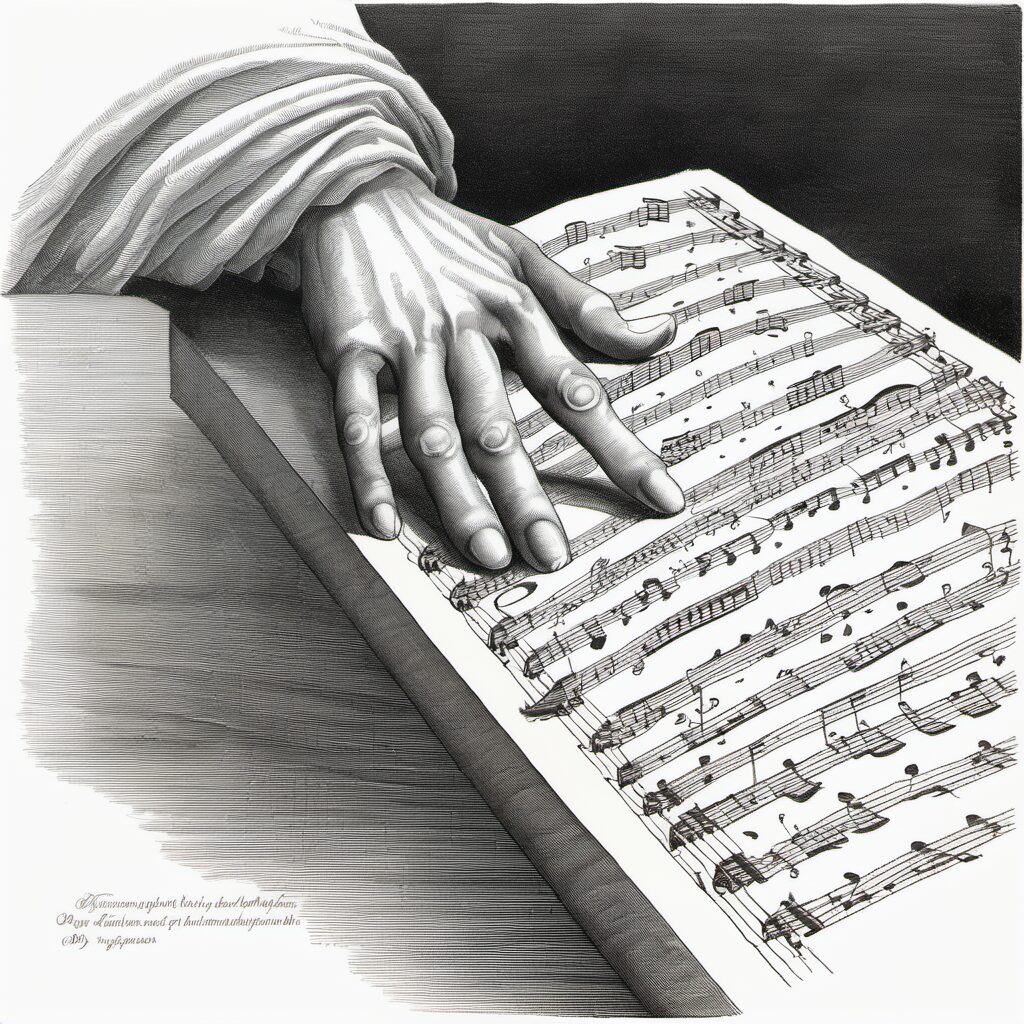
    The piano, a majestic instrument with a rich history spanning over three centuries, is often perceived as a complex machine that requires great skill to operate. However, behind its intricate mechanism lies a world of subtle nuances and expressive possibilities, much like the delicate petals of a flower. In this article, we will explore the piano keyboard as a garden of sound, where every key press can be likened to plucking a petal, evoking a unique fragrance that fills the air.

    Introduction

    The piano keyboard is an instrument of great expressiveness, capable of producing a wide range of dynamics and articulations. From the softest whisper to the loudest shout, each key press can be played with varying degrees of force and velocity. This ability to produce a vast spectrum of tonal colors and textures has led many composers to refer to the piano keyboard as an “orchestra in itself.”

    The Language of Petals

    “The piano is the most beautiful and versatile instrument, after all.” – Johannes Brahms

    The piano keyboard can be seen as a garden of sound, where each key represents a unique flower. Just as different flowers bloom at different times of the year, each note has its own distinct character and timbre. When played together, these notes create a beautiful tapestry of sound, much like the way different petals come together to form a single bouquet.

    The Petal of the Key

    • Allegro: The Bright and Cheerful Petal
    • Largo: The Gentle and Soothing Petal
    • Fugue: The Complex and Intricate Petal

    Each key on the piano keyboard has its own unique voice, much like the different petals of a flower. When played, these voices come together to create a beautiful harmony, evoking a sense of wonder and awe. Just as a garden requires careful nurturing and pruning to bloom, the piano keyboard requires skill and practice to produce its full range of tonal colors.

    Conclusion

    The Piano Keyboard: A Garden of Sound

    In conclusion, the piano keyboard can be seen as a garden of sound, where every key press evokes a unique fragrance that fills the air. With its vast expressive possibilities and intricate mechanism, the piano is an instrument of great beauty and complexity. Whether played solo or with others, the piano keyboard has the power to evoke emotions and create memories that last a lifetime.

  • Vernal Counterpoint: Spring Themes in the Works of Vivaldi and Beyond

    Vernal Counterpoint: Spring Themes in the Works of Vivaldi and Beyond

    Vernal Counterpoint: Spring Themes in the Works of Vivaldi and Beyond

    Spring is one of the four seasons that bring us joy and renewal. It’s a time when flowers bloom, birds sing, and the snow melts away to reveal new life. In music, spring has inspired many composers to create beautiful pieces that capture its essence.

    Antonio Vivaldi, an Italian Baroque composer, was particularly fond of depicting spring in his music. His famous concerto for lute and orchestra “Concerto da Chiesa” is a great example of this. The concerto is divided into four movements, each with a unique character that reflects the changing seasons.

    In the first movement, Vivaldi depicts the snow-covered landscape as it begins to thaw. The music is bright and cheerful, with a lively ritornello that evokes the feeling of birds singing in the trees. As the movement progresses, the music becomes more passionate and expressive, reflecting the blossoming flowers and the warmth of the sun.

    In the second movement, Vivaldi takes us on a journey through the forest, where we encounter all sorts of creatures that are awakening from their winter slumber. The music is full of energy and vitality, with rapid arpeggios and scales that evoke the feeling of birds in flight.

    The third movement is a beautiful adagio that depicts the arrival of spring showers. The music is soothing and calming, with a gentle melody that evokes the feeling of raindrops on the roof. As the movement progresses, the music becomes more dramatic and expressive, reflecting the intensity of the storm.

    The final movement is a lively allegro that depicts the return of the sun and the warmth of summer. The music is bright and cheerful, with a joyful melody that evokes the feeling of dancing in the fields on a sunny day.

    Spring is also a time for love and romance. In Vivaldi’s “Il cimento dell’armonia e del tempo” (The Contest between Harmony and Time), we find a beautiful concerto for violin and orchestra that reflects this theme. The concerto is divided into four movements, each with a unique character that reflects the changing emotions of the lovers.

    In the first movement, Vivaldi depicts the courtship of two young lovers. The music is full of passion and energy, with rapid arpeggios and scales that evoke the feeling of dancing in the ballroom.

    The second movement is a beautiful adagio that depicts the intimacy of the lovers’ relationship. The music is soothing and calming, with a gentle melody that evokes the feeling of a quiet conversation.

    The third movement is a lively allegro that depicts the joy of being together. The music is bright and cheerful, with a joyful melody that evokes the feeling of dancing in the fields on a sunny day.

    The final movement is a dramatic finale that reflects the intensity of the lovers’ emotions. The music is full of energy and vitality, with rapid arpeggios and scales that evoke the feeling of passion and excitement.

    Other composers have also been inspired by the theme of spring. Haydn’s “Il sogno di Scipione” (The Dream of Scipio) is a beautiful opera that reflects this theme. The opera tells the story of Scipio, a Roman general who has a dream in which he sees the ghosts of his ancestors. The music is full of beauty and charm, with arias that evoke the feeling of joy and wonder.

    Mozart’s “Eine Kleine Nachtmusik” (A Little Night Music) is another great example of spring themes in music. The serenade is divided into four movements, each with a unique character that reflects the changing moods of the day.

    In conclusion, spring has inspired many composers to create beautiful pieces that capture its essence. From Vivaldi’s “Concerto da Chiesa” to Haydn’s “Il sogno di Scipione”, and from Mozart’s “Eine Kleine Nachtmusik” to beyond, we find a wide range of musical styles and genres that reflect the theme of spring.

    Works

    • Antonio Vivaldi – Concerto da Chiesa in E major for lute and orchestra RV 428
    • Antonio Vivaldi – Il cimento dell’armonia e del tempo (The Contest between Harmony and Time) Op.5 concerto for violin and orchestra in A major RV 356
    • Haydn, Joseph – Il sogno di Scipione (The Dream of Scipio)
    • Mozart, Wolfgang Amadeus – Eine Kleine Nachtmusik (A Little Night Music) serenade for strings K 525

    See Also

    • Spring in music
    • Claude Debussy – Prelude to the Afternoon of a Faun (1894)
    • Frédéric Chopin – Nocturne in E-flat major Op. 9, 2 (1830)

    External Links

    • Antonio Vivaldi – Concerto da Chiesa in E major for lute and orchestra RV 428 https://en.wikipedia.org/wiki/Concerto_da_chiesa_in_E_major_for_lute_and_orchestra_RV_428
    • Antonio Vivaldi – Il cimento dell’armonia e del tempo (The Contest between Harmony and Time) Op.5 concerto for violin and orchestra in A major RV 356 https://en.wikipedia.org/wiki/Il_cimento_dell%27armonia_e_del_tempo_(Vivaldi)
    • Haydn, Joseph – Il sogno di Scipione (The Dream of Scipio) http://www.haydnfoundation.at/online/haydn/oratorienwerke/sogno/scipio.html
    • Mozart, Wolfgang Amadeus – Eine Kleine Nachtmusik (A Little Night Music) serenade for strings K 525 https://en.wikipedia.org/wiki/Eine_Kleine_Nacht_Musik_(Mozart)
  • The Rite of Renewal: Seasonal Cycles in Classical Form

    The Rite of Renewal: Seasonal Cycles in Classical Form

    The Rite of Renewal: Seasonal Cycles in Classical Form

    Seasonal cycles have been a cornerstone of human experience for centuries, influencing art, literature, and spirituality across cultures. In classical form, these cycles are often represented through themes, motifs, and narrative structures that reflect the eternal struggle between life, death, and rebirth.

    • Introduction
    • Classical forms such as the symphony, ballet, and opera have long been influenced by seasonal cycles. These works reflect a deep understanding of the human condition, capturing the essence of our experiences with nature and its rhythms.

    The Wheel of the Year

    The Wheel of the Year is an ancient pagan concept that describes the cycle of the seasons as a wheel turning eternally. This cycle consists of eight Sabbats, each representing a turning point in the annual journey of the sun:

    • Yule (Winter Solstice)
    • “After Yule, things start to get better.” – Alice Oswald, “Memorial” (2012)

    • Candlemas (February 2nd)
    • Yule is the first of four seasons and represents renewal. It marks the midpoint between the winter solstice and spring equinox.

    • Imbolc (Ostara, March 1-31)
    • Also known as Candlemas, Imbolc is a time of purification and transformation, marking the beginning of spring’s awakening.

    • Beltane (May 1-31)
    • Beltane is a celebration of fertility and new life, symbolizing the peak of spring’s growth.

    • Litha (Summer Solstice)
    • Litha marks the summer solstice, representing the longest day of the year and the peak of the sun’s power.

    • Mabon (Autumn Equinox)
    • Mabon is a time of harvest and gratitude, marking the second turning point in the Wheel of the Year.

    • Samhain
    • Samhain is a celebration of the ancestors and the cycle of life and death. It marks the end of the harvest season and the beginning of winter’s darkness.

    • Yule (Winter Solstice)
    • Yule is the final turning point in the Wheel of the Year, representing rebirth and renewal after the longest night of the year.

    The Influence on Classical Form

    The seasonal cycles have had a profound influence on classical forms such as symphony and ballet. Many works reflect the eternal struggle between life, death, and rebirth, capturing the essence of our experiences with nature and its rhythms:

    • Beethoven’s Symphony No. 9
    • Beethoven’s Symphony No. 9 is a prime example of how classical form reflects seasonal cycles. The symphony’s final movement, “Ode to Joy,” is a celebration of unity and the eternal cycle of life and death.

    • The Four Seasons by Vivaldi
    • Vivaldi’s The Four Seasons is one of the most famous examples of how seasonal cycles have influenced classical music. Each concerto represents a different season, capturing the changing moods and rhythms of nature.

    Conclusion

    In conclusion, seasonal cycles have had a profound influence on classical form, reflecting our eternal struggle with life, death, and rebirth. Through themes, motifs, and narrative structures, these works capture the essence of our experiences with nature and its rhythms, inspiring us to continue the cycle of creation.

    “The turning year is a symbol of time and change; each season represents a journey.” – Anonymous

  • Green Shoots and Golden Horns: Writing Bright Textures for Orchestra

    Green Shoots and Golden Horns: Writing Bright Textures for Orchestra

    Green Shoots and Golden Horns: Writing Bright Textures for Orchestra

    In the world of classical music, texture is an essential element in creating depth, complexity, and beauty within a piece. When it comes to writing bright textures for orchestra, composers have several options at their disposal. From the warmth of strings to the piercing brightness of brass, each section has its unique voice that can add character to the overall sound. This article aims to explore the different approaches in crafting bright orchestral textures.

    Types of Textures

    • Legato Textures: These are smooth, connected melodies played without a break. The strings are perfect for creating legato textures due to their expressive range and dynamic possibilities.

      “Music is the divine way to tell beautiful, poetic things to the heart.” – Ludwig van Beethoven

    • Staccato Textures: In contrast to legato, staccato textures feature short and detached notes. This style of playing creates a sense of clarity and precision, making it perfect for brass instruments like trumpets.

      “Music is the only art form where you can be good at everything.” – John Williams

    Brass Section in Bright Textures

    • Trumpet: Trumpets produce a bright and piercing sound that is perfect for adding clarity to an orchestral texture. Composers often use the trumpet solo in orchestral works to add a touch of elegance.

      “Music gives soul to the universe, wings to the wind, dance to the earth, and breath to all the trees.” – Leonardo da Vinci

    • French Horn: The French horn is known for its warm and rich sound. It can be used in bright textures, especially when combined with other instruments like strings or woodwinds.

      “If you hear a beautiful piano piece and want to play it, try to do it justice.” – Franz Liszt

    Writing Bright Textures for the Orchestra

    • Experiment with different instrumental combinations. For example, pair a trumpet with a violin or a French horn with a woodwind instrument.

      “Collaboration is about being in dialogue with someone and co-creating something new.” – Unknown

    • Pay attention to dynamics. Using crescendos (getting louder) and decrescendos (getting softer) can add depth to an orchestral texture.

      “Music should be felt as much in the silence between notes as in the notes themselves.” – Arnold Schoenberg

    Conclusion

    In conclusion, crafting bright textures for orchestra requires a deep understanding of each instrument’s unique voice. By experimenting with different instrumental combinations and paying attention to dynamics, composers can create rich and engaging orchestral works.

    “Music is the most divine thing in this world on this earth.” – Bismillah Khan

  • Awakening Strings: Chamber Music Inspired by Vernal Landscapes

    Awakening Strings: Chamber Music Inspired by Vernal Landscapes

    Awakening Strings: Chamber Music Inspired by Vernal Landscapes

    Chamber music has long been associated with the introspective and emotive qualities of solo instruments, yet the genre also holds a remarkable capacity for evoking the natural world. In recent years, composers have increasingly turned to landscapes as a source of inspiration, drawing upon the ever-changing beauty of vernal environments to create works that are both deeply personal and universally relatable.

    In this article, we’ll delve into the world of chamber music inspired by vernal landscapes, exploring the ways in which composers use nature as a catalyst for creativity and innovation.

    The Power of Nature

    The connection between music and nature is an old one, with many cultures throughout history recognizing the importance of the natural world in shaping their artistic expression. From the rustling of leaves in Debussy’s La Mer to the sweeping landscapes of Vaughan Williams’ The Downland, nature has long been a source of inspiration for composers.

    In the context of chamber music, this connection takes on a new significance. The intimate settings of these works – often featuring small ensembles or solo voices – create a sense of proximity to the natural world that is at once soothing and uplifting.

    Inspirational Landscapes

    Vernal landscapes – those of springtime, in all their vibrant colors and untamed beauty – offer a wealth of inspiration for composers. From the lush greenery of forests to the rolling hills and sparkling lakes of rural England, these environments are full of life and energy.

    In his piece Spring Can Ricercar, Vivaldi captures the awakening of nature in all its glory. With its soaring melodies and intricate counterpoint, this work is a testament to the power of music to evoke the beauty and wonder of the natural world.

    Another composer who has drawn inspiration from vernal landscapes is Thomas Adès. In his The Tempest, Adès weaves a complex tapestry of sound that reflects the turmoil and transformation of the season.

    The Role of Technology

    In recent years, technology has played an increasingly important role in the creation and performance of chamber music inspired by vernal landscapes. From digital audio workstations to innovative recording techniques, these tools have opened up new possibilities for composers and performers alike.

    One example of this can be seen in the work of composer Sarah Kirkland Snider. Her piece Unremembered was originally composed for solo violin, piano, and soprano – but when performed live, it was augmented by a range of digital instruments and effects, creating an otherworldly soundscape that is at once haunting and beautiful.

    The Future of Chamber Music

    As we look to the future, it’s clear that chamber music inspired by vernal landscapes will continue to play an important role in the world of classical music. With its unique blend of intimacy and accessibility, this genre offers a refreshing alternative to more traditional forms of musical expression.

    In conclusion, the connection between music and nature is one that runs deep – and the works of composers like Vivaldi and Adès are a testament to the enduring power of this inspiration. As we move forward into an uncertain future, it’s clear that chamber music will remain an important part of our cultural heritage – and that vernal landscapes will continue to inspire generations of musicians and composers alike.

    Landscapes (Vivaldi)

    The Tempest (Adès)