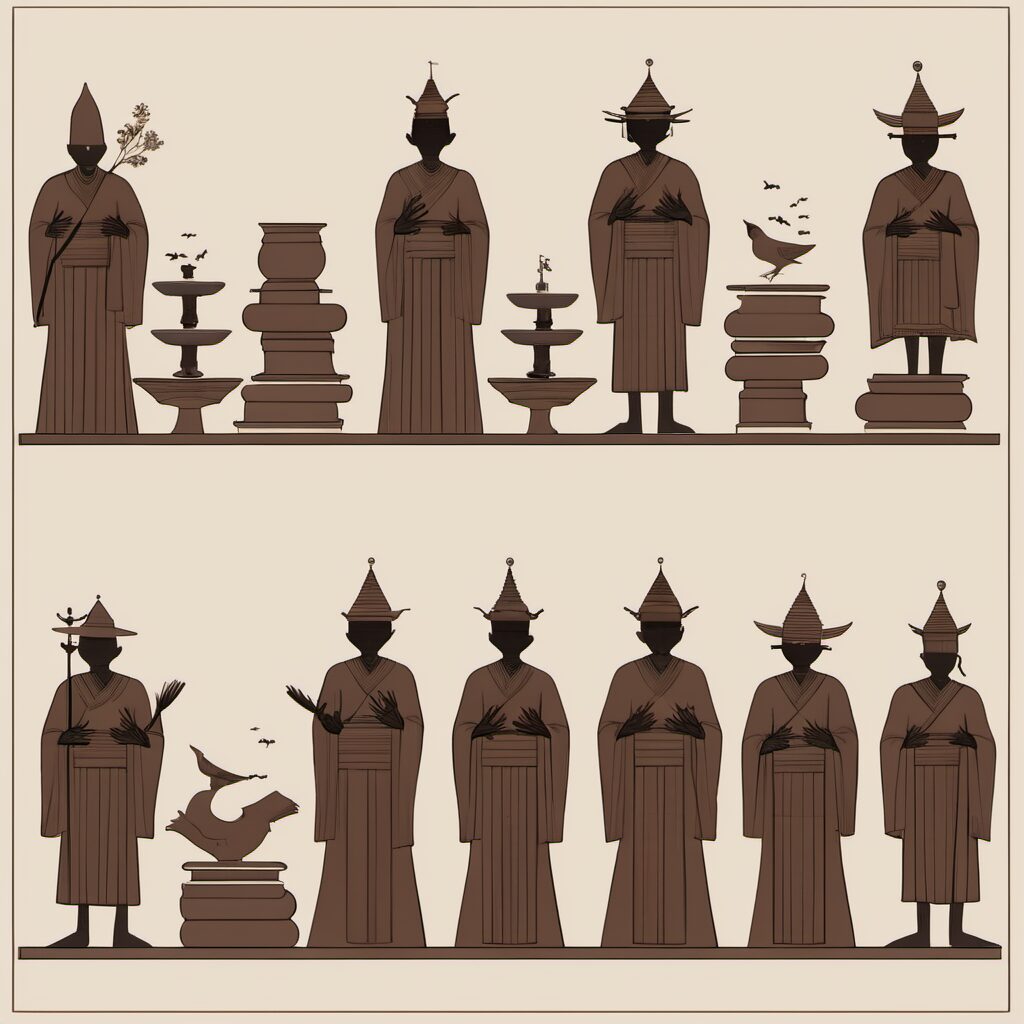
The Influence of Shinto and Zen on Musical Minimalism
Musical minimalism is a style characterized by simplicity, repetition, and a focus on texture. While its roots lie in Western classical music, the influences of Eastern philosophies like Shinto and Zen Buddhism have been increasingly evident in this genre. This article will explore the ways in which Shinto and Zen have influenced musical minimalism, particularly through their concepts of nature, simplicity, and non-dualism.
Shinto and Its Influence on Musical Minimalism
“The universe is not a collection of distinct objects, but a continuum, where every part contains its own essence.” – Shinto proverb
Source: “Shinto” by Mircea Eliade
The concept of wabi-sabi (acceptance of transience and imperfection) in Shinto is also reflected in musical minimalism. Composers like La Monte Young and Terry Riley explore the beauty of imperfection and simplicity, often using repetition and gradual change to create a sense of meditative calm.
Zen Buddhism and Its Influence on Musical Minimalism
Zen Buddhism emphasizes non-dualism, or the idea that the self and reality are ultimately one. This concept is reflected in music, particularly in the works of minimalist composers like John Adams and Philip Glass.
“The ultimate truth is not to be found by a mind which seeks it, but is revealed when the mind is still.” – Dogen Zenji
Source: “Zen Mind, Beginner’s Mind” by Shunmyo Morita and Ceiko Toyama
Another key concept in Zen Buddhism that has influenced musical minimalism is the idea of koan. A koan is a paradox or a seemingly irrational statement used to challenge one’s perceptions and provoke insight. Composers like La Monte Young and Terry Riley have used koans as inspiration for their music, often creating works that are intentionally repetitive and challenging.
Critics’ Views on the Influence of Shinto and Zen on Musical Minimalism
- Philip Glass has said that his use of repetition in minimalism was influenced by his study of Eastern philosophy, particularly Buddhism. He notes that the concept of non-dualism is reflected in the way that he uses simple melodies to create complex textures.
- Steve Reich has also been influenced by Eastern philosophy, particularly the concept of wabi-sabi. He notes that the idea of accepting imperfection and simplicity is reflected in his use of repetition and gradual change in his music.
While the influence of Shinto and Zen on musical minimalism may seem obscure at first glance, it is clear that these Eastern philosophies have had a profound impact on this genre. Through their emphasis on nature, simplicity, and non-dualism, Shinto and Zen have inspired composers to create music that is meditative, repetitive, and introspective.
References
- “Shinto” by Mircea Eliade (Waveland Press, 1994)
- “Zen Mind, Beginner’s Mind” by Shunmyo Morita and Ceiko Toyama (Weatherhill, 1979)
- Interview with Philip Glass (The Guardian, 2011)
- Interview with Steve Reich (The New York Times, 2008)
This article is part of our series on the influence of Eastern philosophy on Western art. Stay tuned for more articles on this fascinating topic!