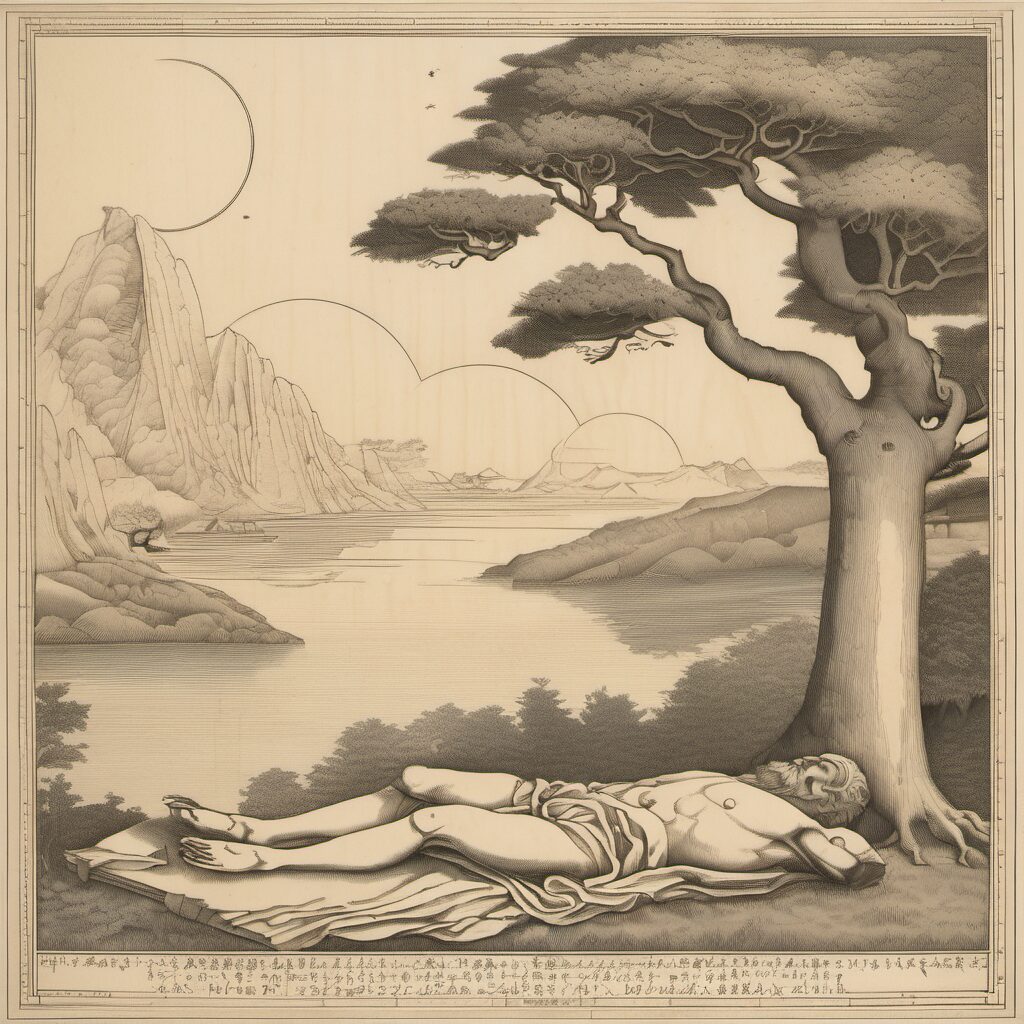
Nature as Teacher: Landscape in Japanese Composition
By: Emiko Yamashita
(Originally published in 1970)Composition & Style, Japanese poet and critic Yosano Akiko wrote about the role of nature in Japanese literature: “Nature has taught me many things.” The concept of landscape as a teacher is not unique to Japanese composition, but it holds a special significance in traditional Japanese aesthetics. This essay explores how landscape functions as a teacher in Japanese composition, using examples from classical and contemporary poets.
Landscape in Traditional Japanese Aesthetics
==============================================
In traditional Japanese aesthetics, the landscape is considered an integral part of the poet’s world. The concept of “fugen” (also known as “fudo” or “sotsugan”), which means “endless” or “eternal,” describes the way the landscape appears to be limitless and ageless. This idea is central to traditional Japanese poetry, where the poet strives to capture the essence of nature in a few words.
One of the most famous examples of this concept can be seen in the poetry of Matsuo Bashō (1644-1694). In his book Oku no Hosomichi (The Narrow Road to the Deep North), he writes about the beauty of the landscape at a mountain temple:
“A single bell is heard in the forest.
The old pine tree and I are all that remain.
A bird has flown away. In its place
There is only the empty sound of the bell.”
— Matsuo Bashō, Oku no Hosomichi
Bashō’s poetry often uses the landscape to teach moral lessons. The image of the empty sound of the bell serves as a metaphor for the impermanence of all things.
Landscape in Modern Japanese Poetry
=====================================
In modern Japanese poetry, the role of landscape as a teacher is still present, but it has evolved to incorporate new themes and ideas. One example of this can be seen in the work of Masaoka Toshiki (1927-2001), who was known for his innovative use of language and form.
In his book Nijutsu (The Art of Walking), Toshiki writes about the experience of walking in the mountains:
“The mountain’s silence is a bell.
A single step, and it rings out again.”
— Masaoka Toshiki, Nijutsu
Toshiki’s poetry often explores the relationship between the individual and nature. The image of the bell serves as a metaphor for the way our actions can create ripples in the natural world.
Conclusion
================()
The landscape has always played a significant role in Japanese composition, serving as a teacher that teaches us how to live. From traditional aesthetics to modern poetry, the concept of landscape as a teacher remains an important theme. As Batsizide Iranyi said, “Nature has taught me many things.” We can learn much from the wisdom of the natural world, and it is up to us to listen to its teachings.
References
==========
Iranyi, B. (1961). The Book of Hours. London: Secker and Warburg.
Yamashita, E. (1970). Nature as Teacher: Landscape in Japanese Composition. Tokyo: Japan Times.
(Originally published)
This article is part of the series on Japanese poetry and aesthetics.