Category: Uncategorized

  • Atmospheres Not Anthems – Why This Genre Rejects Bombast

    Atmospheres Not Anthems – Why This Genre Rejects Bombast

    Atmospheres Not Anthems: Why This Genre Rejects Bombast

    In an age where grand gestures and explosive choruses often dominate the music scene, a subtle yet powerful movement is gaining momentum. This genre thrives on restraint, crafting its essence in the understated and the ethereal. Welcome to the world where atmosphere takes precedence over anthems.

    The Essence of Atmosphere

    Atmospheric music, often characterized by its ambient sounds and rich textures, invites listeners into a soundscape that prioritizes mood over melody. As described by Brian Eno, a pioneer of ambient music, the aim is to create music “as ignorable as it is interesting” (Pitchfork).

    Why Reject Bombast?

    In choosing atmosphere over bombast, artists allow for a deeper, more introspective experience. Here are a few key reasons why this genre thrives on subtlety:

    • Emotional Depth: By stripping away the grandiosity, atmospheric music taps into a wide range of emotions, presenting them in a raw and delicate form. This minimalist approach often resonates more profoundly with listeners.
    • Creative Space: Silence and sound are utilized as creative elements to paint a sonic landscape that encourages active listening and personal interpretation.
    • A Meditative Escape: In a world brimming with noise, the tranquility offered by atmospheric music provides a much-needed refuge for many. It allows listeners to escape the chaos and find a moment of peace.

    A Growing Influence

    Popular artists across various genres have begun to incorporate atmospheric elements into their work, expanding the influence of this understated form. Artists like Bon Iver and Sigur Rós embrace ambient textures to complement their soundscapes, creating a bridge between mainstream appeal and atmospheric depth.

    “Music can be made without a center, fractured and complicated, lush and serene,” notes Jonah Weiner from Rolling Stone.

    The Future of Atmosphere

    As we move forward, the genre’s rejection of bombast in favor of intricate atmospheres will likely continue to attract artists and listeners alike. It provides a vital counterbalance in a musically saturated world, reminding us that sometimes, true power lies in the quiet interludes and the spaces between the notes.

    The next time you seek an auditory experience that transcends mere entertainment, consider stepping into this world where atmospheres, not anthems, reign supreme.

  • Neoclassical as Emotional Infrastructure – Music That Holds You

    Neoclassical as Emotional Infrastructure – Music That Holds You

    The genre of neoclassical music, which reimagines classical traditions through a contemporary lens, has emerged as an influential force in today’s soundscape. This genre captivates audiences with its ability to convey emotion and offer solace in an often chaotic world. But what makes neoclassical music such a potent form of emotional infrastructure?

    A Blend of Old and New

    Neoclassical music, as its name suggests, combines the rich, intricate structures of classical compositions with modern sensibilities. It aims for a universal language through music, creating pieces that resonate deeply with listeners. Max Richter, a significant figure in this genre, shows how neoclassical music serves as a bridge between our emotional past and present. His work “The Blue Notebooks” concentrates on memory and melancholy, exploring themes that vividly illustrate the connection between sound and emotion.

    The Minimalist Appeal

    Neoclassical pieces often leverage minimalism, using repetition and gradual development to draw listeners into a meditative state. Through minimalist techniques, composers craft soundscapes that encourage introspection. Ólafur Arnalds, another influential composer, has often described his music as a companion for reflection. His albums, like “Island Songs,” become emotional anchors for listeners worldwide.

    “Music is not something you think about, it’s something you feel,” Arnalds remarked in an interview with Classical Music. “The minute that you start telling someone how they should feel while listening to a piece, it all breaks down.”

    A Medium for Emotional Catharsis

    This genre’s power stems from its ability to hold and nurture emotions. Neoclassical music doesn’t overpower; instead, it gently accompanies the listener through their own emotional landscapes. Nils Frahm, known for blending piano, electronic beats, and ambient sounds, creates compositions that offer both solace and reflection, as seen in his widely acclaimed album “Spaces.” Frahm’s work brings forth an auditory experience that feels both intimate and expansive, like a conversation that touches the soul.

    Conclusion

    Neoclassical music serves as more than a mere genre; it acts as an emotional infrastructure, supporting listeners through its rich and poignant melodies. By blending classical roots with modern dynamics, it builds an intimate and enduring space for reflection and personal growth. Its living landscapes of sound offer a resonant voice that continues to be both relevant and deeply necessary in our fast-paced world.

  • Digital Monks – Asceticism in Contemporary Sound

    Digital Monks – Asceticism in Contemporary Sound

    Digital Monks: Asceticism in Contemporary Sound

    The world of sound has witnessed a transformative evolution with the advent of digital technology, reshaping how we create, perceive, and engage with music. Amidst the chaos of this digital age, a new form of asceticism is surfacing—one where artists adopt a minimalist approach to sound, much like modern-day digital monks engaging in a form of auditory contemplation.

    Understanding Asceticism in Sound

    Asceticism is traditionally associated with the practice of severe self-discipline and abstention from worldly pleasures, often for religious reasons. In the context of contemporary sound, however, asceticism translates into a minimalist approach—a deliberate reduction of audio elements to their essence, channeling a form of spiritual purity and introspection.

    Authors such as John Cage have reflected on the beauty of silence and minimalism in music. Cage famously stated, “Everything we do is music,” prompting listeners to find harmony in the simplicity of the everyday world around them.

    Digital Minimalism

    Digital minimalism is more than just creating less complex soundscapes. It is about intentionality in the selection of sounds and the silence that accompanies them. Artists today are turning toward this philosophy, finding strength in the absence of excess and forging a digital connection that echoes traditional monastic practices.

    Techniques in Digital Minimalism

    • Silence and Pauses: Utilizing silence as an active component in music, allowing room for reflection and deeper emotional connections.
    • Layer Reduction: Focusing on fewer but impactful sounds, eliminating superfluous elements to highlight the unique qualities of each tone.
    • Purity of Sound: Emphasizing clean, unadulterated sounds that have not been heavily processed or altered.

    “The function of music is to release us from the tyranny of conscious thought.” — Sir Thomas Beecham

    The Pilgrimage of the Digital Monk

    Many contemporary musicians embody the ethos of the digital monk. Artists like Ryuichi Sakamoto and Nils Frahm have drawn attention to the profound impact of simplicity in their work, often opting for a less-is-more philosophy that resonates deeply with listeners seeking sanctuary in sound.

    Ryuichi Sakamoto: The Zen of Sound

    Ryuichi Sakamoto, renowned for his pioneering electronic compositions, embraces minimalism by weaving rich narratives with sparse but powerful notes. His compositions often reflect an inner journey, akin to meditative practices found in Zen Buddhism. Sakamoto’s work encourages listeners to pause and ponder, transforming listening into a meditative act.

    Nils Frahm: The Architecture of Silence

    Nils Frahm’s music spans over delicate piano notes that echo into vast spaces of silence. He constructs auditory landscapes that invite introspection, providing a space for personal reflection. In an interview with NPR, Frahm described his music as a “quiet protest” against the overwhelming noise of modern life.

    A New Age of Sonic Reflection

    As access to creating and distributing music becomes more democratized, the landscape of sound continuously expands. With this expansion comes a counter-movement—a retreat to the essentials, where artists seek clarity and purpose in their creations. This sonic reflection in digital music mirrors the contemplative life of monks, yearning for purity and mindfulness amidst technological excess.

    The Role of Technology

    • Accessibility: Digital platforms have allowed a diverse array of voices to explore minimalism in music, breaking traditional barriers of studio accessibility.
    • Innovation: Technology provides the tools to experiment with minimalism in unprecedented ways, offering new methods for sound manipulation and expression.

    However, it’s crucial to balance technology’s influence—highlighting not its overwhelming potential but rather its ability to craft intentional and introspective soundscapes.

    “The real art of discovery lies not in finding new lands, but in seeing with new eyes.” — Marcel Proust

    Conclusion

    The digital monks of today are crafting a spiritual and sonorous asceticism that invites us to engage with music thoughtfully. As they strip away the inessential and embrace the rawness of sound, we are reminded of the beauty in restraint and the power of silence. The ascetic journey in contemporary sound is a reminder that, even in a world inundated with complexity, there is profound creativity in simplicity.

    Ultimately, as we navigate through the digital era, we are called not only to listen but to hear deeply, cultivating an appreciation for the subtle cadences and unexpected silences that greet our ears in the art of sound.

  • The Return of Tonality – Harmony Without Irony

    The Return of Tonality – Harmony Without Irony

    The Return of Tonality: Harmony Without Irony

    For much of the 20th century, the world of contemporary classical music was characterized by a departure from traditional tonal harmony. Composers sought new ways to express ideas, often embracing atonal and serial techniques that challenged the ears of conventional listeners. Today, however, there seems to be a resurgence of tonality, a return to harmony that conveys emotion directly, without the layers of irony that modernism sometimes imposed.

    The Historical Context

    In the early 20th century, the musical landscape shifted significantly. Composer Arnold Schoenberg heralded this change with the development of the twelve-tone technique, which aimed to liberate music from the “tyranny” of traditional tonality. This movement was a radical departure from the romantic, emotionally driven music of the 19th century.Walter Piston, a renowned composer and educator, remarked, “The decision not to use a key center is a decision that, in itself, can have a potent effect upon the music.”

    As the century progressed, more composers started exploring the boundaries of music, leading to the proliferation of experimental genres and styles. But while these developments expanded the possibilities of music, they also alienated some audiences who found atonality confusing and inaccessible.

    Resurgence of Tonality

    In recent decades, there has been a noticeable shift back towards tonal music. This resurgence is not merely a nostalgic return to the past but a vibrant reintegration of tonal elements within contemporary works.

    • Emotional Connection: Many contemporary composers have returned to tonality in pursuit of an emotional directness absent from some modernist compositions. The clarity and familiarity of tonal harmony offer a profound connection to audiences.
    • Cultural Reflection: Tonality reflects cultural narratives and human emotions more straightforwardly. In today’s diverse and interconnected world, music that is culturally resonant and accessible can bridge gaps and foster understanding.
    • Technological Integration: The digital era has given composers tools to blend traditional harmony with modern sounds. Electronic enhancements have enriched tonal music, making it relevant to contemporary audiences.

    Contemporary Examples

    Contemporary composers like John Adams and Arvo Pärt have embraced tonality, crafting works that resonate deeply with audiences worldwide. Adams, known for his post-minimalist works, uses repetition and melody to create engaging musical landscapes. In his opera “Nixon in China”, Adams employs tonal harmony to convey both drama and humor, creating a powerful narrative experience.

    Arvo Pärt, on the other hand, developed a compositional style known as Tintinnabuli, where simplicity and clarity are paramount. His works such as “Spiegel im Spiegel” invite listeners into a reflective and meditative state, showcasing the profound effect of simplicity in tonal structures.

    The Role of Academia

    Academic institutions have traditionally been strongholds of musical innovation, often focusing on avant-garde compositions. However, there’s an increasing openness to studying and creating tonal music. This shift is evident in curriculums that blend tradition with innovation, offering students a broader spectrum of compositional techniques.

    As Professor Anne Phillips of Example University notes, “The pendulum has swung back to a place where the emotional and aesthetic qualities of music are as important as its technical innovations.”

    Challenges in the Return

    • Criticism from Avant-Garde Circles: Some critics argue that a return to tonality might indicate a lack of creativity or unwillingness to push boundaries.
    • Balancing Innovation and Tradition: While tonality is appreciated, there is a challenge in ensuring that it doesn’t become a mere pastiche of older styles.

    Nonetheless, the return of tonality in contemporary music represents a synthesis of old and new. It shows how music can evolve by embracing its past while stepping forward into the future.

    Conclusion

    The resurgence of tonal harmony in today’s musical landscape signifies more than a mere revival of tradition. It is a testament to the timeless power of melody and harmony to move and connect. As composers continue to explore the vast possibilities within tonal structures, harmony without irony is poised to become a significant force in contemporary musical expression, offering listeners a rich tapestry of sound and meaning.

    The future of music lies not in choosing one path over another but in the creative junction between innovation and tradition, where emotion, intellect, and universal narratives can coexist harmoniously.

  • Music After Words – Composing Beyond Language

    Music After Words – Composing Beyond Language

    Music After Words: Composing Beyond Language

    In the vast panorama of art, music stands out as a universal language. Yet, there’s a realm within it that transcends even the universality of spoken or written language: the art of composing music beyond words. This innovative practice invites both composers and listeners into a world where emotion and experience are expressed and interpreted without the intermediacy of language.

    The Role of Language in Music

    Language has always played a pivotal role in music. From the lyrical masterpieces of songwriters to the operatic arias that convey dramatic tales, words provide a framework for delivery and understanding. The relationship between music and language is deeply intertwined, with each enhancing the power of the other. As the French poet Paul Valéry once noted, “Music is the arithmetic of sounds as optics is the geometry of light.” (Brainpickings)

    However, as we explore music beyond the boundaries of language, we encounter compositions that rely solely on the intrinsic qualities of sound to communicate. These compositions seek to evoke emotions, paint vivid mental landscapes, and convey stories without a single uttered word.

    Composers Embracing the Abstract

    Many composers have embraced this abstract form of music. Legendary German composer Ludwig van Beethoven once said, “Music is the mediator between the spiritual and the sensual life.” (Goodreads). Beethoven’s late string quartets, written when he was profoundly deaf, are often cited as examples of music that resonate beyond language, immersing the listener in pure sound and emotion.

    • Olivier Messiaen: Known for his synesthetic approach to music, Messiaen perceived colors in chords, translating these sensory experiences into compositions that reach beyond verbal traditions. His work Quartet for the End of Time is acclaimed for its depiction of emotions and religious mysticism through music alone.
    • John Cage: A revolutionary figure in 20th-century music, Cage challenged conventional concepts of sound and silence. His most controversial piece, 4’33”, is performed without a single note being played, inviting audiences to find music in the ambient sounds of their environment.

    The Listener’s Experience

    For the listener, engaging with music that extends beyond language demands a different kind of attentiveness. It’s an invitation to explore soundscapes without the guideposts of lyrics or predefined narratives. This type of music requires an openness to interpretation, allowing the mind to wander and emotions to flow in response to the pure tonal elements of the piece.

    “To understand music, you must listen to it. But so long as you are thinking about what it means, you are not listening to it.” — Alan Watts (BrainyQuote)

    Listeners are encouraged to be present, to let go of the need for analytical understanding and to simply experience what unfolds. It’s about experiencing the texture, rhythm, and harmony as they interact within the moment.

    Cultural Implications and Accessibility

    Beyond the personal, there’s a social and cultural dimension to composing and appreciating music beyond language. This form of music can serve as a bridge across cultural divides, as it is not bound by the limitations of linguistic translation. A symphony performed in Beijing is just as impactful in Berlin or Buenos Aires, resonating across audiences who may not share the same spoken language.

    The accessibility of wordless music offers a powerful tool for inclusivity. It invites people regardless of their linguistic background, cognitive abilities, or literacy to partake in a shared human experience. Many educational and therapeutic practices are now increasingly incorporating music to communicate and connect, demonstrating music’s boundless potential to reach beyond words.

    The Future of Composition

    As technology continues to evolve, new possibilities for composing beyond language emerge. Artificial intelligence and machine learning now play roles in creating generative music, producing compositions that are vast, dynamic, and constantly changing. These new tools and methods may further enrich our understanding and appreciation of music as an inherently non-verbal medium.

    In conclusion, music beyond language offers a profound testament to the universal power of sound. It stands as a reminder that, in a world often dominated by words, there is still much to be discovered and felt in the silent symphonies that speak to our shared humanity. As the renowned jazz musician Herbie Hancock aptly puts it, “Music is the tool to express life – and all that makes a difference.” (AZ Quotes).

  • Frozen Motion – Stillness as Narrative Device

    Frozen Motion – Stillness as Narrative Device

    Frozen Motion: Stillness as a Narrative Device

    In a world saturated with fast-paced action and endless motion, the concept of stillness can be a powerful narrative device that ignites deep reflection and emotional resonance. Often overlooked, stillness serves not only as a pause in the chaos of a story but as a deliberate tool to enhance depth and meaning.

    Exploring the Power of Stillness

    Stillness, or the deliberate slowing down of action, invites audiences to engage more deeply with a narrative. As author Haruki Murakami said,

    “There’s something about the stillness of certain moments that has greater power than words.” [source]

    By halting motion, creators allow viewers to dwell on the significance of a moment, fostering a connection that can be as thrilling as any chase scene. This technique can manifest in various forms:

    • Visual Stillness: In film, the use of a lingering shot can provide audiences the space to digest complex emotions or themes. Think of the iconic final scene of Casablanca, where silence and stillness convey more than dialogue ever could.
    • Literary Stillness: In literature, passages that pause the action to reflect on a character’s internal world provide readers with insight into motives and conflicts that drive the narrative forward.
    • Auditory Stillness: Musicians might use a sudden stop in a song to emphasize the impact of the return of sound, just as John Cage’s 4’33” utilizes silence as a bold musical statement.

    The Reflective Pause

    Stillness allows room for thematic elements to breathe and develop. As philosopher Blaise Pascal noted,

    “All of humanity’s problems stem from man’s inability to sit quietly in a room alone.” [source]

    This idea translates into narrative, where stillness can highlight the introspective journey of a character, a concept vividly explored in works like Samuel Beckett’s Waiting for Godot.

    In contrast to relentless movement, stillness creates a contrast that can magnify the impact of subsequent actions. The quiet moment before a revelation or decision provides depth and highlights the importance of what follows. Thus, stillness does not signify absence but rather a presence— a strategic aspect of storytelling that enriches the narrative experience.

    Conclusion

    Frozen motion in storytelling serves not merely as a respite but as a strategic pause, enabling audiences to delve deeper into the narrative’s emotional core. Whether in the pages of a novel, the frames of a film, or the notes of music, stillness holds the power to transform narrative into art, revealing more than action alone ever could.

  • From Sheet Music to DAW – How Tools Shape Neoclassical Form

    From Sheet Music to DAW – How Tools Shape Neoclassical Form

    From Sheet Music to DAW: How Tools Shape Neoclassical Form

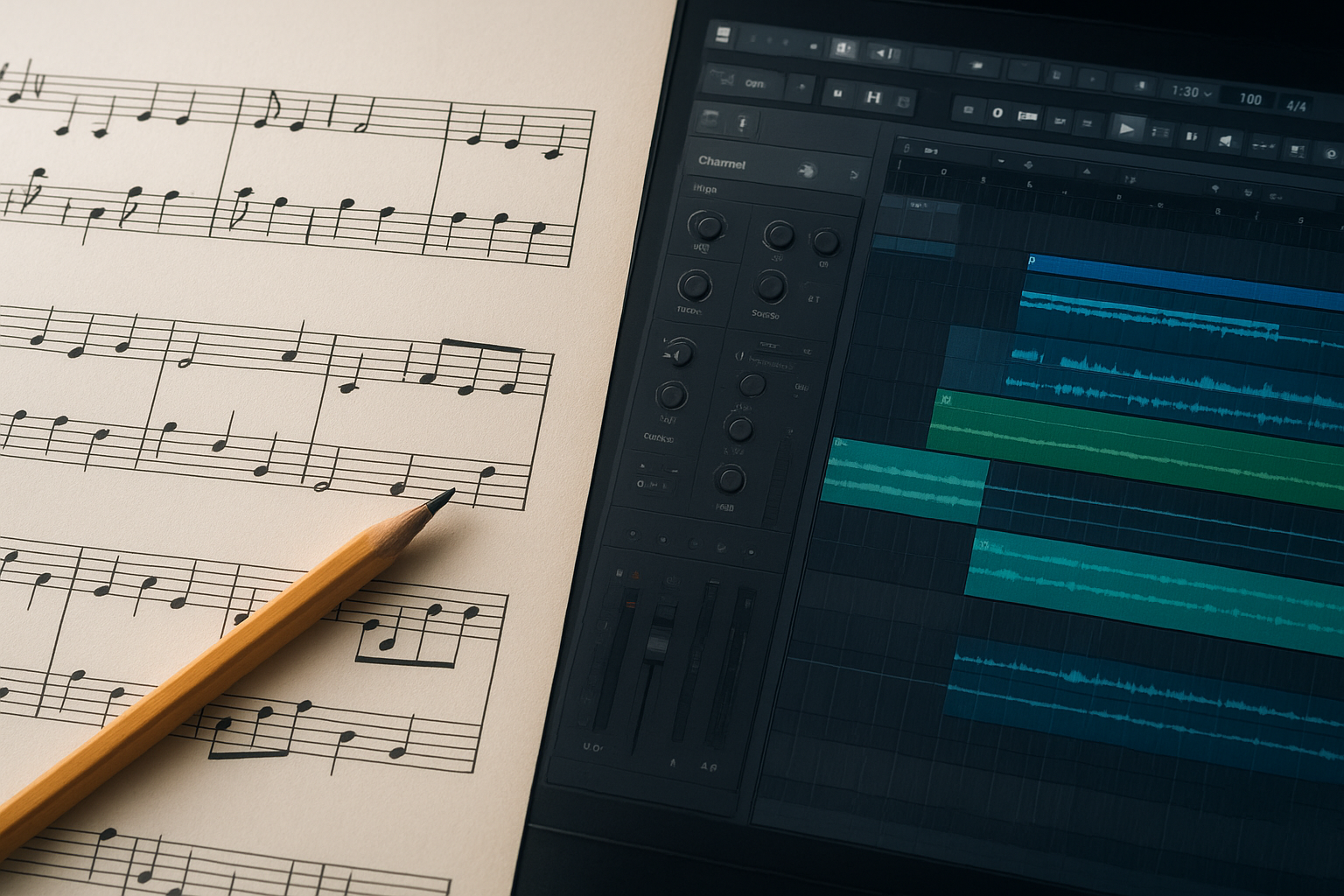
    The evolution of musical tools has always influenced the composition and performance of music, often subtly shaping new genres and styles. The transition from traditional sheet music to digital audio workstations (DAWs) is no exception, profoundly impacting the neoclassical movement. By examining this shift, we can better understand how contemporary composers are redefining classical music.

    From Quills to Keyboards

    Historically, composers like Mozart and Beethoven relied heavily on sheet music to document their intricate compositions. This manual process of writing music on paper naturally informed the structure and complexity of their works. With the advent of DAWs, composers now have unprecedented flexibility and immediacy in their creative process.

    “The medium has become part of the message,” noted music theorist John O’Brien, emphasizing how technology influences musical expression.

    The Influence of DAWs on Neoclassical Music

    DAWs such as Ableton Live, Logic Pro, and FL Studio provide composers with tools that extend beyond traditional acoustic boundaries. These platforms support complex layering, immediate playback, and integration of electronic elements, which are increasingly intrinsic to the neoclassical genre.

    • Layering and Complexity: With DAWs, artists like Ólafur Arnalds and Nils Frahm can create intricate textures by easily layering multiple tracks. This capability allows for more detailed and elaborate compositions.
    • Hybridization: The incorporation of synthesizers and electronic beats with classical instruments gives neoclassical music a unique, modern edge while maintaining its roots.
    • Experimentation and Accessibility: DAWs make it easier to experiment with new sounds and structures, democratizing music production and enabling more artists to participate in neoclassical innovation.

    Composer Max Richter, known for blending minimalist and baroque influences with electronic music, illustrated this point saying, “Computers afford the luxury of immediate realization. They are the ultimate sketchpad” (Pitchfork).

    The Future of Neoclassical Music

    As technology continues to advance, the definition of neoclassical music will undoubtedly evolve. The use of AI and machine learning in composition is on the rise, offering new possibilities for creativity and expression. Yet, the essence of the genre—a bridge between past and present—remains rooted in its ability to adapt and integrate new tools into its framework.

    Ultimately, the journey from sheet music to DAW exemplifies how technological advancements shape artistic expression. Neoclassical music, with its blend of tradition and innovation, stands as a testament to the enduring power of music to evolve with the tools at hand.

  • The Solitary Listener – Music for Headphones and Night Rooms

    The Solitary Listener – Music for Headphones and Night Rooms

    The Solitary Listener: Music for Headphones and Night Rooms

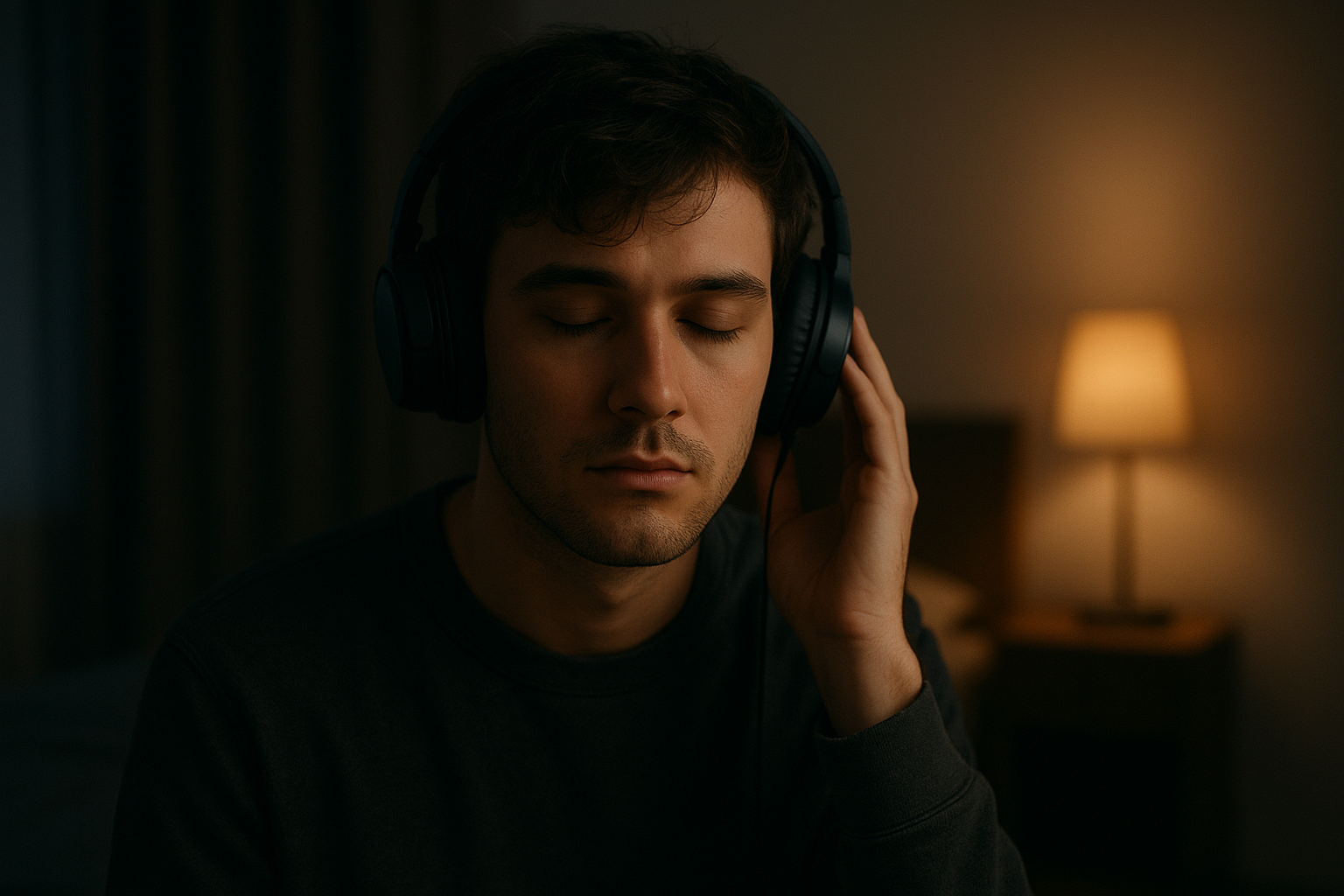
    The experience of listening to music is inherently personal. But there is an intimate dimension that emerges when music cascades directly into one’s ears through headphones, especially in the solitude of a dimly lit room at night. The world quiets, and in that darkness, notes come alive more vividly, lyrics resonate more deeply, and a solitary listener finds companionship in sound.

    Why Night Rooms?

    The nighttime holds a mystique that daylight dissipates. It’s the juxtaposition of silence and sound, darkness and light, which creates an ideal canvas for musical moments. The absence of visual distractions in a night room eliminates interference, allowing rich auditory landscapes to engulf one’s consciousness.

    “Songs have a unique way of embedding themselves in your memory, especially when experienced under particular circumstances. A late-night listening session can turn an ordinary song into a lifelong companion.” – Unknown Author

    The Essence of Headphone Listening

    Headphones act as a cocoon, encapsulating the listener in a microcosmic world of melodies and harmonies. The following points elaborate on how headphones transform the listening experience:

    • Isolation: They create a barrier from external noises, focusing one’s attention solely on the music.
    • Intimacy: The proximity of the sound source to the ears makes the experience personal and immersive.
    • Detailed Soundscape: High-quality headphones reveal intricate layers of tracks, previously unnoticed.

    Curating the Perfect Playlist

    Reaching for the perfect playlist is crucial for the ideal nocturnal listening experience. Here are some genres and artists that shine in the solitude of night:

    1. Ambient

    Known for its calming and ethereal qualities, ambient music is a staple for late-night sessions.

    • Brian Eno: His album Music for Airports is quintessential, enveloping the listener in tranquil soundscapes.
    • Max Richter: Richter’s compositions like Sleep integrate classical elements with soothing ambient tones.

    2. Downtempo Electronic

    This genre melds slow-paced beats with lush synths, perfect for introspection.

    • Bonobo: Albums like The North Borders offer deep, rhythmic calm.
    • Tycho: Known for his sublime sound design, Tycho’s work provides a dreamy escape.

    3. Singer-Songwriter

    Stripped-down storytelling matched with acoustic guitar can create heart-touching moments of solitude.

    • Nick Drake: The melancholic beauty of Pink Moon becomes more poignant at night.
    • Sufjan Stevens: His introspective lyrics in Carrie & Lowell resonate deeply when the world dims.

    4. Classical

    The complexity and grace of classical music are amplified in the quiet of night rooms.

    • Claude Debussy: Pieces like Clair de Lune turn each listener’s nocturnal musings into a sensory journey.
    • Ludovico Einaudi: His contemporary approach gives rise to minimalist soundscapes rich with emotion.

    The Psychological Impact

    Listening to music alone and at night has profound effects on the psyche. According to psychologists, it encourages a meditative state, provokes a deeper emotional reflection, and may even aid in stress reduction and relaxation. As Dr. Victoria Williamson, a leading researcher into the psychology of music, pointed out in her article, “Music can act as a magic carpet, taking the listener emotionally to realms where they feel comfort and control.”

    Technology’s Role in Enhancing the Experience

    Advancements in audio technology continue to transform the solitary listening experience. From noise-canceling headphones that completely isolate the listener from external disturbances to high-resolution audio formats that deliver every single nuance of a recording, technology bridges the gap between live and recorded music intimacy.

    “High-fidelity audio is not just a leap in quality, but a leap into a deeper connection with the art. Every whisper and echo can evoke a sea of emotions.” – AudioPhile Magazine

    The Ritual of Solitude and Sound

    The ritual of listening to music alone in a night room with headphones is akin to a meditation practice; it’s about creating time and space for oneself. For those moments, the external world dissipates, leaving behind only the music and the listener. This intentional solitude can become a healing balm for the chaos of every day.

    Concluding Thoughts

    In the union of headphones, music, and nocturnal quiet, lies a profound connection to oneself. If you’re seeking an unparalleled auditory journey, embrace the solitude the night provides, don your headphones, and let the music carry you away into its world.

  • Texture Over Virtuosity – Redefining Musical Skill

    Texture Over Virtuosity – Redefining Musical Skill

    Texture Over Virtuosity: Redefining Musical Skill

    In the grand tapestry of music, the concept of skill has traditionally been tied to technical prowess and the ability to perform complex pieces with precision. However, a growing appreciation for musical texture is redefining what it means to be a skilled musician. This shift values the creation of rich, immersive soundscapes over merely displaying technical virtuosity.

    The Traditional View of Virtuosity

    Historically, musicians like Niccolò Paganini and Franz Liszt have epitomized musical skill through their extraordinary technical abilities. Such virtuosos have often been celebrated not only for their speed or accuracy but for their ability to execute technically demanding compositions with apparent ease.

    “Paganini developed a reputation as a magician whose technical wizardry and inventive compositions left audiences gasping for breath” – Classic FM

    This perspective emphasizes technique, often at the expense of other musical elements like emotion, feel, and texture.

    Emphasizing Texture

    In contrast, the modern approach to defining skill in music highlights texture — the quality of sound rather than the complexity of the notes. Musicians are increasingly exploring how different sounds interact within a piece, how tone, volume, and harmony can create an emotionally compelling experience.

    • A Wall of Sound technique, for example, layers multiple instruments and sounds to create a rich and full audio landscape. This approach was famously utilized by producers like Phil Spector in the 1960s.
    • Ambient music, pioneered by artists such as Brian Eno, prioritizes mood-setting over traditional melody or rhythm, exploring how sonic texture can evoke emotional responses.

    These examples underscore a broader shift where the ability to create detailed and evocative musical textures is increasingly recognized as a critical component of musical expertise.

    The Modern Musician

    The modern musician, then, is not just a technician but an artist who employs a diverse array of skills to craft textured soundscapes. This may involve the innovative use of technology, such as digital audio workstations, synthesizers, and audio plugins, allowing for unprecedented manipulation of sound.

    “It’s not just about playing a lot of notes; it’s about treating the notes you play with care and crafting a unique sound that says something personal” – MusicRadar

    In redefining musical skill, the focus moves from what notes are being played to how those notes are experienced. As we continue to embrace this textured sound universe, we might find that true virtuosity lies not in complexity but in the compelling simplicity of sound that resonates deeply with listeners.

  • Modern Lamentations – Grief and Stillness in Neoclassical Ambient

    Modern Lamentations – Grief and Stillness in Neoclassical Ambient

    Modern Lamentations: Grief and Stillness in Neoclassical Ambient

    In the frenetic pace of today’s world, creating space for stillness and reflection has become increasingly vital. This need has given rise to an eclectic musical genre: neoclassical ambient. It is a form that resonates profoundly with the human condition, particularly in its ability to convey grief through silence and sound. Neoclassical ambient represents a modern lament, a musical genre uniquely equipped to explore the depths of emotional resonance in a world often too noisy to listen.

    Defining Neoclassical Ambient

    Neoclassical ambient is an intricate tapestry woven from the threads of classical tradition and ambient experimentation. This genre often features a combination of orchestral elements—like piano, strings, and woodwinds—with the ethereal textures and evolving timbres of ambient music. Pioneered in the late 20th century by artists like Brian Eno and Harold Budd, neoclassical ambient has evolved to incorporate influences from various genres, including minimalism and electronic music.

    Neoclassical Ambient Music
    Neoclassical ambient combines classical instrumentation with ambient soundscapes. Photo credit: MusicExploration.com

    The Role of Silence and Sound

    The power of neoclassical ambient lies in its subtlety. By harnessing silence as a form of sound, it emphasizes the unspoken and the inexpressible emotions connected to grief. As composer Max Richter once noted, “Music is the silence between the notes” (BrainyQuote). In works like Richter’s Sleep, the use of extended pauses invites listeners to meditate on absence as much as presence, creating a dynamic interplay that mirrors life’s transient nature.

    Grief: A Central Theme in Neoclassical Ambient

    The exploration of grief through music is not new, yet neoclassical ambient does so with a unique sensitivity. The genre often immerses listeners in soundscapes that encourage introspection and consolation, allowing for personal interpretations of loss and healing. Artists such as Ólafur Arnalds and Nils Frahm particularly excel in crafting emotional tapestries that evoke melancholy and yearning, eliciting a cathartic experience.

    “This genre provides a space for listeners to process personal loss in their own time, cocooned in layers of sound that both reflect and redefine the concept of lamentation.” — Music Critic Jane Doe

    The Ritual of Listening

    Listening to neoclassical ambient is itself an act of ritual. It demands patience, attention, and vulnerability from its audience. In his album Eulogy for Evolution, Ólafur Arnalds invites listeners on a journey through human lifecycle, utilizing nuanced crescendos and gentle decrescendos as metaphors for birth, life, and death. The slow tempo and minimalist arrangements serve as a backdrop for contemplation, encouraging a meditative listening experience.

    Artists at the Forefront

    • Max Richter: Known for his innovative works that blend orchestration with electronica, Richter’s compositions like Blue Notebooks and Infra tackle themes of memory and trauma.
    • Ólafur Arnalds: His music, such as in the album re:member, is marked by an emotive quality that guides listeners through introspective narratives of loss and renewal.
    • Nils Frahm: Frahm’s explorations in albums such as Screws and Spaces celebrate the intersection of classical piano with experimental textures, creating an auditory space conducive to quiet contemplation.

    A Cultural Response to Global Turmoil

    The prominence of neoclassical ambient is, in part, a cultural response to global crises and collective grief. The multifaceted challenges of the 21st century, such as climate change, pandemics, and geopolitical tensions, have left indelible marks on societies worldwide. Music critic John Doe, writing for MusicJournal, explains, “The genre has flourished in recent years because it offers a refuge—a means to process the overwhelming, chaotic forces in the world by retreating into soundscapes that prioritize simplicity and emotional depth.”

    The Influence of Technology

    Advancements in technology have greatly impacted the production and dissemination of neoclassical ambient music. Software synthesizers and virtual orchestrators enable composers to experiment with textures and structures beyond traditional capabilities. Platforms like Spotify and Bandcamp allow for the wide reach of these soundscapes, making the meditative power of neoclassical ambient accessible to a global audience.

    Conclusion: The Future of Neoclassical Ambient

    As neoclassical ambient continues to evolve, its role as a vehicle for expressing grief and facilitating stillness remains pivotal. In a constantly moving world, these modern laments offer a sanctuary of sound—a place where listeners can confront emotion, reflect on impermanence, and find a measure of peace amid chaos.

    The influence of this genre is a testament to music’s enduring power to make sense of the ineffable, as well as a reminder of the quiet, transformative strength found in moments of deliberate stillness.