Category: Uncategorized

  • The Shape of Emotion – How Classical Form Builds Psychological Journeys

    The Shape of Emotion – How Classical Form Builds Psychological Journeys

    In the realm of art and architecture, form often dictates function. However, when we dive into the classical structures of music and literature, we find that form can also craft a rich tapestry of emotional and psychological journeys. This intricate dance between structure and sentiment invites us to explore how classical forms serve as the backbone for our deeply human experiences.

    The Architecture of Emotion

    Classically structured works, like those of Beethoven or Shakespeare, use specific forms to guide emotional progression. Sonata form, for instance, is celebrated for its unique ability to outline a narrative arc within instrumental music. Composed of three main sections—exposition, development, and recapitulation—this form mirrors a psychological journey, taking us through tension, exploration, and resolution.

    “Music expresses that which cannot be put into words and that which cannot remain silent.” – Victor Hugo

    In similar fashion, the classical five-act play, employed by playwrights such as William Shakespeare, presents a structured journey: exposition, rising action, climax, falling action, and denouement. Each act builds upon the last, shaping the audience’s emotional journey as it unfolds.

    The Emotional Blueprint

    But why do these forms resonate so deeply with our emotions? The answer lies in the predictability and order they offer amidst the complexities of narrative. According to The Atlantic, “Classical forms provide a framework within which the messy, often unpredictable symphony of human emotion can find structure.”

    These forms act as a psychological anchor, providing reassurance through their familiarity. The listener or reader can forecast the trajectory of the narrative or musical piece, allowing them to relate to the subtler nuances of character development or thematic evolution.

    A Contemporary Take

    Modern creators continue to innovate within these classical frameworks. As observed by The Guardian, composers and authors have embraced and expanded these traditional shapes—sometimes adhering closely to the form; other times, deconstructing it entirely.

    The very essence of emotion, after all, is not to be constrained, but rather to be explored and expressed. Yet, it is within these timeless structures that artists can channel overwhelming emotions into something universally relatable and profound.

    Ultimately, whether in the grandeur of a symphony or the intricate layers of a novel, classical forms offer more than just a framework—they offer a journey. As we immerse ourselves in these age-old structures, we are invited to travel alongside the artists, experiencing their worlds through the well-crafted paths of emotional exploration.

  • AI as a Modern Apprentice – Classical Reinventions in the Digital Era

    AI as a Modern Apprentice – Classical Reinventions in the Digital Era

    AI as a Modern Apprentice: Classical Reinventions in the Digital Era

    The digital age has ushered in advancements in technology that have revolutionized many aspects of modern life. Among these advancements, Artificial Intelligence (AI) stands out as a particularly transformative force. In many ways, AI has come to function as a modern apprentice, learning and evolving to meet the diverse needs of today’s world. Just as apprenticeships in the classical era provided hands-on learning experiences that were pivotal for the development of skills, AI is now embarking on a similar journey, reinventing classical roles in unexpected and profound ways.

    AI’s Role as a Modern Apprentice

    Traditionally, apprenticeships involved young learners studying under experienced mentors to gain practical, hands-on training in a particular field. In the digital era, AI acts as the apprentice by absorbing vast amounts of data and learning from its environment to collaborate with humans.

    • Healthcare: AI is revolutionizing the medical field by taking on tasks such as diagnostics and personalized treatment plans. For instance, AI algorithms can analyze medical imaging with remarkable accuracy, identifying conditions that might elude even seasoned professionals. The study published in Nature demonstrated that AI could outperform human radiologists in detecting breast cancer in mammograms.
    • Finance: In finance, AI systems perform complex trading tasks, risk assessments, and fraud detection. By learning continuously, these systems provide insights and predictions that would typically require years of human experience.
    • Education: AI-based personalized learning platforms are remaking education by catering to individual student needs, learning paces, and styles. This personalized attention mimics an apprenticeship model where the “apprentice” AI analyzes and adapts information for optimal learning outcomes.

    The Evolution of Apprenticeships in the AI Era

    The essence of an apprenticeship lies in continuous learning and adaptation—abilities that AI excels at. As AI systems become more sophisticated, they offer capabilities that mirror those of human apprentices, albeit at a much larger scale. According to the McKinsey Global Institute, AI could potentially deliver additional global economic activity of around $13 trillion by 2030, boosting global GDP by about 1.2% a year.

    “AI is becoming capable of performing tasks that have historically required human judgment, decision making, and analysis,” says the report from McKinsey.

    Challenges and Ethical Considerations

    As AI continues its path as the modern apprentice, it also poses certain challenges:

    • Bias and Fairness: AI systems are trained on data that can sometimes reflect human prejudices. Ensuring that these systems remain fair and unbiased is a significant challenge that requires ongoing attention.
    • Job Displacement: The automation of tasks traditionally performed by humans raises concerns about job displacement. While AI can improve productivity, it also necessitates a continuous discussion about the reorientation of labor.
    • Ethical Frameworks: The deployment of AI technologies must be guided by robust ethical frameworks. As AI systems often make decisions that affect human lives, these frameworks are crucial for ensuring that AI acts as a responsible apprentice.

    AI and Human Collaboration

    The ultimate goal is not to replace human intellect and creativity but to enhance them. The synergy between AI and human expertise allows new dimensions of innovation to emerge. This collaborative dynamic creates a new breed of ‘machine-aided apprentices’ where AI assists in tasks, giving humans more time to focus on creative and complex problem-solving aspects. “The future of AI is not about man versus machine, but rather min and machine working together,” says Soumitra Dutta, a professor at Cornell University.

    Conclusion

    As AI continues to develop, its role as a modern apprentice becomes ever more critical. By learning from data, methods, and its own experiences, AI is reinventing traditional roles across various industries. The collective aspirations to build intelligent systems that collaborate effectively with humans will ensure that AI thrives not as a competitor but as an apprentice, ultimately leading to breakthroughs that were once thought impossible.

    Thus, the digital era presents a unique opportunity to reimagine and reinvent the age-old concept of apprenticeships through AI, heralding a new age of learning and growth.

  • Polyphony as Prayer – Sacred Layers in Renaissance and Classical Writing

    Polyphony as Prayer – Sacred Layers in Renaissance and Classical Writing

    The Renaissance and Classical periods gifted the world with a splendid array of musical expressions. Among these, polyphony stands out as a powerful form of musical composition that evokes the divine. At its core, polyphony in music is akin to layers of prayer, intertwining to create a tapestry of sacred sound.

    The Essence of Polyphony

    Polyphony refers to the simultaneous combination of two or more independent melodies, each given equal value. This technique flourished during the Renaissance period, with composers like Giovanni Pierluigi da Palestrina and Josquin des Prez leading the charge. Their compositions are characterized by a harmonic balance that invokes a sense of spiritual reflection.

    “The term polyphony is used to describe a texture consisting of two or more independent melodic voices, as opposed to music with just one voice (monophony) or music with one dominant melodic voice accompanied by chords (homophony).” — Wikipedia

    Sacred Influence in Musical Layers

    In many ways, polyphonic music acts as an auditory symbol of prayer. Each voice in a polyphonic work can be imagined as an individual’s prayer, rising and intertwining with others to form a communal hymn. The overlapping melodic lines require meticulous balance, akin to balancing spiritual introspection and communal worship.

    • Renaissance Influence: During the Renaissance, polyphony reached its peak with sacred music forms, particularly in the mass and motet. The complexity and beauty of these compositions were deemed worthy of the divine. Palestrina’s Missa Papae Marcelli is a quintessential example.
    • Classical Integration: Moving forward to the Classical era, composers like Johann Sebastian Bach, though technically Baroque, laid foundational structures that influenced classical polyphony. His works, filled with intricate counterpoints, often reflected deep religious devotion and have been interpreted as forms of prayer in sound.

    The Legacy of Sacred Layering

    Polyphony’s role as a musical prayer extends beyond its original contexts, inspiring modern compositions and broadening our understanding of the spiritual in sound. This sacred layering fosters a connection between the earthly and the divine, reminding us of music’s eternal ability to echo the spiritual experiences of humanity.

    The legacy of polyphony reveals how music transcends temporal boundaries, continuing to serve as both a mirror and a conduit for spiritual reflection. In today’s fast-paced world, the serene and contemplative nature of polyphonic music offers a haven for the soul.

  • Beethoven’s Spiritual Volcano – The Fire Beneath the Late Quartets

    Beethoven’s Spiritual Volcano – The Fire Beneath the Late Quartets

    Beethoven’s Spiritual Volcano – The Fire Beneath the Late Quartets

    The late string quartets of Ludwig van Beethoven, composed during the last years of his life, stand as both a monumental achievement in Western music and a deep exploration into the human spirit. These works, considered revolutionary and transcendental, were written at a time when Beethoven was completely deaf and facing personal and health challenges. They reflect an inner spiritual tumult akin to a dormant volcano, churning with complexity and emotional depth.

    Beethoven’s Journey to the Late Quartets

    By the time Beethoven embarked upon his late quartets, his life was marked by profound transformations. He had long moved beyond the stylistic innovations of his earlier works. The late quartets include:

    • Op. 127 in E-flat major
    • Op. 130 in B-flat major
    • Op. 131 in C-sharp minor
    • Op. 132 in A minor
    • Op. 133 – the “Grosse Fuge”
    • Op. 135 in F major

    Yet, the striking factor was not merely their innovative composition but the spiritual contemplation that defined their substance. Beethoven’s deeply personal turmoil and spiritual reflections are practically audible. Musicologist Joseph Kerman describes these quartets as “an unbroken line from desperate struggle to spiritual breakthrough.”

    Influences and Inspirations

    Beethoven’s life during the composition of these quartets was resplendent with both physical and existential challenges. His increasing deafness had stripped tangible musical experience, leaving only his intellectual vision and inner ear. Adding to this was his turbulent personal life, exemplified by legal battles over the custody of his nephew Karl and the persistent ailments plaguing him.

    Beethoven’s interest in the philosophical and literary movements of the time infused his work with a deeper existential essence. His affinity for the works of Johann Wolfgang von Goethe, Friedrich Schiller, and Immanuel Kant provided an expansive emotional palette from which he bravely drew.

    The Spirit of Experimentation

    Contrary to fulfilling the expectations of his contemporaries, Beethoven embarked on an audacious path of structural and harmonic innovation. The Grosse Fuge, originally the final movement of Op. 130, is a shining example of his rebellious spirit. It serves as a testament to Beethoven’s relentless pursuit of evolving musical forms, characterized by extreme complexity and an uncompromising sense of resolution.

    “This is not music for bringing the weary soul tranquil peace, but music that compels attention, that makes the hearer witness the birth of an entire new order,” writes Maynard Solomon in his comprehensive biography of Beethoven.

    Inner Struggle and Transcendence

    The late quartets stand as mythic narratives—each note meticulously crafted to illustrate his internal battleground. For instance, the Adagio of Op. 132, described as a “Holy Song of Thanksgiving from a Convalescent to the Deity,” is a deeply spiritual journey. Its ethereal quality is a reflection of Beethoven’s gratitude after surviving a serious illness, enveloping the listener in its meditative serenity before rising into exuberant relief.

    The Legacy of the Late Quartets

    Although initially baffling to audiences and players alike, these quartets have, over time, become cornerstones of chamber music repertory. Their success is measured by their ability to continually unveil profound depths to new generations of listeners and musicians. “They seem to me eternal,” noted Igor Stravinsky about them, highlighting their perpetual modernity.

    In their timeless nature, the late quartets resonate as powerful testaments to human endurance and resilience. Beethoven’s musical form, like the spirit beneath a volcano, reveals both devastation and rebirth. His late works speak eloquently about the creative spirit’s ability to transcend personal hardship, forever altering the landscape of musical understanding.

    The complexity, obscurity, and spiritual insight of these quartets leave a legacy akin to whispers from an ancient god—complex, mysterious, and filled with knowledge beyond its time. Beethoven transformed personal tribulation into artwork that speaks profoundly to the continuity of human inquiry and art’s potential to mirror the furious inner dialogues of the human soul.

    Conclusion

    The late string quartets of Ludwig van Beethoven not only epitomize a pinnacle of musical genius but also encompass the breadth of human spiritual endeavor under the most arduous circumstances. Emerging from the struggles that Beethoven faced, these works stand as reverberating echoes of a soul that refused to be silent, thus providing a model of resilience and inspiration that continues to ignite passionate discourse among musicians and scholars alike. They confirm Beethoven’s belief, as quoted in a letter to a friend, that “Music is the one incorporeal entrance into the higher world of knowledge which comprehends mankind but which mankind cannot comprehend.”

  • Orchestral Color Alchemy – Transforming Emotion Through Instrumentation

    Orchestral Color Alchemy – Transforming Emotion Through Instrumentation

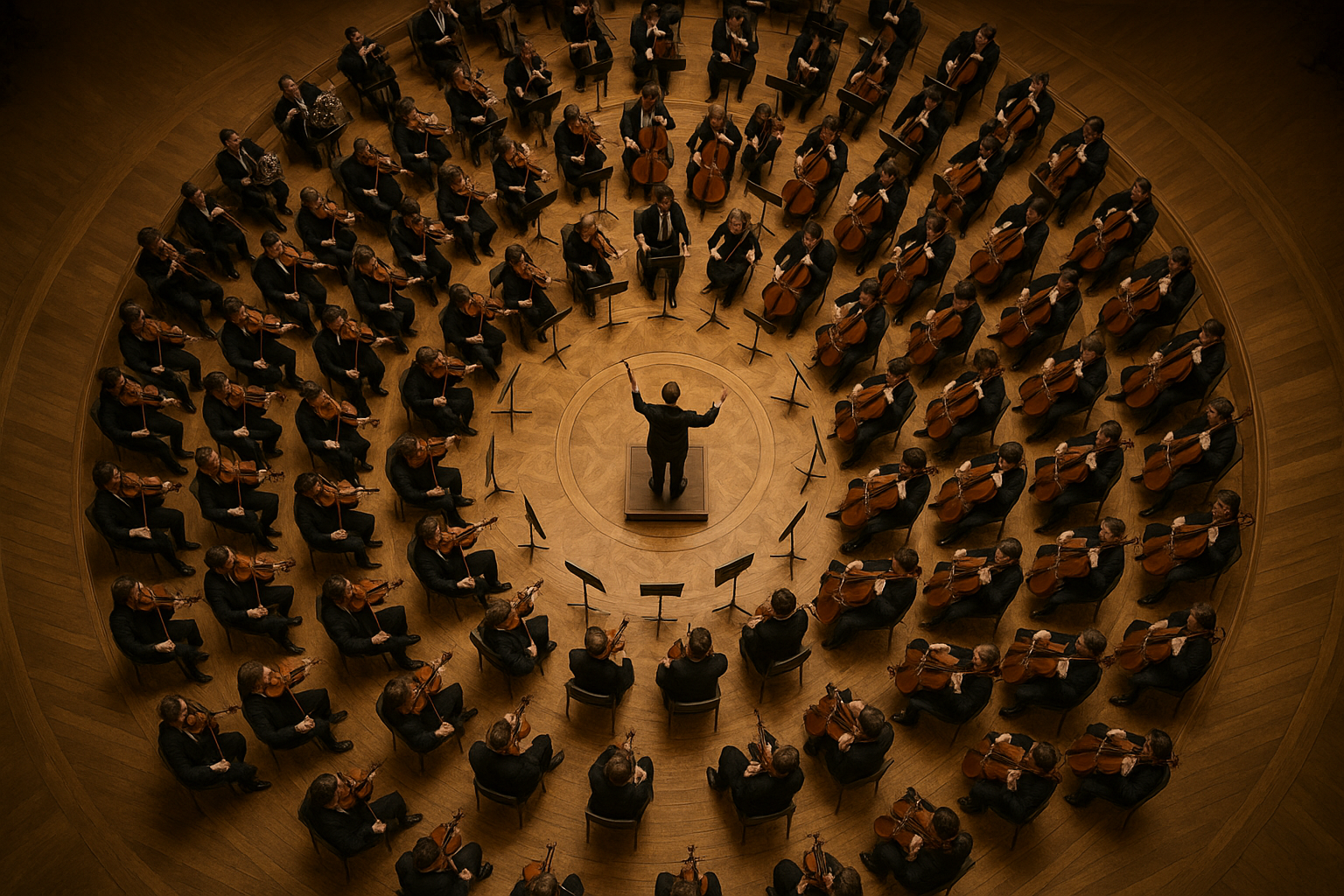
    Music has the profound ability to evoke emotions, tell stories, and transform atmosphere. At the heart of its expressive power lies the art of orchestration – the masterful arrangement of music for an orchestra, which turns simple melodies into grand symphonies of emotive force. This process, often described as “orchestral color alchemy,” involves the combination of diverse instrument sounds to create specific tonal colors and emotional textures. Through expert orchestration, composers direct the emotional journey of their audience, transforming abstract notes on a page into vivid experiences.

    The Alchemy of Instrumentation

    In orchestral music, each instrument possesses a unique timbre, or tonal quality, which contributes to the overall color of the orchestra. This diversity allows composers to use instruments in much the same way a painter uses different hues.

    • Strings: Often the backbone of the orchestra, string instruments can convey a wide range of emotions. The violin, with its bright and penetrating sound, can cut through the texture to express intense passionate melodies, while the cello adds warmth and depth with its rich tones. The double bass, on the other hand, provides the essential grounding bass line with a majestic and sometimes foreboding presence.
    • Woodwinds: These instruments are known for their ability to add unique colors and textures. The clarinet, for example, has a versatile sound that can be dark and mysterious or light and playful. The flute floats over the orchestra like a shimmering feather, often used to evoke lightness and airiness. The oboe, with its piercing and poignant sound, is often used to convey melancholy and solitude.
    • Brass: Known for their powerful and triumphant sound, brass instruments such as the trumpet and trombone are frequently utilized for their ability to project a commanding sound over the orchestra. The French horn, with its warm and rich tones, often suggests nobility and grandeur or quiet introspection.
    • Percussion: Percussion instruments are integral to the orchestral palette, adding rhythm, texture, and accentuation. From the dramatic roll of a timpani to the delicate shimmer of a triangle, percussion can evoke a wide range of emotions, from suspense and excitement to whimsy.
    • Keyboards: While not always a permanent fixture in the orchestral ensemble, keyboards such as the piano and celesta add unique dimensions. The piano offers a vast range of dynamics and is often used for solos that require introspection or delicacy. The ethereal tones of the celesta, as famously used by Tchaikovsky in “Dance of the Sugar Plum Fairy,” create an enchanting and magical atmosphere.

    Crafting Emotional Landscapes

    Composers use the interplay of these instrumental colors to craft intricate emotional landscapes. By blending the various sections, they can emphasize certain emotions, create tension or release, and guide the audience’s emotional responses. The decision of which instrument carries the melody or harmony, and how brightly it is painted against the orchestral canvas, is crucial in transforming an ordinary passage into a poignant moment of emotional impact.

    “The possibilities of instrumentation are infinite; they require not only a profound theoretical understanding but also a natural intuition for sound and nature’s moods,” said Hector Berlioz, a pioneer in orchestration and a prominent Romantic composer.

    Examples of Emotional Orchestration

    Several famous compositions exemplify the power of orchestration in evoking emotion.

    • Gustav Mahler’s Symphony No. 5: Mahler uses the full spectrum of orchestral color to convey a wide range of emotions throughout the symphony. Particularly in the fourth movement, the “Adagietto” for strings and harp, the composer creates an intimate and introspective atmosphere that evokes a profound sense of longing and beauty.
    • Igor Stravinsky’s “The Firebird”: Stravinsky’s ballet suite showcases his revolutionary use of orchestration to create vivid and vibrant soundscapes. The “Infernal Dance” features bold brass and percussion that convey a wild, unyielding energy, while the finale employs soaring strings and triumphant brass to achieve a sense of victory and transcendence.
    • Claude Debussy’s “Prélude à l’après-midi d’un faune”: Debussy’s masterful blending of woodwinds and strings creates a dreamlike, floating effect, thereby evoking the languid and sensual imagery of a faun’s afternoon dreams.
    • John Williams’s Soundtracks: Renowned for his work in the film industry, John Williams has created some of the most memorable orchestral scores. In “Star Wars,” Williams uses lush, full-bodied strings and heroic brass themes to create an epic sense of adventure, perfectly matching the grand scale of the films.

    The Science and Art of Orchestral Balance

    A key aspect of orchestration is balance—ensuring that the various sections blend together to form a cohesive sound without overpowering one another. This balance requires a deep understanding of acoustics and the physical properties of sound.

    “Orchestration is the most delicate balance between power and nuance, between the roar of the full orchestra and the whisper of a single instrument,” remarked Leonard Bernstein, whose insights on orchestration continue to inspire musicians today.

    To achieve this balance, composers adjust the dynamics and articulation of each instrument. A skilled orchestrator will know how to use silence as effectively as sound, understanding when to allow an instrument to fade into the background or step forward into the spotlight. This modulation of sound creates dynamic variety, which enhances the dramatic effect of a performance.

    Innovations and Future Directions

    Modern orchestration continues to evolve, incorporating new technologies and blending traditional orchestral instruments with electronic elements. Contemporary composers experiment with live electronic manipulation and digital sampling to expand the aural palette. As composers push the boundaries of traditional orchestration, new works explore hybrid soundscapes that appeal to a broad, modern audience.

    In this digital age, orchestration embraces both tradition and innovation, maintaining the profound emotional impact of music while exploring new sound possibilities. The alchemy of orchestration continues to evolve, enchanting audiences through the universal language of music.

    For more on the magic of orchestration and its impact on emotions, explore this detailed guide by Classic FM.

    In conclusion, the transformative power of orchestration lies in its ability to manipulate the orchestral palette skillfully, crafting experiences that resonate on a deeply emotional level. An ever-evolving art form, orchestration remains a testimony to the boundless creativity of composers as they paint with sound to capture the myriad emotions of the human experience.

  • The New Classical Producer – Blending Tradition with Machine Creativity

    The New Classical Producer – Blending Tradition with Machine Creativity

    In a world where technology continually reshapes traditional practices, classical music has not been immune to these changes. From collaborative performances via Zoom to virtual orchestras, the classical music sphere is exploring the fine line between human genius and machine innovation. Enter the new classical producer: a figure at the intersection of traditional artistry and cutting-edge technology.

    The Evolution of Classical Music Production

    For centuries, classical music has been associated with the stalwart dedication of composers like Beethoven, Mozart, and Tchaikovsky, whose works are still celebrated worldwide. Fast forward to today, and the process of creating and producing classical music is undergoing a transformation.

    The integration of modern technology into classical music production is creating new opportunities and challenges. As noted by The Guardian, “Technology offers the possibility of not only expanding the audience for classical music but also transforming the very way it is created.”

    Artificial Intelligence: Partner or Adversary?

    One of the most groundbreaking developments in this transformation is the use of Artificial Intelligence (AI). AI systems are now capable of composing music, conducting orchestras, and even producing entire symphonic pieces. The potential for these technologies to assist and inspire human composers is vast.

    However, this raises a critical question: Will AI overshadow human creativity in classical music? A report by The New York Times emphasizes, “Rather than competing against human musicians, AI serves as a tool that enhances their creativity, allowing for new forms of collaboration.”

    Blending Tradition with Technology

    Producers today must skillfully blend the rich traditions of classical music with modern machine creativity. Here are some key aspects where this blend is becoming evident:

    • AI-Assisted Composition: Producers are using AI to generate new compositions, offering a fresh perspective while preserving classical structures.
    • Digital Orchestration: Technology allows for digital simulations of orchestras, enabling compositions that might otherwise be impossible to hear live.
    • Interactive Concert Experiences: Virtual and augmented reality are being used to create immersive experiences that allow audiences to engage with the music in innovative ways.

    Artificial Creativity: Friend or Faux?

    Embracing AI in classical music also presents a philosophical dilemma: what does it mean for a piece of music to be “authentically” classical if machines contribute to its creation?

    “The question of authenticity in AI-generated music is not merely academic. It challenges our concepts of creativity and originality,” notes Music Professor Elena Georgiou from the University of Musicology.

    Proponents argue that machine creativity doesn’t undermine human involvement but rather augments it, providing new tools for expression. Critics, however, fear a future where the human touch becomes overshadowed by algorithmic art.

    The Collaborative Future

    The integration of AI in classical music production suggests a collaborative future where humans and machines work hand in hand. This symbiotic relationship can lead to a unique form of music creation, where AI-generated ideas are shaped and refined by human artistry.

    Composer and producer Anthony Braxton stated in a recent interview with Classical Music Magazine, “AI should be seen as a co-composer—one that provides endless variations and perspectives which may have otherwise been unseen.”

    The Impact on Musicians and Audiences

    For musicians, this technological shift requires adaptation. Learning to work with AI tools could become as essential as mastering an instrument. Similarly, audiences may also need to expand their understanding and appreciation, recognizing the role technology plays in shaping the music they hear.

    Overall, the technological evolution in classical music production invites both musicians and listeners to question and expand their concepts of art and creativity.

    Conclusion

    The new classical producer stands at a fascinating crossroad of past and future, blending the time-honored artistry of classical music with the groundbreaking innovations of AI technology. As the lines continue to blur between traditional and machine creativity, one thing remains certain: the core of classical music, its ability to move and inspire, will remain timeless.

  • The Composer’s Inner Vision – Mystical Experiences Behind Masterpieces

    The Composer’s Inner Vision – Mystical Experiences Behind Masterpieces

    Throughout history, many composers have been inspired by events and experiences beyond the ordinary. These mystical and transcendental experiences have often shaped the creation of some of the most profound and moving music. This article explores these unique and unexplained phenomena and how they influenced the works of celebrated composers.

    The Spiritual Awakening of Beethoven

    Ludwig van Beethoven, one of the most celebrated composers of the Western classical music tradition, grappled with a myriad of personal challenges, including his encroaching deafness. Despite these struggles, or perhaps because of them, Beethoven experienced a profound inner awakening that significantly influenced his later compositions.

    “Music is the mediator between the spiritual and the sensual life,” Beethoven declared, encapsulating his belief in the transcendent power of music.

    The Ninth Symphony, particularly the choral finale with “Ode to Joy,” is considered a manifestation of Beethoven’s spiritual vision. According to The Journal of Musicology, this piece represented a kind of universal brotherhood and peace, a message Beethoven hoped would transcend his own suffering and resonate with all of humanity.

    Messiaen’s Visions and Colours

    Olivier Messiaen, a 20th-century French composer, is renowned for his ethereal and distinctly spiritual compositions. Messiaen experienced synesthesia, a condition where one perceives numbers or letters as inherently colored. He purportedly translated these vivid personal experiences into his music, creating works that were deeply spiritual and visually inspiring.

    In a 1986 interview with The Rest is Noise, Messiaen explained, “My music is colored; if not, I do not see it…I see colors which translate in musical terms.” His masterpiece, Turangalîla-Symphonie, exemplifies this phenomenon. The symphony is described as a kaleidoscope of colors, reflecting Messiaen’s deep appreciation for the spiritual connection between sound and sight.

    Sibelius and the Finnish Landscape

    Jean Sibelius, Finland’s national composer, drew deeply from the mystical landscapes and folklore of his native country. His compositions often echo the serene and haunting beauty of Finland’s natural environment. This connection to nature is profoundly evident in his famous work, Finlandia, which paints a soundscape that captures the soul and spirit of the Finnish identity.

    “The essence of my work has always been to strive towards the mystical,” Sibelius noted in a letter to a close friend. “Nature brings me a sense of inner peace and mystical connection.”

    The composer’s symphonies, particularly the mysterious and sparse Symphony No. 7, were also heavily influenced by Finland’s natural beauty and his own personal affinity for the mystical and spiritual.

    Arvo Pärt and the Tintinnabuli Style

    Estonian composer Arvo Pärt is known for his minimalist style, known as tintinnabuli. This approach emerged after Pärt’s conversion to Orthodox Christianity in the 1970s, a time when he withdrew from public life to study medieval and Renaissance music. His spiritual and mystical experiences during this period led to compositions that resonate with a deep sense of contemplation and timelessness.

    According to The Guardian, Pärt’s music, characterized by simplicity and stillness, evokes a meditative quality that draws listeners into its spiritual and mystical depths. Works like Fratres and Spiegel im Spiegel are imbued with a luminescence that reflects Pärt’s quest for inner peace and spiritual enlightenment.

    Philip Glass and Tibetan Buddhism

    Composer Philip Glass is often associated with minimalism, but his music has been profoundly influenced by his study of Tibetan Buddhism. His opera Satyagraha, which draws from the teachings of Mahatma Gandhi, and Symphony No. 5, titled Requiem, Bardo, Nirmanakaya, explore Buddhist concepts of life, death, and rebirth.

    In a Interview Magazine feature, Glass revealed, “Buddhism teaches us about the nature of mind and reality—in my compositions, I aspire to express these complex relationships.”

    Glass’s association with Buddhism infuses his work with a reflective and meditative quality, striving to convey mystical experiences through repetitive structures and harmonic progressions.

    The Sustaining Power of Musico-Spiritual Experiences

    The intersection of music and mystical experiences offers a profound insight into the composer’s inner world. Whether through Beethoven’s spiritual resilience, Messiaen’s synesthetic visions, or Glass’s Buddhist enlightenment, these experiences have birthed masterpieces that transcend time and cultural boundaries.

    As these composers demonstrate, mystical experiences can push the boundaries of human creativity, allowing for the creation of music that not only speaks to the soul but also reaches into the metaphysical realm. In doing so, these compositions provide not just entertainment but a spiritual journey—both for the composer and the listener.

    While we may never fully understand the mystical inspirations behind the masterpieces, we are privileged to experience their transcendent beauty and power. As Messiaen once mused, “The aim of music is not to please, but to spiritualize and elevate—the ultimate aim is an awakening of one’s own spirit.”

  • Minimalism as Meditation – Finding Stillness Through Repetition

    Minimalism as Meditation – Finding Stillness Through Repetition

    Minimalism as Meditation: Finding Stillness Through Repetition

    In our fast-paced and chaotic world, the practice of minimalism emerges as a beacon of simplicity and tranquility. Minimalism, at its core, is more than just an aesthetic or a lifestyle. It is a discipline that encourages us to remove excess and focus on what truly matters. More intriguingly, minimalism can be akin to a form of meditation—where stillness is achieved through repetition and the abandonment of the unnecessary.

    The Essence of Minimalism

    Minimalism calls for a deliberate stripping away of what is superfluous, allowing for an enhanced focus on what remains. The minimalist mantra often centers on repetition—whether it be a repeated process of decluttering or the reiterative design elements found in minimalist art and architecture. This repetitive nature is akin to meditation, where one finds peace through the continuous return to a singular focus.

    Repetition as a Path to Stillness

    Repetitive actions and ideas are foundational to many forms of meditation. Much like the repetition of a mantra or a breath in meditation, minimalism uses the repetition of process and form to bring the mind to rest. The famous minimalist artist Donald Judd once said,

    “A shape, a volume, a color, a surface is something itself. It shouldn’t be concealed as part of a fairly different whole.”

    His work epitomizes how focusing on the repetition of simple forms can bring a sense of contemplation and stillness.

    Minimalist Living: A Meditative Exercise

    • Intentionality: By consciously choosing belongings and activities, minimalism aligns our environment with our personal values.
    • Simplicity: Possessing fewer material items reduces distractions, allowing the mind to rest and focus.
    • Mindfulness: The practice of minimalism fosters a mindful awareness of our choices, paralleling the state achieved in meditation.

    Minimalism and meditation both advocate for understanding what is truly essential. As in meditation, where one might sit in quiet reflection, minimalism invites an evaluation of one’s possessions and priorities. Author and minimalist proponent Leo Babauta notes,

    “Simplicity boils down to two steps: Identify the essential. Eliminate the rest.”

    This philosophy, being central to both minimalism and meditation, ultimately leads to a more serene and purposeful existence.

    Conclusion

    In essence, minimalism as meditation is not merely about reducing physical clutter but about fostering a deeper connection with our inner peace. Through the intentional repetition of essential rituals and rhythms, minimalism offers a meditative journey akin to mindfulness practice, urging us to embrace stillness amidst the noise.

    As we explore the potential of minimalism to bring about inner peace, we might find that the greatest luxuries in life come not from abundance but from clarity and simplicity.

  • The Harmonic Pilgrimage – How Composers Seek Truth Through Tonality

    The Harmonic Pilgrimage – How Composers Seek Truth Through Tonality

    The world of music is a vast ocean of sound that resonates with the deepest parts of the human experience. At the heart of this melodious journey lies tonality, a musical system characterized by the organization of pitches and chords that form the foundation of a composition. The harmonic pilgrimage of composers is a rich, enlightening journey where they delve into tonality to seek truths about the human condition and the cosmos at large.

    The Essence of Tonality

    Tonality serves as the backbone of Western music tradition, guiding listeners through a structured auditory experience. The concept is rooted in the relationships between notes and chords centered around a tonic or keynote. According to music theorist Carl Dahlhaus, “tonality is the product of the interaction between a tonal center and the relationships it generates” (Studies on Tonal Theory).

    Tonal music, deeply embedded in the Western classical canon, creates a sense of expectation and resolution. This sensation of anticipation, tension, and release is what composers have historically used to convey profound emotions and narratives, making the quest for truth through tonality a journey as old as music itself.

    Pilgrimage Through the Centuries

    • The Baroque Era: During the Baroque period, composers like J.S. Bach explored the possibilities of tonality through intricate counterpoint and harmonic progressions. Bach’s Well-Tempered Clavier stands as a monumental testament to the expressive potential of tonal music, where each prelude and fugue explores a unique emotional landscape through precise harmonic language.
    • The Classical Period: As music evolved into the Classical period, figures like Wolfgang Amadeus Mozart and Ludwig van Beethoven expanded tonal boundaries. Beethoven’s Symphony No. 9 in D minor, Op. 125, commonly known as the “Choral Symphony,” uses a tonal framework to navigate themes of struggle and triumph, culminating in the universally uplifting “Ode to Joy,” a profound statement on unity and brotherhood.
    • The Romantic Premier: The Romantic era witnessed composers stretching the limits of tonality. Franz Schubert’s harmonic innovations in Winterreise and Richard Wagner’s dramatic chromaticism in Tristan und Isolde represented a yearning for emotional depth and transcendence. Wagner’s use of the “Tristan chord” is often cited as a significant step towards the dissolution of traditional tonality.

    “The emotional power of music is fundamentally reliant on its tonal framework, which not only structures our listening experience but also our emotional responses.” — Leonard Meyer, Emotion and Meaning in Music

    Modern Reflections and Tonal Expansion

    As the 20th century dawned, the harmonic voyage took on revolutionary dimensions. Composers like Arnold Schoenberg began to question and even reject traditional tonality, leading to the development of the twelve-tone serialism technique. Schoenberg’s approach was revolutionary, seeking truth not within the comfortable confines of a tonal center but in its absence, creating a new realm of musical expression.

    Contrastingly, other composers found ways to reinterpret tonality to reflect modern concerns. Igor Stravinsky’s neoclassicism reintegrated tonal principles while infusing them with contemporary vitality, as seen in his ballet, The Firebird. Stravinsky himself professed, “I do not only obey rules, I create them,” underscoring how tonality is both a structure and a springboard for innovation (Encyclopaedia Britannica).

    Philosophical Dimensions of Tonality

    Tonality, for many composers, is a philosophical voyage as much as a musical one. It represents a search for meaning and a reflection on the human state. So profound is its impact that music theorist Leonard B. Meyer postulated that tonality affects listeners both intellectually and emotionally. He wrote, “Tonality endows a piece of music with a sense of time and place, creating a musical ‘home’ for the listener” (Leonard B. Meyer).

    Conclusion: Continued Exploration

    The harmonic pilgrimage is an ongoing journey. Modern composers continue to explore tonality in ways that reflect contemporary issues. Artists such as Arvo Pärt use minimalist tonal approaches to evoke profound spirituality, while composers like John Adams employ a blend of tonality and innovation in works such as Shaker Loops to resonate with a modern audience.

    Ultimately, the pilgrimage through tonality illuminates how composers strive to articulate complex realities and emotional truths. As music evolves, the interplay of tradition and innovation ensures that this quest remains eternally vibrant, promising new horizons for both creators and listeners alike.

    “Music is the shorthand of emotion.” — Leo Tolstoy

    Through the symphonies, operas, and contemporary compositions, the harmonic pilgrimage manifests as an exploration of the depths of tonal possibilities, perpetually seeking and revealing truth through the universal language of music.

  • From Quill to Quantum – Evolution of Composition Tools Through Centuries

    From Quill to Quantum – Evolution of Composition Tools Through Centuries

    The journey of writing instruments has been a fascinating tale of human ingenuity and adaptation. From the ancient quill to the quantum computing tools of today, each evolution has marked a significant shift in how thoughts and ideas are expressed and preserved.

    The Age of Quills

    Quills were the primary writing instruments from the 6th to the 19th century. Made from bird feathers, quills were prized for their flexibility and fine lines. “The pen is mightier than the sword,” declared Edward Bulwer-Lytton, underscoring the power quills wielded in shaping history and influencing public opinion through written word.

    Industrial Revolution and the Rise of the Fountain Pen

    The Industrial Revolution brought about significant advances in writing technology. By the early 19th century, fountain pens began to replace quills. The invention of the fountain pen is attributed to Petrache Poenaru, who patented one in 1827. The self-contained ink reservoir offered convenience that quills could not, leading to their widespread adoption.

    Typewriters: Mechanizing the Written Word

    The invention of the typewriter in the 19th century further revolutionized writing. For the first time, documents could be produced quickly and uniformly. Mark Twain was one of the first authors to submit a typewritten manuscript, declaring,

    “I like the new-fangled writing machine about half first-rate…”

    The typewriter not only increased the speed of writing but also democratized the production of literature and business documentation.

    From Analogue to Digital: Computers and Word Processors

    With the advent of computers in the late 20th century, writing entered the digital age. The development of word processors transformed how text was composed, edited, and shared. Writers gained unprecedented flexibility and efficiency. Microsoft Word, released in 1983, became a staple tool, reflecting ongoing changes in technology.

    Into the Quantum Era

    Today, we stand on the brink of a new frontier with quantum computing. While still in developmental stages, quantum technology promises to revolutionize data processing and storage capabilities. According to IBM, quantum computers could potentially handle writing tasks that require significant computational power, like real-time language translation and massive data analytics, in ways traditional computers cannot.

    The evolution from quill to quantum is not only a testament to technological progress but also to the enduring human desire to communicate and express ideas. As we continue to innovate, one can only imagine the next steps in the journey of writing tools and how they will reshape our cultural and literary landscapes.