Author: editor

  • Schubert’s Lyricism: Unpacking the Beauty of the German Lied

    Schubert’s Lyricism: Unpacking the Beauty of the German Lied

    Schubert’s Lyricism: Unpacking the Beauty of the German Lied

    The German Lied, a form of art song, holds a cherished place in the realm of classical music. Among its greatest proponents is Franz Schubert, whose ability to blend poetry with melody is unparalleled. Schubert’s contributions to this genre are both significant and numerous, with his works serving as a touchstone for lyric beauty and emotional depth.

    The Genesis of the German Lied

    The Lied genre blossomed in Germany during the late 18th and early 19th centuries, coinciding with the Romantic era. Romanticism emphasized expression, emotion, and individual experience, making poetry an essential component of the artistic movement. The Lied uniquely marries music to words, designed to enhance the affective power of the lyric.

    As Ruth Bingham notes, “The rise of middle-class reading societies and a yearning for personal expression prompted a flourishing of lyric poetry and music” [Ruth Bingham]. During this period, the intimate connection between singer and pianist became integral to the performance, reflecting a balanced dialogue between vocal and instrumental lines.

    Franz Schubert: The Master of Melody

    Franz Schubert’s prolific output includes over 600 Lieder, with some of his most celebrated cycles being Die schöne Müllerin and Winterreise. Schubert’s genius lay in his ability to encapsulate the essence of a poem through his music, considering not just the text but the emotional context as well.

    Erlkönig: A Case Study

    The Erlkönig, based on Goethe’s famous ballad, dramatizes the narrative of a father and son riding through the night, haunted by the sinister Erlking. Schubert’s setting exemplifies the urgency and terror described in the poem through a relentless, rhythmic piano accompaniment that mimics the galloping horse. The dramatic shifts in vocal delivery for each character showcase Schubert’s skill in musical storytelling.

    “The contrast between the unrelenting triplets and the melodic lines brings the text to life, transforming poetry into an audible visual experience” [Music Analyst Review].

    The Emotional Palette of Schubert’s Lieder

    The emotional range encapsulated in Schubert’s Lieder extends from joyful innocence to profound despair. His music not only conveys the literal text of the poems but also explores subtextual layers, often enhancing the narrative’s underlying themes. Schubert had a unique ability to express melancholy and beauty simultaneously, a hallmark of his style.

    Exploring Winterreise

    Winterreise (“Winter Journey”) is another monumental work that epitomizes Schubert’s emotional depth. This song cycle project presents the journey of a sorrowful protagonist who wanders through a wintry landscape. The cycle explores themes of unrequited love, isolation, and despair.

    “In Winterreise, the landscape is symbolic, representing both external and internal desolation. Schubert’s music traverses this terrain, creating a poignant narrative that resonates deeply with listeners” [Romantic Era Music Scholar].

    The Poetic Collaborators

    Schubert’s musical achievements are deeply intertwined with his poetic collaborators, including icons like Johann Wolfgang von Goethe and Wilhelm Müller. The symbiotic relationship between music and poetry allowed Schubert to craft Lieder that were both introspective and expansive.

    Goethe‘s poems provided fertile ground for Schubert’s creativity. Classics like Gretchen am Spinnrade showcase how Schubert transforms simple motifs into complex emotional reflections. Schubert’s interpretation of Goethe’s text often reveals layers of psychological insight absent in mere recitation.

    Legacy and Influence

    Schubert’s legacy extends beyond his lifetime, influencing subsequent composers and evolving the Lied into new forms. His innovation in harmonies and song structure laid the groundwork for later Romantic composers such as Robert Schumann and Johannes Brahms, who expanded on Schubert’s thematic and emotional templates.

    “Schubert forged paths that others followed, opening doors to a broader emotional and expressive potential in music,” writes a renowned music historian.

    Conclusion

    The beauty of Schubert’s Lieder lies in their timeless ability to resonate with the human spirit. His unmatched lyricism and profound understanding of the human condition make Schubert a beacon in the world of classical music. Exploring Schubert’s Lieder is not just an artistic endeavor but a journey into the depths of human emotion and expression.

  • Vivaldi’s Seasons: A Baroque Masterpiece of Program Music

    Vivaldi’s Seasons: A Baroque Masterpiece of Program Music

    Vivaldi’s Seasons: A Baroque Masterpiece of Program Music

    Antonio Vivaldi’s The Four Seasons stands as a singular triumph in the realm of program music, encapsulating the quintessence of the Baroque era’s vibrant blend of technical precision and expressive depth. Comprised of four violin concertos, each corresponding to a season of the year, this work remains a touchstone for both classical music novices and seasoned aficionados.

    The Structure of the Seasons

    The four concertos are titled Spring (La primavera), Summer (L’estate), Autumn (L’autunno), and Winter (L’inverno). Each concerto is structured in three movements, often following a fast-slow-fast tempo arrangement, which is typical of the Baroque concerto form.

    • Spring: Opens with a brilliant depiction of birds joyfully calling after the thaw of winter.
    • Summer: Intensifies to illustrate the oppressive heat and sudden stormy fury.
    • Autumn: Captures the merriment and relaxation of the harvest season.
    • Winter: Portrays the stark and biting nature of winter’s chill, complete with chattering teeth.

    Program Music and Vivaldi’s Innovation

    Program music is an evocative embodiment of the narrative and descriptive capabilities of music. Vivaldi advanced this tradition by intricately pairing music with sonnets, which accompany each concerto. These sonnets, attributed to Vivaldi himself, provide a detailed framework that guides the listener through the musical journey of each season.

    “From the gentle breezes of Spring to the icy winds of Winter, Vivaldi’s The Four Seasons is nothing short of musical storytelling at its finest.”

    This innovative intertwining of poetry and music by Vivaldi was groundbreaking during his time. As noted in his sonnet for Spring, the “birds greet it with joyous song,” allows listeners to visualize and feel the lively scenes painted through Vivaldi’s music.

    Enduring Legacy

    The universal appeal and accessibility of The Four Seasons have cemented its place in both popular and classical culture. Its enduring popularity is evident in its endless reinterpretations and appearances in movies, commercials, and concerts worldwide. For instance, ThoughtCo. explains how the concertos continue to inspire and delight audiences with their vivid imagery and intricate compositions.

    The Four Seasons is not only a masterpiece of program music but also an enduring testament to Vivaldi’s creative brilliance and innovative spirit, capturing the nuances of nature through the power of music.

  • Ravel’s Exquisite Craft: From Boléro to the Subtlety of Daphnis et Chloé

    Ravel’s Exquisite Craft: From Boléro to the Subtlety of Daphnis et Chloé

    Ravel’s Exquisite Craft: From Boléro to the Subtlety of Daphnis et Chloé

    Maurice Ravel occupies a unique position in classical music history. Known for his meticulous attention to detail and innovative orchestrations, Ravel’s work encompasses a spectrum of emotional and auditory experiences. Among his most celebrated compositions are the universally recognized Boléro and the more nuanced and complex Daphnis et Chloé. While both pieces showcase Ravel’s signature style, they also reflect his versatility as a composer. This article explores the creative brilliance behind these two masterpieces, highlighting Ravel’s distinct style and contributions to the world of music.

    Boléro: The Unchanging Masterpiece

    Commissioned by the Russian ballerina Ida Rubinstein in 1928, Boléro was born from a specific request for a ballet with Spanish musical themes. Remarkably, it took Ravel only a few months to complete the piece. On its composition, Ravel himself commented:

    “It is a piece for orchestra without music…I have written one masterpiece, Boléro. Unfortunately, it does not contain any music.”— Maurice Ravel, New York Philharmonic

    Despite his modesty, Boléro remains one of the most renowned works for its hypnotic repetition and gradual orchestral build-up. The piece is famous for its singular theme, which grows progressively louder over its 15-minute span, using a kaleidoscope of instrumental color to maintain audience engagement.

    • Instrumentation: Ravel’s genius shines through in his orchestration choices, featuring instruments like the flute, oboe, and clarinet, each taking turns to accentuate the theme.
    • Repetition: The continuous repetition is not just mechanical but is characterized by evolving textures and dynamics.

    When premiered, the reaction was mixed, with some declaring it monotonous while others found it mesmerizing. However, today it is undeniably considered a classic, perfectly encapsulating Ravel’s innovative spirit.

    Daphnis et Chloé: A Symphony in Choreography

    While Boléro is celebrated for its dramatic simplicity, Ravel’s Daphnis et Chloé is lauded for its complex textures and evocative storytelling. Commissioned by the Ballets Russes and the famous impresario Sergei Diaghilev, this ballet, composed between 1909 and 1912, is a stunning example of Ravel’s orchestral prowess.

    The narrative is based on the ancient Greek love story by the poet Longus, and the score is considered Ravel’s most ambitious orchestral work. The composer described it as a “choreographic symphony”, marrying elements of symphonic and dance music.

    • Musical Language: Ravel utilizes a wide palette of harmonic colors, leading to a vibrant and impressionistic sound world.
    • Orchestration: The piece is noted for its elaborate orchestration, especially its use of extended techniques that create unique soundscapes.

    Particularly noteworthy is the famous “Daybreak” section, often cited for its shimmering depiction of dawn and the awakening of nature. This section, with its lush orchestration and ethereal choir, provides a breathtaking representation of romantic awakening.

    Connecting the Innovations

    What’s fascinating about comparing these compositions is how they exhibit Ravel’s duality as an artist—balancing the simplistic with the complex, the intense with the subtle. Both Boléro and Daphnis et Chloé challenge the listener, whether through relentless repetition or through imaginative and sound-rich storytelling.

    Ravel’s influence extends beyond his contemporaries, impacting numerous genres and inspiring a legion of composers and musicians. His ability to cross the boundary between classical and modern, simplistic yet richly diverse, ensures his music continues to resonate profoundly. Whether it’s the obsessive rhthym of Boléro or the lush landscapes of Daphnis et Chloé, Ravel’s work remains a masterclass in musical invention.

    As we reflect on Ravel’s body of work, it’s clear that his dedication to detail and innovation continually places him amongst the titans of classical music. Each piece he penned remains a testament to the art of composition and the pianist’s endless potential.

    For more on Ravel’s stunning orchestration, delve deeper into sources like the Ravel Association and the many recordings available on major streaming platforms. Whether new to Ravel or a longtime admirer, exploring his works offers an endlessly rich auditory experience.

  • Shostakovich and State: Music as Resistance in the Soviet Era

    Shostakovich and State: Music as Resistance in the Soviet Era

    The artistic life of Dmitri Shostakovich, one of the 20th century’s most prominent composers, was intricately tied to the Soviet state. His experiences under the regime not only shaped his personal and professional life but also colored his music with a voice of subtle resistance. The complexity of his interactions with Soviet authorities provides a compelling study of art in the face of political oppression.

    “The musician talks to the community in a language understood by the world, without the necessity of French, Japanese, Persian, or the phraseology of party slogans.”Dmitri Shostakovich

    Early Years and Initial Success

    Shostakovich was born on September 25, 1906, in Saint Petersburg. His prodigious musical talents were recognized early, and he enrolled at the Petrograd Conservatory in 1919. By the age of 19, Shostakovich had already gained fame with his First Symphony, which premiered in 1926 to critical acclaim. The early years of Soviet rule, although turbulent, allowed for a certain degree of creativity and innovation in the arts as the regime sought to establish its cultural identity.

    • First Symphony: A youthful masterpiece that put Shostakovich on the map and symbolized the early optimism of Soviet art.
    • Opera and Theatres: He also worked on operas like The Nose and Lady Macbeth of Mtsensk, which reflected his experimental approach during this period.

    The Great Purge and Artistic Repression

    The onset of Stalin’s purges in the late 1930s marked a dark chapter in Soviet history. The arts were to be used as a tool for propaganda, and artists were expected to align with the ideologies of Socialist Realism if they were to survive. Shostakovich’s 1936 opera, Lady Macbeth of Mtsensk, was initially successful, but Joseph Stalin’s personal disapproval led to a vicious campaign against it in the state press. The infamous “Muddle Instead of Music” editorial in Pravda declared:

    “An insult to the Soviet people, its result will be destruction.”Pravda

    In the wake of this condemnation, Shostakovich’s music was banned, he lost financial support, and his life entered a precarious phase. To adapt and survive, he began working on projects that reflected the state’s desires more overtly while embedding deeper, often ironic messages in his music.

    Symphony No. 5: “A Soviet Artist’s Practical Creative Reply”

    Perhaps the most famous example of Shostakovich’s complex relationship with the state is his Fifth Symphony. Premiered in November 1937, it was officially subtitled A Soviet Artist’s Practical Creative Reply to Just Criticism. Although the Symphony appeared to conform to state expectations, many have argued that it contained veiled criticism of the regime.

    • Official Interpretation: A triumphal work lauding Soviet achievements.
    • Alternative Reading: A work of private lament, expressing the deep-seated fears and anxieties of life in Stalin’s USSR.

    “The rejoicing is forced, created under threat… like someone beating you with a stick and saying, ‘Your business is rejoicing.’” Solomon Volkov, quoting Shostakovich.

    Later Works and Subterfuge

    Throughout his career, Shostakovich continuously defied easy categorization. His later works, including the Tenth Symphony, exposed his complex approach to composition under duress:

    • Tenth Symphony: Some speculate it represents a portrait of Stalin, complete with a mockery of the dictator’s character and reign.
    • String Quartets: These pieces often carried highly personal, encrypted messaging, such as the DSCH motif standing for his initials (D. Sch) in German notation.

    His works such as the Eighth String Quartet, which he claimed to have written in memory of victims of fascism and war, is often viewed as autobiographical, reflecting his own struggles and personal tragedies.

    Legacy and Impact

    After Stalin’s death in 1953, Shostakovich experienced a degree of artistic liberation, although the political climate remained treacherous, and he was often cited as both the regime’s cultural hero and its quiet critic. His music continues to be studied and celebrated for its emotional depth, technical mastery, and courage under oppression.

    Global Influence: Recognized internationally, Shostakovich was able to bridge the cultural divides brought about by the Cold War and infuse global music communities with his profound insights.

    Cultural Symbolism: He remains a symbol of artistic resilience, reflecting both the inner soul of Russian identity and universal truths about the human spirit faced with adversity.

    As musicologists and historians continue to examine Shostakovich’s life and works, his legacy as an enigmatic figure who thrived artistically amidst severe repression remains indisputable. His compositions resonate with a rich tapestry of subtext, revealing the depth and complexity of life under a totalitarian regime.

    “Music… is a means capable of expressing dark dramatism and pure rapture, suffering and ecstasy, fiery and cold fury, melancholy and wild merriment—and it is capable of expressing any shades of meaning our consciousness can conceive of.”Dmitri Shostakovich

    The works of Dmitri Shostakovich endure as a testament to the power of music as not just a form of expression but also a profound mode of resistance against tyranny.

  • Haydn: The Father of the Symphony and the String Quartet

    Haydn: The Father of the Symphony and the String Quartet

    Franz Joseph Haydn, an influential composer of the Classical period, has earned the title of “Father of the Symphony” and the “Father of the String Quartet” through his groundbreaking work in these genres. Living from 1732 to 1809, Haydn’s musical innovations laid the groundwork for future composers, making significant contributions to the development of classical music.

    The Early Life of a Musical Pioneer

    Born in Rohrau, Austria, Haydn’s journey to becoming a maestro was not immediate. At the age of six, he was sent to nearby Hainburg to receive a proper musical education. His early exposure to music paved the way for his eventual arrival in Vienna, where he joined the choir at St. Stephen’s Cathedral.

    Revolutionizing the Symphony

    Throughout his career, Haydn composed 104 symphonies, each contributing to the evolution of the symphonic form. He introduced new ideas in orchestration and structure, establishing the basic framework for composers like Mozart and Beethoven to build upon. As quoted by British musicologist and composer Donald Tovey, “to one tuned in the key of Haydn, the key to all Viennese music of the succeeding century is unlocked.”

    Creation of the String Quartet

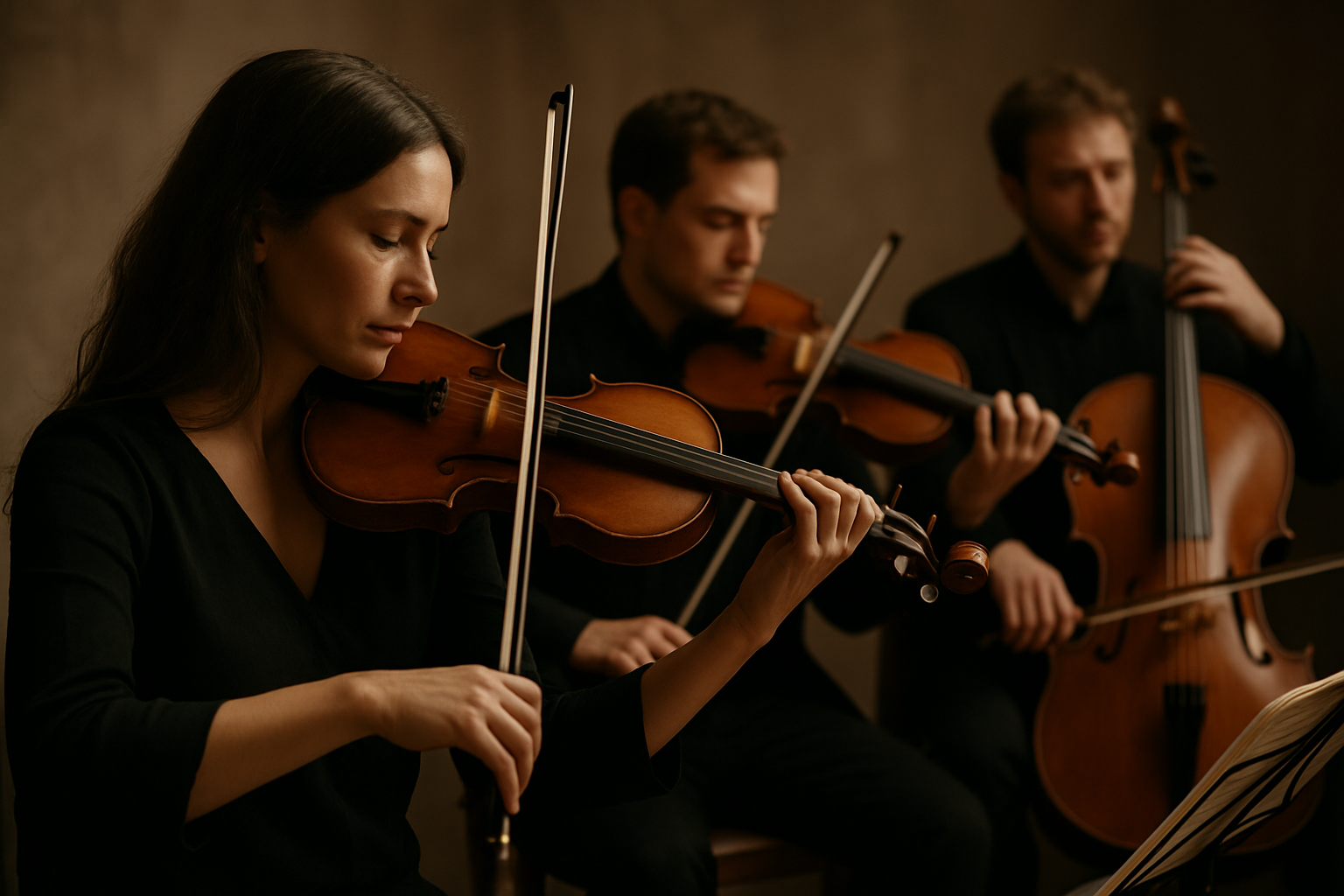
    The string quartet, consisting of two violins, a viola, and a cello, became a dominant form in chamber music largely due to Haydn’s efforts. He composed 68 string quartets, exploring and perfecting the interplay between the instruments. Haydn’s quartets are celebrated for their wit, inventiveness, and expressive power. The Emperor Quartet remains one of the most performed and cherished pieces in the quartet repertoire.

    “It was from Haydn that I first learned the true way to compose quartets,” remarked Wolfgang Amadeus Mozart, evidencing Haydn’s profound impact on his contemporaries.

    Legacy and Influence

    Haydn’s works were not only cornerstone pieces of his time but also paved the way for new generations of musicians. His use of thematic development, variation, and motivic unity opened new avenues for musical expression. As such, his influence extends well beyond his own era.

    Today, Haydn is remembered not only for his prolific output but also for shaping the symphonic and chamber music traditions. His relentless curiosity and unyielding quest for innovation have solidified his status as a towering figure in the history of Western music. For those who study and appreciate the classics, Haydn’s contributions remain invaluable—as vital today as they were over two centuries ago.

  • Stravinsky’s Shock: The Primitive Power of The Rite of Spring

    Stravinsky’s Shock: The Primitive Power of The Rite of Spring

    Stravinsky’s Shock: The Primitive Power of The Rite of Spring

    Music is, by its very nature, essentially powerless to express anything at all.” These are the controversial words of Igor Stravinsky, the composer who shook the early 20th century music scene with the premiere of The Rite of Spring in 1913. It’s a statement that, at least on the surface, might seem at odds with the profound impact his ballet had upon its first audience. Yet, The Rite of Spring continues to challenge conventional ideas about music and its capabilities.

    This article explores the primitive power of The Rite of Spring and the cultural shock it caused, examining its innovative elements, its reception, and its lasting influence on music and beyond.

    The Creation of The Rite of Spring

    Conceived as part of a collaboration between Stravinsky and the Ballets Russes impresario Sergei Diaghilev, The Rite of Spring was intended to be a work that delved into pre-Christian rituals. Stravinsky described it as a vision of a “great pagan ritual” in which “wise elders, seated in a circle, watch a young girl dance herself to death.” The ballet portrays the raw power and violence that Stravinsky saw as being inherent in nature and human instinct.

    Vaslav Nijinsky, the renowned dancer and choreographer of the Ballets Russes, brought Stravinsky’s vision to life with groundbreaking choreography. The dance was as unconventional as the music, characterized by its earthy and angular movements that broke from the grace and fluidity of traditional ballet.

    Musical Innovation

    Stravinsky’s score for The Rite of Spring is as revolutionary as its thematic elements. The music abandons traditional harmony and melody for complex rhythms and atonal passages. In particular, the piece is famous for its use of polyrhythms—the simultaneous occurrence of multiple, contrasting rhythms—which creates a sense of unpredictability and chaos.

    • Rhythm: The core of the ballet’s shock value lies in its rhythmic innovations. The rhythmic irregularity and intricate complexity were something audiences of the early 20th century had never encountered, creating an effect of physical and emotional unease.
    • Harmony: Stravinsky employed dissonance unashamedly, with abrupt changes in key and a general sense of harmonic instability. These techniques broke the boundaries of tonal tradition, further contributing to the feeling of rawness and primal power.
    • Instrumentation: Stravinsky expanded the orchestral palette by assigning unconventional roles to different instruments, thus enabling them to produce new and startling timbres.

    The Paris Premiere and Its Reception

    The premiere of The Rite of Spring on May 29, 1913, at the Théâtre des Champs-Élysées in Paris is legendary for its audience’s explosive reaction. The performance soon descended into a riotous uproar, with shouts and fistfights among the audience members who were divided between enthusiasm and outrage.

    “Disgust was general at this din, and very soon a battle began. Punches flew, canes were brandished, and the police had to intervene.”

    — New York Times, on the riotous reaction to The Rite of Spring

    Much of the audience found the music and choreography perplexing and offensive. The narrative of ancient rituals and the primal, seemingly formless nature of the music and dance clashed with contemporary tastes, leading to extreme responses.

    The Lasting Influence of The Rite of Spring

    Despite—or perhaps because of—the initial tumult, The Rite of Spring went on to become one of the most influential works in the history of music. It radically altered perceptions of what music and dance could express and do.

    Influence on Music

    • Rhythmic Complexity: Stravinsky’s use of rhythm directly influenced composers throughout the 20th century. Musicians such as Béla Bartók, Leonard Bernstein, and Philip Glass have acknowledged its impact on their work.
    • Freedom from Tradition: The move away from traditional harmony opened the door for future explorations in atonality and avant-garde musical styles. It inspired countless composers to explore bold and innovative directions.

    Impact Beyond Music

    The influence of The Rite of Spring transcends music. The score and dance defied the conventional boundaries of their time and continue to inspire various art forms, including film, literature, and fine arts. Its thematic focus on primal human instincts reflected broader early 20th-century concerns about modernity and the subconscious mind, paralleling movements in psychoanalysis and art.

    Conclusion

    Stravinsky’s The Rite of Spring remains a potent symbol of the power of art to challenge, provoke, and redefine cultural norms. Its initial shock value has only amplified its significance over time. As audiences have become more accustomed to what was once radical, The Rite of Spring continues to stand as a tribute to the ever-evolving nature of artistic expression. Stravinsky’s work demonstrated that music, indeed, might not have the power to express anything specific, yet the raw emotion it evokes and the boundaries it challenges speak volumes.

  • Chopin’s Poetic Soul: The Nocturnes as Windows to the Romantic Spirit

    Chopin’s Poetic Soul: The Nocturnes as Windows to the Romantic Spirit

    Chopin’s Poetic Soul: The Nocturnes as Windows to the Romantic Spirit

    Chopin’s Poetic Soul: The Nocturnes as Windows to the Romantic Spirit

    Romanticism, with its emphasis on emotion, individualism, and nature, found its sublime expression in various art forms during the 19th century. Among the foremost figures in music who encapsulated the Romantic spirit was Frédéric Chopin, a genius whose compositions have continued to resonate through time. The nocturnes, perhaps more than any of his works, are a testament to Chopin’s ability to harness the power of the subtle and the sublime.

    The Nocturne: A Form Perfected by Chopin

    Though not invented by Chopin, the nocturne was indelibly shaped by his genius. Originally developed by the Irish composer John Field, Chopin transformed the form into a nuanced and expressive vehicle, rivaling the great vocal arias of opera.

    “I want to write and not say everything, for the story must be deciphered between the lines.”

    This quote attributed to Chopin hints at his compositional ethos that comes alive in his nocturnes. These pieces invite listeners to delve into a world where clarity mingles with ambiguity, creating a tapestry of emotions.

    The Romantic Spirit Through the Lens of Chopin’s Nocturnes

    Chopin’s nocturnes offer a perfect lens through which to explore the core ideals of the Romantic spirit:

    • Individual Expression: Unlike the grand symphonies of the era, Chopin’s nocturnes are intimate, personal pieces, almost confessional in nature. He invites the listener into his world, offering glimpses of delicate and fleeting feelings.
    • Infinite Melancholy: An air of wistfulness pervades much of the Romantic music, and Chopin’s nocturnes are no exception. Pieces like Nocturne in E-flat Major, Op. 9 No. 2 embody a serene melancholy, where tranquil forms belie tumultuous undercurrents.
    • Nature and the Night: The nocturnes, literally “of the night,” conjure images of night skies, lending a mysterious aura reinforced by their variations in light and shade.

    An Analysis of Select Nocturnes

    Among the twenty-one nocturnes penned by Chopin, a few stand out as particularly illustrative of his Romantic style. Each contains profound depths that act as windows into Chopin’s soul.

    Nocturne in B-flat Minor, Op. 9 No. 1

    This piece begins with a simple, haunting melody in the right hand, accompanied by deep, resonant bass chords. As it progresses, the nocturne reveals complexities and turbulence, echoing the inner conflicts that characterize much of Romantic art.

    Nocturne in C Minor, Op. 48 No. 1

    A stark departure from the more serene nocturnes, this composition exudes an almost unrestrained passion. Its form is akin to a dramatic soliloquy, capturing the essence of Romantic heroism and tragedy.

    Nocturne in D-flat Major, Op. 27 No. 2

    With a lyrical quality that soars, this nocturne feels almost like a radiant love song, enveloping the listener with its tender articulations. The gentle introspection of this piece offers a tender glimpse into the gentle side of Romanticism.

    A Lasting Impact

    Chopin’s nocturnes have long outlived their creator, standing as timeless beacons of the Romantic spirit. Musicians for generations have studied and performed these works, revealing new emotions and interpretations with each performance.

    As one of his contemporaries aptly stated:

    “Chopin was a revolutionary enfolded in the luxury of a song… He was a leading force in taking music from the rationality of Classicism into the expressive embrace of Romanticism.”

    Indeed, the nocturnes serve not only as a testament to Chopin’s compositional prowess but as a continual reminder of music’s ability to bridge the world of meaning and mystery, capturing the ethos of the Romantic age.

    Chopin’s Place in Romantic Hearts

    In the realm of Romantic music, Chopin reigns as a sovereign of the heart’s most sacred chambers. His nocturnes encapsulate the subtle expressions of solitude, passion, and longing—fragments of the soul rendered through the delicate touch of the piano. These works reaffirm his standing as not only a technical virtuoso but also a poet whose verses need no words.

    Thus, Chopin’s nocturnes remain as windows to the Romantic spirit, not just because of their form and content, but because they express the ineffable through every chord and silence, inviting listeners to explore their own inner landscapes with each note that fades into the night.

  • J.S. Bach: The Eternal Source of Counterpoint and Devotion

    J.S. Bach: The Eternal Source of Counterpoint and Devotion

    Johann Sebastian Bach remains a towering figure in the world of classical music, revered not only for his technical mastery but also for the deep spiritual quality that permeates his compositions. Born in 1685 in Eisenach, Germany, Bach’s life and work continue to influence musicians and composers around the globe.

    The Master of Counterpoint

    Bach’s skill in counterpoint, the art of weaving together independent melodies, is unsurpassed. His compositions exemplify this intricate technique, demonstrating his ability to create complex yet harmonious musical tapestries.

    • Fugues: The Bach fugue is perhaps the ultimate expression of counterpoint. Each voice enters successively, building on the previous, a testament to Bach’s architectural prowess in music.
    • Canons: Known for their strict structural discipline, Bach’s canons were exercises in both technical rigor and creative freedom.
    • The Art of Fugue: This collection is often cited as the pinnacle of contrapuntal writing and remains a central study piece for aspiring composers.

    “Bach’s music is the only argument proving the creation of the Universe cannot be regarded a complete failure.” — Anonymous

    The Spiritual Anchor

    Bach’s music was deeply influenced by his Lutheran faith. Much of his work was composed for church services, and his devoutness is evident in the emotive power and structure of his compositions.

    • Sacred Works: His Mass in B Minor and St Matthew Passion are towering achievements, blending theology with musical innovation.
    • Cantatas: Composed for specific Sundays and events in the liturgical calendar, these works were both reflections of personal faith and musical craftsmanship.
    • Chorale Preludes: Bach’s intricate preludes on hymn tunes served as inspirational lessons in both music theory and spiritual reflection.

    As Albert Schweitzer noted, “Bach opens a vista to the universe. After experiencing him, people feel there is meaning to life after all” (Wikipedia).

    Bach’s legacy endures, inspiring countless generations with his inexhaustible creativity and profound devotion. Musicians and listeners alike continue to find in his works endless layers of meaning and beauty, affirming his status as the eternal source of counterpoint and devotion.

  • Beethoven’s Revolution: The Journey from the Eroica to the Ninth Symphony

    Beethoven’s Revolution: The Journey from the Eroica to the Ninth Symphony

    Beethoven’s Revolution: The Journey from the Eroica to the Ninth Symphony

    Ludwig van Beethoven, one of the most influential composers in the history of Western music, brought about a profound transformation in the format and thematic content of symphonic music. This metamorphosis is most dramatically exemplified in two of his masterpieces: the Eroica Symphony and the Ninth Symphony. The progression from the former to the latter marks a significant period of innovation that shaped the future of music.

    The Eroica Symphony: A Bold New Direction

    Beethoven’s Symphony No. 3 in E-flat major, Op. 55, known as the Eroica, represents a bold departure from the musical conventions of the 18th century. Originally intended to be dedicated to Napoleon Bonaparte, the symphony was retitled after Beethoven learned that Napoleon had declared himself emperor. “Beethoven broke with tradition and entrenched the idea of music as an expression of human triumph over adversity,” says musicologist Lewis Lockwood.

    This symphony expanded the scope, size, and ambition of the symphonic form. Its first movement alone is almost as long as entire symphonies by earlier composers like Haydn or Mozart. The second movement, a somber funeral march, introduced an emotional depth previously unseen in symphonic music. As Sir John Eliot Gardiner notes, “This was music as a powerful force, capable of taking its listeners through an epic journey.”

    From Eroica to the Middle Symphonies: Experimentation and Expansion

    In the wake of the Eroica, Beethoven continued to explore new musical ideas through his middle-period symphonies. His Fifth Symphony, with its iconic four-note motif, serves as a testament to his relentless innovation. “Symphonies became platforms for expressing a broader range of human emotions, beyond the purely aesthetic or entertaining,” notes Jan Swafford, author of Beethoven: Anguish and Triumph.

    These works explored the dynamic potential of orchestration and thematic development. They set the stage for Beethoven’s burgeoning genius to fully manifest in his final symphonic masterpiece, the Ninth Symphony.

    The Ninth Symphony: Ode to Joy and Human Unity

    The Symphony No. 9 in D minor, Op. 125, incorporating Friedrich Schiller’s poem “Ode to Joy,” was revolutionary for its inclusion of vocal soloists and a chorus—an unprecedented combination for a symphony of its time. By weaving choral elements into the symphony, Beethoven envisioned a unified human race coming together in a celebration of joy and brotherhood. As Richard Taruskin discusses in The Oxford History of Western Music, “Beethoven’s Ninth represented the apotheosis of his symphonic achievements and a harbinger of things to come in music history.”

    “All men will become brothers,” proclaims Schiller’s text, heralding Beethoven’s message of unity and universal harmony.

    The thematic depth and complexity of the Ninth Symphony went beyond music theory—it engaged with ideas of humanism and political enlightenment. Its premiere in 1824 was not only a musical event but a cultural milestone.

    Beethoven’s Legacy and Continuing Influence

    The influence of Beethoven’s revolutionary approach to the symphony stretched far beyond his lifetime. Composers in the Romantic era like Brahms, Mahler, and Bruckner were deeply inspired by Beethoven’s work. As stated by the conductor Leonard Bernstein, “No composer has influenced the core of symphonic thought and work more than Beethoven.”

    • Johannes Brahms: Often hailed as Beethoven’s successor, Brahms carried the traditions of structural complexity and thematic development established by Beethoven.
    • Gustav Mahler: His symphonies expanded on Beethoven’s operatic qualities, infusing them with lush orchestration and emotional scope.
    • Anton Bruckner: Known for his expansive symphonic architecture, Bruckner’s works reflect Beethoven’s artistic vision of grandeur and spiritual transcendence.

    Today, Beethoven’s symphonies remain at the heart of orchestral repertoire worldwide, embodying a transformative moment in music history that continues to evoke inspiration and awe. His journey from the Eroica to the Ninth Symphony stands as a testament to the power of music to transcend mere entertainment and become a force for human expression and unity.

  • Mozart: The Enigmatic Genius Behind Don Giovanni

    Mozart: The Enigmatic Genius Behind Don Giovanni

    Mozart: The Enigmatic Genius Behind Don Giovanni

    Wolfgang Amadeus Mozart, a name synonymous with musical prodigy, left an indelible mark on the classical music world with his prowess and innovation. Among his remarkable operatic compositions, Don Giovanni stands out as a masterpiece of drama and complexity. Known for his ability to weave emotion and intellect into music, Mozart was more than just a composer; he was an enigmatic genius whose contributions continue to resonate.

    “Mozart is the greatest composer of all.” – Ludwig van Beethoven

    The Genesis of Don Giovanni

    Don Giovanni, an opera in two acts, was composed in 1787 with a libretto by Lorenzo Da Ponte. This “dramma giocoso” blends elements of drama and comedy, bringing to life the infamous Spanish libertine Don Juan. The story navigates themes of seduction, revenge, and morality, brought to life through Mozart’s inventive and expressive score.

    • Act I introduces Don Giovanni’s reckless lifestyle and his manipulative charm, setting the stage for subsequent conflicts.
    • Act II depicts his inevitable downfall, culminating in a dramatic and otherworldly denouement.

    The opera premiered at the National Theatre in Prague and was an instant success. Praised for its depth and dynamism, Don Giovanni has been celebrated for transcending conventional operatic narratives of its time.

    Mozart’s Genius in Composition

    Mozart’s ability to capture the essence of characters through music is particularly evident in Don Giovanni. The overture sets the tone with its dark and foreboding motifs, reflecting the protagonist’s turbulent journey. Throughout the opera, Mozart masterfully uses arias, duets, and ensembles to define the emotional and psychological contours of each character.

    In the words of musicologist Julian Rushton, “Don Giovanni is an opera of extraordinary imagination, combining a wide variety of styles to brilliant effect.” This complexity and ingenuity have cemented Mozart’s reputation as a visionary composer.

    Mozart’s Unfading Legacy

    Mozart’s life, though tragically short, was a testament to prodigious talent and relentless creativity. His ability to craft intricate melodies and harmonies that resonate with audiences is reflected in his extensive body of work. Don Giovanni, with its rich tapestry of human emotion and morality, endures as a testament to Mozart’s genius.

    In exploring Mozart’s enigmatic brilliance, one can’t help but marvel at his capacity to shape the contours of opera. His mastery in Don Giovanni underscores not just the grandeur of his compositions, but also his enduring influence on music and culture.