Author: editor

  • Carmina Burana: Orff’s Primal Rhythms and Medieval Poetry

    Carmina Burana: Orff’s Primal Rhythms and Medieval Poetry

    Carmina Burana: Orff’s Primal Rhythms and Medieval Poetry

    Carl Orff’s Carmina Burana stands as a powerful union of twentieth-century musical innovation and medieval poetry. Premiering in 1937, this scenic cantata draws its text from a bawdy collection of 24 lyrical poems found in the 13th-century manuscript, Codex Buranus, or the Carmina Burana.

    The Origins of Carmina Burana

    The original Carmina Burana is a manuscript compiled by itinerant scholars and clerics with texts written in Latin, Old High German, and Provençal. It covers a wide array of themes, from the joys of spring and the fickleness of fortune to carnal pleasures.

    The famous opening and closing movement, “O Fortuna,” has achieved great popularity, its powerful choral motif often used in film and television to convey intense emotion and grandeur. The haunting power of the piece lies in its relentless depiction of Fortune’s wheel, an ever-turning cycle of prosperity and adversity:

    O Fortuna, velut luna, statu variabilis, semper crescis aut decrescis;

    – Carmina Burana, “O Fortuna” (Translation: “O Fortune, like the moon, you are changeable, ever waxing and waning”)

    Carl Orff’s Composition

    A hallmark of Orff’s composition style in Carmina Burana is his emphasis on rhythm and simplicity. Rather than resorting to complex harmonies and counterpoint, Orff’s score bursts with primal energy, utilizing strong, insistent percussive elements. His music unitizes simple, repetitive motifs that mirror the raw and direct emotion of the medieval poetry.

    Orff said of his creation, “the thinking behind my work was to present the power of sound running through speech.” His keen focus on rhythm led to what has been described as a “singing symphony,” where the chorus plays an equal role with the orchestra, propelling the entire cantata with visceral power.

    Lasting Legacy

    Carmina Burana has left an indelible mark on music culture worldwide. The colossal energy of its live performances ensures its continual popularity. Each rendition invites listeners on a sensory journey, bridging the gap between the mystique of the Middle Ages and the dynamism of modern music.

    The piece’s pervasive influence can be heard not just in the concert hall but in modern media, as “O Fortuna” finds its dramatic way into diverse settings, proving the timeless appeal of Orff’s primal fusion of sound and poetry.

    For further insights, explore this Wikipedia article which provides a comprehensive overview of both the manuscript and Orff’s musical adaptation.

  • Anatomy of a Fugue: In-Depth Analysis of Bach’s Well-Tempered Clavier

    Anatomy of a Fugue: In-Depth Analysis of Bach’s Well-Tempered Clavier

    Anatomy of a Fugue: In-Depth Analysis of Bach’s Well-Tempered Clavier

    The Well-Tempered Clavier by Johann Sebastian Bach stands as one of the masterpieces of Western music, a quintessential work that has influenced generations of composers and musicians. Comprising two books of preludes and fugues in all 24 major and minor keys, it is revered not only for its technical mastery but also for its expressive depth and complexity.

    Understanding the Fugue

    A fugue is a polyphonic composition based on a central theme, called the “subject,” that is introduced at the beginning and developed in interweaving melodic lines, or “voices,” throughout the piece. Bach’s fugues display the intricate balance between order and creativity, demonstrating his unparalleled command over counterpoint.

    • Subject: The central theme upon which the fugue is based. In the Well-Tempered Clavier, these subjects range from simple motifs to complex melodic fragments.
    • Answer: The second entry of the subject, typically transposed to a different key, often the dominant.
    • Episode: Passages of connective material that offer contrast and development, usually excluding the complete subject.
    • Stretto: Overlapping entries of the subject that heighten tension and complexity.
    • Countersubject: A secondary theme that accompanies the subject or answer, adding further layers to the texture.

    In the Well-Tempered Clavier, each fugue is tailored to the emotional and technical characteristics of its key, demonstrating Bach’s genius in blending harmony and counterpoint.

    The Historical Context

    Composed during the early 18th century, Bach’s Well-Tempered Clavier played a crucial role in the evolution of Western classical music. The well-tempered tuning system allowed for writing in all keys without unpleasant intonation issues that plagued earlier tuning systems.

    “The purpose of the Well-Tempered Clavier was not only to explore the possibilities of this new tuning system but also to provide a comprehensive teaching tool for musicians. It offered insights into the tonal possibilities of keyboard music, shifting the paradigm of compositional and performance practices.” — Encyclopedia Britannica

    In-Depth Analysis of Selected Fugues

    Fugue in C Major, BWV 846

    Opening the first book of The Well-Tempered Clavier, the C major fugue is characterized by its clarity and brightness. The subject, comprising a mix of leaps and stepwise motion, establishes a firm tonal center. The ensuing voices enter successively, each subtly intertwining with the others. The fugue’s simplicity belies its elegant structure and the precision required to bring out its beauty.

    Fugue in C Minor, BWV 847

    The C minor fugue showcases Bach’s ability to imbue music with emotional weight. Here, the subject is more rhythmic and insists upon its melodic pathway. As this fugue unfolds, Bach employs episodes with dramatic harmonic shifts and stretto passages, creating tension and resolution in a vivid musical journey.

    Fugue in D# Minor, BWV 853

    Considered one of the most complex fugues in Book I, the D# minor fugue is a testament to Bach’s mastery. The angular melody of the subject and its dense contrapuntal texture demand virtuosic control. Throughout, Bach expertly weaves the countersubjects, creating an intricate tapestry of sound with moments of striking dissonance and resolution.

    The Legacy of Bach’s Fugue Writing

    The Well-Tempered Clavier has resonated through the centuries, influencing composers like Mozart, Beethoven, and Chopin. Its blend of intellectual rigor and emotional expressivity set a standard for musical composition, earning its place as an essential study for anyone passionate about classical music.

    “Bach’s music is remarkable for its technical brilliance and profound beauty, remaining a cornerstone of the keyboard repertoire and a testing ground for any serious musician.” — BBC Music Magazine

    In conclusion, the Well-Tempered Clavier epitomizes Bach’s vision of music as a divine language. Each fugue within its pages offers a world of its own, inviting performers and listeners alike to explore the intricate dialogue between structure and freedom.

  • The Magic Flute: Mozart’s Blend of Enlightenment and Esotericism

    The Magic Flute: Mozart’s Blend of Enlightenment and Esotericism

    The Magic Flute: Mozart’s Blend of Enlightenment and Esotericism

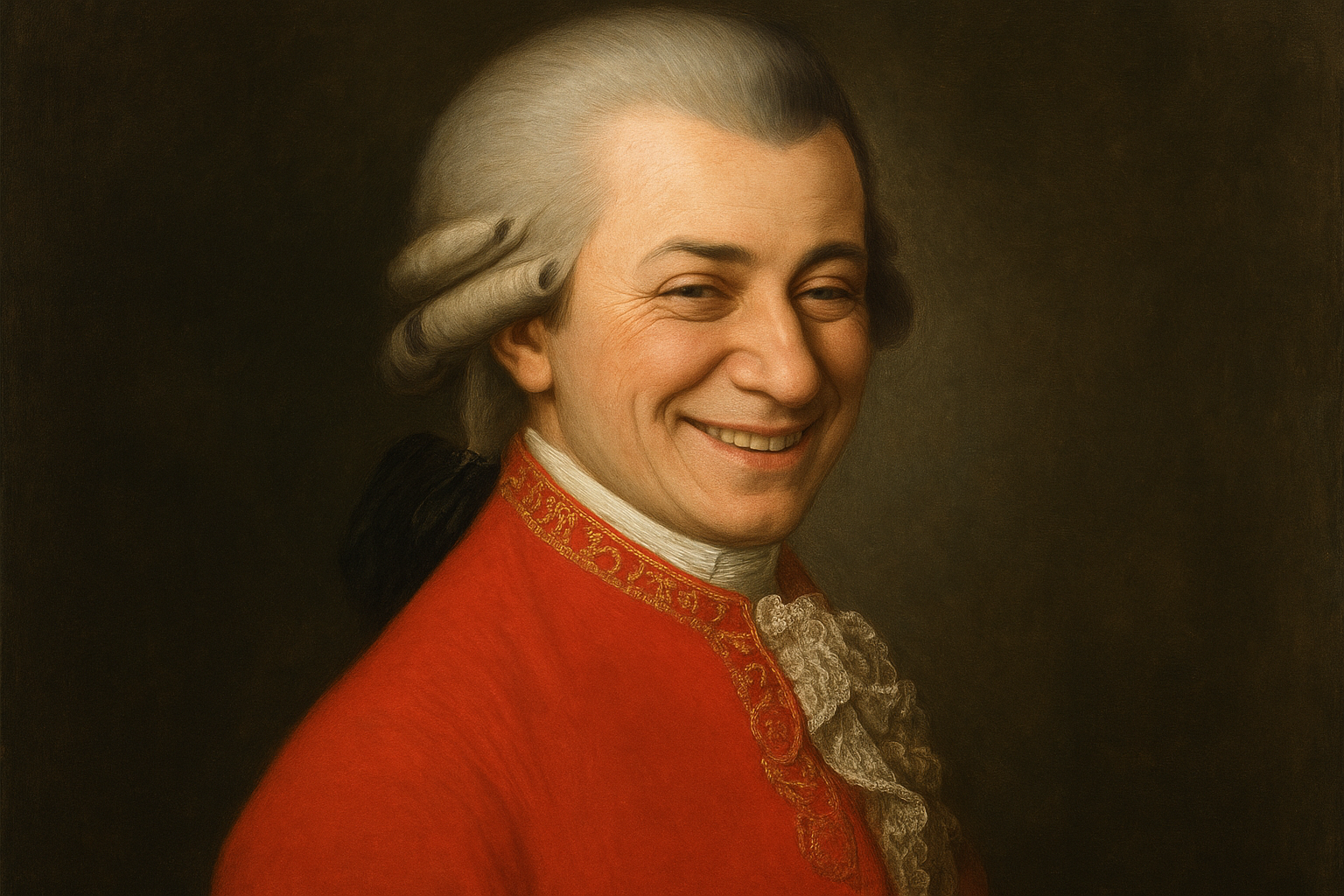
    Wolfgang Amadeus Mozart, one of the most influential and celebrated composers of the classical era, left behind an astonishing legacy. Among his vast repertoire, The Magic Flute stands out as an intriguing opera that intertwines the ideals of the Enlightenment with deep esoteric symbolism. Premiered on 30 September 1791 in Vienna, just two months before his untimely death, this opera remains a staple of the classical canon and continues to intrigue audiences and scholars alike.

    An Overview of Enlightenment Ideals

    The Enlightenment, a cultural movement of intellectuals spanning the late 17th to the 19th century, emphasized reason, scientific thought, and individualism over tradition. It was a time when thinkers like Voltaire, John Locke, and Immanuel Kant championed knowledge, freedom, and the innate rights of humanity. Kant famously declared, “Sapere aude” (Dare to know), a call to abandon fear and superstition in favor of human reason.

    Mozart, living in the age of Enlightenment, was naturally influenced by these ideas. His connections with the Freemasons, a society built on Enlightenment principles, played a crucial role in shaping his works, with The Magic Flute being a prime example.

    An Esoteric Journey

    The Magic Flute weaves a complex tapestry of Masonic symbolism and mystical allegory. The story revolves around Prince Tamino, who embarks on a quest to rescue the Queen of the Night’s daughter, Pamina. Assisted by the endearing bird-catcher Papageno, Tamino must undergo trials set by Sarastro, the high priest of the sun. Throughout their journey, the power of friendship, love, and wisdom triumph over tyranny and ignorance.

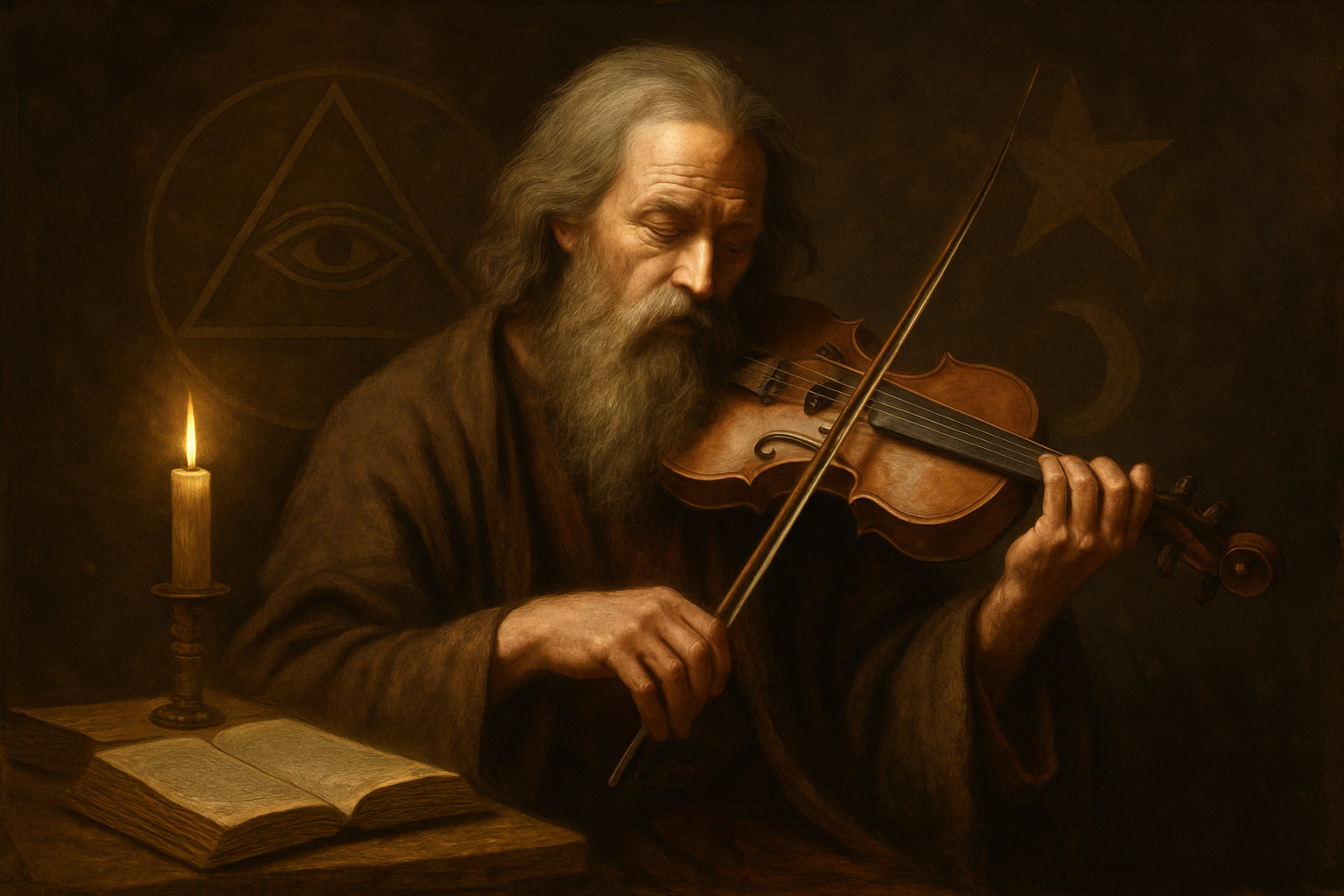
    The opera reflects many Masonic themes: the quest for enlightenment through trials resembling Masonic initiation rites, the clash between light (reason) and darkness (ignorance), and the importance of virtues like wisdom and brotherhood. It is said that the number three, a significant figure in Freemasonry, is omnipresent in the opera, represented by the three Ladies, three Boys, and three qualities that Tamino must exhibit—courage, constancy, and wisdom.

    The Characters and Their Symbolism

    • Prince Tamino:
      • The Seeker of Truth: Representing the Enlightened individual, Tamino’s journey from darkness to light symbolizes mankind’s path to knowledge and virtue.
    • Queen of the Night:
      • Embodiment of Chaos and Intolerance: The Queen of the Night is often interpreted as the antithesis of Enlightenment ideals, embodying emotion-driven chaos versus rational order.
    • Sarastro:
      • Guardian of the Light: As the wise high priest, Sarastro symbolizes the moral and philosophical authority of reason and the embodiment of genuine enlightenment.
    • Papageno:
      • Everyman: Representing the common people, Papageno is content with basic joys and remains largely indifferent to the lofty ideals pursued by others.

    The Power of Music and Libretto

    Mozart’s genius is evident throughout The Magic Flute, where he uses music not just as an artistic expression but as a means to convey profound philosophical messages. The overture itself serves as a prologue, introducing the audience to the thematic dichotomy of darkness versus light through its dramatic use of a minor to major transitions. The distinct styles, from the comedic to the sublime, mirror the opera’s shifts between light-heartedness and profundity.

    The libretto by Emanuel Schikaneder, Mozart’s friend and colleague, enhances this with text that is both dramatic and humorous, aligning perfectly with the Freemasonic ideals. Schikaneder, also believed to have been a Freemason, complemented Mozart’s music by embedding the esoteric themes subtly into the dialogue and lyrics.

    Enlightenment’s Legacy in The Magic Flute

    The Magic Flute is not merely an opera; it is a philosophical journey reflective of a crucial historical moment where reason and mysticism intertwined. It captures the optimism of the late 18th century, where the growth of knowledge and enlightenment gave rise to hopes of a better and more equitable society.

    Although the Enlightenment espoused ideals such as rationality, freedom, and equality, the opera creatively acknowledges the existence of mystery and the inexplicable within human experience. Here, Mozart’s fairytale-like narrative invites audiences to consider the coexistence of reason and wonder without dismissing one for the other.

    Enduring Appeal and Impact

    “Music is the one incorporeal entrance into the higher world of knowledge which comprehends mankind but which mankind cannot comprehend.” — Beethoven

    Beethoven’s words resonate with the enduring magic of The Magic Flute. Its universal themes of love triumphing over adversity, the pursuit of truth, and the celebration of human courage continue to resonate across cultures and generations. The profound philosophical undertones coupled with the opera’s accessible and entertaining narrative ensure its status as one of the most performed and studied works in opera history.

    The intricacies embedded in the music and story of The Magic Flute invite continual exploration and reinterpretation, reflecting both Mozart’s genius and the timeless allure of blending enlightenment with esotericism.

    For those interested in diving deeper into the world of The Magic Flute, numerous resources and performances are available. [Explore the opera in depth](https://www.metopera.org/discover/synopses/the-magic-flute/) through the Metropolitan Opera’s resources that offer insightful analysis and interpretation.

    In conclusion, Mozart’s The Magic Flute serves as a testament to the creative synthesis of Enlightenment ideals and esoteric mysticism, delivering a timeless narrative that celebrates the harmony of reason and imagination existing within the human spirit.

  • The Genesis of the G Major Cello Concerto: Dvořák’s Creative Process

    The Genesis of the G Major Cello Concerto: Dvořák’s Creative Process

    The Genesis of the G Major Cello Concerto: Dvořák’s Creative Process

    Antonín Dvořák, one of the most celebrated composers of the Romantic era, is renowned for his profound impact on the world of classical music. His Cello Concerto in B Minor, Op. 104, remains a staple in the repertoire of cellists worldwide. However, less is known about his earlier and now lesser-known G Major Cello Concerto, a work that offers unique insight into his creative process.

    The Initial Spark

    The genesis of Dvořák’s G Major Cello Concerto dates back to the 1860s—a period of significant personal growth and professional exploration for the composer. It is believed that his deep admiration for renowned cellist David Popper may have influenced his interest in writing for the cello. At this time, Dvořák was steadily gaining recognition, and he was experimenting with various musical forms and instrumentation. The G Major concerto was one of these early attempts, showcasing his developing style.

    • Composed between 1865-1867, this concerto was a reflection of Dvořák’s early forays into orchestral music.
    • The work remained unpublished and largely unknown during his lifetime.
    • Dvořák revisited the genre later with his more famous Cello Concerto in B Minor, which overshadowed earlier efforts.

    The Creative Process

    Dvořák’s work on the G Major Cello Concerto involved an intricate creative process marked by both intuition and technical skill. According to musicologist John Clapham, Dvořák’s initial concepts for his compositions often began with a simple, singable theme that would then be elaborated through various instrumental textures.

    “Dvořák’s themes tended to be folk-like in character, reflecting his Bohemian heritage, yet they were also infused with a universality that made them accessible to audiences worldwide.” — Encyclopedia Britannica

    In the case of the G Major concerto, one can perceive the budding ideas that would later flourish in his more mature works:

    • The melodic structure is noticeably simpler than in his later compositions, emphasizing clarity and thematic repetition.
    • The orchestration shows Dvořák’s early attempts at creating a rich, dynamic interplay between the solo cello and the orchestra.
    • The harmonic progressions reflect both traditional elements and Dvořák’s inherent inclination towards innovative modulations.

    Challenges and Discoveries

    Dvořák faced numerous challenges during this period, primarily concerning his confidence in orchestrating for the cello. Not originally a cellist himself, he had to navigate the instrument’s unique demands and temperamental response in conjunction with an orchestra. It was through trial and error in the G Major concerto that Dvořák honed this skill, which became prominent in his later works.

    Interestingly, the concerto was never performed publicly during Dvořák’s lifetime, and the manuscript seemingly disappeared into obscurity until it was rediscovered in the late 20th century. This rediscovery has sparked renewed interest and scholarly discussion on the concerto’s role in Dvořák’s development as a composer.

    Legacy and Appreciation

    While the G Major Cello Concerto does not share the fame of its successor, it stands as a testament to Dvořák’s early ingenuity and dedication to mastering the form. Its completion marked a significant step towards the refined and emotionally resonant Cello Concerto in B Minor. The latter work, composed in 1895, came to be seen as a quintessential piece of the cello repertoire, celebrated for its expressive depth and intricate orchestration.

    Today, musicians and scholars harken back to the G Major concerto as a significant milestone in understanding Dvořák’s artistic journey. It underscores the composer’s progressive evolution from a budding artist experimenting with musical ideas to a mature master craftsman capable of producing works of remarkable beauty and complexity.

    Conclusion

    The tale of the G Major Cello Concerto is not merely a story of an early draft overshadowed by later achievements. Rather, it’s an essential chapter in the narrative of Antonín Dvořák’s quest to find his unique voice in the world of classical music. As we continue to rediscover and appreciate such works, we gain a deeper understanding of the artistic processes that shape the masterpieces we cherish today.

  • Clair de Lune: Analyzing Debussy’s Masterpiece of Impressionist Piano

    Clair de Lune: Analyzing Debussy’s Masterpiece of Impressionist Piano

    Clair de Lune: Analyzing Debussy’s Masterpiece of Impressionist Piano

    Claude Debussy’s Clair de Lune, translating to “Light of the Moon,” is one of the most renowned pieces of piano music ever written. This masterpiece encapsulates the essence of the Impressionist movement in music, showcasing Debussy’s innovative approach to composition and harmony.

    The Origins of Clair de Lune

    Composed in 1890 and later revised in 1905, Clair de Lune is the third movement of Debussy’s Suite Bergamasque. The suite was inspired by Paul Verlaine’s poem Clair de Lune, which is part of his collection Fêtes galantes. Verlaine’s poem captures an air of melancholy and mystery, aligning perfectly with the tonal color and emotional depth of Debussy’s composition.

    “Your soul is a chosen landscape / Where charming masqueraders and dancers are promenading / Playing the lute and dancing and almost / Sad beneath their fantastic disguises.” — Paul Verlaine

    Impressionist Techniques in Clair de Lune

    Debussy’s Clair de Lune exemplifies several key characteristics of Impressionist music:

    • Nontraditional Scales: Debussy often used whole-tone scales, pentatonic scales, and modal harmonies to evoke a sense of ambiguity and exploration. These scales contribute to the dream-like quality of the piece.
    • Tone Color: The piece emphasizes timbre and texture, using the piano’s range and sustain pedal to create lush, atmospheric effects. This approach reflects Debussy’s desire to ‘paint’ with sound.
    • Rhythmic Freedom: The use of rubato and fluid time signatures allows the music to flow organically, resembling the shifting and ephemeral nature of moonlight.

    Structural and Harmonic Analysis

    Clair de Lune is in the key of D♭ major and follows an ABA ternary form. This relatively simple structure is enriched by Debussy’s novel harmonic language:

    • Section A: The opening section introduces the main theme with gentle, cascading arpeggios. The harmony here is delicate, with extended chords creating a sense of wonder and introspection.
    • Section B: The middle section moves to a more passionate and intense character, utilizing richer textures and dynamic contrasts to build emotional tension.
    • Return of Section A: The piece concludes by revisiting the serene mood of the opening, bringing the listener back to the tranquil and illuminated landscape.

    Impact and Legacy

    The serene beauty and introspective character of Clair de Lune have cemented it as a staple of both classical and popular culture. It has been featured in numerous films, from Ocean’s Eleven to Twilight, and continues to be a favorite among pianists and audiences alike.

    Debussy’s work marked a departure from the Romantic tradition, paving the way for modern music’s exploration of new tonal possibilities. His influence can be seen in the works of later composers such as Maurice Ravel, Olivier Messiaen, and even jazz musicians who admire his innovative harmonies and textures.

    Conclusion

    Claude Debussy’s Clair de Lune remains a masterpiece of Impressionist music, encapsulating the spirit of its time while continuing to inspire and captivate listeners worldwide. Its delicate interplay of harmony, melody, and rhythm captures the ethereal beauty of moonlight, inviting us to explore the rich emotional landscape it reveals.

    For further detailed information, you can explore more about the piece and its analysis provided by musicologists here.

  • The Fifth Symphony: Beethoven’s Fate Motive and Formal Innovation

    The Fifth Symphony: Beethoven’s Fate Motive and Formal Innovation

    The Fifth Symphony: Beethoven’s Fate Motive and Formal Innovation

    Ludwig van Beethoven’s Symphony No. 5 in C minor, Op. 67, often referred to simply as “Beethoven’s Fifth,” remains one of the most iconic pieces of classical music. This work is celebrated not only for its intense emotional depth but also for its groundbreaking structural innovations and the famous “Fate Motive.”

    The “Fate Motive”

    The symphony is instantly recognizable for its opening four notes: short-short-short-long. Beethoven himself is reputed to have described this motif as “Fate knocking at the door.” These notes are evocative and have inspired countless interpretations over the years. According to V&A Museum, “it throws open a window into Beethoven’s fiery personality and revolutionary compositional voice.”

    “The opening of Beethoven’s Fifth Symphony is widely known, even among people who have never been to a symphony concert,” writes Gramophone.
    “The repeated three short notes and a long note are heard in one of the most famous openings of any piece of classical music.”

    Formal Innovation

    Beethoven’s Fifth is remarkable for its cohesive structure. Unlike many works of the time, Beethoven constructed his symphony as a tightly integrated whole. The symphony’s development of thematic material from the opening bars through to the dramatic finale was revolutionary in the early 19th century. Beethoven’s ability to weave the “Fate Motive” throughout the symphony demonstrated a novel approach to thematic cohesion.

    • First Movement: The Allegro con brio introduces the “Fate Motive,” setting a turbulent and foreboding tone.
    • Second Movement: The Andante con moto offers a softer, more lyrical response, featuring variations entwined with the main theme.
    • Third Movement: The Allegro breaks traditional form by acting as a bridge leading directly into the triumphant final movement.
    • Fourth Movement: The Allegro is a burst of energy, heralding structured optimism that resolves the symphony’s narrative arc.

    Legacy

    Beethoven’s Fifth Symphony has had an enduring influence on music. Its structural innovations and thematic motifs can be seen in the works of many later composers, and it continues to be a staple in orchestral performances worldwide. As noted by BBC Music Magazine, “It is a powerful piece of music that retains its ability to inspire and move audiences.”

    In conclusion, Beethoven’s Fifth Symphony is not merely a cornerstone of classical repertoire; it is a testament to Beethoven’s genius and his ability to convey the profound anthems of human experience through daring formal innovations and emotional expression.

  • The Goldberg Variations: Bach’s Infinite Study in Theme and Transformation

    The Goldberg Variations: Bach’s Infinite Study in Theme and Transformation

    The Goldberg Variations: Bach’s Infinite Study in Theme and Transformation

    Among Johann Sebastian Bach’s most revered works is The Goldberg Variations, a piece that embodies the limitless potential of a single theme transforming across an elaborate sequence of variations. This masterful composition is not only a testament to Bach’s genius but also a profound exploration of musical architecture and emotional depth.

    Origins and Inspiration

    Composed in 1741, The Goldberg Variations were reportedly commissioned by Count Hermann Karl von Keyserlingk, a Russian ambassador to the Saxon court, who aimed to cure his insomnia. According to Johann Nikolaus Forkel, Bach’s first biographer, the work was named after the young harpsichordist Johann Gottlieb Goldberg, who was employed by the Count to perform the piece during sleepless nights.

    The Structure of Transformation

    The work begins with a singular Aria, a simple yet hauntingly beautiful piece that sets the thematic foundation. What follows is a cycle of 30 variations, each ingeniously exploring different musical styles, structures, and emotional expressions. Bach employs an ingeniously crafted pattern—every third variation is a canon, increasing by one interval at a time, from unison up to a ninth, interspersed with genre-form pieces such as fughettas, gigues, and French overtures.

    The Art of Variation

    Each variation reveals Bach’s astounding capacity to reinvent a theme. The essence of the original Aria is preserved, yet Bach steeps each movement in distinct stylistic and emotional characterizations. As Glenn Gould, one of the most acclaimed performers of The Goldberg Variations, famously said, “Bach was really an early advocate of the infinite variety possible within very tightly circumscribed forms” (BrainyQuote).

    “It’s a constant rebirth, an eternal rejuvenation of a single idea, under new aspects and in fresh combinations.” —Johannes Brahms

    Enduring Legacy

    The profound impact of The Goldberg Variations is evident from its enduring popularity, transcending time to influence countless musicians and listeners. Through its intricate patterns and emotional range, Bach invites performers and audiences alike to engage with music as a fluid, living art form.

    As time has revealed, The Goldberg Variations remain a boundless source of inspiration and discovery. From the concert hall to the intimate spaces of a quiet home, Bach’s work continues to offer solace, challenge, and joy, an infinite study in theme and transformation—unsurpassed in its melodic grace and structural brilliance.

  • The Legacy of Hildegard of Bingen: Music and Mysticism in the Middle Ages

    The Legacy of Hildegard of Bingen: Music and Mysticism in the Middle Ages

    The Middle Ages, often characterized as a period of darkness and ignorance, is, in truth, a fascinating epoch of profound spiritual and cultural evolution. Among the luminaries of this era stands Hildegard of Bingen (1098–1179), a polymath who not only contributed to the development of Western music but also left an indelible mark on theology and mysticism.

    Early Life and Spiritual Awakening

    Hildegard was born into a noble family in the Rhine region of what is now Germany. From a young age, she reported experiencing intense visions, which she later described in her work Scivias. Her religious and mystical insights foreshadowed her later life as a Benedictine abbess, theologian, and composer. According to Hildegard, these visions were divine revelations. As she famously wrote, they came from “the living Light,” filling her with a transformative clarity and purpose.

    Music: A Heavenly Harmony

    Hildegard’s contributions to music are profound and pioneering. Her compositions, characterized by soaring melodies and ethereal beauty, were revolutionary for their time. She penned over 70 works, including the liturgical drama Ordo Virtutum. Unlike the more formulaic Gregorian chants, her music embraced a broader range, reflecting the transcendent qualities of her visionary experiences.

    “I heard a voice from heaven saying to me, ‘Cry out therefore, and write thus.’” – Hildegard of Bingen

    Theology and Mysticism

    Hildegard’s theological writings delve deep into divine and earthly symbiosis, where she blended mystical experiences with a profound understanding of the cosmos. Her works, such as Physica and Causae et Curae, explore medicine and natural science, demonstrating her belief in the interconnectedness of all creation.

    • Scivias: Hildegard’s principal work, including 26 visions, illustrating her understanding of God and the universe.
    • Ordo Virtutum: One of the earliest known morality plays, encompassing themes of virtue and the soul’s journey.
    • Symphonia: A collection of her musical compositions that have been hailed for their originality and depth.

    Legacy and Impact

    Declared a Doctor of the Church in 2012, Hildegard’s legacy persists in her profound vision of a universe filled with divine light. Her music continues to be performed worldwide, captivating audiences with its timeless beauty and depth. Through her works, Hildegard invites a reflection on the mystical dimensions of life and the harmony of creation.

    You can learn more about Hildegard’s life and works at the Encyclopædia Britannica.

    In both her music and writing, Hildegard of Bingen offers a rich tapestry of insight that bridges the medieval and modern worlds, inviting seekers of wisdom to explore the profound unity between the divine and the earthly.

  • Purcell’s English Voice: Baroque Brilliance in Theater and Church

    Purcell’s English Voice: Baroque Brilliance in Theater and Church

    Purcell’s English Voice: Baroque Brilliance in Theater and Church

    Henry Purcell, often hailed as England’s greatest Baroque composer, remains a pivotal figure whose music elegantly bridges the realms of theater and church in late 17th-century England. Born in 1659, Purcell’s work exemplifies the rich, expressive possibilities of the Baroque era, infused with a uniquely English voice.

    Musical Innovation in the Theater

    Purcell’s contribution to dramatic music, notably through his operas and semi-operas, highlights his skill in blending music with narrative. His most famous stage work, Dido and Aeneas, is a masterpiece of operatic form. Premiering in 1689, it contains the haunting aria “When I am laid in earth,” which underscores Purcell’s ability to convey profound emotion through music.

    “No composer before him ever caught the English hues of speech so surely. His melodies are often founded upon the common inflections of English speech.” – Sir John Eliot Gardiner (The Guardian)

    • Dido and Aeneas: An opera in miniature, it illustrates Purcell’s flair for drama and musical storytelling.
    • The Fairy-Queen: Based on Shakespeare’s A Midsummer Night’s Dream, this semi-opera showcases diverse musical forms and Purcell’s inventiveness in theatrical music.

    Church Music: A Sacred Legacy

    Beyond the theater, Purcell’s church compositions significantly impacted English sacred music. His anthems and service music demonstrate a masterful use of counterpoint and harmony, blending the solemnity essential to sacred settings with an approachable lyrical beauty.

    • Anthems: Works such as “Hear My Prayer, O Lord” reveal his adept use of vocal textures to evoke spiritual depth.
    • Funerary Music: Composed for the funeral of Queen Mary II, these pieces, including his famous Funeral Sentences, are poignant examples of Baroque choral writing.

    Purcell’s untimely death in 1695 at the age of 36 curtailed a career that had already left an indelible mark on both theatrical and sacred music. His oeuvre remains celebrated for its melodic grace, rhythmic vitality, and innovative fusion of English and European musical traditions.

    Today, Henry Purcell is remembered not only as a quintessentially English composer but as a Baroque master whose works continue to inspire performers and delight audiences worldwide.

  • Clara Schumann: A Composer and Performer in Her Own Right

    Clara Schumann: A Composer and Performer in Her Own Right

    Clara Schumann remains a formidable figure in the world of classical music, not only as the wife of the renowned composer Robert Schumann but as a pioneering musician whose talents and innovations forged a path for future generations of female artists. In the 19th century, a time when women were often excluded from professional artistic pursuits, Clara’s legacy as both a composer and performer has continued to resonate with audiences and musicians alike.

    The Early Years

    Born Clara Wieck on September 13, 1819, in Leipzig, Germany, she entered the musical world at an early age. Her father, Friedrich Wieck, was a music teacher determined to mold his daughter into a musical prodigy. Clara’s rigorous education under her father’s guidance included lessons in piano, violin, singing, theory, harmony, composition, and counterpoint.

    A Prodigy Emerges

    By the age of nine, Clara was performing publicly, and her talent quickly captured the hearts of audiences across Europe. Her early compositions, crafted under the watchful eye of her father, displayed a remarkable grasp of musicality and sophistication. The Encyclopædia Britannica notes that Clara’s performance career spanned over 60 years, during which she made substantial contributions to the popularization of her husband’s work, as well as the promotion of the music of Johannes Brahms, her close friend and confidant.

    Married Life and Professional Challenges

    Clara married Robert Schumann in 1840, and together they became one of music history’s iconic couples. Yet, Clara’s own career never faded into the background. Despite personal hardships, including the mental illness and eventual death of her husband, Clara continued to compose and perform.

    “I once believed that I possessed creative talent, but I have given up this idea; a woman must not wish to compose — there has never yet been one able to do it. Should I expect to be the one?” — Clara Schumann

    Legacy

    Despite her self-deprecating quote, Clara’s contributions have undeniably carved her place in history. Although her compositions, including Piano Concerto in A Minor and Three Romances for Violin and Piano, were not as prolific as those of her male counterparts, they have recently been subject to scholarly reevaluation and greater appreciation.

    Today, Clara Schumann is celebrated as a composer of considerable merit and a performer of profound skill. Her life and work continue to inspire musicians and audiences, reaffirming her status as a pioneering figure in the realm of classical music.

    • Name: Clara Josephine Wieck Schumann
    • Born: September 13, 1819
    • Died: May 20, 1896
    • Occupation: Composer, Pianist