Author: editor

  • When Melodies Dream – Subconscious Sources of Classical Inspiration

    When Melodies Dream – Subconscious Sources of Classical Inspiration

    The realm of classical music is a tapestry woven with threads of conscious genius and the mysterious whisperings of the subconscious. The creative process behind some of the most renowned pieces in history often involves a dialogue with dreams and subconscious musings. This introspective journey delves into how these sources have shaped iconic compositions, reshaping the understanding of musical inspiration.

    The Connection Between Dreams and Music

    Throughout history, artists across disciplines have drawn inspiration from their dreams. In the world of classical music, this phenomenon is no exception. Dreams have served as a profound source of creativity, providing composers with melodies, themes, or the emotional essence that permeates their work.

    “All men dream, but not equally. Those who dream by night in the dusty recesses of their minds, wake in the day to find that it was vanity: but the dreamers of the day are dangerous men, for they may act on their dreams with open eyes, to make them possible.”
    T.E. Lawrence

    The ‘dangerous’ dreamers of the classical music world have given us symphonies and sonatas born from the liminality between sleep and wakefulness. Let’s explore how some of these masters tapped into their nocturnal visions.

    Beethoven’s Nocturnal Inspirations

    Ludwig van Beethoven, a towering figure in classical music, often found his creative reservoir while teetering on the edge of slumber. Anecdotes suggest that his famed Moonlight Sonata, with its ethereal and melancholic first movement, may have emerged from Beethoven’s contemplation during his evening strolls and moments of reflective solitude.

    Franz Schubert and the Symphony of Dreams

    Franz Schubert’s compositions are rich with the emotive quality of dreams. His Symphony No. 8 in B minor, commonly known as the “Unfinished Symphony,” is a prime example of Schubert’s ability to channel the subconscious. The symphony, with its mysterious and unfulfilled narrative, leaves listeners suspended in a dream-like state, questioning the boundary between reality and the ephemeral nature of imagination.

    Schubert’s friend, Bauernfeld, recounted instances of the composer waking with new ideas brimming in his mind. It’s suggested that these subconscious nudges were pivotal in shaping Schubert’s unique melodic language.

    The Dream World of Franz Liszt

    Franz Liszt, the virtuoso pianist and composer, was deeply influenced by his dreams. His transformative piano compositions, with their hauntingly poetic narratives, often echoed the surreal quality of dreams. Liszt spoke of “visions of the night,” which inspired works such as Les Préludes and his darker and mystical pieces like the Mephisto Waltzes.

    In letters to colleagues, Liszt described how dreams provided him with entire passages, which he would then carefully translate into his waking compositions, thus bridging his two worlds.

    Modern Studies on Subconscious Creativity

    Recent scientific research continues to explore the connection between the subconscious mind and creativity. A study published in the journal Behavioral and Brain Functions emphasized the brain’s remarkable ability to process complex tasks unconsciously, influencing creative outputs through dreams and intuitive experiences.

    This aligns with the experiences of classical composers, suggesting that the exploration of the subconscious can serve as a catalyst for artistic brilliance.

    Tchaikovsky and Dream-Laden Imagery

    Pyotr Ilyich Tchaikovsky’s works often feature fantastical themes, suggesting a deep engagement with dream imagery. Pieces like The Nutcracker and Swan Lake embody the vibrant, surreal character of dreams, weaving narratives that transcend the everyday.

    Tchaikovsky himself noted the process of transforming scattered melodic ideas conjured during moments of rest into cohesive works that have captivated audiences for generations.

    The Legacy of Dream-Inspired Compositions

    The power of dreams and the subconscious in shaping classical music cannot be overstated. These experiences, unique to each composer, continue to intrigue musicians and audiences alike. As T.E. Lawrence eloquently observed, those who take their dreams seriously and strive to bring them to life create works that redefine the boundaries of creativity.

    In celebrating the dream-inspired masterpieces of the past, we find inspiration to look beyond the waking world, acknowledging the profound potential of our subconscious to illuminate new paths of artistic exploration.

  • The Virtuoso’s Ritual – Daily Practices of Peak Performers

    The Virtuoso’s Ritual – Daily Practices of Peak Performers

    The Virtuoso’s Ritual: Daily Practices of Peak Performers

    In the world of high achievement, whether it be in music, sports, business, or any field that demands elite performance, the daily routines of top-tier performers are of particular fascination. The curiosity lies in understanding what habits, rituals, and mindsets propel these individuals to the zenith of their fields. In this article, we explore the daily practices of peak performers, delving into the intricate rituals that guide them to excellence.

    The Power of Routine

    “We are what we repeatedly do. Excellence, then, is not an act, but a habit.” – Aristotle

    Routines are the backbone of a peak performer’s life. They provide structure and predictability, which in turn free the mind from mundane decision-making, allowing it to focus on high-priority tasks. Consider James Clear’s insights on how routine enhances productivity. He states, “Your mind is freed up to actually work on the tasks at hand rather than constantly combing over a list of all the things you need to do.”

    Morning Rituals of the Elite

    The morning routines of elite performers are particularly deliberate. These early practices set the tone for the day, often blending mindfulness, physical exercise, and goal setting. Here are some common elements:

    • Meditation and Mindfulness: Many peak performers begin their day with a period of meditation. Practiced by individuals such as Ray Dalio, meditation is credited with enhancing focus and reducing stress.
    • Physical Activity: Exercise, like the vigorous morning workouts of Richard Branson, is a staple. It boosts energy levels and cognitive function for the day ahead.
    • Gratitude Journaling: Gratitude has been shown to improve psychological health. Writing down what they are grateful for helps performers maintain a positive outlook.

    Mindful Eating and Hydration

    Nutrition plays a crucial role in fueling the body and mind. Peak performers often adhere to meticulously planned diets that optimize their energy levels and cognitive function. For instance, LeBron James is known for his dedication to a diet rich in lean proteins, healthy fats, and plenty of kale and other vegetables to maintain his peak athletic performance.

    Hydration is equally important. Many performers start their day with a glass of water to kickstart their metabolism, a practice advocated by nutritionists globally. Keeping hydrated is crucial for maintaining mental acuity and physical energy.

    Focused Work Blocks

    The ability to maintain deep focus is a distinguishing trait of productive individuals. Techniques such as the Pomodoro Technique or time blocking are strategies that help maintain high levels of concentration by segmenting work into focused periods followed by short breaks. These methods are particularly useful in helping peak performers manage their time efficiently and prevent burnout.

    Continuous Learning and Skill Refinement

    One of the core values of peak performers is a commitment to lifelong learning. They dedicate significant time each day to enhancing their knowledge and skills. For example, Bill Gates famously takes a yearly reading vacation, but it’s his daily reading habit that fuels his continuous growth.

    Books, podcasts, and online courses are popular mediums through which peak performers gain knowledge. By doing so, they stay ahead in their field, gaining insights and ideas that propel their success.

    Networking and Relationship Building

    Successful people understand the importance of collaboration and relationship building. Daily practices often include reaching out to mentors, engaging in conversations with peers, or simply checking in with colleagues. Building strong, supportive networks can open doors and provide opportunities that might not arise otherwise.

    Reflection and Adjustment

    The day often ends with a period of reflection. By taking the time to review their performance, peak performers can identify areas for improvement. This reflective practice can involve:

    • Journaling: Writing about daily experiences to gain clarity and insight.
    • Mindmapping: Visualizing thoughts and plans can help organize ideas and refine strategies.
    • Feedback Analysis: Actively seeking and reviewing feedback can identify areas for growth.

    The Role of Rest and Recovery

    Rest and recovery are crucial components of a high-performing lifestyle. Adequate sleep is non-negotiable for peak performers. As Matthew Walker, a prominent sleep scientist, emphasizes, sleep is essential for creativity, productivity, and overall health. Adequate rest allows the brain to consolidate learning and recharge for the day ahead.

    Conclusion

    Incorporating these daily practices does not only aid in reaching the heights of professional success but also contributes to a balanced and fulfilling life. The rituals of peak performers are carefully curated to nurture their physical, mental, and emotional well-being. By adopting and adapting these practices, anyone can enhance their potential and strive closer to their personal and professional ambitions.

    In the pursuit of excellence, there is no singular path. However, learning from those who have achieved peak performance provides valuable insights. Whether through rigorous routines, dedicated learning, or the cultivation of meaningful relationships, the habits of these virtuosos can inspire us all to achieve greater heights.

  • Composing With Algorithms – Expanding Classical Form Through Code

    Composing With Algorithms – Expanding Classical Form Through Code

    The intersection of technology and music dates back centuries, with advancements in instruments and recording techniques constantly reshaping how music is created and enjoyed. Today, as we delve deeper into the 21st century, a new frontier emerges: composing with algorithms. By integrating coding into the creative process, composers are expanding the traditional boundaries of classical music, exploring the fusion of man and machine to craft innovative musical landscapes.

    The Evolution of Algorithmic Composition

    Algorithmic composition is not an entirely new concept. In fact, it traces back to the era of Musikalisches Würfelspiel, or “musical dice games” from the 18th century, where musicians used random dice throws to compose music. This idea—the use of predetermined rules to generate music—evolved significantly with the development of computers. By the mid-20th century, composers like Iannis Xenakis and Lejaren Hiller started using computers to assist in musical composition, marking the advent of computational creativity in music.

    The Role of Algorithms in Music Composition

    • Generating New Ideas: Algorithms are capable of generating novel sequences and harmonies, offering composers fresh perspectives. This can lead to music that might be unconventional yet innovative, pushing the boundaries of classical form.
    • Enhancing Creativity: By offloading some of the more mundane or repetitive aspects of composition to algorithms, composers can focus on higher-level creative decisions. This collaboration between human intuition and machine precision initiates a unique creative partnership.
    • Exploring Interactivity: Algorithms allow composers to introduce interactive elements in their compositions, responding dynamically to performers or audiences, thus personalizing each performance.

    Case Studies: Pioneers of Algorithmic Composition

    David Cope: Experiments in Musical Intelligence

    The computer is a tool, just as beneficial as the violin or the piano. It helps us explore realms of music that are impossible via traditional means.” — David Cope

    David Cope, a trailblazer in the field, created the Experiments in Musical Intelligence (EMI), an AI system capable of analyzing existing music and generating new compositions in the style of the analyzed works. This approach sparked significant debate over the role of machines in creative arts but undeniably demonstrated the potential of algorithms in composition.

    Emily Howell: A New Musical Identity

    Continuing with his innovative feats, Cope developed Emily Howell, an AI that interacted with Cope through musical inputs and feedback, creating an ongoing dialogue between composer and algorithm. Emily Howell’s works reflect the unique merging of algorithmic suggestions and human final touches, demonstrating a harmonious bonding of machine-generated creativity with human emotional depth.

    Anna Meredith: Seamlessly Integrating Code and Composition

    Contemporary composer Anna Meredith is known for her seamless integration of electronic and acoustic elements. Her experiments with algorithmic composition allow her to explore textures and rhythms that may be complex to compose manually but provide a vast palette of possibilities when approached computationally. Her project Varmints blends elements across classical and electronic music, showcasing the potential of algorithmic creativity in genre-blurring compositions.

    The Implications and Challenges of Algorithmic Composition

    While the integration of algorithms in composition is exhilarating, it brings with it a set of unique challenges. The primary question revolves around authorship. When an algorithm plays a significant role in composing a piece, who should be credited as the creator? This question thrusts us into a larger debate about creativity, innovation, and what it means to be an artist.

    Furthermore, the unpredictability of algorithms can result in unexpected musical outputs that might not always align with a composer’s initial intent. Additionally, the design of the algorithms themselves poses ethical questions, particularly regarding their training datasets which can influence the type and style of music produced.

    The Future of Algorithmic Composition

    As technology continues to advance, the possibilities for algorithmic composition are vast. Machine learning and artificial intelligence hold the potential to craft increasingly sophisticated musical works, possibly achieving levels of complexity akin to human compositions. The implementation of quantum computing could further elevate the computational creativity, allowing for even deeper levels of musical exploration.

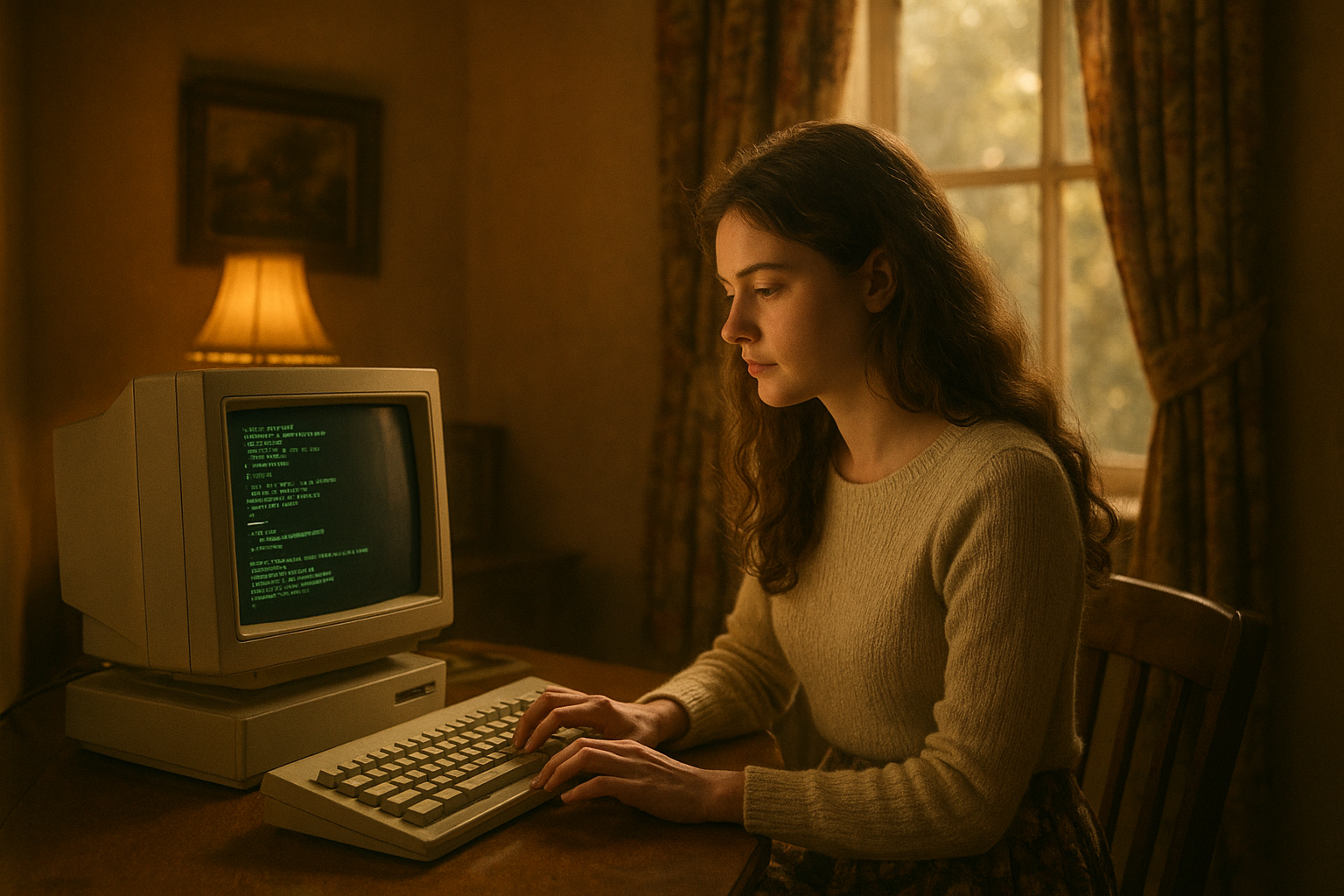
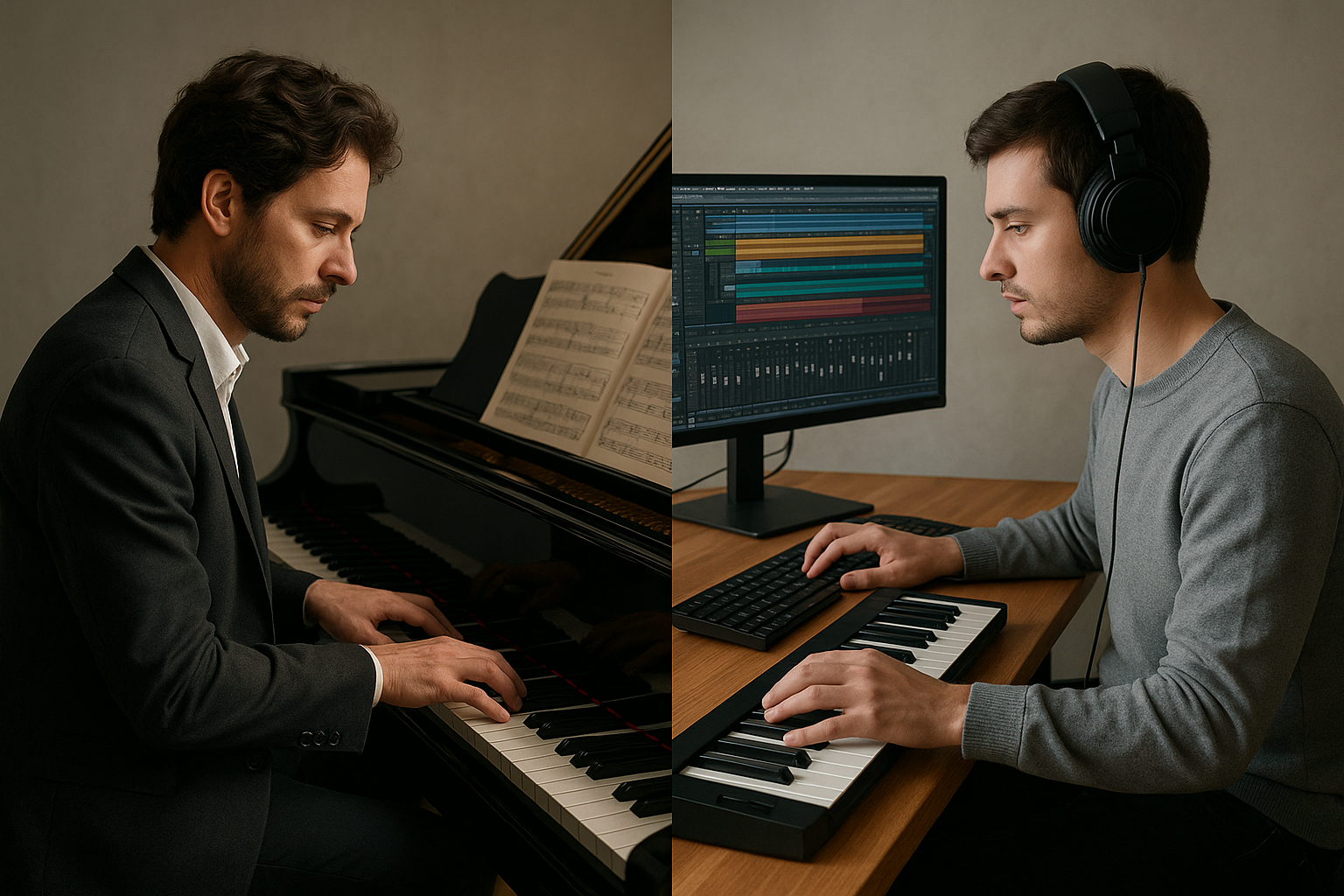
    Collaborations between musicians and technologists are essential to push the boundaries even further. As the field of music technology evolves, educational opportunities in algorithmic composition are becoming more prevalent, preparing a new generation of musicians who are equally comfortable at a piano or a computer keyboard.

    Conclusion

    The integration of algorithms into the compositional process is not about replacing human creativity but expanding it. As we embrace these new tools, we redefine what it means to compose, creating a cultural shift that celebrates the possibilities at the nexus of art and technology. Just as the instruments of the past shaped the soundscape of their time, algorithms are set to compose the symphonies of the future.

    Ultimately, composing with algorithms opens new horizons for artists, allowing them to explore the infinite landscape of music and creativity. Whether viewed as an extension of classical traditions or a revolution in musical thought, algorithmic composition represents an exciting chapter in the history of music, one where code not only supports but inspires art.

  • The Orchestra in the Machine – Simulating Symphonies with AI

    The Orchestra in the Machine – Simulating Symphonies with AI

    In recent years, artificial intelligence (AI) has found its place within the realms of art and music, creating exceptional and intricate symphonies that rival those produced by human composers. From Bach to Beethoven, the algorithmic echo of a computer program aims to capture human creativity in its code-driven clutches. But how does AI simulate such grand compositions, and what does this mean for the future of music?

    A Symphony of Data

    To understand AI-composed music, it is crucial to appreciate the vast datasets required for training. Machine learning models learn from tens of thousands of pieces, identifying patterns, harmonies, and the intricacies involved in music composition. This deep learning process allows AI to generate new music pieces that are stylistically similar to the classical greats.

    • Training Data: AI absorbs a wide repertoire of existing compositions, learning the nuances of musical scales, tempo, and rhythm.
    • Compositional Algorithms: The algorithms utilize neural networks to process and replicate the complex patterns found in renowned symphonies.
    • Real-time Adaptation: Machines can simulate compositional processes in real-time, allowing for dynamic and responsive music creation.

    The Creators Behind the Code

    Several companies and research groups are pioneering AI music. For example, OpenAI has delved into the world of musical AI with its diverse array of projects, exploring AI’s potential to compose music with the emotional depth of a human artist. Their model, DALL·E, known mostly for visual art, sets intriguing precedence for music as well.

    Another key player is Sony’s Computer Science Laboratory and their project Flow Machines, which produced “Daddy’s Car,” an AI-generated song inspired by The Beatles. Experiments like these showcase how deeply AI can emulate human-like creativity.

    Embracing the Influence of AI

    The question arises whether AI-generated compositions can touch the expressive hearts of human listeners. Renowned music professor David Cope once said, “What we’re dealing with is the relationship between the mechanistic and the spiritual.” This delicate balance challenges the traditional beliefs about artistic ingenuity.

    “Given that music is both math and feeling, the question is whether computers will ever be able to generate a feeling, and not just a facsimile of one,” noted Mark Swans in The Guardian.

    As we venture further into this technological era, AI’s symphonic creations may either enhance human artistry or redefine it. For now, the orchestra within the machine plays on, creating a new harmony between man and technology.

  • The Spiritual Life of Timbre – Mystical Qualities of Orchestral Color

    The Spiritual Life of Timbre – Mystical Qualities of Orchestral Color

    The world of orchestral music transcends mere notes on a page, venturing into the mystical realm where sound and spirit entwine. At the heart of this transformation is timbre, often referred to as the “color” of music. Timbre imbues and animates compositions, offering them a spiritual dimension that connects deeply with listeners.

    The Enigmatic Essence of Timbre

    Timbre defies easy definition. It is the distinguishing characteristic that enables us to perceive a difference between a flute and a violin, even if they are playing the same pitch and loudness. Renowned composer and conductor Leonard Bernstein encapsulated its essence beautifully when he said, “The most wonderful possibility is that somewhere in this enchanted wood a fairy essence of the unattainable is hovering to be caught, however fleetingly, in some aspect of sound.” (Leonard Bernstein, The Unanswered Question).

    Indeed, timbre is the ethereal quality that invokes emotions and imagery within music, acting as a bridge between the auditory and the spiritual.

    The Alchemy of Orchestration

    Orchestration is akin to alchemy, wherein composers and conductors blend various timbres to create a new, powerful whole. The grand orchestral palette includes strings, woodwinds, brass, and percussion, each contributing a distinct voice to the symphony of sound.

    • Strings: Often associated with warmth and expressiveness, strings can evoke a range of emotions from tranquility to intense passion.
    • Woodwinds: Known for their rich and varied sounds, woodwinds can mimic natural sounds and evoke pastoral imagery.
    • Brass: With their bold and resounding timbre, brass instruments convey power, majesty, and heroism.
    • Percussion: Providing rhythm and color, percussion instruments add layers of complexity and excitement.

    As composers wield these tools, they craft spiritual narratives that resonate with the mysteries of the human experience. As Claude Debussy once remarked, “Orchestral color, considered purely as such, is no less capable of properly defining the contours and the shading.” (Claude Debussy).

    Mysticism and the Power of Sound

    The mystical qualities of orchestral timbre have been explored by numerous composers seeking to convey transcendental states. Gustav Mahler, in his symphonies, united celestial sounds to express cosmic themes, bridging heaven and earth. His Symphony No. 8, known as the “Symphony of a Thousand,” is an exemplary work that invests the power of orchestral color to evoke spiritual grandeur.

    “A symphony must be like the world. It must contain everything.” – Gustav Mahler

    Similarly, Olivier Messiaen explored the spiritual dimensions of timbre, drawing inspiration from religious themes and portraying them through an intricate palette of sound. Messiaen’s Turangalîla-Symphonie exemplifies his fusion of rhythmic complexity and harmonic color, aiming to convey the joy and ecstasy found in divine love.

    The Synesthetic Experience

    Timbre also plays a crucial role in synesthesia, a phenomenon where the stimulation of one sensory pathway leads to automatic, involuntary experiences in a second sensory pathway. Certain individuals may “see” colors when they hear specific musical notes or instruments, adding a visual element to their auditory experience. This is not confined to rare cases but can occur in varying intensities in many listeners, enhancing their perception of music.

    Renowned composer Alexander Scriabin explored this intersection, notably in compositions like Prometheus: The Poem of Fire, which utilized a “light organ” to accompany the music with a changing display of colors.

    “I am a moment illuminating eternity…” – Alexander Scriabin

    Immersion into the Sublime

    The immersive quality of orchestral timbre can transport listeners beyond the concert hall, guiding them on an introspective journey. The powerful, haunting timbre of an oboe solo in a symphonic work can evoke an emotional solitude, while the majestic call of the French horns can invoke images of triumphant vistas.

    Orchestral music, with its robust timbral palette, invites audiences to explore hidden depths of consciousness. This spiritual journey is what makes classical music ever-relevant—it is an eternal voyage into the self and beyond.

    The Future of Orchestral Color

    As technology and musical expression continue to evolve, so does the exploration of timbre. Contemporary composers integrate electronic instruments and computer-generated sounds, further expanding the auditory landscape. This evolution underscores the timeless relevance of timbre—the spiritual essence of sound remains a profound aspect of musical creation.

    In conclusion, the spiritual life of timbre and its mystical qualities remain pivotal to the orchestral experience. It acts as the soul of the symphony, an eternal whisper of the esoteric, inviting both musicians and audiences alike to embark on a journey into the mystical realms of sound. As we continue to explore and embrace the colors of music, we find in them reflections of our own shared humanity, uniting us across time and space through the resonant art of orchestral timbre.

  • Music Theory as Sacred Geometry – Hidden Patterns in Classical Thought

    Music Theory as Sacred Geometry – Hidden Patterns in Classical Thought

    Music and geometry have been intertwined since ancient times, sharing a profound connection that resonates through the annals of cultural and scientific history. This relationship is perhaps most vividly explored through the lens of classical music theory, where sacred geometry uncovers hidden patterns within harmonious soundscapes.

    The Harmony of the Spheres

    The concept of “Music of the Spheres” dates back to ancient Greek philosophers like Pythagoras and Plato, who believed that celestial bodies produced a form of music through their movements. Pythagoras, in particular, famously proposed that the ratios of musical harmony mirror the proportions found in geometry. This vision of cosmic order revealed how music, mathematics, and the universe were inextricably linked.

    “There is geometry in the humming of the strings, there is music in the spacing of the spheres.” – Pythagoras

    The Golden Ratio and Musical Composition

    The Golden Ratio (approximately 1.618), a ubiquitous pattern in nature and art, also weaves its way through music. Composers from the Baroque to the Romantic period often utilized this divine proportion to achieve balance and beauty in their works. For instance, experts have noted the presence of the Golden Ratio in the compositions of Wolfgang Amadeus Mozart and Frédéric Chopin, where the structure of sonatas and fugues often mirror this mathematical principle.

    Mathematics in Motion: The Fibonacci Sequence

    Just as the Golden Ratio plays a central role, the Fibonacci Sequence finds a harmonious echo in musical compositions. This sequence, in which each number is the sum of the two preceding ones, is intimately related to the Golden Ratio and appears frequently in the rhythm and structure of music. The meticulous works of Johann Sebastian Bach can be seen as reflections of this sequence, as he crafted compositions that balance unpredictable creativity with mathematical precision.

    Contemporary Resonances

    Today, the exploration of these hidden patterns continues. Modern composers and musicians, inspired by this historical connection, seek to apply mathematical concepts like fractals and algorithms to create novel musical experiences. The digital age offers limitless possibilities in sound generation, yet the ancient principles of sacred geometry remain a guiding force in musical composition.

    As technology evolves, the fusion of music theory and geometry remains a testament to the enduring quest for harmony and order—a reminder that, as we decode the patterns of classical thought, we reveal timeless truths about our universe.

  • The Digital Harpsichord – Rebuilding Ancient Voices with Modern Tech

    The Digital Harpsichord – Rebuilding Ancient Voices with Modern Tech

    The Digital Harpsichord: Rebuilding Ancient Voices with Modern Tech

    In an era where digital technology constantly reshapes the boundaries of music, the harpsichord—a symbol of Baroque music and history—finds itself at the nexus of revival and innovation. The emergence of digital harpsichords brings about an intriguing dialogue between tradition and technology, offering an opportunity to rebuild ancient voices using modern tools.

    Understanding the Harpsichord

    The harpsichord, a keyboard instrument widely used during the Renaissance and Baroque periods, is known for its distinctive, crisp timbre. Its sound production, unlike the hammer action of the piano, involves plucking strings with small plectra.

    “To hear a sound in history’s echo takes more than a mere replay; it takes a reconstruction of its soul and body simultaneously.” – Anonymous

    Despite its decline in popularity with the rise of the piano in the 18th century, the harpsichord holds a revered place in music history. It invokes the works of Johann Sebastian Bach, François Couperin, and Domenico Scarlatti, offering a soundscape rich in historical context.

    The Rise of Digital Emulation

    With the advent of modern technology, musicians and engineers have endeavored to emulate the harpsichord digitally. This innovation, known as digital harpsichord technology, seeks to replicate the instrument’s intricate sound features.

    • Sampling: High-quality digital harpsichords utilize audio samples from real harpsichords. Every note and nuance is recorded, capturing the idiosyncratic sounds each instrument produces.
    • Physical Modeling: More advanced digital versions employ physical modeling, simulating the mechanics and acoustics of the harpsichord to generate sound naturally in real-time.
    • User Accessibility: Digital interfaces allow musicians of all levels to engage with it, breaking down the barriers of cost and accessibility inherent in acquiring and maintaining historical instruments.

    The intersection of these technologies has transformed how we experience harpsichord music, providing platforms like Arturia’s Solina V that emphasize authentic sound replication while integrating modern-day functionality.

    Rebuilt for Modern Audiences

    The digital harpsichord not only aims to preserve historical sonority but also aspires to innovate by offering hybrid sounds that blend ancient textures with contemporary results. This technology is evident in productions ranging from classical reproductions to modern EDM tracks.

    The Benefits of Digital Harpsichords:

    • Educational Reach: Digital access to harpsichord sounds opens new educational prospects, allowing students to explore Baroque music authentically, free from the limitations of physical harpsichord availability.
    • Creative Explorations: Composers can now incorporate harpsichord sounds into various genres without the constraints of traditional harmonizations, allowing them to innovate beyond classical boundaries.
    • Cost Efficiency and Space: Unlike their acoustic counterparts, digital harpsichords require no tuning and take up minimal space, making them highly practical for both amateur musicians and professionals.

    Cultural Renaissance and Accessibility

    Historically, the harpsichord was an elite instrument reserved for the courts and wealthy patrons. However, the digital democratization enables widespread access, fostering new appreciation and study of the Baroque era’s cultural legacy.

    The virtual reconstruction of historical instruments has invited a renaissance of interest in period music, making it an active part of contemporary music discourse. By reducing the divide between past and present, digital harpsichords serve as a bridge, creating a conversation across centuries.

    Challenges and Considerations

    Despite its many advantages, digital harpsichord technology contends with challenges:

    1. Authenticity Concerns: Critics often argue about the authenticity of digitally reproduced sounds compared to physical timbres rooted in tangible physics.
    2. Purist Opposition: Enthusiasts of historical precision may resist digital versions due to a preference for original craftsmanship and acoustic properties.
    3. Technological Limitations: Digital inaccuracies, such as latency and sound fidelity, can hinder the adoption of digital harpsichords in professional classical settings.

    “Technology is best when it brings people together.” – Matt Mullenweg

    The challenge lies in developing technology that bridges these gaps effectively while maintaining the integrity and cultural resonance of the original instruments.

    The Future of Digital Harpsichords

    As digital technologies advance, so will our ability to rebuild musical experiences from ages past. The digital harpsichord exemplifies how innovation can preserve historical art forms while integrating them into the fabric of modern culture.

    This revitalization reflects a broader trend of utilizing technology to explore heritage—creating dynamic intersections where the past informs the present, and the auditory experiences of previous generations resound within modern-day compositions.

    Therefore, the digital harpsichord stands not merely as a replication of historical sound but as a testament to the enduring relevance of cultural legacies, continually shaping the ever-evolving landscape of music.

  • Harmonic Light and Shadow – The Dramatic Art of Classical Chords

    Harmonic Light and Shadow – The Dramatic Art of Classical Chords

    Throughout history, music has served as a powerful medium to express the full spectrum of human emotions. In the realm of classical music, the interplay of harmony and melody creates an art form akin to painting, where light and shadow dance upon a canvas of sound. This is particularly evident in the dramatic art of classical chords, which wield the power to evoke deep emotional responses.

    The Role of Chords in Classical Music

    Chords, the harmonic building blocks of music, bring depth and texture to musical compositions. A chord can create a sense of tranquility or instill tension and unrest. As Leonard Bernstein eloquently stated, “Music can name the unnameable and communicate the unknowable” (source), underscoring the enigmatic potency of music’s harmonic elements.

    The Dichotomy of Major and Minor Chords

    At the heart of classical harmonic language lies the dichotomy between major and minor chords. Major chords are often perceived as bright and stable, conveying emotions such as joy and triumph. In contrast, minor chords are associated with somberness and introspection. This duality allows composers to paint varied emotional landscapes, shifting from hope to sorrow with a mere change in tonality.

    • Major Chords: The use of major chords is prevalent in compositions meant to evoke uplifting and grandiose themes. Pieces such as Beethoven’s “Symphony No. 9” capture the essence of triumph and joy.
    • Minor Chords: Conversely, minor chords feature prominently in works exploring melancholic or reflective themes. Chopin’s “Nocturnes” showcase the introspective quality of minor tonalities.

    Chords in Dynamic Progressions

    Beyond static harmony, the progression of chords serves as a narrative device. A well-crafted chord progression can lead the listener through a story of tension, climax, and resolution. This musical journey is often utilized in operas and symphonic works to mirror the dramatic arc of a narrative.

    Without music, life would be a mistake,” said Friedrich Nietzsche, reflecting on music’s integral role in human experience (source).

    In its harmonic essence, classical music captures the complex interplay between light and shadow. Through the artful use of chords, composers continue to touch the hearts of listeners, revealing the dramatic potential rooted within the seemingly simple assembly of notes. As we navigate the emotions these chords evoke, we delve deeper into the mysterious power of music—a timeless testament to the endless creativity of the human spirit.

  • Repetition as Revelation – Mysticism Within Minimalist Process

    Repetition as Revelation – Mysticism Within Minimalist Process

    Repetition as Revelation: Mysticism Within Minimalist Process

    In the realm of contemporary art, few movements have captured the intrigue and critical examination as seamlessly as Minimalism. Characterized by simplicity, order, and starkness, Minimalism invites both artists and audiences to engage in a unique visual and auditory dialogue. However, beneath its austere exterior lies an enchanting layer of mysticism that emerges through the concept of repetition. This article delves into the spiritual resonance and revelatory potential of repetition in minimalist art, exploring how it subtly transforms monotonous cycles into profound experiences.

    Understanding Minimalist Repetition

    The minimalist movement, which gained prominence in the late 1960s and early 1970s, emphasizes the use of simple forms and limited color palettes to distill art to its essence. At its core, Minimalism seeks to strip away the superfluous to reveal the underlying beauty of structure and form.

    Repetition within minimalist art, whether in music, visual art, or literature, utilizes recurring motifs to create a meditative and immersive experience. The idea is succinctly captured by composer Steve Reich, renowned for his contributions to minimalist music. As Reich notes, “by drawing the listener’s attention to only a small amount of material, you create the possibility of experiencing more detail.”

    Musical Mysticism: The Power of Reiteration

    In music, repetition is not a mere compositional tool but a transformative force. Minimalist compositions strive to demonstrate how repetition can manifest as a catalyst for spiritual introspection. Music for 18 Musicians by Steve Reich is a prime example, where the persistent use of patterned rhythms and melodic fragments invokes a trance-like state in the listener.

    Critics often draw parallels between Reich’s work and traditional spiritual practices. As mentioned by The Guardian, Reich has defined his style as having an affinity with African drumming and the Balinese gamelan, infusing it with the spiritual cadence found in the rituals of these cultures. The repetitive chants and cycles are akin to a mantra, drawing both musician and audience into a shared spiritual journey.

    Visual Art: Minimalism Meets Mysticism

    In the visual arts, repetition manifests in patterns and symmetry to evoke a quiet contemplation. Agnes Martin, a key figure in minimalist painting, used grids and lines to express what she saw as the spiritual quality of serenity and joy. Her work invites viewers to focus on perception and the nuances within the seemingly identical.

    “Art is the concrete representation of our most subtle feelings,” Martin once declared, underscoring the emotional resonance found in minimalist art.

    As viewers engage with repetition in her paintings, what initially seems monotonous becomes a moment of revelation. The lines blur between objectivity and spirituality, leading to a personal experience of introspection and mindfulness.

    Literature and Language: Words in a Spiral

    Repetition is also a crucial feature in minimalist literature, where concise prose and recurring themes lead to profound messages. For instance, the Japanese author Haruki Murakami, often lauded for his sparse yet deep style, employs repetitive motifs to explore themes of loneliness and the human condition.

    In novels like Norwegian Wood or The Wind-Up Bird Chronicle, Murakami weaves cycles of events and motifs, subtly directing readers towards a deeper understanding of spiritual languor and existential searching. Through repetition, Murakami underscores the characters’ inner worlds, allowing mundane occurrences to carry a weightier, mystical meaning.

    The Philosophical Underpinnings of Repetition

    At the heart of repetition is a philosophical inquiry into the nature of experience and meaning. Søren Kierkegaard famously explored the idea of “repetition” or “recollection forward” in his philosophical writings. This concept alludes to the idea that true understanding and revelation come from the repetitive actions, akin to a spiral, where believers perpetually delve deeper into perception.

    Kierkegaard’s exploration highlights how repetition is inherently tied to the human quest for knowledge and truth, transcending the mundane and touching the divine. Similarly, Minimalism in its various forms seeks to unlock this revelation through repetition, forcing introspection and reflection on part of the audience.

    Repetition as a Spiritual Channel

    The deliberate use of repetition as a channel for spiritual engagement is a testament to its profound impact. As pointed out by art critic Clement Greenberg, minimalist art by its very nature challenges the observer to abandon preconceived notions and to seek out truth in pure perception. This metaphysical perspective allows repetition to act as a conduit for spiritual awakening.

    Furthermore, in an age characterized by distractions and a barrage of sensory experiences, the repetitive simplicity of minimalist art offers an oasis of calm and clarity. It beckons observers to peel back layers of the ordinary, to perceive what lies beneath the repetition and ultimately to find solace in revelation.

    Conclusion: The Infinite Loop of Revelation

    Minimalism thrives on the principle that less is more, and repetition is the key to unlocking its deeper insights. In its purest form, repetition becomes not just a technique, but a revelation. This mystical dimension invites both creators and viewers to engage in an infinite loop of understanding, where each experience is unique despite the sameness.

    Ultimately, the symbiosis between repetition and revelation in minimalist art offers a profound insight into human perception and experience. While the journey may seem like a winding path, it is, in essence, a spiral—a manifestation of mysticism that points to an ever-deeper understanding of reality.

    As Minimalism continues to influence art and culture, the repetitive forms that have become its hallmark will remain not as echoes of redundancy, but as eternal invitations to explore what lies beyond the surface—a continuous cycle of repetition as revelation.

  • The Composer as Seer – Visionary Creativity Through the Ages

    The Composer as Seer: Visionary Creativity Through the Ages

    Throughout history, composers have often been seen as visionaries, figures whose creative genius transcends the boundaries of time and culture. Their music has not only challenged existing paradigms but also envisioned new realities, offering listeners a profound connection to the unseen world. This exploration of musical visionaries will delve into how composers have embodied the role of the seer, influencing their times and ours through their innovative works.

    The Ancient Origins of Musical Visionaries

    The concept of the composer as a seer has roots in ancient civilizations, where music was often perceived as a divine gift. In Ancient Greece, Orpheus was more than a mere musician; he was considered a prophet whose music could charm all living things and even inanimate objects. As Pindar once wrote, “Orpheus’ voice could move the very stones to build.” (Encyclopedia Britannica on Orpheus).

    This mythical portrayal of Orpheus reflects the broader belief in music’s transcendent power, a theme echoed in later traditions. In China, the legendary sage Confucius emphasized music’s role in harmonizing society and personal character, suggesting a visionary quality inherent in musical composition.

    Medieval and Renaissance Visions

    During the Medieval and Renaissance periods, music took on even more overt spiritual and visionary connotations. Hildegard of Bingen, a 12th-century abbess, composer, and mystic, described her music as “visions from the Living Light.” Her compositions were imbued with ethereal beauty, reflecting her profound spiritual insights and doctoral guidance.

    “I composed and sang plainsong and chant not by human learning, but by God’s inspiration.” – Hildegard of Bingen

    Likewise, during the Renaissance, the idea of music as a universal language was popularized by Johannes Kepler and other intellectuals who spoke of the “music of the spheres,” envisioning the cosmos itself as a grand, harmonious symphony.

    Classical Innovators

    The Classical era saw composers grappling with and expanding the boundaries of musical form and expression. Ludwig van Beethoven, often considered the epitome of the musical seer, used his profound deafness to access an internal auditory world, producing works that stretched existing forms into new realms.

    “Music is the mediator between the spiritual and the sensual life.” – Ludwig van Beethoven (The Guardian)

    His 9th Symphony, with its choral culmination in “Ode to Joy,” speaks to a universal brotherhood, making a visionary statement that extends beyond mere notes and rhythms into the realm of a societal ideal.

    Romantic and Post-Romantic Visionaries

    The Romantic era embraced the idea of the composer as a lone, visionary hero. Figures like Franz Liszt and Frédéric Chopin captured the tumultuous spirit of their times through intensely personal and often revolutionary compositions.

    Richard Wagner further advanced this vision, creating epic, mythic operas that sought to embody the totality of artistic expression. His concept of the Gesamtkunstwerk (“total artwork”) was a synthesis of all art forms, aspiring to transport audiences to a different plane of understanding and experience.

    20th-Century Pioneers

    The 20th century brought new dimensions to the visionary role of the composer. The advent of new technologies and forms spurred revolutionary changes in musical creation. Igor Stravinsky, with works like The Rite of Spring, shattered classical conventions and reimagined the possibilities of rhythm and harmony. The premiere of The Rite in 1913 is legendary for inciting a riot, yet it marked a seismic shift in music and remains one of the most influential compositions of the century.

    “I have learned… that music is the best way to digest time.” – Igor Stravinsky (Brain Pickings)

    John Cage pushed these boundaries further, redefining what could be considered music with compositions like 4’33”, which consisted entirely of silence. Cage’s work asked audiences to reconsider preconceived notions of sound and silence, challenging the very nature of listening and performance.

    Contemporary Visionaries

    Today’s composers continue to push boundaries and redefine what it means to be a musical visionary. Philip Glass and Steve Reich have championed minimalist techniques, focusing on repetitive structures that open up new modes of listening and contemplation.

    Meanwhile, in other corners of the compositional world, artists like Kaija Saariaho and Tan Dun blend traditional and avant-garde techniques, drawing on their cultural heritages while crafting globally resonant works. Tan Dun’s compositions exemplify this approach, bridging Eastern and Western musical traditions in innovative ways. His work for the film Crouching Tiger, Hidden Dragon earned both popular and critical acclaim, showcasing the visionary potential of cross-cultural music.

    The Enduring Legacy of Composers as Seers

    The role of the composer as seer endures, challenging audiences to transcend the mundanity of everyday life. As technology evolves and cultures intermingle more than ever, visionary composers are uniquely positioned to guide listeners through this complex soundscape.

    Whether revisiting classical compositions or exploring new sound worlds, the visionary spirit of the seer-composer continues to inspire. By transcending time, space, and cultural boundaries, composers remind us of the limitless potential of human creativity.

    For a deeper understanding of how visionary composers have shaped our world, scholars and enthusiasts alike continue to explore their works, unraveling layers of innovation and inspiration from every era of music history.