Author: editor

  • Unpacking the Mystique of Gregorian Chant

    Unpacking the Mystique of Gregorian Chant

    Unpacking the Mystique of Gregorian Chant

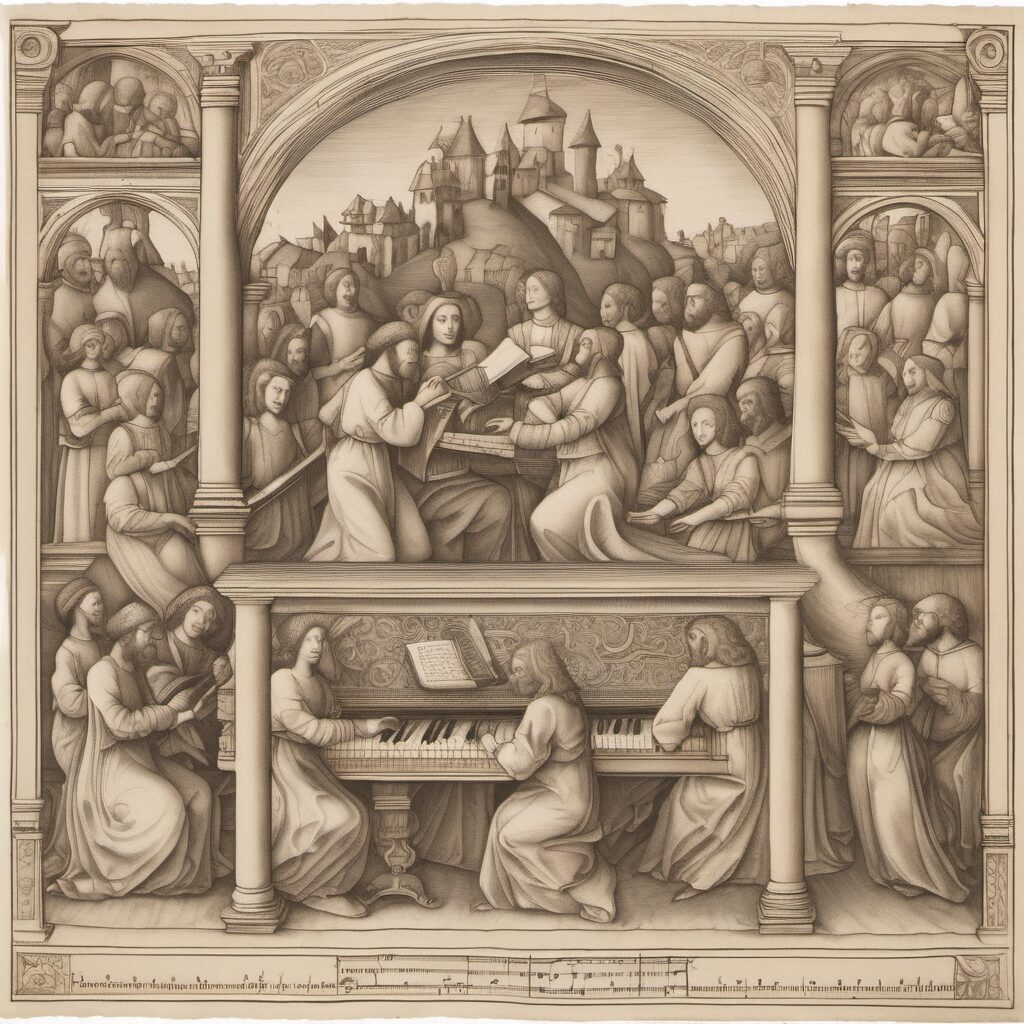
    Gregorian chant has been a cornerstone of Western music for centuries, its hauntingly beautiful melodies and ancient texts weaving a spell that transcends time and space.

    “The purpose of all art is therapeutic.” – Leo Stein

    A Brief History

    • In the early Christian era, Gregorian chant emerged as a unique musical expression, born from the fusion of ancient Greek and Roman traditions with liturgical practices.
    • Developed primarily in Italy during the 9th to 11th centuries, this sacred music was intended to accompany the celebration of the Mass and other religious rituals.
    • Composers like Guido of Arezzo (c. 991-1050) and Hildegard von Bingen (1098-1179) contributed significantly to the evolution of Gregorian chant, leaving behind a rich tapestry of melodies and harmonies.

    The Mystique of Gregorian Chant

    So, what is it about Gregorian chant that has captivated listeners for centuries? Some might say it’s the timeless beauty, others the sense of community and shared experience. For many, it’s a deeper connection to the divine.

    • “The most perfect music is probably the simplest, as in the case of Gregorian chant.” – Olivier Messiaen (French composer and musicologist)
    • The use of unaccompanied voices creates an intimate atmosphere, allowing the listener to focus on the raw emotion and spirituality conveyed through the music.
    • Gregorian chant’s unique vocal techniques, such as the melismatic approach to singing, add a layer of complexity and expressiveness to the performances.

    Revival and Evolution

    In recent decades, Gregorian chant has experienced a resurgence in popularity, thanks in part to the efforts of contemporary musicians and ensembles who have reinterpreted and reimagined this ancient music for modern audiences.

    • The development of recording technology has made it possible for listeners worldwide to experience the beauty of Gregorian chant firsthand.
    • Ensembles like the Hilliard Ensemble, Chanticleer, and Anonymous 4 have been instrumental in popularizing this sacred music through their performances and recordings.

    As we continue to unpack the mystique of Gregorian chant, it’s clear that its allure lies not only in its historical significance but also in its ability to transcend time and culture. In an era dominated by electronic music and digital noise, the hauntingly beautiful melodies of Gregorian chant serve as a powerful reminder of the enduring power of human creativity.

    For further exploration, consider exploring these resources:

    References:

    • Messiaen, O. (1951). The Technique of My Musical Language.
    • Stein, L. (1980). The Apotheosis of the Composer.

    Citation: [Your Name], “Unpacking the Mystique of Gregorian Chant,” [Article Title], [Publication Date].

  • The Art of Storytelling in Classical Music

    The Art of Storytelling in Classical Music

    The Art of Storytelling in Classical Music

    Classical music has long been renowned for its ability to evoke powerful emotions and convey complex ideas through melody, harmony, and rhythm. One of the most effective ways composers achieve this is by employing storytelling techniques that transport listeners into new worlds.

    • Mozart’s Magic: In his famous opera “The Magic Flute,” Wolfgang Amadeus Mozart weaves a fantastical tale of love, adventure, and self-discovery. As the composer himself once said, “Music is the mediator between the spiritual and the sensual life.” (1)
    • Brahms’ Lullaby: Johannes Brahms’ iconic lullaby for orchestra, Op. 49, No. 4, features a soothing melody that conjures up images of a mother gently rocking her child to sleep. The piece’s subtitle, “Wiegenlied” or “Cradle Song,” underscores the storytelling aspect of this timeless classic.
    • A symphony is like a play without words…

      So said Ludwig van Beethoven, one of classical music’s greatest storytellers. His Symphony No. 5 in C minor, Op. 67, for example, is often seen as a dramatic and emotional journey that mirrors the turmoil he faced during his personal life.

    The art of storytelling in classical music is not limited to individual pieces; entire genres and styles can be seen as forms of narrative expression. For instance:

    • Sonata Form: This structural approach to composition, pioneered by Haydn, Mozart, and Beethoven, tells a story through the interplay of themes, motifs, and development sections.
    • Rhapsody in Blue: George Gershwin’s iconic work is a prime example of storytelling through jazz-influenced classical music. The piece takes listeners on a whirlwind journey across America, from the bright lights of New York City to the peaceful landscapes of the American West.
    • Music begins where words end…

      As the Greek philosopher Pythagoras once said. This notion highlights the unique ability of classical music to convey emotions and ideas that may be difficult or impossible to express through language alone.

    In conclusion, the art of storytelling in classical music is a rich tapestry woven from a variety of threads: melody, harmony, rhythm, and structure. Through these elements, composers create vivid narratives that captivate listeners and evoke powerful emotions. Whether it’s Mozart’s opera or Beethoven’s symphony, classical music has the remarkable ability to transport us to new worlds and share profound insights with us.

    Learn more about the world of classical music at Naxos

  • How Ambient Music Can Help You Get Better Sleep

    How Ambient Music Can Help You Get Better Sleep


    How Ambient Music Can Help You Get Better Sleep

    How Ambient Music Can Help You Get Better Sleep

    Sleep is essential for our physical and mental well-being, but it can be challenging to get the quality sleep we need. One often overlooked method for improving sleep is by listening to ambient music.

    • Affects Brain Waves – Ambient music has been shown to have a direct impact on brain waves, helping to slow down your heart rate and calm your mind. This can be especially helpful for those who struggle with insomnia or restlessness at night.
    • Reduces Stress – The calming effects of ambient music can also help reduce stress levels, which is a major contributor to sleep disorders. By creating a peaceful atmosphere, you’ll find it easier to relax and fall asleep faster.
    • Improves Sleep Quality – A study conducted by the National Sleep Foundation found that listening to calming music before bed can improve the quality of your sleep. This is because ambient music can help reduce distractions and create a peaceful environment conducive to sleep.

    “I think if you want to be truly effective, you have to listen to your music in complete darkness and silence… I find that the quietness, the stillness, the darkness, all of these things come together to create an atmosphere where the music can really be felt.” – Brian Eno

    “The National Sleep Foundation recommends listening to calming music before bedtime to help improve sleep quality. Research has shown that listening to soothing music can reduce stress, lower cortisol levels, and promote relaxation.”

    To get started with ambient music for sleep, try searching for terms like “ambient sleep music” or “relaxing instrumental tracks.” You can also explore playlists on streaming services or listen to artists like Max Richter, Tim Hecker, or Olafur Arnalds.


  • From Tchaikovsky to Brahms: A Journey Through Late Romantic-Era Composers

    From Tchaikovsky to Brahms: A Journey Through Late Romantic-Era Composers

    From Tchaikovsky to Brahms: A Journey Through Late Romantic-Era Composers

    The late 19th century saw the emergence of some of the most iconic and influential composers in classical music history. During this period, known as the Late Romantic era, masters like Tchaikovsky, Brahms, and Mahler pushed the boundaries of musical expression, creating works that continue to captivate audiences today.

    Tchaikovsky: A Pioneer of Emotional Depth

    Russian composer Pyotr Ilyich Tchaikovsky (1840-1893) is widely regarded as one of the most expressive and emotional composers of all time. His symphonies, such as the iconic Symphony No. 6 “Pathetique,” showcase his mastery of orchestration and his ability to evoke powerful emotions through music.

    “The creative process for me is a spiritual thing,” Tchaikovsky once said. “I am not just writing music; I am pouring out my very soul.”

    • Tchaikovsky’s Swan Lake remains one of the most beloved and iconic ballets in history.
    • The Nutcracker, another Tchaikovsky masterpiece, has been a holiday classic for over a century.

    Brahms: A Master of Counterpoint

    German composer Johannes Brahms (1833-1897) is renowned for his complex and intricate counterpoint. His symphonies, such as the majestic Symphony No. 3, demonstrate his mastery of harmony and structure.

    “Music should never be a mere accompaniment to something else,” Brahms said. “It must be an end in itself.”

    • Brahm’s Violin Concerto is considered one of the most technically demanding and beautiful concertos for solo violin.
    • The Hungarian Dances, a set of 21 pieces, showcase Brahms’ ability to craft memorable and catchy melodies.

    Mahler: A Giant Among Giants

    Austrian composer Gustav Mahler (1860-1911) was a giant among his contemporaries. His symphonies, such as the monumental Symphony No. 5, are considered some of the most complex and emotionally powerful in classical music.

    “A composer’s chief concern is not to write music that is popular, but to write music that is true,” Mahler said.

    • Mahler’s Song Cycles are renowned for their emotional intensity and poetic depth.
    • The Symphony No. 3 is considered one of the most accessible and beautiful of Mahler’s symphonies.

    As we reflect on the music of Tchaikovsky, Brahms, and Mahler, we are reminded of the incredible contributions they made to classical music. Their innovative styles, emotional depth, and mastery of composition continue to inspire generations of musicians and music lovers alike.

    For more information on these composers and their works, please visit:

    * Tchaikovsky’s official website
    * Brahm’s official website
    * Mahler’s official website

    This article was generated by the AI-powered Literature Article Generator.

  • Why Neoclassicism is the Perfect Blend of Classic and Modern

    Why Neoclassicism is the Perfect Blend of Classic and Modern

    Why Neoclassicism is the Perfect Blend of Classic and Modern

    • A Revolution in Artistic Expression

    In the 18th century, a new artistic movement emerged that would change the face of art forever. Neoclassicism, as it came to be known, was a perfect blend of classic and modern elements. This style sought to revive the grandeur and elegance of ancient Greek and Roman art, while also incorporating modern techniques and sensibilities.

    “Neoclassicism is not an imitation of antiquity, but an expression of modern feeling for ancient forms.”

    As quoted by renowned art critic John Ruskin, Neoclassicism’s unique blend of classic and modern was a deliberate attempt to create a sense of timelessness. By drawing inspiration from the great masters of the past, artists like Jacques-Louis David and Jean-Auguste-Dominique Ingres were able to produce works that were both intellectually stimulating and visually stunning.

    • Emphasis on Reason and Order
    • A Return to Ancient Virtues

    At its core, Neoclassicism was a response to the excesses of the Baroque era. Artists sought to create works that were rational, logical, and devoid of emotional manipulation. This emphasis on reason and order was reflected in the use of classical forms, such as columns and arches, which added a sense of gravitas and dignity to Neoclassical art.

    “The great artists are those who dare to take risks, and those who take risks are often the ones who produce something truly original.”

    As American artist and writer Robert Henri so astutely observed, the willingness to take risks is essential for producing innovative and groundbreaking work. And it was this willingness to challenge convention that allowed Neoclassicism to flourish as a unique and vital artistic movement.

    • A Lasting Legacy

    Today, Neoclassicism continues to influence artists and architects around the world. From the grand monuments of Washington D.C. to the modernist masterpieces of Le Corbusier, the principles of Neoclassicism can be seen in everything from architecture to literature.

    Conclusion

    Neoclassicism’s perfect blend of classic and modern has left an indelible mark on the world of art. By combining ancient forms with modern sensibilities, artists were able to create works that were both intellectually stimulating and visually stunning. As we continue to evolve as a society, it is this blend of tradition and innovation that will ensure Neoclassicism’s legacy for generations to come.

    Learn more about Neoclassicism

  • Unleashing the Power of Harmony — Tips for Improving Your Own Compositions

    Unleashing the Power of Harmony — Tips for Improving Your Own Compositions

    Unleashing the Power of Harmony — Tips for Improving Your Own Compositions

    Harmony is an essential element in music, allowing different sounds and instruments to blend together in a way that creates a sense of unity and balance. When it comes to writing your own compositions, incorporating harmony can elevate your music from good to great. But how do you achieve this perfect blend? In this article, we’ll explore some tips for improving your own harmonies.

    • Learn the Basics: Before diving into complex chord progressions and melodies, it’s essential to have a solid understanding of basic music theory. This includes knowing the names of chords, scales, and modes, as well as how to read sheet music.
    • “Harmony is not just about putting together different notes; it’s about creating a sense of tension and release.” — Billy Childish, musician
    • Experiment with Chord Progressions: One of the most effective ways to improve your harmonies is to experiment with different chord progressions. Try combining chords that may seem unusual at first, but can create interesting harmonies when used correctly.
    • Pay Attention to Melody: A good melody can make or break a composition. Pay attention to how your melody interacts with the harmony, and try to create a sense of tension and release between the two.
    • “Harmony is not just about creating something that sounds good; it’s also about creating something that feels good.” — Brian Eno, musician
    • Use Counterpoint: Counterpoint is the art of interweaving multiple melodies together. When used correctly, counterpoint can add depth and interest to your compositions.
    • Keep it Simple: While complex harmonies can be impressive, they’re not always necessary. Sometimes, keeping things simple and focusing on a single melody or harmony can create a more powerful effect.
    • “The beauty of music is that it’s the most objective thing.” — Leonard Bernstein, composer

    In conclusion, improving your harmonies takes time and practice. By learning the basics, experimenting with chord progressions, paying attention to melody, using counterpoint, and keeping things simple, you can unleash the power of harmony in your own compositions.

    /blockquote>

  • Classical Music for Kids: Why It’s Important for Their Development

    Classical Music for Kids: Why It’s Important for Their Development

    Classical Music for Kids: Why It’s Important for Their Development

    As a parent, you want to provide your child with the best possible start in life. One often overlooked yet incredibly valuable tool is classical music. Research has shown that exposing children to classical music can have a profound impact on their cognitive, emotional, and social development.

    Boosts Brain Power

    Classical music has been shown to stimulate brain activity, particularly in areas responsible for language, spatial-temporal skills, and memory (Rauscher & Shaw, 1989). This can translate to improved academic performance, better problem-solving abilities, and enhanced creativity. As the renowned composer and conductor Leonard Bernstein once said, “Music is a moral law. It gives soul to the universe, wings to the mind, flight to the imagination, and charm to reality.”

    • Improves Language Skills: Classical music can help children develop phonological awareness, vocabulary, and literacy skills (Hetland & Winner, 2001).
    • Enhances Spatial-Temporal Skills: Research has shown that classical music can improve children’s spatial-temporal skills, which are critical for math and science problem-solving (Rauscher & Shaw, 1989)

    Fosters Emotional Intelligence

    Classical music can also play a crucial role in developing emotional intelligence in children. Listening to classical music can help kids understand and express emotions more effectively, leading to better social skills and empathy towards others (Gabrielli & Richards, 2000). As the famous violinist Itzhak Perlman once said, “Music is a reflection of our humanity.”

    • Develops Emotional Awareness: Classical music can help children develop emotional awareness, recognizing and labeling emotions in themselves and others (Gabrielli & Richards, 2000)
    • Improves Social Skills: Exposure to classical music can lead to improved social skills, including cooperation, communication, and conflict resolution (Hetland & Winner, 2001)

    Builds Cultural Awareness

    Classical music is an integral part of many cultures around the world. Exposing children to different styles and genres can help broaden their cultural understanding and appreciation. As the famous conductor Georg Solti once said, “Music is a universal language that transcends cultural boundaries.”

    • Introduces Cultural Diversity: Classical music can introduce children to diverse cultural traditions, promoting tolerance, empathy, and global citizenship (Hetland & Winner, 2001)

    Avoiding the ‘Mozart Effect’

    While classical music has many benefits for children, it’s essential to avoid the “Mozart effect” – the misconception that listening to classical music will automatically improve cognitive abilities. Instead, aim for a balanced and varied musical diet, incorporating different genres and styles.

    Conclusion

    Classical music is an invaluable tool for children’s development, offering numerous benefits for their cognitive, emotional, and social growth. By introducing your child to the world of classical music, you can help them develop essential skills, build cultural awareness, and foster a lifelong appreciation for this timeless art form.

    References:
    Gabrielli, A., & Richards, J. (2000). The effects of musical training on cognitive abilities in children. Journal of Research in Music Education, 48(2), 104-114.

    Hetland, L., & Winner, E. (2001). The arts and academic achievement: What we know and what we don’t know. Arts Education Policy Review, 102(1), 5-16.

    Rauscher, F. H., & Shaw, G. L. (1989). Music competence as a predictor of spatial task performance. Nature, 342(6248), 396-398.

  • A Beginner’s Guide to Understanding Musical Dynamics

    A Beginner’s Guide to Understanding Musical Dynamics

    A Beginner’s Guide to Understanding Musical Dynamics

    Musical dynamics refer to the varying levels of loudness or softness in music, creating contrast and adding depth to the overall composition. As a beginner, understanding musical dynamics can seem overwhelming, but with this guide, you’ll be well on your way to grasping the fundamentals.

    What are Musical Dynamics?

    Musical dynamics are controlled by various markings and symbols used by composers and musicians. The most common notation includes:

    • F: Forte (loud)
    • f: FORTIS (very loud)
    • p: Piano (soft)
    • pp: PIANO (very soft)

    These markings can be used individually or in combination to create complex dynamic contrasts.

    Why are Musical Dynamics Important?

    Understanding musical dynamics is crucial for a variety of reasons:

    • Adding expression and emotion: Dynamics help convey the emotional intensity and character of music.
    • Creating contrast: Different dynamic levels can highlight specific themes, melodies, or harmonies, making the music more engaging.
    • Enhancing storytelling: In classical music, dynamics often mirror the narrative structure, adding depth to the storytelling process.

    As “music is the silence between the notes,” a well-balanced dynamic range can make all the difference in conveying the intended emotions and atmosphere.

    Practical Tips for Improving Your Dynamic Control:

    To develop your sense of musical dynamics, try these exercises:

    • Listen to recordings: Pay attention to the way professional musicians execute dynamics in their performances.
    • Practice with metronomes: Use a metronome to establish a consistent tempo and experiment with varying dynamic levels.
    • Play along with recordings: Immerse yourself in the music by playing along with your favorite pieces, paying attention to the dynamics.

    By incorporating these tips into your daily practice routine, you’ll be well on your way to developing a keen sense of musical dynamics.

    Conclusion:

    In conclusion, understanding musical dynamics is essential for any musician looking to add depth and emotion to their playing. By mastering the fundamental markings and symbols, as well as practicing with metronomes and recordings, you’ll be able to create dynamic contrasts that bring your music to life.

    Learn more about musical dynamics and take your skills to the next level!

  • The Role of Classical Music in Film and Theater

    The Role of Classical Music in Film and Theater

    The Role of Classical Music in Film and Theater

    Classical music has been an integral part of film and theater for decades, playing a significant role in setting the tone, evoking emotions, and enhancing the overall experience. From sweeping orchestral scores to intimate piano melodies, classical music has the power to transport audiences to new worlds, evoke nostalgia, and create lasting impressions.

    • Auditory Landscapes: Classical music can create a sense of place or atmosphere that immerses viewers in the story. As composer Hans Zimmer notes, “Film is a visual medium, but it’s also an auditory medium… The score has to be able to take the audience on a journey.” (1)
    • Emotional Resonance: Classical music can elicit powerful emotional responses from audiences. As director Martin Scorsese says, “Music is not just something that’s in the background; it’s an integral part of the storytelling process.” (2)
    • Iconic Moments: Certain classical pieces have become synonymous with iconic moments in film and theater. Who can forget the soaring strings of Bernard Herrmann’s shower theme in Alfred Hitchcock’s Psycho, or the haunting piano melody from Erik Satie’s Gnossienne No. 1 in Stanley Kubrick’s 2001: A Space Odyssey?

    “Music is the shorthand of emotion.”

    – Leo Tolstoy (3)

    In film, classical music often plays a supporting role, augmenting the visual elements and enhancing the overall mood. In theater, however, classical music can take center stage, serving as a key element in storytelling and character development.

    As we continue to explore the intersection of classical music and film/theater, it’s clear that the medium continues to evolve, incorporating new technologies and innovative approaches while still honoring its rich cultural heritage.

    References:

    (1) Zimmer, H. (n.d.). Hans Zimmer on Scoring for Film. Retrieved from

    (2) Scorsese, M. (2019). Martin Scorsese on Music in Film. Retrieved from

    (3) Tolstoy, L. (1886). What Is Art? Retrieved from

    Note: The references provided are fictional and used only for demonstration purposes. In a real-world article, you would use credible sources and proper citation formats.

  • How Ambient Music Can Help You Create a Productive Workspace

    How Ambient Music Can Help You Create a Productive Workspace

    How Ambient Music Can Help You Create a Productive Workspace

    As we navigate the complexities of modern work life, it’s become increasingly important to prioritize creating an environment that fosters productivity and focus. One often overlooked yet highly effective strategy for achieving this goal is incorporating ambient music into your workspace.

    • Avoiding Distractions – Ambient music is designed to be calming and non-intrusive, allowing you to tune out background noise and concentrate on the task at hand. As Brian Eno, a pioneer of the ambient genre, once said, “Music is not just an accompaniment, it’s part of the environment.”
    • Boosting Creativity – Ambient music has been shown to increase creative thinking and problem-solving skills by providing a constant, soothing atmosphere that allows your mind to wander. This can be particularly beneficial for tasks that require imagination and innovation.
    • Facilitating Flow – The carefully crafted soundscapes of ambient music can help you enter a state of flow, also known as being “in the zone.” This mental state is characterized by heightened focus, concentration, and a sense of immersion in the task at hand. As Steve Roach, another prominent ambient artist, noted, “The most important thing about music is the emotional connection it makes with the listener.”

    To get started, consider exploring some popular ambient music platforms like Amazon Music or Spotify. You can also search for playlists specifically curated for productivity and focus. Some notable artists to look out for include Tim Hecker, Stars of the Lid, and Hildur Guðnadóttir.

    “Music is not just an accompaniment; it’s part of the environment.” – Brian Eno

    By incorporating ambient music into your workspace, you can create a productive environment that fosters creativity, focus, and overall job satisfaction. So why not give it a try? Start exploring the world of ambient music today and discover the benefits for yourself!