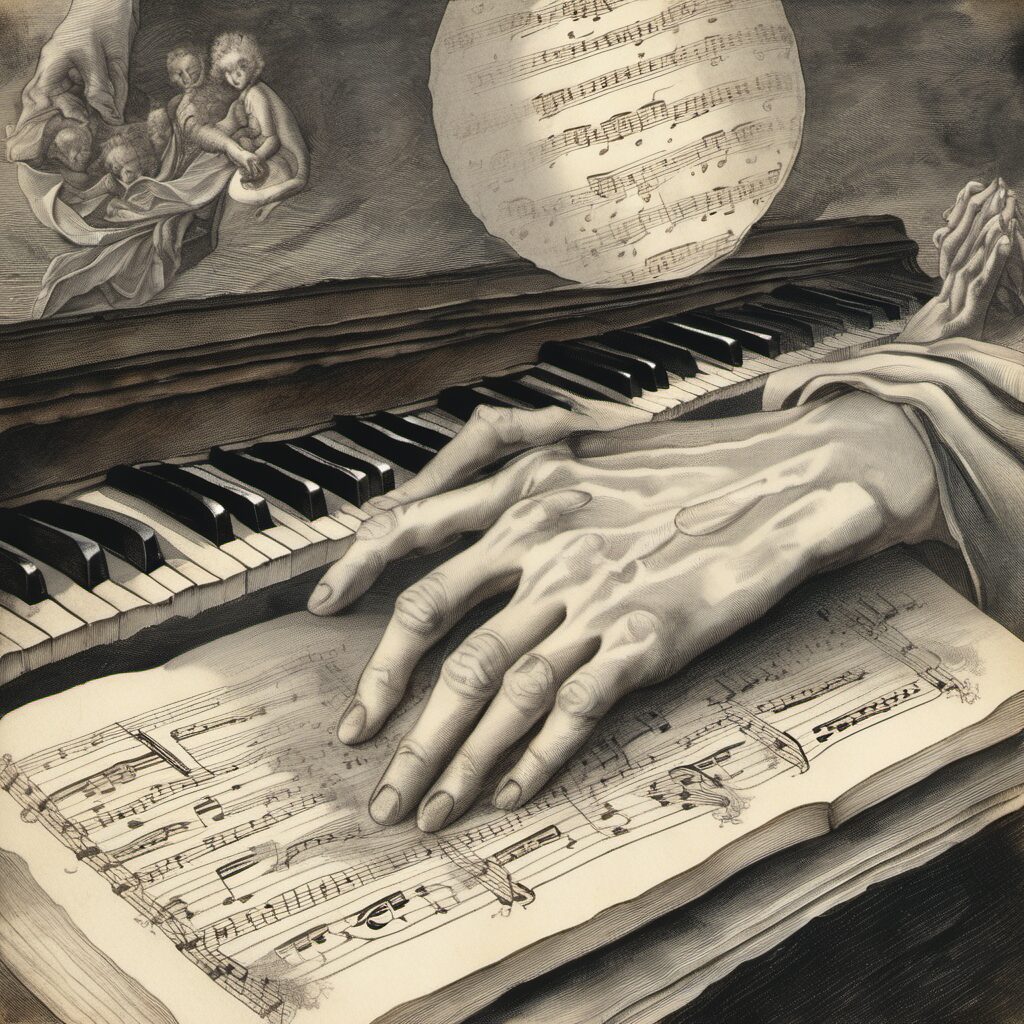
The Melancholy of the Minor Key – A Cultural History of Sadness
Music has long been associated with emotion, and among its many moods and styles, the minor key is perhaps the most melancholic. From Chopin’s Nocturnes to Debussy’s Preludes, the minor key has captivated audiences with its somber and introspective quality.
Origins of the Minor Key
The minor key has its roots in ancient Greek music theory. The Greek mode known as the ‘Aeolian’ was considered the most melancholic, and it is from this mode that many of today’s minor keys are derived. In the Middle Ages, the minor key became associated with the Latin word “tristitia”, meaning sadness or sorrow.
Romanticism and the Rise of Melancholy
The 19th century saw a rise in melancholic music, particularly during the Romantic era. Composers such as Chopin and Liszt created works that were expressive and emotional, often using the minor key to convey feelings of sadness and longing.
“The greatest pleasure in life is the presence of someone who will grab our hand and walk with us into the darkness, so we may become more sensitive to the light.” – Chopin
20th Century Music and Melancholy
The 20th century saw a wide range of musical styles and genres emerge. However, many of these styles retained the melancholic quality of the minor key. From Debussy’s impressionist works to Bartok’s folk-inspired compositions, the minor key played an integral role in shaping the sound of these eras.
Cultural Significance of Melancholy
Throughout history, music has played a significant role in expressing and exploring emotions such as sadness. The melancholic quality of the minor key allows composers to convey complex feelings and emotions through melody and harmony.
- The minor key is often used in funeral music and mournful melodies
- Melancholy is associated with introspection, self-expression, and emotional depth
- The minor key can evoke a sense of longing or yearning in listeners
Conclusion
In conclusion, the melancholy of the minor key has played a significant role in shaping music history. From its origins in ancient Greek theory to its use in modern compositions, the minor key remains an integral part of our cultural heritage.