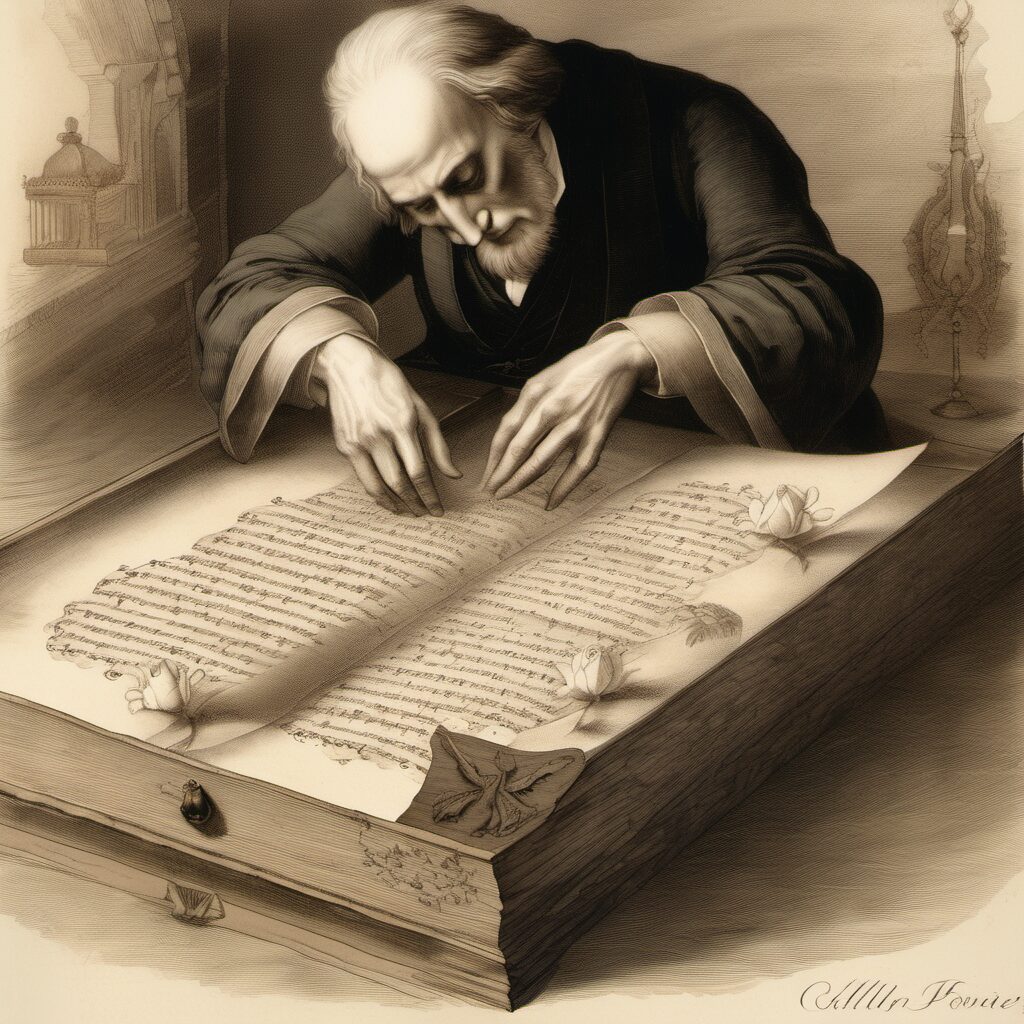
Unpacking the Haunting Beauty of Chopin’s Nocturnes
Nocturne in E-flat major (Op. 9, No. 2) – Frédéric Chopin
Frédéric Chopin was a Polish composer and pianist who dominated the field of Romantic music with his expressive and technically demanding compositions. Among his most popular and beloved works are the nocturnes, a collection of 21 pieces for solo piano that exude an unparalleled beauty and haunting quality.
These nocturnes were written in the mid-19th century, when Chopin was at the height of his powers as a composer and performer. They were originally titled “Nocurnes” (French: Nocturnes) but were later classified into Op. 9 and Op. 32 which is more accurate.
"Music expresses that for which words cannot adequately sound out the inexpressible."
— Frédéric Chopin
The nocturnes are characterized by their dreamy, evocative quality, which is often described as melancholic or introspective. They are structured around a slow tempo and a simple melody, but are augmented with complex harmonies and dynamic contrasts that create an illusion of depth and space.
The piano part itself requires great skill to execute correctly due to the delicate nuances in phrasing, dynamics, and pedaling required for each piece. The Nocturne in E-flat major (Op. 9, No.2) is a prime example – the first movement has a beautiful adagio tempo with a melody that glides effortlessly over broken chord progressions.
The nocturnes were very popular during Chopin’s lifetime and remained so after his death, and it’s easy to see why – they capture an atmosphere of introspection and contemplation that continues to captivate audiences today.
- Instrumental techniques required to play the Nocturne: Finger independence, pedaling control, dynamic range, touch, tone.
- Compositional techniques employed by Chopin: Modulation, counterpoint, harmony and rhythm.
- Style of the nocturnes: Larghetto (slow tempo), Adagio (very slow tempo), Allegretto (fast tempo).
The nocturnes are an exemplary representation of Chopin’s skill as a composer and his deep understanding of the piano as an instrument. Their haunting beauty continues to enthrall listeners around the world, and their popularity shows no signs of waning.
"Chopin, the poet-pianist, has imparted to us music of the most beautiful kind which, at first glance, might seem inaccessible due to its complexity, but in reality, reveals a profound depth and beauty that is both captivating and overwhelming."
— Jerzy Stolinski (Polish pianist)
Visit https://en.wikipedia.org/wiki/Nocturne_%28Chopin%29 for more information about the nocturnes.
Visit https://www.youtube.com/watch?v=3Jw6tY1d3M4&list=PLCoCfVJmWk2L8iKqjZr9bBhF5N8Pf5ZG &feature=endscreen for listening to Chopin’s Nocturne (Op. 9, No. 2) on YouTube.