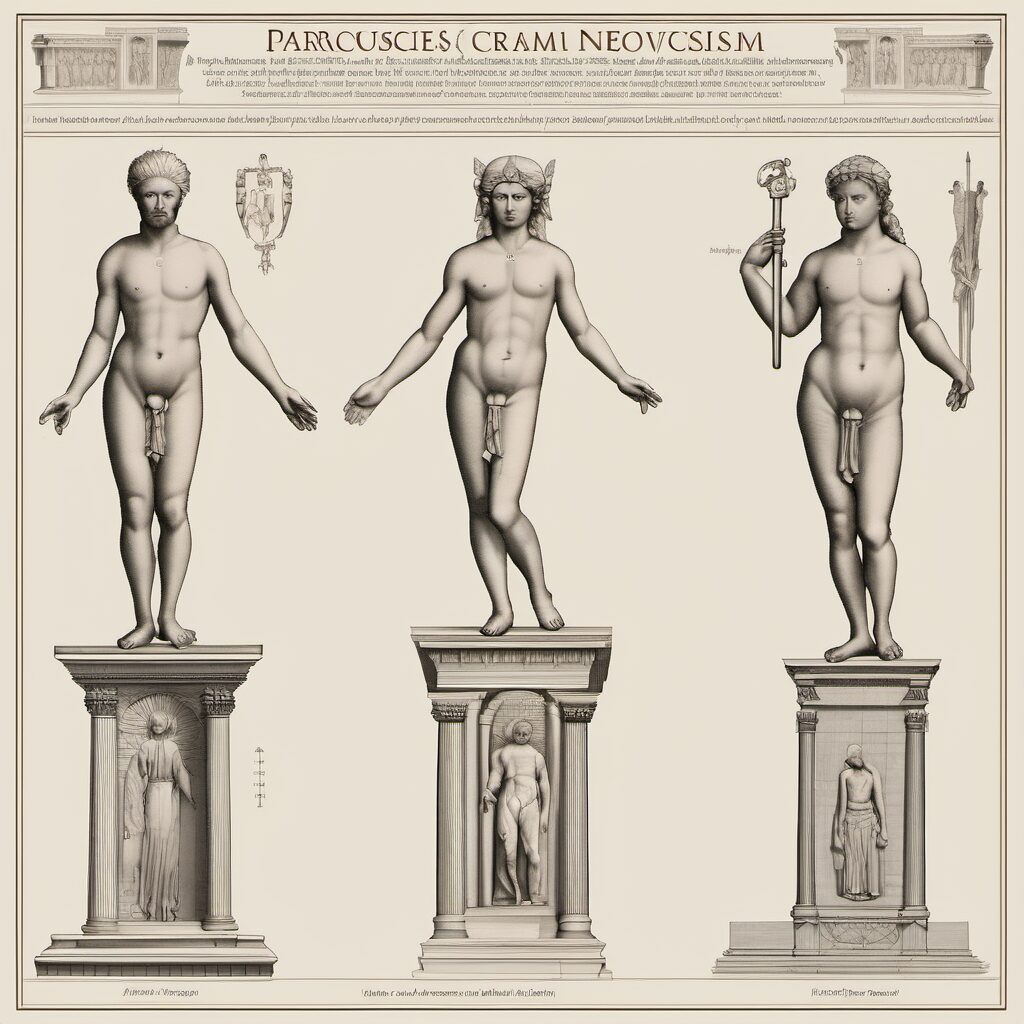
Unraveling the Mystique of Neoclassicism — A Beginner’s Guide to Understanding the Era’s Architectural Style
Neoclassicism, a style that emerged in 18th-century Europe, has captivated architects and art enthusiasts alike with its elegant simplicity and sense of grandeur. In this article, we’ll delve into the world of Neoclassicism, exploring its defining characteristics, notable examples, and lasting impact on architectural history.
What is Neoclassicism?
Neoclassicism was a reaction against the ornate Baroque style that preceded it. Architects sought to revive the principles of classical Greek and Roman architecture, as described by Vitruvius, emphasizing simplicity, proportion, and the use of traditional building materials.
“Architecture is the noblest of the arts.” — Marcus Vitruvius Pollio
Key Features:
* Use of columns, arches, and domes
* Symmetry and balance in design
* Classical orders (e.g., Doric, Ionic, Corinthian)
* Minimal ornamentation
Notable Examples of Neoclassicism
1. The White House, Washington D.C.
Designed by James Hoban in 1792, this iconic building is a prime example of American Neoclassicism.
2. Monticello, Virginia
Thomas Jefferson’s home, completed in 1806, showcases the masterful blending of classical and Gothic elements.
3. The Pantheon, Paris
Built by Jacques-Germain Soufflot in 1790, this temple-inspired building embodies Neoclassicism’s grandeur and simplicity.
Legacy and Influence
Neoclassicism has had a lasting impact on architectural styles:
* Revival of classical elements in later periods (e.g., Victorian Gothic)
* Influence on subsequent movements (e.g., Art Nouveau, De Stijl)
* Continuing relevance in modern architecture, where clean lines, symmetry, and minimal ornamentation are still prized.
Conclusion
Neoclassicism’s mystique lies in its ability to balance tradition with innovation. By embracing the principles of classical architecture while incorporating elements from other styles, Neoclassicist architects created a unique and enduring legacy that continues to inspire today.
- Neoclassicism and the Ancient Greek Ideal (The Metropolitan Museum of Art)
- Neoclassicism: Art and Architecture of the 18th Century (Artsy)
By exploring the world of Neoclassicism, we can appreciate the timeless allure of this architectural style and its continued influence on modern design.