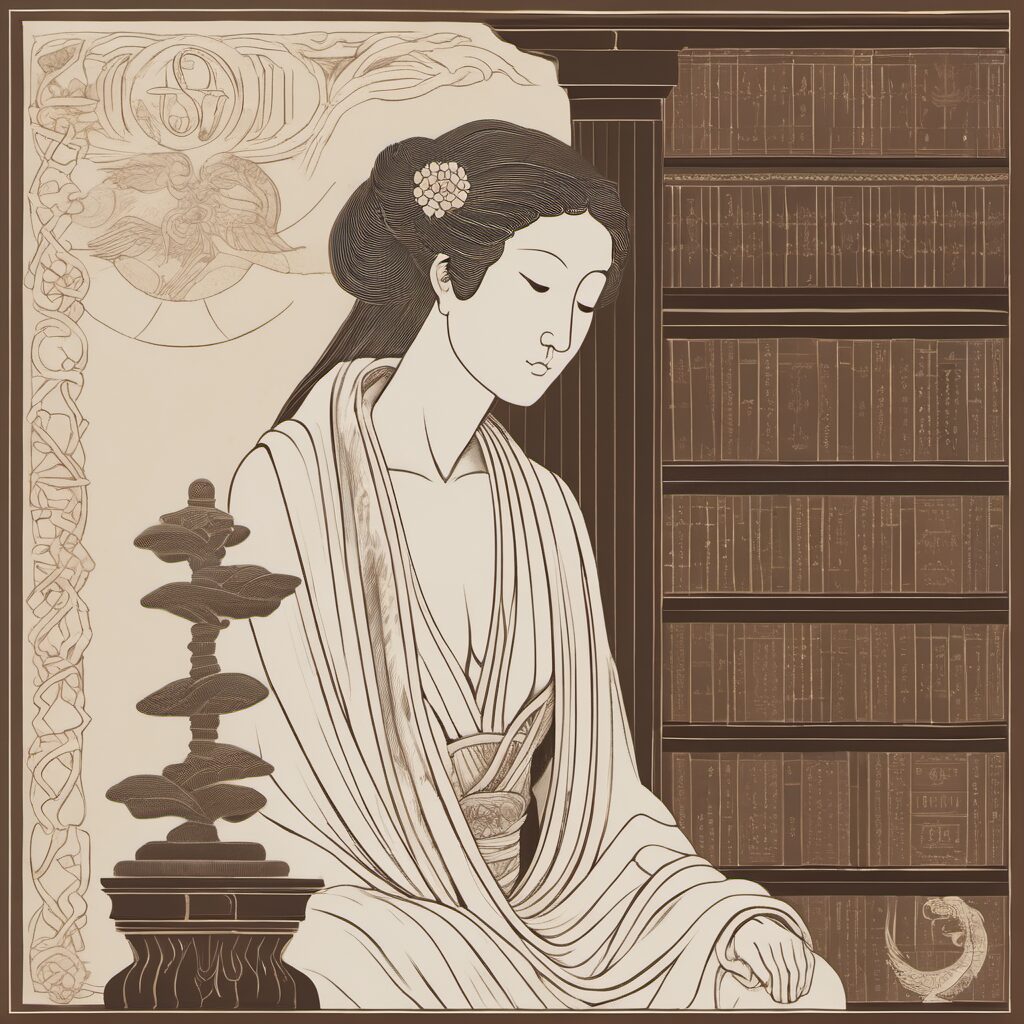
Meditative Motifs: Cycles in Japanese Neoclassical Writing
### Introduction
In Japanese neoclassical writing, meditative motifs play a significant role in creating a contemplative atmosphere that encourages readers to reflect on their thoughts and emotions. This article will explore the concept of cycles in Japanese neoclassical writing, focusing on how these motifs contribute to the overall meaning and message of the text.
### The Importance of Cycles
Cycles are a fundamental concept in Japanese philosophy, particularly in the study of wabi-sabi (the beauty of imperfection) and mononoke-shi (the spirits of the forest). In neoclassical writing, cycles refer to the repetition of events or patterns that create a sense of rhythm and structure. These cycles can be seen in various forms, such as the cycle of birth, growth, decay, and rebirth, or the cycle of seasons.
Example: “Okuyama Sōsuke” by Tetsurō Ōta
Okuyama Sōsuke was a Japanese painter who lived during the 17th century. His work is characterized by its use of cycles in composition, where he would repeat similar motifs and patterns throughout his paintings.
### The Role of Cycles in Neoclassical Writing
Cycles play a crucial role in neoclassical writing, as they create a sense of continuity and connection between the past and present. By repeating events or patterns, authors can highlight the cyclical nature of life and encourage readers to contemplate their own place within this cycle.
Example: “In Praise of Shadows” by Junichirō Tanizaki
“In Praise of Shadows” is a classic work of Japanese literature that explores the concept of aesthetics and the role of light in creating beauty. The author, Junichirō Tanizaki, uses cycles to describe the way light changes throughout the day, highlighting its cyclical nature.
### Conclusion
In conclusion, meditative motifs and cycles are essential elements in Japanese neoclassical writing. By exploring these concepts, we can gain a deeper understanding of the role of repetition and rhythm in creating a contemplative atmosphere that encourages readers to reflect on their thoughts and emotions. Through the use of cycles, authors can create a sense of continuity and connection between the past and present, highlighting the cyclical nature of life.
References:
* Ōta, T. (1932). Okuyama Sōsuke.
* Tanizaki, J. (1933). In Praise of Shadows
* Wikipedia
© 2024 Meditative Motifs: Cycles in Japanese Neoclassical Writing by Author.
Generated with HTML America.