Category: Uncategorized

  • Divine Dissonance: The Use of Tension to Express Spiritual Struggle

    Divine Dissonance: The Use of Tension to Express Spiritual Struggle

    The journey of understanding and navigating spiritual struggles is a complex and profound aspect of the human experience. One of the most fascinating ways these inner conflicts manifest is through the concept of divine dissonance. This dissonance, characterized by tension and conflict, is instrumental in both artistic expression and personal spiritual journeys.

    The Nature of Spiritual Dissonance

    At its core, divine dissonance refers to the inherent contradictions and struggles individuals face when dealing with spiritual matters. It is an emotional and intellectual tension that arises from conflicting beliefs, desires, or expectations. This struggle is not only a vital aspect of spiritual growth but also serves as a catalyst for deeper self-awareness and enlightenment.

    “In each of us there dwells a deep well of silent potential, within which this tension plays out, urging us toward a greater understanding of our place in the universe.”
    Kahlil Gibran

    Historical Context of Divine Dissonance

    Throughout history, various religious and spiritual traditions have embraced dissonance as a necessary component of spiritual development. The Abrahamic religions, for example, meticulously document the struggles of prophets and saints whose spiritual journeys were marked by profound dissonance.

    • Christianity: The Apostle Paul, in his epistles, often spoke of the inner turmoil between the flesh and the spirit (Romans 7:15-25). His writings illustrate a personal battle that is emblematic of the human spiritual struggle.
    • Buddhism: The Buddhist path acknowledges suffering (dukkha) and the inherent dissonance of desires and reality as pivotal in the quest for enlightenment.
    • Hinduism: The Bhagavad Gita portrays Arjuna’s moral and spiritual dissonance on the battlefield as a metaphor for the inner battles faced by all individuals.

    Artistic Expression of Spiritual Struggle

    Artists across various mediums have long utilized dissonance to convey the depth of spiritual struggle. This tension is reflected not only in the content of their works but also in their techniques and the emotive responses they evoke.

    Music as a Medium

    Music, with its ability to communicate complex emotions beyond words, is laden with spiritual dissonance. Composers like Beethoven and Arvo Pärt have used musical tension to explore themes of struggle and transcendence.

    • Beethoven: In pieces such as Symphony No. 9, Beethoven utilizes harmonic tension to reflect themes of human triumph and spiritual rebirth.
    • Arvo Pärt: Known for his tintinnabuli technique, Pärt creates musical pieces that simultaneously evoke spiritual strife and serenity, illustrating the dual nature of divine dissonance.

    Visual and Literary Arts

    In visual arts and literature, dissonance is depicted through imagery and narrative conflict that signify the spiritual journey.

    • Visual Arts: The works of artists like Vincent van Gogh often capture the tumultuous nature of the spiritual journey through the use of vibrant colors and dynamic forms.
    • Literature: Authors such as Charles Dickens and Fyodor Dostoevsky explore spiritual dissonance through complex characters and narratives that embody the struggles of faith and morality.

    The Role of Dissonance in Personal Spiritual Growth

    On a personal level, divine dissonance encourages introspection and growth. The clash between beliefs, emotions, and desires is often a necessary step in understanding oneself more intimately.

    “The tension between the striving for peace and the acceptance of suffering is a dance that shapes the individual’s spiritual path.”
    Thomas Merton

    By confronting these dissonances, individuals forge a deeper connection with themselves and their spirituality. This personal journey often involves questioning long-held beliefs, which can lead to a renewed or reshaped faith.

    Navigating Dissonance in Modern Life

    In our contemporary world, with its fast-paced and often contradictory nature, managing spiritual dissonance is more important than ever. The prevalence of materialism, digital noise, and cultural dichotomies presents unique challenges to modern spirituality.

    Fortunately, tools such as meditation, mindfulness, and spiritual retreats offer ways to find balance and peace amidst the tension. These practices help individuals remain grounded and attuned to their spiritual needs, fostering resilience and enlightenment.

    Conclusion

    Divine dissonance, with its rich historical and cultural heritage, remains a vital aspect of human spirituality. It compels us to confront our internal contradictions, seek deeper truths, and express our struggles through artistic and personal endeavors.

    As we continue to grapple with these spiritual tensions, understanding and embracing divine dissonance can ultimately lead to a more profound and fulfilling spiritual journey.

  • The Quest for Meaning: Philosophical Undercurrents in Classical Pieces

    The Quest for Meaning: Philosophical Undercurrents in Classical Pieces

    Classical music has long been celebrated for its capacity to transcend time and evoke a range of emotions within listeners. From the haunting echoes of Beethoven’s Moonlight Sonata to the majestic crescendos of Bach’s Brandenburg Concertos, classical pieces often resonate with profound philosophical themes. The intertwining of philosophy and music offers a tapestry of meaning that invites both reflection and introspection.

    The Interplay of Music and Philosophy

    The relationship between music and philosophy is as ancient as history itself. Philosophers have long speculated about the nature of music and its potential to convey ideas about human existence, the cosmos, and the divine. Pythagoras, the ancient Greek philosopher, famously explored the mathematical underpinnings of musical harmony, emphasizing that the universe itself is a symphony of numbers.

    “Music is the movement of sound to reach the soul for the education of its virtue,” Plato once suggested, elucidating the belief that music serves as a conduit for deeper understanding and moral development.

    Beethoven and the Struggle for Freedom

    When discussing philosophical undercurrents in classical music, it is impossible to overlook Ludwig van Beethoven. His works encapsulate the Enlightenment ideals of personal freedom and human dignity. Symphony No. 9, well-known for its choral finale based on Friedrich Schiller’s Ode to Joy, is not just a musical masterpiece but also a call for universal brotherhood. In this symphony, Beethoven uses the interplay between soloists and choir to express a philosophical belief in human solidarity, linking personal joy to collective euphoria.

    The core theme of freedom and struggle is equally evident in Beethoven’s Eroica Symphony. Initially dedicated to Napoleon Bonaparte as an embodiment of democratic ideals, Beethoven scratched out the dedication when Napoleon declared himself Emperor. According to musicologists, this act was a powerful statement of the composer’s own ideals of freedom and personal integrity against tyranny.

    Bach and the Divine Order

    Johann Sebastian Bach’s compositions are imbued with a deep sense of spirituality and order. His music often mirrors the intricate design of the universe as perceived through the lens of baroque existential thought. In works like the Mass in B Minor or the St. Matthew Passion, Bach explores themes of faith, mortality, and salvation, each note a testament to the divine order he revered.

    Bach’s Well-Tempered Clavier serves as more than a collection of keyboard solos; it stands as an exploration of the “well-tempered” life. Bach’s work in this collection aligns with the philosophical notion that life, much like a piece of music, requires proper tuning and balance between destiny and choice for harmonious existence.

    Schopenhauer and the Operatic Urge

    Arthur Schopenhauer, a philosopher known for his notions of the “will” and aesthetic contemplation, had a profound appreciation for music, considering it a direct emanation of the world’s innermost nature. Operas, with their dramatic narratives and emotional gravitas, align closely with Schopenhauer’s philosophy. In Richard Wagner’s operas, for instance, the pursuit of unattainable desires and the ultimate futility of ambition echo Schopenhauer’s ideas.

    Wagner, heavily influenced by Schopenhauer, composed The Ring Cycle not as mere storytelling through music but as a reflection on the human condition, interwoven with the tragic destiny of its characters, thereby realizing philosophical insights through operatic form.

    The Modern Reflection: Finding Meaning Today

    In contemporary times, classical music continues to serve as a vessel for philosophical exploration. Modern philosophers and musicologists alike find new interpretations and meanings within these timeless works, continuing to unravel the questions of existence, identity, and morality. The enduring legacy of classical compositions reveals an inextricable link between music and philosophy—a quest for meaning that remains just as vital today as it was centuries ago.

    The quest for meaning is, at its core, a reflection of humanity’s eternal search for understanding in a complex world. Through classical music, listeners engage with profound insights into the human spirit’s perennial struggle, reflecting upon and often embracing the philosophical currents that flow beneath each note.


    For readers looking to dive deeper into the philosophical aspects of classical music, consider exploring resources such as SoundsGoodman Music Philosophy and checking out concert performances with philosophical programs.

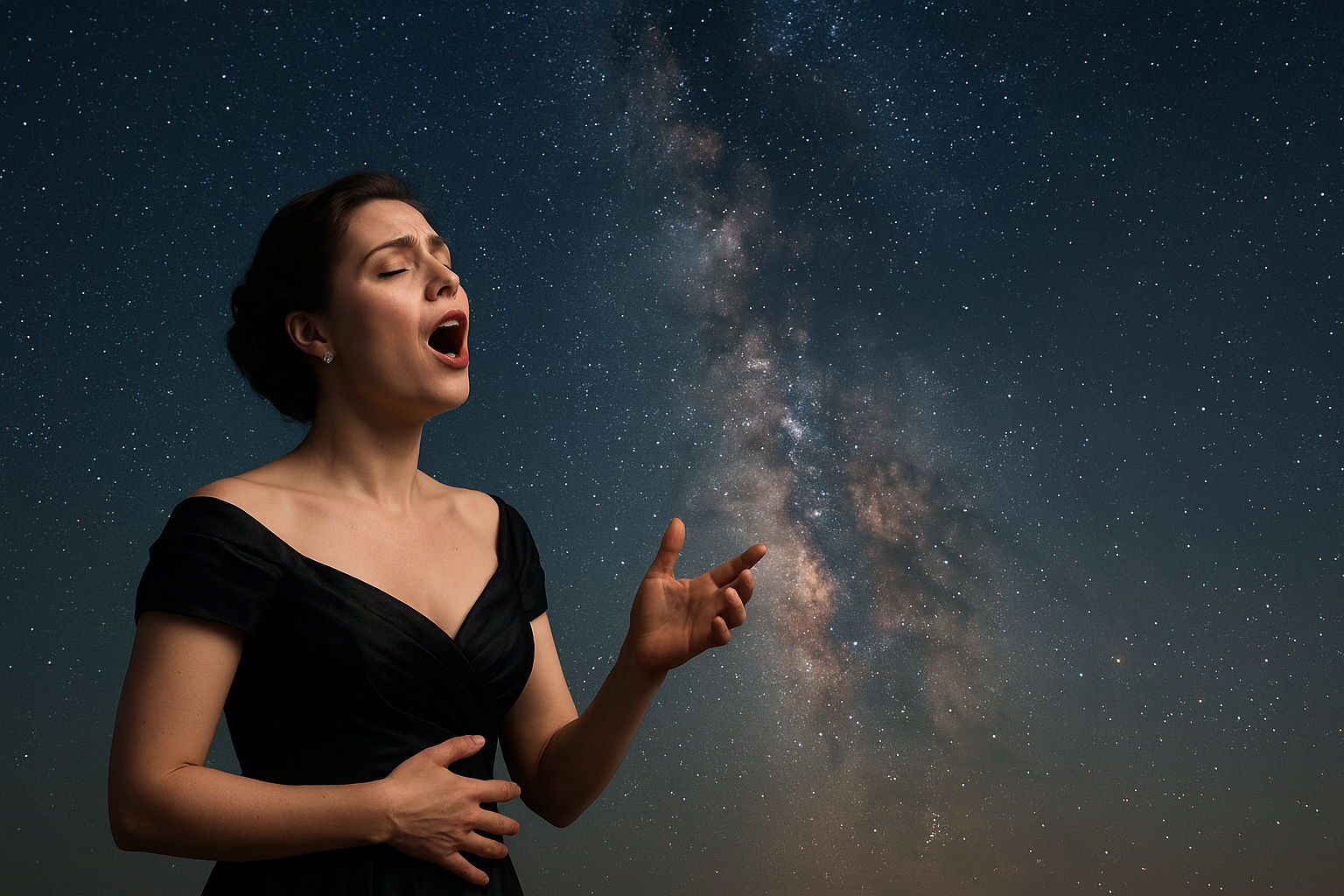
  • Singing to the Stars: Astral Imagery in Classical Lieder

    Singing to the Stars: Astral Imagery in Classical Lieder

    The tradition of European art song, commonly referred to with the German term Lieder, has long provided a rich tapestry of melodic and poetic exploration. A distinct feature of this genre is its use of vivid imagery, with celestial and astral elements featuring prominently across its repertoire.

    The Romantic Fascination with the Cosmos

    During the Romantic era, extending roughly from the late 18th to the late 19th century, composers and poets were enveloped by a fascination with nature, the sublime, and the metaphysical. The sky, stars, moon, and sun—symbols of both vastness and intimacy—served as perfect metaphors for expressing the ineffable.

    “The stars awaken a certain reverence, because though always present, they are inaccessible.” – Ralph Waldo Emerson

    This reverence is echoed in the works of composers like Franz Schubert and Robert Schumann, whose songs often draw upon the celestial to explore human emotion and longing.

    Franz Schubert: A Night Sky in Melody

    Franz Schubert, a seminal figure in the development of Lieder, infused his compositions with astral imagery. His song “An die Nachtigall” (“To the Nightingale”), with lyrics by Johann Wolfgang von Goethe, uses the night as a backdrop for yearning and sorrow—reflecting the Romantic coupling of the night sky with emotion. In Schubert’s “Abendstern” (“Evening Star”), the titular star serves as a beacon of hope amidst darkness.

    • Song: “An die Nachtigall”
    • Poet: Johann Wolfgang von Goethe
    • Theme: Yearning in the night

    The use of stars and night skies transcends the mere backdrop, becoming active agents within the narrative structure of these pieces, influencing mood and direction.

    Robert Schumann’s Starry Echoes

    Robert Schumann’s songs, often inspired by his literary interests, reveal a deep connection to the night. His setting of Heinrich Heine’s “Mondnacht” (“Moonlit Night”) is celebrated for its expansive, dreamlike qualities. The moon and stars in this song encapsulate a sense of unity with nature and longing for transcendence.

    • Song: “Mondnacht”
    • Poet: Heinrich Heine
    • Theme: Unity with nature

    In “Mondnacht”, Schumann uses the piano to simulate the shimmering of stars, a technique that demonstrates how Lieder combines poetic and musical elements to elevate the text’s meaning.

    Astral Themes Across Borders

    While Schubert and Schumann are central to the German tradition of Lieder, the fascination with astral imagery is by no means confined to the Germanic world. In French mélodie, composers like Gabriel Fauré and Claude Debussy employed similar celestial motifs. Fauré’s settings of Verlaine’s poetry often include lunar and nocturnal imagery, as in “Clair de Lune.”

    “Nature is a haunted house—but Art—is a house that tries to be haunted.” – Emily Dickinson

    This quote resonates with the ideal behind the astral imagery in Lieder and mélodie: music and text strive to encapsulate the elusive beauty and mystery of the cosmos.

    The Enduring Power of Celestial Symbolism

    The prevalence of celestial themes in classical Lieder speaks to a universal human curiosity and the capacity for wonder. Whether woven through text or melody, the stars and night skies continue to inspire composers and listeners alike. They serve as reminders of the infinite, igniting the imagination and evoking the deepest emotions.

    Such symbolism persists today, as contemporary composers and songwriters find themselves drawn to the stars much like their Romantic predecessors. In navigating the heavens through song, we find not only artistic beauty but also a mirror reflecting our own experiences and emotions.

    Conclusion

    In exploring the stars through the medium of song, composers of Lieder have created works that transcend their earthly bounds, linking human emotion to the vast cosmos. These songs remain a testament to the enduring power of astral imagery, inviting us to gaze upwards and find a deeper connection to the universe.

    As the music and poetry of the Lieder tradition continue to be performed and cherished, they remind us of the timeless allure of the celestial and the profound inspiration it has provided to artists for centuries.

    For those interested in delving deeper into the works mentioned, many are readily accessible in performances by renowned artists, bridging the historical divide through the universal language of music.

  • The Art of Revelation: How Music Unveils Deeper Truths

    The Art of Revelation: How Music Unveils Deeper Truths

    Music, in its sublime essence, transcends the auditory experience, functioning as a vessel of revelation and a conduit to deeper truths. It is a profound art that reflects human emotions, cultural narratives, and spiritual journeys, offering insights into the innate aspects of existence that often elude ordinary understanding.

    The Spiritual Power of Music

    Throughout history, music has been more than mere entertainment. It has served as a sacred element in religious rituals and spiritual practices. Indeed, Plato once remarked, “Music gives a soul to the universe, wings to the mind, flight to the imagination, and life to everything” (Goodreads). This notion underscores music’s capacity to connect individuals to universal truths and higher states of consciousness.

    Religions and spiritual traditions worldwide recognize the power of music. From the chanting of Gregorian monks to the dynamic rhythms of Sufi whirling dervishes, music facilitates a divine connection, a pathway to enlightenment and inner peace.

    Music as a Narrative Tool

    Beyond its spiritual dimensions, music also serves as a powerful narrative tool, conveying stories and truths that words alone cannot express. Lyrics combined with melody hold the potential to articulate complex emotional landscapes.

    As Hans Christian Andersen wisely stated, “Where words fail, music speaks” (BrainyQuote). Music becomes a language in itself, capable of transcending cultural barriers and connecting on a human level.

    • Jazz: Born out of the African American experience, jazz embodies stories of struggle, triumph, and hope, narrating history through its improvisational nature.
    • Folk Music: Often embedded with local and historical narratives, folk music captures collective memories and societal growth, preserving them for future generations.
    • Classical Compositions: Pieces like Beethoven’s Symphony No. 9 offer a timeless exploration of human emotion and philosophical inquiry.

    Emotional Resonance and Personal Reflection

    Music’s ability to evoke emotion is unparalleled. It not only reflects the composer’s intentions but also resonates personally, inviting listeners to explore their inner landscapes. Music becomes a mirror, reflecting emotions that listeners might find difficult to articulate.

    In times of personal turmoil or joy, individuals often seek solace or celebration through music. This process of resonance and reflection can lead to personal revelations, as songs evoke memories, dreams, and desires. The emotional catharsis enabled by music can lead to self-discovery and an enhanced understanding of one’s place in the world.

    Music and Cultural Identity

    Music also plays a crucial role in the expression and preservation of cultural identity. It stands as a testament to cultural evolution, with unique sounds offering insights into societal values and historical challenges. For example, reggae music from Jamaica offers more than rhythmic appeal; it encapsulates themes of resistance, spirituality, and Bob Marley’s pursuit of global unity.

    The Neuroscience of Music

    Scientific studies support the profound impact of music on our brains. For instance, research from McGill University reveals that music triggers the release of dopamine, a neurotransmitter associated with pleasure and reward (Nature). This neural response not only explains the joy we derive from music but also its ability to influence emotional and psychological states.

    Moreover, studies suggest that music can enhance cognitive function, improve mood, and even aid in mental health treatment. These findings highlight music’s profound ability to uncover the intrinsic emotional and psychological truths within the human mind.

    Conclusion: A Universal Language

    In summary, music is a universal language that unveils deeper truths through its spiritual, emotional, and cultural resonances. Whether through inducing personal revelations, narrating cultural histories, or facilitating emotional healing, music remains an essential part of the human experience.

    In the words of Ludwig van Beethoven, “Music is the mediator between the spiritual and the sensual life” (Goodreads). As we continue to engage with this art form, we open ourselves to the myriad truths it reveals, enriching our connection to ourselves and the universe.

  • Hymns of the Heart: The Evolution of Sacred Song in the Classical Era

    Hymns of the Heart: The Evolution of Sacred Song in the Classical Era

    The Classical era, an epoch spanning from the mid-18th century to the early 19th century, marked a significant transformation in the landscape of Western music. This period saw developments in musical forms, styles, and approaches that influenced the sacred song, elevating it to new artistic heights. This article explores the evolution of sacred music during this era, focusing on its roots, development, and enduring impact.

    The Dawn of the Classical Era

    The Classical era followed the Baroque period, which had been characterized by its ornate musical style. Composers like Johann Sebastian Bach and George Frideric Handel dominated the Baroque landscape with intricate polyphony and embellished melodies. However, the Classical era ushered in a preference for clarity, balance, and formality.

    Composers aimed to simplify musical composition without sacrificing depth and emotion. Joseph Haydn, often referred to as the father of the symphony and the string quartet, exemplified this shift. His works laid the groundwork for future composers, including Wolfgang Amadeus Mozart and Ludwig van Beethoven.

    Reimagining Sacred Music

    Sacred music during the Classical era was reframed to match the evolving tastes of the time. The newfound clarity and balance in music affected the composition of hymns and liturgical pieces, making them more accessible and emotionally impactful.

    • Mozart’s Influence: Wolfgang Amadeus Mozart was pivotal in redefining sacred music. His compositions display a mastery of form and expressive melody, notably his Requiem Mass in D minor, K. 626. In this incomplete masterpiece, finished posthumously by Franz Xaver Süssmayr, Mozart exquisitely blends profound sorrow and celestial beauty, creating a seminal work in the sacred repertoire.
    • Haydn’s Contributions: Joseph Haydn’s The Creation, a significant oratorio, reflects a sublime narrative of the biblical Creation story. Described by musicologist Daniel Heartz as “the greatest achievement of his career” ([Cambridge University Press]), this piece highlights Haydn’s ability to integrate dramatic elements with spiritual profundity.

    The Role of the Church and Patronage

    The Church played a dual role, both as a patron and as a conservator of traditional styles. The rich tradition of choral music remained central to church services, with an emphasis on congregational participation.

    “Music in the Classical period presented itself with the spiritual elevation that was concurrent with the Age of Enlightenment, balancing art with divine worship” (Library of Congress).

    Many composers were employed by religious institutions, where they were expected to produce music fitting the liturgical calendar. This relationship often led to the creation of sacred works that were both innovative and deeply rooted in tradition.

    The Emergence of the Oratorio

    The oratorio, a large-scale musical composition for orchestra and voices, saw significant developments during the Classical period. While rooted in religious themes, the oratorio became a medium through which composers could engage with dramatic storytelling.

    Ludwig van Beethoven’s oratorio Christ on the Mount of Olives captures a vivid portrayal of Christ’s anguish and resolution. The piece exemplifies Beethoven’s skill in blending narrative with an emotional complexity that was unprecedented at the time.

    • Greater Accessibility: Oratorios were performed outside the strict confines of church services, allowing a broader audience to experience sacred music. This change was pivotal in bringing sacred themes to secular concert halls.
    • New Narratives: Composers explored a wider range of biblical stories, moving beyond the traditional focus on Passion settings. This variety enriched the genre and engaged diverse audiences.

    Simplification and Secularization

    The Classical era also witnessed a gradual shift towards secularization in music composition. As Europe experienced cultural, political, and scientific evolutions of the Enlightenment, religious music began to incorporate these new ideas, reflecting a synthesized worldview.

    Moreover, hymns underwent simplification to emphasize congregational singing. The focus moved from the grandeur of the complex polyphonic works of the Baroque to more homophonic structures that allowed clearer text articulation and participation.

    The Legacy of Classical Sacred Music

    The influence of Classical sacred music resonates throughout subsequent musical periods. This era elevated the technical and emotional sophistication of hymns and sacred compositions, setting a precedent that continues to influence worship music.

    • Contemporary Hymnody: Many modern hymns bear the structural and stylistic hallmarks of the Classical era, emphasizing melody and harmonic progression that facilitate congregational engagement.
    • Historicity and Performance: Today, performances of Classical sacred music in concert halls and places of worship continue to captivate audiences, bridging historical contexts with contemporary spirituality.

    “Sacred music from the Classical era not only reflects the theological and philosophical shifts of its time but also remains a powerful testament to the unchanging aspects of the human condition” (Oxford Music Online).

    In conclusion, the evolution of sacred song during the Classical era was marked by a harmonious blend of innovation and tradition. Composers of the time crafted music that was both structurally balanced and deeply moving, leaving a legacy that continues to inspire both performers and worshippers today.

    The hymns of the heart, crafted during this transformative period, remain a testament to the enduring capacity of sacred music to connect the temporal with the divine, offering solace and inspiration across generations.

  • The Symphony of the Soul: Exploring Mahler\’s Spiritual Journeys

    The Symphony of the Soul: Exploring Mahler\’s Spiritual Journeys

    The Symphony of the Soul: Exploring Mahler’s Spiritual Journeys

    Gustav Mahler, the luminary composer whose works traverse the spheres of earthy earthliness and divine transcendence, is often celebrated as a master of the symphonic form. His music, however, extends beyond mere symphonic structure, serving as a profound exploration into the spiritual and existential realms.

    The Early Years: A Foundation of Intrigue

    Born in the Kingdom of Bohemia in 1860, Mahler’s early experiences were steeped in a rich cultural tapestry comprised of German, Jewish, and Czech influences. Growing up, Mahler was exposed to the sights and sounds of rural folk music mixed with traditional religious hymns, elements that would later permeate his intricate compositions.

    Mahler’s soul-searching nature was rooted firmly in his upbringing. As Britannica notes, “His family’s Judaic roots and diverse socio-cultural experiences in Kaliště contributed significantly to his early compositions.”

    Symphony No. 2: The Awakening

    “From the heart of the core, a cry from nature that is elicited by the arrow, a means of coming to voice, an expression of trembling existence.” ― Gustav Mahler

    Mahler’s exploration of the afterlife, judgment, and ultimate redemption is vividly encapsulated in his “Resurrection Symphony” (Symphony No. 2). In this monumental composition, Mahler weaves the theme of life’s perennial pulsation with echoes of a quest for meaning beyond mortal demise.

    The symphony’s final movement delivers a powerful reflection on resurrection and renewal, culminating in a triumphant choral ensemble. “Rise again, yes, you shall rise again, my dust!” the choir exclaims in an exalted embrace of eternal life—seamlessly blending earthy humanity and heavenly aspiration.

    The Fifth Symphony: A Love Transcendent

    The Fifth Symphony marks another chapter in Mahler’s symphonic odyssey where spiritual and lyrical fervor intertwine. Composed during a time of personal turning points, the symphony is felt as a journey through darkness to the ultimate light in the famous Adagietto movement.

    This fourth movement, an ethereal love song, isn’t merely a vehicular passage but encapsulates a transcendent union between Mahler and his beloved Alma Schindler. In listening, one vividly experiences the yearning and pure love—emotive forces coalescing into a spiritual narrative.

    “My symphony will be something the world has not yet heard!” Mahler once declared about his work.

    The Adagietto was famously interpreted as a love letter, not just to Alma, but to love itself—a testament to the power of beauty that resonates through eternity.

    Symphony No. 9: Facing Mortality

    The Ninth Symphony, arguably Mahler’s most introspective work, is often viewed as his farewell to life. Composed in the twilight of his life, it confronts mortality with both dread and peace.

    Here, Mahler contemplates the finality of all temporal existence. As the symphony unwinds, listeners are drawn into a deep meditation on impermanence. “Perhaps Mahler’s Ninth is an evocation of his own acceptance of mortality,” observes Classic FM.

    The final bars fade into silence, capturing the stillness of death yet transcending bleakness through a luminous acceptance. The Ninth is lauded for its poignant nature, not as a somber end but rather the dawn of something undefined.

    Legacy: A Spiritual Conductor

    Gustav Mahler’s music continues to resonate globally not just as symphonic oeuvre, but as a spiritual guide that examines, questions, and reflects profound human experiences.

    His symphonies serve as timeless spiritual conversations that continue to inspire introspection and exploration of the human condition. As eloquently put by The Guardian, “These symphonies are a monument to the spirit’s tenacity in the face of despair.”

    • Connection to Nature: Much of Mahler’s music reflects his deep connection to the natural world and its spiritual symbiosis.
    • Diverse Influences: His compositional style was a melange of Austrian folk tunes, Jewish liturgical chants, and classical symphonic structures.
    • Personal Growth and Reflection: Through his symphonies, Mahler laid bare his innermost thoughts, fears, and spiritual quest for enlightenment.

    Mahler’s symphonic legacy remains an eternal dialogue—a symphony of the soul—that reverberates with a timeless spiritual resonance.

  • Beyond the Notes: What Makes Classical Music Timeless and Profound

    Beyond the Notes: What Makes Classical Music Timeless and Profound

    Classical music has endured the ebb and flow of cultural shifts and technological innovations over centuries. Despite its origins in the distant past, it continues to resonate with audiences around the world today. But what is it about this genre that makes it so timeless and profound?

    The Emotional Depth of Classical Music

    Classical music is renowned for its capability to evoke a wide range of emotions. This emotional depth is achieved through complex musical structures, including intricate melodies, harmonies, and rhythms. According to Beethoven’s Shadow: His Influence and Voices in Music Written After Him, “Each composition becomes a conversation between the artist and the listener, transcending time and space.”

    Composers like Ludwig van Beethoven and Johannes Brahms were masters at embedding deep emotional connections within their music. Beethoven’s Symphony No. 9, with its “Ode to Joy,” is a powerful expression of triumph over adversity. Brahms’ Symphony No. 1 evokes feelings of struggle and eventual victory, encapsulating the human spirit through orchestration.

    The Universality of Themes

    Classical music often explores universal themes such as love, nature, and existential quests. These themes are timeless, resonating with listeners across different cultures and epochs. As composer and conductor Leonard Bernstein once stated, “The universality of Beethoven’s music lies in its timeless summoning of the human condition.” Through music, composers address themes that remain relevant irrespective of time or place.

    Bernstein reflects, “This is music of incredible optimism, music that believes in the power of the human spirit.”‘

    The Intricate Compositional Structure

    Beyond emotions and themes, the structural intricacy of classical compositions plays a significant role in their timelessness. The use of forms such as sonata-allegro, fugue, or rondo requires mathematical precision and creativity. Baroque music, notably represented by Johann Sebastian Bach, demonstrates an exquisite balance of complexity and clarity.

    In his article “The Power of Passion: Why Bach Endures,” musician and scholar John Eliot Gardiner notes, “Bach’s music taps into something profound—an elemental order and balance that conveys the divine.”

    The Pioneering Sonic Experimentation

    Classical music often serves as a fertile ground for sonic experimentation. Composers like Igor Stravinsky and Arnold Schoenberg pushed the boundaries of musical norms, introducing new harmonic languages and innovative orchestration techniques. Stravinsky’s The Rite of Spring allowed for a break from traditional tonality, paving the way for modern compositions.

    As Stravinsky expressed during one of his debates about music, “Real creativity demands the liberty to be unconventional and the audacity to tackle known norms.”

    The Influence and Heritage

    Another aspect that contributes to the timelessness of classical music is its profound cultural and musical influence. Many genres, including jazz and rock, borrow techniques, forms, and even melodies from classical music to innovate and evolve their unique styles. This cross-genre fertilization elevates the status and relevance of classical music across generations.

    According to acclaimed conductor Gustavo Dudamel, as quoted in NPR, “Music is a universal language that encompasses generations; classical music is at the heart of it, building a bridge to the past and a foundation for future artistic endeavors.”

    Listener’s Personal Journey

    Listener interpretation is also fundamental to the timeless nature of classical music. Each individual brings personal experiences and emotional landscapes to music listening. As a result, a single composition can hold varied meanings, making it a personal journey rather than just an auditory experience.

    Renowned musicologist Jan Swafford notes in his book The Beethoven Reader, “Classical music holds mirrors for each listener to look into and find part of themselves in the sounds.”

    The Role of Performance and Interpretation

    Classical music thrives on interpretation. Different performances bring out varied nuances of the same composition, breathing new life into each rendition. Pianist Lang Lang describes classical music’s ability to evolve, saying, “Each performance is an adventure, revealing new facets and emotions I’ve never experienced before.”

    This interpretative nature ensures that classical music remains vibrant and continuously evolving, reflecting both the essence of the past and the innovations of the present.

    Conclusion: The Endless Conversation

    Ultimately, what makes classical music timeless and profound is its capacity to continually engage listeners in an endless conversation about the human experience. It transcends time, cultures, and forms, articulating the complexities of life in musical narratives that resonate across ages. As humanity continues to evolve, classical music remains an essential companion reflecting the eternal quest for beauty, understanding, and truth.

  • The Human and the Holy: Mozart\’s Quest for Balance in Music

    The Human and the Holy: Mozart\’s Quest for Balance in Music

    The Human and the Holy: Mozart’s Quest for Balance in Music

    Wolfgang Amadeus Mozart, a towering figure in classical music, crafted compositions that continue to resonate centuries after his death. His quest for balance between the human and the holy pervades his body of work, offering listeners a journey through divine inspiration tethered by profound emotion and human experience.

    Human Emotion in Melody

    Mozart’s genius lay in his ability to infuse a sense of humanity into music that could otherwise seem ethereal. His operas, such as The Marriage of Figaro and Don Giovanni, are vivid depictions of human life, brimming with imperfection and passion. Mozart deftly uses melody and harmony to convey complex emotions, capturing “the heart’s most hidden secrets without uttering a word,” as Albert Einstein noted in his reflections on music.

    The Holy Through Harmony

    While Mozart’s music is firmly rooted in human emotion, it also frequently reaches for the divine. His Requiem in D minor, composed during the last year of his life, embodies this balance. It is both a deeply personal piece and a transcendent exploration of the sacred.

    “The music is not in the notes but in the silence between,” Mozart is often quoted as saying. This understanding of music as a vessel for the divine is what grants Mozart’s compositions an otherworldly quality.

    A Synthesis of Worlds

    Mozart’s ability to navigate between these two planes—human and holy—enabled him to reinvent the boundaries of his art. Works like his Great Mass in C minor highlight this duality, weaving together liturgical reverence with intricate counterpoint that reflects human struggle and triumph.

    The synthesis of earthly concerns with spiritual quests reflected Mozart’s own life—filled with the joys of family and friends, yet punctuated by financial struggles and personal sorrows. This duality emerges vividly in his music, inviting audiences to explore their humanity within the context of the divine.

    Legacy of Balance

    Mozart’s enduring legacy speaks to his singular ability to balance these contrasting forces. As the acclaimed musicologist Neal Zaslaw has observed, Mozart’s works “achieve a synthesis and balance between the sacred and the secular” that continue to captivate and inspire.

    In an era that often separated the realms of the sacred from the profane, Mozart’s compositions remain a testament to the power of music to unite these domains, offering a timeless exploration of both the depths of the human soul and the heights of the divine.

    For further reading on the life and works of Mozart, consider visiting the Mozarteum Foundation.

  • A Mirror to the Infinite: Romantic Composers and the Sublime

    A Mirror to the Infinite: Romantic Composers and the Sublime

    The Romantic era, which spanned from approximately 1800 to 1850, was a time of great transformation and expression in art, literature, and music. One of the defining characteristics of this period was the exploration of the sublime—an aesthetic ideal that sought to evoke intense emotions and a sense of awe, often by reflecting the immensity of nature or the complexity of the human spirit.

    The Sublime in Romantic Music

    Romantic composers, such as Ludwig van Beethoven, Franz Schubert, and Hector Berlioz, harnessed music’s ability to evoke the sublime, encapsulating both the beauty and terror of existence. Music became a powerful means to mirror the infinite and convey emotions that words struggled to express. Beethoven, in particular, transformed the symphony into a vehicle of deep philosophical reflection.

    “The Romantic notion of infinity seems to be expressed in the ceaseless energy and complex formal construction of his music.”

    Beethoven’s Ninth Symphony, especially the choral final movement, titled “Ode to Joy,” exemplifies his effort to address universal brotherhood and the human quest for transcendence.

    Nature as a Source of Inspiration

    Romantic composers found inspiration in the natural world, translating its grandeur and mystery into music. Franz Schubert’s compositions often evoke the pastoral and evoke imagery of wide landscapes. His song cycle Winterreise paints a poignant, chilling picture of a desolate, winter journey.

    Similarly, Frédéric Chopin drew from nature’s beauty, though his approach was often more intimate and infused with personal emotion. His Nocturnes and Preludes capture fleeting moments, blending delicate melodies with profound emotional depth.

    Beyond the Immediate

    The Romantic era’s engagement with the sublime was not solely confined to the esoteric. It often intertwined with the sociopolitical landscapes of the time. Hector Berlioz’s Symphonie Fantastique exemplifies this synthesis by combining autobiographical elements with viscerally dramatic music. The symphony portrays an artist’s opium-induced visions, rich in thematic innovation and orchestral color.

    Liszt, too, embarked on a journey to capture the spiritual through music. His symphonic poems, like Les Préludes, challenge the listener’s perceptions and invite them to ponder existential questions.

    Conclusion

    Romantic composers’ exploration of the sublime set the stage for future musical innovations, reflecting and shaping the human experience. Their works continue to reverberate, inviting listeners to engage with the infinite complexities that lie within and beyond the music itself.

    For more on Romantic composers, visit Britannica: Romanticism.

  • The Resonance of Belief: How Faith Shaped Musical Structures

    The Resonance of Belief: How Faith Shaped Musical Structures

    Music and religion have been intertwined throughout history, with each shaping and influencing the other. Not merely as a backdrop to ritualistic practices, music in various forms of faith has evolved to be a conduit for spiritual expression and a structured pathway for worship and contemplation.

    An Ancient Symphony of Spirit

    In many ancient cultures, music was regarded as a divine gift. For example, in Greek mythology, Orpheus’ lyre could enchant all living things and even inanimate objects. The religious rituals of ancient Greece often employed music as an essential component. According to Smithsonian Folkways, “music in ancient Greece was almost always linked to the divine” (source).

    The Medieval Church: Crafting the Canon

    The Christian Church during the medieval period became a powerful patron of music. This era witnessed the rise of the Gregorian chant, a form of plainchant instrumental in formal worship. The chants, named after Pope Gregory I, were influential in standardizing a unified liturgical practice across Christendom.

    “The Gregorian chant exemplifies the perfect union between text and music, designed to enhance the spiritual messages of the church” – Musicologist Joan Gerard

    Moreover, the architectural grandeur of Gothic cathedrals is often credited with encouraging the development of polyphonic music. Inside these vast spaces, the acoustics amplified sounds, allowing for the intricate interweaving of voices—each independent yet harmoniously united.

    Eastern Spirituality: Rhythm and Reflection

    In Eastern traditions such as Hinduism and Buddhism, music plays a vital role in spiritual life. The ethereal sounds of the veena or sitar in Indian spirituality are associated with the goddess Saraswati and Shiva, respectively. Music’s rhythm and melody support meditation, helping practitioners focus and find inner peace.

    In Buddhism, the chanting of mantras with specific tonal inflections aims to bring practitioners into a deeper meditative state. As noted in a study by Pew Research, these chants are believed to resonate with the universe, manifesting harmony within one’s self and the surroundings.

    Islamic Influence: Maqam and Mysticism

    Islamic devotional music demonstrates the complexity and beauty of spiritual expression in forms like the na’at and nasheed. These vocal compositions often praise the Prophet Muhammad and convey a rich poetic tradition rooted in passion and reverence.

    The rich musical system of maqam provides structured melodic patterns that express different emotional states. This modality forms the bedrock of much traditional Arab music and is crucial in promoting the spiritual ethos during religious festivals and gatherings.

    “In the Islamic tradition, music serves as an auditory path to contemplation, where the soul elevates in atunement with the divine” – Scholar Tariq al-Jamil

    Modern Interpretations and Ecumenical Echoes

    Even in modern times, religious music continues to evolve. Gospel music in the African American tradition merges the emotional experience of faith with a cultural history of struggle and overcoming. As noted by The Library of Congress, “Gospel music has enriched American culture with its spirited hymns and the powerful message of hope” (source).

    Similarly, contemporary Christian music blends pop and rock elements with evangelical themes, often aiming to reach younger audiences and rejuvenate community engagement in spiritual life. These compositions bridge the sacred and the secular, maintaining the core values of religious beliefs while embracing modernity.

    Universal Harmony through Melody

    The intersection of faith and music highlights a universal truth: the quest for transcendence. Across different religions and traditions, this pursuit resonates in harmonious expressions meant to elevate the soul and nurture the spirit.

    As we continue to explore how these vibrant art forms influence and enrich each other, we are reminded that music, like faith, transcends the earthly domain, echoing a larger cosmic order that binds humanity in its melodic embrace.