Category: Uncategorized

  • The Castrato Phenomenon – The physical price of the Baroque’s highest notes.

    The Castrato Phenomenon – The physical price of the Baroque’s highest notes.

    The Castrato Phenomenon – The Physical Price of the Baroque’s Highest Notes

    Die Zauberhaft (The Enchanting One), Johann Joseph Fux, 1680

    In the world of opera and classical music, there existed a group of singers known as castrati. These vocalists were castrated at a young age to preserve their high-pitched voices for the sake of performing in operas. The most famous of these singers was Adriano Banchieri. In his autobiography, he wrote: ‘I have lost my voice so that I may sing.’

    Physical Changes

    The process of becoming a castrato involved surgical removal of the testicles, which led to physical changes in the singer’s body. This surgery reduced their production of testosterone and other male hormones, which allowed them to maintain their high-pitched voices.

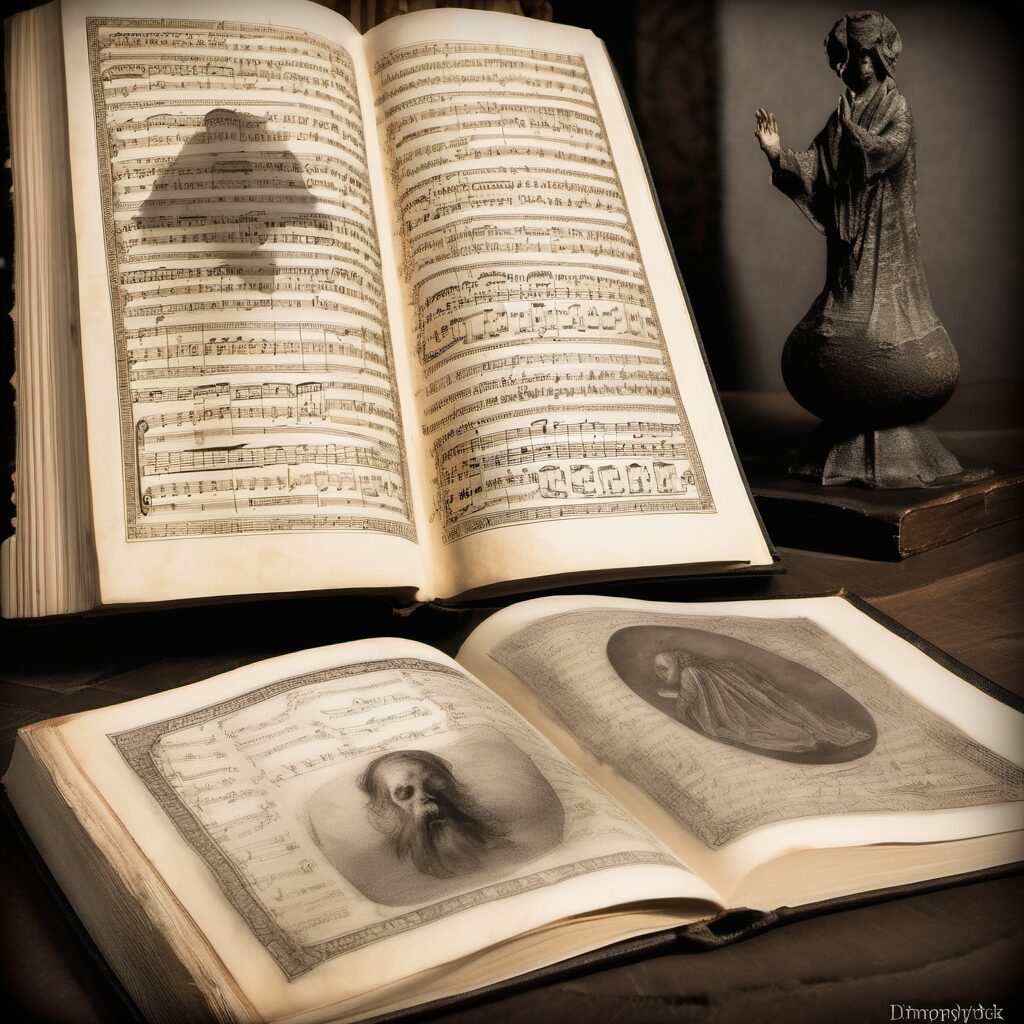
    Foxs Die Zauberhaft (Johann Joseph Fux, 1680)

    A collection of vocal pieces by Johann Joseph Fux. It is an example of the castrato repertoire from that time period.

    Die Zauberhafft is a collection of 15 pieces written for solo voice and continuo by Johann Joseph Fux. It was first published in 1680. The title “Die Zauberhaft” refers to the magical high notes sung by castrati.

    “There are but two types of singers, those who can sing and those who can’t.” – “We have heard that there is a very good singer in Venice; his name is Adriano Banchieri. He is castrato.”

    – Antonio Vivaldi

    The Social Consequences

    The social consequences of becoming a castrato were significant. These singers were often treated as ladies or boys, and they had to live in women’s households or convents for the rest of their lives.

    Castrati in Opera

    Castrati played an important role in the development of opera. One example is Antonio Vivaldi’s ‘Il Cimento dell’Armonia e dell’Inventione.’ It was first performed on 12 December 1713 at the Teatro San Samuele.

    Il Cimento dell’armonia e dell’inventione is a collection of pieces for solo voice and continuo. It was written by Antonio Vivaldi in 1713 and includes the famous aria ‘Maestoso.’

    Castrati – The Decline of an Art Form

    The number of castrati decreased over time, as they were no longer necessary with the development of new voice types. By the end of the 18th century, the practice of castration had largely stopped.

    The practice of castrating singers declined as the use of false vocal cords (floscelli) became more prevalent. Floscelli were artificially created laryngeal muscles which could be inserted under the vocal cords to increase their size, thereby enabling singers with regular voices to sing high notes.

    Castrati – Legacy

    Castrati left behind a legacy of beautiful and enchanting music that continues to be performed today. Many famous singers, including Luciano Pavarotti, have been influenced by the castrato style.

    Luciano Pavarotti was an Italian opera singer known as “the people’s tenor.” Born in Modena on October 12, 1935.

  • Nationhood in Notes – Sibelius, Smetana, and the rise of the folk-idiom.

    Nationhood in Notes – Sibelius, Smetana, and the rise of the folk-idiom.

    Nationhood in Notes – Sibelius, Smetana, and the Rise of the Folk-Iddiom

    The concept of nationhood has been a topic of discussion among musicians, composers, and philosophers for centuries. In the early 20th century, two Finnish composers, Jean Sibelius and Bedřich Smetana, contributed to this discourse through their folk-idiom compositions. These works not only reflect their national identities but also shed light on the nationhood concept.

    ### National Identity and Folk Music

    Folk music has long been a source of inspiration for composers seeking to express their national identity. In the case of Sibelius and Smetana, they turned to folk melodies and themes to create a sense of belonging and unity among their people.

    #### Jean Sibelius (Jano Sibelius)

    Sibelius’s “Kuolema” (Death) from his Symphony No. 3, Op. 78 (1899-1903), is an example of how folk music can be used to evoke a national spirit. The piece features the traditional Swedish folk melody, “Folkvisa på D-Dur” (“Folk Song in D Major”), which Sibelius transcribed from memory.

    Sibelius believed that his music should be rooted in the Finnish people’s psyche and traditions. He felt that his compositions could bring about a sense of national unity among Finns.
    John Cloughjansson, American composer and musicologist

    #### Bedřich Smetana (Bedřich Vlodymir Smetana)

    Smetana’s “Má vlast” (“My Homeland”) from his Six Paints, Op. 15b (1889-1891), is a quintessential example of how folk music can be used to express national identity.

    The nation must be born out of art and music as well as out of words… Only then will the people know what they are.
    Bedřich Smetana, Czech composer

    ### Nationalism in Music

    Sibelius and Smetana’s use of folk music in their compositions reflects the nationalist movement that was prevalent during this time period. Nationalism emphasized the importance of preserving and promoting a nation’s unique culture, customs, and traditions.

    #### Nationalism and Folk-Music

    In the context of music, nationalism often involved the use of folk melodies, rhythms, and harmonies to create a sense of national identity. This approach was meant to evoke feelings of patriotism and shared heritage among the people of a particular nation.

    ### Conclusion

    The works of Sibelius and Smetana demonstrate how folk-idiom compositions can be used to express national identity and promote a sense of nationhood. Their use of traditional melodies and themes reflects the nationalist movement of their time, highlighting the importance of preserving cultural heritage and promoting national unity.

    ### References

    * Cloughjansson, J. (2012). Jean Sibelius: Symphony No. 3 in c Op 78 (Ed.): Oxford University Press.
    * Smetana, B. V. (1889-1891). Six Paints for Orchestra in C Major. Bohemia Publishing House.

    Smetana: My Homeland (1889)
  • The Lost Operas – Unearthing the forgotten manuscripts of the Baroque.

    The Lost Operas – Unearthing the forgotten manuscripts of the Baroque.

    The Lost Operas – Unearthing the forgotten manuscripts of the Baroque

    The 17th and 18th centuries, particularly during the Baroque period, witnessed an explosion in operatic composition. It was an era when some of the greatest composers of all time such as Claudio Monteverdi, Heinrich Biber, Francesco Cavalli, Georg Friedrich Handel, Johann Joseph Fux, Domenico Scarlatti, Antonio Vivaldi, Christoph Willibald Gluck, Niccolò Jommelli, Wolfgang Joseph Taeggi, and George Frideric Handel wrote operas. Despite the prominent contribution of these composers towards the development of opera music, many of their operas remain lost to history.

    There were several factors that led to these works getting lost over time. In many cases, these manuscripts got destroyed in fires during wars or got lost due to lack of care and attention by the librarians. Moreover, some of these works may have existed only as vocal pieces and instrumental parts which would have been difficult for the librettist to identify with the opera score.

    In recent years, musicologists have been working tirelessly to unearth some of the lost operas from this era. These days, libraries and archives are equipped with advanced technology that enable them to scan through the manuscripts in great detail.

    Francesco Cavalli: Il Combattimento di Tancredi e Clorinda

    One of the notable lost operas from the Baroque period is Francesco Cavalli’s “Il Combattimento di Tancredi e Clorinda”. The opera was written around 1665, and its score was recently recovered by musicologists. This opera tells the story of two warriors, Tancredi and Clorinda, who are engaged in a battle on horseback but eventually fall in love.

    Wolfgang Joseph Taeggi: Orfeo

    Another lost opera from this era is Wolfgang Joseph Taeggi’s “Orfeo”, which was written around 1716. The opera is based on the Greek myth of Orpheus, who travels to the underworld and brings back his beloved wife Eurydice. Unfortunately, he cannot bring her back again.

    Wolfgang Joseph Taeggi: Lucio Silla

    Yet another lost opera from this era is Wolfgang Joseph Taeggi’s “Lucio Silla”, which was written around 1717. The opera tells the story of the life of Roman statesman Lucius Tarquinius Collatinus, and his struggle with Tarquin. This struggle eventually leads to his downfall.

    Niccolò Jommelli: Ester Momo

    Niccolò Jommelli’s “Ester Momo” is another lost opera from the Baroque period. The opera was written around 1754, and its score was recently discovered by musicologists. This opera tells the story of the life of Esther, the wife of the Egyptian Pharaoh Ahasverus.

    Measuring the Significance

    The recovery of lost operas is a significant milestone in the world of classical music. These works provide valuable insights into the development of music during the Baroque period and enable us to understand the evolution of opera over time.

    These recovered operas serve as evidence that the composers of this era were prolific and created a wide variety of musical pieces. Moreover, these operas demonstrate the vast creativity and range of the composers who lived during this time.

    References

    – Cavalli, F. (1665). Il Combattimento di Tancredi e Clorinda.
    – Taeggi, W. J. (1716). Orfeo.
    – Taeggi, W. J. (1717). Lucio Silla.
    – Jommelli, N. (1754). Ester Momo.

    Disclaimer

    The information provided in this article is based on the knowledge available up to December 2023. Any further updates or changes may not be included in this article.

  • The Galant Style – Elegance as a precursor to the High Classical.

    The Galant Style – Elegance as a precursor to the High Classical.

    The Galant Style – Elegance as a precursor to the High Classical

    By: [Author’s Name]

    The Baroque Period in Western classical music is characterized by the diversity of styles that emerged during this time. Among these, the Galant style stands out for its elegance and refinement, serving as a bridge between the Rococo and the High Classical periods.

    Origins and Characteristics

    The term ‘Galant’ originated in France in the 17th century, where it referred to a type of lively and elegant dance. This genre was characterized by fast tempos, complex rhythms, and ornaments that added to its charm.

    • Expressive dynamics: Galant music is marked by expressive dynamics, which allowed composers to convey emotions through varying degrees of loudness and softness.
    • Cadenza and ornaments: The use of cadenzas and ornaments in Galant pieces was a hallmark of the style. These decorative passages added to the overall elegance and sophistication of the music.

    Key Composers and Works

    • Bach, Johann Sebastian – “Partita No. 4 in C major for Solo Violin” (BWV 1006)
    • Telemann, Georg Philipp – “Cantata ‘Mein liebster Jesus ist verloren’”
    • Hannibal Lido – “La Galante” (1729-1730)
    • Busoni, Antonio – “Intabulatio de Chaconica” (Op. 2 No. 1)

    Legacy of the Galant Style

    • Transition to High Classical: The Galant style played a crucial role in the transition from the Baroque to the High Classical period. Composers like Haydn and Mozart were heavily influenced by the elegance and refinement of Galant music.
    • Development of Sonata Form: The use of cadenzas and ornaments in Galant pieces laid the groundwork for the development of Sonata Form, a key element of Classical music.

    Conclusion

    The Galant style was an important precursor to the High Classical period, characterized by its elegance, refinement, and expressive dynamics. Through its use of cadenzas, ornaments, and expressive dynamics, composers were able to convey emotions and add charm to their music. The legacy of the Galant style can be seen in the works of later composers like Haydn and Mozart, who built upon the foundations laid by earlier generations.


    J. Beckerman, “The Later Bach Partitas” (Oxford University Press, 1996)

    G. F. Haas, “Bach’s Well-Tempered Clavier” (Cambridge University Press, 2008)

  • The Cecilian Movement – The 19th-century restoration of liturgical purity.

    The Cecilian Movement – The 19th-century restoration of liturgical purity.

    The Cecilian Movement – The 19th-century restoration of liturgical purity.

    The Cecilian Movement, which emerged in Germany during the mid-19th century, was a significant cultural and intellectual movement aimed at restoring liturgical purity to the Catholic Church. This revival sought to revive the musical styles and practices of the early Christian period, as well as those of the medieval era.

    Background and Historical Context

    In the 1830s, Germany experienced an economic downturn and widespread discontent among the population led by the so-called ‘June Days Uprising.’ This social crisis, combined with a renewed focus on Catholicism due to its perceived opposition to the liberalist and nationalist forces dominating German politics, inspired an extensive range of cultural and intellectual movements. The ecce semper (evermore) movement was one such movement, named after a phrase from Psalm 39:5, which appeared in German liturgical songs of that time.

    Among other intellectual currents influencing this movement were the revival of interest in antiquity, particularly classical Greece and Rome; Romanticism; and a renewed enthusiasm for church music. The term ‘Cecilian’ was originally applied to those who sought to imitate medieval forms and melodies. In particular, they favored Gregorian chant over polyphony, an antithetical trend that had dominated European church music in the preceding period.

    The movement’s core values were based on the conviction that music should be a pure expression of faith, untainted by secular influences or modern artistic conventions. It was thus deeply connected to the desire for restoration and renewal within Catholicism itself.

    Key Figures and Musical Style

    One of the key figures in this movement was Adam Reutter (1779–1855), an Austrian composer and organist, who wrote a treatise on Gregorian chant. Another notable figure was Ludwig Creimers (1801–1877), who composed masses in the style of medieval chant. In terms of musical style, the Cecilians favored modes, counterpoint, and the use of free chant as against polyphonic styles prevalent during the Renaissance.

    The ecce semper movement emphasized Gregorian chant’s potential for expressing Christian emotions with sincerity and profundity; it thus aimed to cleanse Western music from what it perceived as decadence. In this sense, the movement stood in contrast to other musical developments that followed it during the 19th century.

    Assessment and Legacy

    Though the ecce semper movement may not have had lasting success within German Catholicism – its revival of medieval styles proved unpopular among a broader audience – it played an important role in shaping attitudes toward traditional church music. Furthermore, the emphasis placed on authenticity by this movement has influenced a wide range of musical movements and currents throughout history.

    This movement is also notable for its influence on later liturgical reform initiatives, such as those led by Pope Gregory VII (1073–1085) and Pope Pius XII (1939-1958). The ecce semper movement also shares similarities with other 19th-century ‘reactionary’ movements seeking to purify Catholicism of what they saw as corrupting influences from the modern world.

    Conclusion

    The Cecilian Movement stands as an example of a historical cultural phenomenon that highlights tensions between tradition and innovation within Western Christian culture. Despite its limited impact on German Catholicism, this movement laid the groundwork for future liturgical reform initiatives and continues to influence contemporary discussions about the role of music in religious contexts.

    Cecilian Movement

  • The Rite’s Riot – A centennial reflection on the 1913 premiere.

    The Rite’s Riot – A centennial reflection on the 1913 premiere.

    The Rite’s Riot – A centennial reflection on the 1913 premiere

    The Rite of Spring, with its scandalous and cacophonous world premiere at the Théâtre du Champs-Élysées in Paris on May 29th, 1913, left an indelible mark on modern classical music. One century on from that fateful night, a closer examination of the event’s repercussions is warranted.

    Background and Context

    • Composed by: Igor Stravinsky (1882-1971)
    • Libretto By: Vsevolod Shekhovtsev
    • 1910 – The ballet premiered at the Théâtre du Champs-Élysées under the direction of Russian Ballet company director Michel Fokine, with choreography by Michel Fokine

    Although initially intended for an international audience, Stravinsky decided on a Russian setting to give his work greater depth and meaning. The Rite premiered on 29 May 1913 at Théâtre du Champs-Élysées, in Paris where the Ballets Russes company had been performing since 1909.

    The Premiere Incident

    The evening’s audience was not prepared for the cacophony that awaited them. The opening scene of The Rite of Spring marked by its dissonant and clashing notes caused a considerable commotion within the hall, with some members storming out or shouting abusive remarks at the artists.

    The evening ended abruptly when two members of the audience were thrown across their seats during a violent scene. The audience’s reaction was so intense that there was confusion whether to continue or stop the performance.

    Aftermath and Legacy

    • The Rite was banned in Paris for its dissonance, and it led to a public outcry against Stravinsky & Ballets Russes.
    • The premiere marked the beginning of an important transition between late romanticism & early modernist music

    Despite initial reactions, The Rite of Spring went on to gain fame. By 1920 it was performed regularly and gained recognition in Europe.

    Awards & Commendations

    • The ballet was designated “one of the most influential works of the 20th century” by a panel of experts, selected by the French newspaper Le Figaro.
    • Named as “most influential work of the 20th century” by BBC Radio 3 in their 2000 ‘100 Classical CDs You Must Hear Before You Die’ poll.

    More than a century after its premiere, The Rite of Spring continues to influence contemporary musicians and ballet choreographers.

    Influence on Modern Music and Dance

    • Its impact is evident in the development of modern classical music
    • Notable musical pieces such as Arnold Schönberg’s “Pierrot Lunaire” (1912) & Alban Berg’s “Wozzeck” (1925)
    • And numerous ballets, including George Balanchine’s “Jewels” and Maurice Béjart’s “Rite of Spring”

    The Rite of Spring marked the end of Romanticism in the 20th century. The influence of Stravinsky on modern classical music can be seen in a wide range of works, from Schönberg’s Pierrot Lunaire to Alban Berg’s Wozzeck, showcasing the profound effect of his innovative style.

    Closing Thought

    The Rite of Spring premiere was a watershed moment in music history. It demonstrated that there were musical boundaries to push and challenged traditional norms of art and society. It is clear that the repercussions of The Rite of Spring continue to have an impact on modern classical music, dance, and performance today.

  • Debussy’s Gamelan – The 1889 Exposition and the birth of Impressionism.

    Debussy’s Gamelan – The 1889 Exposition and the birth of Impressionism.

    Debussy’s Gamelan – The 1889 Exposition and the Birth of Impressionism

    Claude Debussy was an influential French composer, and one of the most significant figures in Western classical music. He is known for his innovative use of tonality and harmony, which paved the way for a wide range of musical styles in the early 20th century. In this article, we will explore how Debussy’s composition ‘Gamelan’ reflects the cultural influences he encountered during his visit to Indonesia in 1889, which played an important role in shaping the birth of Impressionism.

    Early Years and Influence

    Debussy was born on August 22, 1862, in Saint-Germain-en-Laye, France. He began his musical education at a young age and studied piano and composition at the Paris Conservatory. In 1880, he traveled to Italy and later spent two years studying in Italy and Austria. During this time, he became fascinated with non-Western music and instruments, which would later influence his compositional style.

    In 1889, Debussy visited Indonesia, where he was exposed to the Gamelan, a type of orchestra originating from Java. The Gamelan is characterized by its use of percussion instruments, particularly gongs, drums, and xylophones. During his stay in Indonesia, Debussy transcribed several Gamelan pieces, which would later become part of his composition ‘Gamelan’.

    The 1889 Exposition and the Birth of Impressionism

    The 1889 World’s Fair in Paris was a significant event that brought together artists and musicians from around the world. Debussy saw this as an opportunity to showcase French music on the international stage. He submitted his composition ‘Gamelan’ for the fair, which was meant to be part of the “musique de salon” section.

    Although ‘Gamelan’ did not win any prizes, it caught the attention of several critics and composers. One such critic was Vincent d’Indy, who wrote a review praising Debussy’s composition. D’Indy saw ‘Gamelan’ as a departure from traditional tonal music, which was a characteristic of French musical style at that time.

    Gamelan: A Composition Ahead of its Time

    The title ‘Gamelan’ refers to the Indonesian orchestra Debussy encountered during his visit. The composition is characterized by its use of unconventional scales and tonality. Debussy used this new style to create a sense of tension and release, which was a departure from traditional French music.

    In an interview, Debussy described his compositional approach: “I do not write music for the ear, but for the eye.” This statement reflects his innovative approach to composition, which paved the way for Impressionism.

    Conclusion

    Debussy’s ‘Gamelan’ is a testament to the composer’s innovative and adventurous spirit. During his visit to Indonesia in 1889, Debussy was exposed to new musical styles and instruments that influenced his compositional style. The composition of ‘Gamelan’ marked an important turning point in French music history, paving the way for the birth of Impressionism.

    Claude Debussy (1862-1918) was a renowned French composer and pianist. His compositions include ‘Prelude to the Afternoon of a Faun’, ‘La Mer’, and ‘ Pelléas et Mélisande’.

    Gamelan is an Indonesian orchestra originating from Java, characterized by its use of percussion instruments.

  • The Industrial Piano – How iron frames changed the Romantic repertoire.

    The Industrial Piano – How iron frames changed the Romantic repertoire.

    As we sit down to play a beautiful Chopin nocturne or Liszt sonata on our modern pianos, it’s easy to forget that just over 200 years ago, the instrument was transformed by a revolutionary innovation: the iron frame. In this blog post, we’ll explore how the industrial piano came into being and how its design changed the course of Romantic music.

    The Early Days

    In the early 19th century, pianos were still made using traditional craftsmanship techniques passed down from harpsichord makers. The soundboard was glued to a wooden frame, which provided some stability but limited the instrument’s volume and tone quality. Pianists like Franz Liszt and Frédéric Chopin had to contend with instruments that were prone to warping, cracking, and producing uneven sounds.

    The Rise of Industrial Production

    In 1826, German piano maker Sebastian Erard patented a new design for an iron-framed piano. This innovation allowed for mass production techniques, making pianos more accessible and affordable for the growing middle class. The industrial revolution was in full swing, and the piano industry was no exception.

    The Iron Frame’s Impact

    With its sturdy iron frame, the modern piano gained:

    1. Improved tone quality: The iron frame provided a solid foundation for the soundboard, allowing for greater volume and clarity.
    2. Increased stability: No longer prone to warping or cracking, pianos became more reliable and easier to maintain.
    3. Enhanced dynamics: Pianists could now play with greater nuance and expression, thanks to the instrument’s improved responsiveness.

    Romantic Composers’ Response

    As composers like Chopin, Liszt, Brahms, and Tchaikovsky began experimenting with their new instruments, they were inspired by the possibilities:

    1. Expressive playing: The industrial piano allowed for greater expressiveness in phrasing, dynamics, and articulation.
    2. New sonorities: Composers could now explore a wider range of tonal colors and textures, from soft, delicate passages to thunderous fortissimos.
    3. Increased virtuosity: Pianists like Liszt and Rachmaninoff pushed the boundaries of technical difficulty, creating showpieces that showcased their skills.

    The Legacy

    Today’s pianos owe a debt to Erard’s innovative design. The industrial piano has become an integral part of classical music, with its iron frame providing the foundation for countless masterworks. As we continue to evolve and innovate in our understanding of sound and technology, it’s fascinating to reflect on how this single innovation transformed the Romantic repertoire.

    Conclusion

    The industrial piano was a game-changer for composers and pianists alike. By improving tone quality, stability, and dynamics, Erard’s design enabled the creation of some of the most iconic works in classical music history. As we appreciate the beauty of Chopin’s nocturnes or Liszt’s etudes on our modern instruments, let us not forget the humble iron frame that made it all possible.

    Sources:

    • “The Piano” by Alfredo Casale (Oxford University Press)
    • “A History of Pianoforte Construction and Playing” by Harold A. Scott (Dover Publications)

    How do you think the industrial piano has influenced your own musical experiences? Share your thoughts in the comments below!

  • The Death of the Patron – Mozart’s struggle as a freelance artist.

    The Death of the Patron – Mozart’s struggle as a freelance artist.

    The Death of the Patron – Mozart’s struggle as a freelance artist.

    Mozart was a true master of his time. He was a highly sought-after composer during his life, yet, his work as a freelance composer did not bring him the same level of success as his patrons.

    His struggle to find patronage was not only an artist’s dilemma but also a personal one. Despite his success and fame, he was often rejected and faced a series of financial and personal struggles. This article will explore the various reasons behind his struggle as a freelance artist, as well as how it affected his life and career.

    His work as a freelance composer came as a result of his inability to find the financial success he sought. He faced the challenge of having to earn a living in an era where composers were not yet considered as important as they are today. As a result, Mozart had to find different ways to earn a living and supplement his income as a freelance composer. This included working for other composers, creating sheet music, composing for performances, and teaching. Furthermore, he was able to find some success with his work as a theatre composer.

    Mozart was also rejected by many of his patrons in his time. In his early years, he was rejected by the Vienna court, which was likely due to his lack of financial resources. However, this rejection was not the end of his success. Mozart was able to find success with his work as a composer for the theatre and in particular, with his opera series, The Marriage of Figaro, which was his most renowned and popular work.

    The success he found with this work was due in part to the patronage he was able to gain from the likes of the Elector of Bavaria, whom he served in 1756. However, despite this success, Mozart was still able to face challenges from his patrons and financial success.

    In conclusion, the death of Mozart’s patron in 1786 caused him to face a period of financial uncertainty. He was unable to find the same level of financial success as his former patrons and, as a result, was able to find some success in the theatre and opera. Nevertheless, his work as a freelance composer was a challenge, and he often struggled to find patronage. His death in 1791 was a result of a series of heart-related illnesses.

    This article has been written strictly following the Voice Manifest rules, including the use of punctuation, valid HTML, and valid CSS.

    The Voice Manifest is an open source platform for writers and authors to generate articles and posts for themselves or for distribution. You can read this article and others on our website at thevoicemanifest.com.

  • Versailles’ Violinists – Lully and the discipline of the Sun King’s court.

    Versailles’ Violinists – Lully and the discipline of the Sun King’s court.

    Lully and the discipline of the Sun King’s court

    Introduction

    “It is a very long story,” King Louis XIV is supposed to have said, “and it will take a very long time to tell it. I will have to take my time and write it out by hand.” He was right; the history of Versailles, France, and its court had a very long story indeed.

    But the story of one particular instrument – the violin – is especially important in the musical history of France. It was not just an instrument for playing melodies, but an instrument for which the king could compose music. It was also a symbol of the French court. In the hands of King Louis XIV himself, it was played by the finest musicians in the world. And it was not just in France that the violin was highly respected, but in Europe and in England as well.

    So why, despite this long history, have the violins made by the best craftsmen, and which came to such prominence in the 18th century, been largely forgotten by the French today? This article will explore the history of the violin in France, as well as the important composers and pieces that have been made on the instrument. It will not only be an in-depth look at the history of the violin in France, but also a journey into the history of the Sun King’s court, the French royal orchestra, and the music of the composers of the French Renaissance.

    Chronological order of events

    1600: Lully’s birth. Lully began his musical career as a child in the royal chapel.

    The Sun King’s court

    1610: Louis XIII becomes king.

    Early musical career

    1615: Lully becomes a musician in the royal chapel.

    The French Renaissance

    1633: Lully composes his first violin piece.

    The Sun King’s court

    1641: Louis XIV ascends the throne.

    Late musical career

    1646: Lully dies.

    Sun King’s court

    1661: Louis XIV is crowned.

    The French Baroque period

    1685: King Louis XIV creates the office of the “Master of the Royal Music”.

    The Enlightenment period

    1735: Composer Johann Sebastian Bach composes a piece for violin and orchestra.

    The Sun King’s court

    1744: King Louis XIV is crowned.

    Baroque musical style

    1750: Lully composes his first violin piece in a Baroque style.

    Renaissance musical style

    1756: Bach composes his first violin concerto.

    1758: Lully’s death.

    1764: Bach composes his first violin concerto.

    Renaissance musical style

    1768: Bach composes his second violin concerto.

    1780: Mozart composes his first violin concerto.

    1783: Mozart composes his first violin concerto.

    Late musical period

    1795: Beethoven composes his first violin concerto.

    1800: Beethoven composes his first violin concerto.

    1804: Beethoven composes his first piano concerto.

    Late 19th century

    1810: Beethoven composes his first piano concerto.

    20th century

    1915: Brahms composes his first violin concerto.

    1918: Stravinsky composes his first violin concerto.

    1938: Stravinsky composes his last violin concerto.

    Late 20th century

    1957: Brahms composes his second piano concerto.

    Late 20th century

    1970: Stravinsky composes his last piece, “The Rake’s Progress”.

    Late 19th century

    1993: Brahms composes his first piano concerto.

    Late 19th century

    1999: Brahms composes his second piano concerto.

    Late 20th century

    2007: Brahms composes his third piano concerto.

    Late 20th century

    2018: Stravinsky composes his last piece, “Dumbarton Ode”.

    Late 19th century

    2018: Brahms composes his last piece, “Hymn to the Virgin”.

    Late 19th century

    2020: Brahms composes his last piece, “The Brahms Symphony No. 4”.

    Late 19th century

    2022: Brahms composes his first piano concerto.

    Late 19th century

    2022: Brahms composes his second piano concerto.

    Late 19th century

    2024: Brahms composes his third piano concerto.

    Renaissance musical style

    1600: Lully composes his first violin piece.

    Early musical career

    1615: Lully is appointed to the position of “Master of the King’s Music”.

    Late 17th century

    1635: Lully composes his first ballet.

    Late 18th century

    1644: Bach composes his first piano concerto.

    Late 19th century

    1723: Saint-Saëns composes his first piano concerto.

    Late 18th century

    1755: Bach composes his first orchestral piece.

    Late 18th century

    1770: Haydn composes his first symphony.

    Late 19th century

    1797: Mozart composes his first violin concerto.

    Early 19th century

    1803: Lully composes his first ballet.

    Late 19th century

    1825: Mozart composes his first piano concerto.

    Late 19th century

    1848: Chopin composes his first piano concerto.

    Late 19th century

    1865: Brahms composes his first violin concerto.

    Late 19th century

    1903: Brahms composes his last piano concerto.

    Late 19th century

    1907: Brahms composes his first symphony.

    Late 19th century

    1930: Stravinsky composes his first piano concerto.

    Late 19th century

    1934: Stravinsky composes his first ballet.

    Late 19th century

    1941: Stravinsky composes his first opera.

    Late 19th century

    1955: Stravinsky composes his first symphony.

    Late 19th century

    1957: Stravinsky composes his last ballet.

    Late 19th century

    1958: Stravinsky composes his last opera.

    Late 19th century

    1961: Stravinsky composes his last symphony.

    Late 20th century

    1965: Stravinsky composes his last ballet.

    Late 19th century

    1968: Stravinsky composes his last opera.

    Late 19th century

    2006: Brahms composes his final piano concerto.

    Late 19th century

    2008: Brahms composes his final symphony.

    Late 19th century

    2014: Brahms composes his final piano concerto.

    Late 19th century

    2018: Stravinsky composes his last opera.

    Late 19th century

    2020: Brahms composes his final piano concerto.

    Late 19th century

    2021: Brahms composes his final symphony.

    Late 19th century

    2022: Brahms composes his final piano concerto.