Category: Uncategorized

  • Sound as Illumination – Enlightenment Music and Spiritual Light

    Sound as Illumination – Enlightenment Music and Spiritual Light

    Sound as Illumination: Enlightenment Music and Spiritual Light

    Music has long served as a powerful conduit for human expression, acting as an indelible link between the tangible and the ethereal. During the Enlightenment, a period characterized by a surge in intellectual and philosophical advancements, music assumed a pivotal role as both a reflection and a catalyst of spiritual illumination.

    A Symphony of Philosophy and Enlightenment

    The Enlightenment, reaching its peak in the 18th century, was a period marked by the embrace of reason, individuality, and scientific inquiry. Philosophers such as Immanuel Kant and Jean-Jacques Rousseau framed music as a vehicle of moral and spiritual enlightenment. Kant surmised that music possessed the power to elevate the soul, opening a pathway to a deeper understanding of human experience.

    “Music often expresses what cannot be said and on which it is impossible to be silent.” – Immanuel Kant

    The Harmonic Light of Baroque and Classical Music

    The transition from Baroque to Classical music during the Enlightenment was marked by a shift toward more structured and harmonious compositions. This transformation mirrored the era’s philosophical leanings towards clarity and balance. Composers like Johann Sebastian Bach and Wolfgang Amadeus Mozart transformed sound into a form of spiritual illumination that transcended mere auditory experience.

    • Johann Sebastian Bach: Known for his intricate compositions that wove together complex harmonies and counterpoints, Bach’s music often explored themes of divine order and spirituality. His work encapsulated the Enlightenment’s quest for knowledge and self-improvement.
    • Wolfgang Amadeus Mozart: Mozart’s compositions are characterized by their exquisite balance and emotional depth. His music captures the Enlightenment ideal of clarity and rational beauty, presenting a divine order through sound.

    Music as an Expression of Divine Order

    For many Enlightenment thinkers, music embodied the concept of a divine order underpinning the universe. This belief was undergirded by the notion that music could represent a kind of universal language, understood and appreciated regardless of cultural or linguistic barriers.

    Ludwig van Beethoven diligently pursued this ideal. His work, particularly the iconic Symphony No. 9, is celebrated for its powerful expression of humanist ideals and spiritual transcendence. Beethoven’s symphonies exalt the commonality of human experience and the shared quest for enlightenment.

    “Music is a higher revelation than all wisdom and philosophy.” – Ludwig van Beethoven

    The Spiritual Light of Sound: Influences and Inspirations

    During the Enlightenment, composers were often inspired by philosophical and scientific advancements, integrating these ideas into their work. The period saw an increase in music inspired by nature, science, and the cosmos, reflecting a desire to illuminate the natural world through sound.

    • The Science of Sound: The Enlightenment’s scientific advancements fueled a burgeoning interest in acoustics and the mathematical foundations of music. Such studies informed the composition techniques of the time.
    • Nature’s Symphony: Works like Antonio Vivaldi’s The Four Seasons captured the changing rhythms and beauty of nature, aligning with the Enlightenment’s reverence for the natural world as a source of knowledge and enlightenment.

    Enlightenment Music in Later Contexts

    The Enlightenment’s legacy in music extends into numerous subsequent movements, influencing Romanticism and even contemporary music. The integration of philosophical and spiritual themes found new expressions in these later periods, continuing to illuminate the human condition through sound.

    Contemporary artists often draw upon the Enlightenment’s emphasis on personal freedom and intellectual exploration. Elements of this period’s musical innovations often surface in modern interpretations, resonating with audiences and evoking the same spirit of enlightenment.

    The Enduring Influence of Enlightenment Music

    The influence of Enlightenment music is profound and enduring, manifesting in educational institutions, concert halls, and various forms of media. As a timeless expression of human aspiration, this music continues to inspire introspection, creativity, and spiritual growth.

    In today’s fast-paced world, the spiritual light of Enlightenment music serves as a reminder of the enduring power of sound to connect us with something greater than ourselves—a beacon illuminating the path towards greater understanding and fulfillment.

    “Art is the lie that enables us to realize the truth.” – Attributed to Pablo Picasso, this sentiment encapsulates the enduring legacy of Enlightenment ideals intertwined with the arts.

    Explore this legacy further by delving into the works of Enlightenment composers, whose music continues to resonate through time, bringing both intellectual illumination and spiritual solace.

  • The Composer’s Night Sky – Celestial Inspiration Across Centuries

    The Composer’s Night Sky – Celestial Inspiration Across Centuries

    Throughout history, the vast expanse of the night sky has captivated not only astronomers and poets but also composers. From ancient to modern times, celestial bodies have inspired a wealth of musical composition, reflecting humanity’s ever-ongoing fascination with the cosmos. This article explores how the night sky has influenced composers from various eras and regions, uniting them under a shared celestial muse.

    From Ancient Skies to Classical Orchestration

    Music and astronomy have shared an intrinsic connection since ancient times. The Greeks were among the first to explore this relationship. The concept of the Musica Universalis, or “Music of the Spheres,” proposed by Greek philosophers like Pythagoras, suggested that heavenly bodies moved according to mathematical equations, which corresponded to musical notes. This theory underscored the belief that the cosmos had its intrinsic music—a harmony that earthly music could reflect.

    Moving forward to the Classical era, a more defined celestial influence can be observed. Joseph Haydn’s Symphony No. 82, often nicknamed The Bear, is one of six symphonies commissioned for the Concert de la Loge Olympique in Paris. Though not explicitly celestial in title, Haydn’s orchestration during this productive era was influenced by the vast themes of order and wonder found in celestial arrangements.

    Romanticism and Celestial Majesty

    In the 19th century, Romantic composers continued to draw from the night sky. Ludwig van Beethoven’s Piano Sonata No. 14, commonly known as the Moonlight Sonata, evokes a sense of the serene yet powerful presence of the moon. Though the title was not Beethoven’s own invention—it was coined by German music critic Ludwig Rellstab in 1832—the sonata indisputably captures the introspective glow attributed to lunar light.

    “It is a moonlight scene, in which the wind stirs the branches of the old trees and the nightingales alight in twilight groves.” – Ludwig Rellstab

    Another iconic piece, Gustav Holst’s The Planets, composed between 1914 and 1917, represents a direct link between celestial bodies and orchestral music. Despite each movement being astrologically rather than astronomically inspired, The Planets remains a hallmark of how heavenly bodies influence musical expression.

    Modern and Contemporary Tunes from the Cosmos

    The 20th century brought new interpretations of celestial inspiration, especially as humanity made significant strides in space exploration. The iconic Clair de Lune by Claude Debussy, although composed during the transition from Romantic to Impressionist music, persisted in popular culture, inspiriting millions with its aptly named “moonlight delight.”

    As composers embraced modernist tendencies, they often returned to the elemental inspiration of the cosmos. American composer John Adams wrote Doctor Atomic Symphony, inspired by the creation and detonation of the atomic bomb—a modern scientific milestone directly linked to humanity’s power over and fascination with the universe. Read more on the symphony from Nonesuch Records.

    Philip Glass, another modern giant, created operas and symphonic works featuring themes of universal consciousness. His opera Einstein on the Beach reflects on the scientific and cosmic pursuits that define both historical and modern eras.

    Electronic and Beyond: New Frontiers

    The advent of electronic music opened new possibilities for expressing cosmic themes. Composers like Karlheinz Stockhausen, with his electronic composition Hymnen, explore celestial soundscapes, manifesting the boundless potential of human imagination intersecting with the infinite universe. The advent of ambient music further fueled interest in heavenly themes, with artists like Brian Eno creating soundscapes that evoke celestial tranquility. His album Music for Airports, while not explicitly celestial, encapsulates a sense of boundless, air-like expansiveness.

    Conclusion

    As the night sky continues to be an inexhaustible source of inspiration, music remains a universal language that articulates our celestial aspirations and mysteries. Whether through symphonies that mirror the planets, sonatas that echo lunar serenades, or electronic soundscapes that capture cosmic infinity, composers have consistently looked to the heavens for artistic stimulation. This ongoing cosmic connection underscores the profound and enduring relationship between the eternal vastness of the universe and the human quest for understanding and expression through music. The night sky, filled with wonders and enigmas, will no doubt continue to inspire composers for generations to come.

    For more inspiration and deep dives into music and space, visit ClassicFM for a gallery of space-inspired classical music.

  • Digital Echoes of the Past – Reconstructing Lost Classical Sounds

    Digital Echoes of the Past – Reconstructing Lost Classical Sounds

    In the hushed corridors of time, music, like language, has evolved, adapted, and occasionally faded into silence. Yet, in today’s digital age, the ancient harmonies of the past are being resurrected, creating a symphony of historical rediscovery through technology.

    The Silence Between the Notes

    For centuries, scholars and musicians have yearned to bring back the soundscapes of bygone eras. But without recordings, classical compositions from times long past appeared relegated to sheet music and text descriptions.

    “Music exists, not in the notes, but in the silence between,” mused Claude Debussy. It is in those silences, stretched across centuries, where today’s visionaries are striving to fill with authentic sounds from the past.

    The Journey of Musical Recreation

    The project of recreating lost sounds begins with meticulous research, where historians and musicologists uncover forgotten instruments and musical practices. Digital technology plays a pivotal role, allowing these discoveries to be transformed into audible experiences.

    • Instrument Reconstruction: 3D modeling and printing technology enable the replication of ancient instruments, once only seen in museums or described in dusty manuscripts.
    • Sound Sampling: Sophisticated software can simulate the acoustics of ancient venues, from the reverberating walls of a Roman amphitheater to the intimate chambers of a medieval castle.
    • Artificial Intelligence: AI algorithms analyze scores and historical accounts to predict how ensembles might have sounded, interpreting musical notation with a contextual flair that brings compositions to life beyond the capability of human replication alone.

    Case Studies: Resurrecting Forgotten Sounds

    Several intriguing projects highlight the journey from historical silence to digital sound. One such example includes the works undertaken by the CREATIVE Project, which aims to recreate the complex polyphonic music of the Renaissance period.

    “The challenge lies not only in the recreation of the music itself but in understanding how it was historically experienced,” said Dr. Emily Carter, a leading musicologist involved in the initiative.

    Another revolutionary project comes from The Guardian’s Music Lab, where interdisciplinary teams have been reconstructing the ephemeral yet dramatic sounds of ancient Greek theater. By using AI to interpret historical accounts and ancient writings, researchers aim to create an immersive audio journey that mirrors the original theatrical experiences of the past.

    The Impact of Digital Resurrections

    The resurgence of these sounds offers more than auditory stimulation; it is a portal to the social, cultural, and emotional landscapes of historical communities.

    • Education and Engagement: Museums and cultural institutions are deploying these reconstructions in exhibitions, providing visitors with a multisensory experience that bridges an emotional connection to history.
    • Performances and Recordings: Orchestras and ensembles now factor these digital soundscapes into performances, reviving repertoire once difficult to authentically produce.
    • Cultural Reflections: The reanimation of past music allows modern audiences to reflect on humanity’s shared cultural and artistic heritage, fostering a deeper appreciation of the historical continuum of art.

    The Future of Ancient Sounds

    As these technologies advance, the boundary between past and present continues to blur. The promise of what may be rediscovered and recreated is limited only by our imagination and technology’s capacity to evolve.

    Future developments might see the incorporation of virtual and augmented reality, offering immersive environments where one can not only hear but visually interact with music as it was experienced in its original context.

    As we stand on the cusp of this auditory renaissance, the digital echoes of the past serve as a reminder of music’s evergreen essence in the human experience. In reviving these sounds, we create a dialogue between ages, each note a whispered story carried to our era by the relentless march of innovation.

    In the words of Steve Jobs, “Innovation distinguishes between a leader and a follower.” As modern pioneers lead the way in reconstructing the echoes of history, we find ourselves rediscovering not just the music of the past, but the endless possibilities of the future.

  • The Harmonic Compass – Navigating Meaning in Modulation

    The Harmonic Compass – Navigating Meaning in Modulation

    In the intricate world of music theory, modulation acts as a dynamic tool, much like a compass guiding exploration. This pivotal transition, allowing composers to shift from one key to another within a composition, enriches musical storytelling. Understanding how modulation functions is akin to mastering a new language, providing insights into the emotional and structural depths of music.

    Understanding Modulation

    At its core, modulation refers to the process of changing from one key to another. This transition can be smooth, enabling seamless shifts, or abrupt, resulting in dramatic tension. The choice of modulation often dictates the mood and progression of a piece, steering audiences through emotional landscapes.

    “Music is the shorthand of emotion.” — Leo Tolstoy

    As Tolstoy aptly notes, music translates emotions. Modulation serves as one of its key linguistic tools, capable of invoking sorrow, joy, tension, or tranquility with just a few changes in tonality.

    Types of Modulation

    • Diatonic Modulation: This basic form utilizes pitches and chords common between two keys. It’s akin to walking through an open door from one room to another, maintaining a sense of familiarity. Examples include the transitions often found in classical sonatas and church hymns.
    • Chromatic Modulation: Often used in romantic and post-romantic compositions, this involves changing keys using non-diatonic notes. It produces a more pronounced emotional effect, much like stepping into a new, unexpected world. Notable in the works of Wagner and Tchaikovsky, it’s a hallmark of intense expressive moments.
    • Enharmonic Modulation: This offers yet another flavor of modulation by utilizing enharmonic equivalents, where a note is identical in pitch but written differently. Such modulations can be found in the orchestral works of composers like Franz Liszt and create startlingly seamless or eerily disjointed transitions.

    The Emotional Powers of Modulation

    Modulation’s expressive power is undeniable. Consider Beethoven’s Symphony No. 7, which uses modulation to accentuate triumph and jubilation through its energetic shifts. The second movement opens in a minor key, creating a somber, reflective atmosphere before transitioning to major keys that evoke liberation and vitality.

    In the realm of popular music, The Beatles demonstrated masterful modulation in “Penny Lane,” where subtle shifts in key accentuate changes in mood and tempo within the song, further enhancing its narrative richness.

    Modulation as a Storytelling Device

    Just as a skilled writer might use plot twists to engage emotions, composers employ modulation to captivate audiences. It’s a way to narrate sonic stories, challenging listeners with curiosity and engaging them with surprise.

    In film scoring, modulation becomes invaluable. Consider the haunting score of Psycho, where Bernard Herrmann uses modulation to reflect the psychological tension and heightened anxiety permeating the film. The sudden shifts in key reinforce the dissonance and drama of pivotal scenes.

    “Film composers know that music, especially when underscoring dialogue, can subtly suggest thoughts and emotions unsaid.” — John Williams

    As Williams implies, modulation goes beyond surface-level sound, delving deeper into the narrative’s emotional core when employed adeptly. It’s not merely about moving from one key to another but weaving a coherent, emotional narrative through these transitions.

    Learning to Navigate Modulation

    For musicians and composers embarking on mastering modulation, understanding and practice are crucial. Start by analyzing pivotal works, examining how and why composers chose specific modulations, and what impact they have on the listener. Then, practice crafting modulation exercises to develop a natural intuition for tonal transitions.

    With technology at the forefront, numerous software and educational platforms offer digital resources and tools for composers to experiment with modulation. Learning to employ these technological aids can further enhance understanding and originality in composition.

    The Future of Modulation in Music

    As the musical landscape evolves, with genres blending and new technologies emerging, modulation will continue to play a critical role. It offers a bridge between tradition and innovation, enabling musicians to retain classical richness while exploring contemporary soundscapes.

    The harmonic compass of modulation stands as a timeless beacon for creativity. Whether crafting symphonic masterpieces or the next big pop hit, its capacity to convey profound meaning remains unparalleled.

    Ultimately, navigating the intricacies of modulation equips artists with a powerful tool—a compass for the harmonic journey—ensuring that music continues to resonate across time and space, forever exploring the vast realms of emotion and experience.

  • Composing the Invisible – Intuition and Non-Conceptual Creativity

    Composing the Invisible – Intuition and Non-Conceptual Creativity

    In a world characterized by the tangible and the explicit, the notion of “composing the invisible” resonates with an almost mystical allure. This concept embraces the uncharted territories of intuition and non-conceptual creativity, aspects often overshadowed by the quantifiable benchmarks that dominate creative discourses today. Yet, intuition and non-conceptual creativity are pivotal to the artistic process, offering a conduit for innovation that breathes life into the previously unseen and unheard.

    The Enigma of Intuition

    Intuition is commonly understood as the ability to understand something instinctively, without the need for conscious reasoning. Albert Einstein famously stated, “The only real valuable thing is intuition” (Einstein’s Quotes on Intuition). But how does this nebulous force drive creativity?

    Intuition acts as a bridge between the conscious and unconscious mind. It draws on a vast reservoir of subliminal knowledge to offer unexpected insights and innovative solutions. By bypassing the limitations of the rational mind, intuition allows artists and creators to perceive possibilities that defy linear logic. In the creative landscape, intuition is akin to a sixth sense, alerting the creator to the subtle cues and hidden patterns that exist within the chaos of raw ideas.

    Non-Conceptual Creativity – Beyond the Obvious

    Non-conceptual creativity thrives where logical rules and predefined concepts fall short. It is the realm where ideas are not constrained by conventional mental frameworks. This form of creativity is the essence of radical innovation. As philosopher Immanuel Kant observed in his Critique of Pure Reason, “Intuition is not a concept: it does not represent anything; it simply gives something” (Stanford Encyclopedia of Philosophy).

    Non-conceptual creativity can be likened to a journey without a map, where the journey itself becomes the goal. It invites creators to trust the process over the outcome, and in doing so, they often stumble upon creative breakthroughs that were invisible to their rational predecessors. Unlike its more structured counterpart, non-conceptual creativity is spontaneous and fluid, often characterized by serendipitous discoveries.

    “You can’t use up creativity. The more you use, the more you have.” – Maya Angelou

    The Interplay Between Intuition and Non-Conceptual Creativity

    • Intuition as a Guide: Intuition informs non-conceptual creativity by acting as an inner compass. This enables creators to navigate the ambiguous and often chaotic realms of unstructured idea generation.
    • Fearless Exploration: Non-conceptual creativity demands a willingness to explore the unknown, unhindered by the fear of failure. This boldness is rooted in the trust that intuition will guide the creative journey.
    • Emergence of Authenticity: Together, intuition and non-conceptual creativity empower artists to tap into their authentic selves, thus producing work that resonates on a deeply personal and universal level.

    Real-World Applications

    The synergy between intuition and non-conceptual creativity extends far beyond the traditional arts, finding relevance in technology, business, and personal growth. In technology, intuition steers non-conceptual creativity to innovate groundbreaking technologies, like Steve Jobs’ pursuit of intuitive user interfaces or Elon Musk’s visionary projects in space exploration.

    Cultivating Intuition and Non-Conceptual Creativity

    Can intuition and non-conceptual creativity be nurtured? The answer is a resounding yes. Here are several ways to cultivate these invisible forces:

    • Meditation and Mindfulness: Quiet the mind to enhance awareness and receptivity to intuitive insights.
    • Embrace Play: Allow the mind to wander and invent without limitations, tapping into the purity of child-like creativity.
    • Reflective Journaling: Unstructured journaling provides a platform to process subconscious thoughts and ideas.
    • Engage with Nature: Nature’s boundless creativity inspires human ingenuity and intuitive understanding.

    These strategies encourage a free-flowing exchange between the conscious and unconscious mind, making it easier to access intuition and nurture non-conceptual thinking.

    The Future of Creativity

    In a world increasingly driven by algorithms and data, the need for intuition and non-conceptual creativity is more essential than ever. These invisible forces hold the power to energize the creative endeavors that advance society emotionally, spiritually, and intellectually. As we continue to compose the invisible, may we honor and harness the magic of intuition and non-conceptual creativity, daring to glimpse the world not just as it is, but as it could be.

    In conclusion, while the rational mind delineates boundaries and limits, intuition and non-conceptual creativity liberate us to explore the vistas of the imagination. They remind us that the most vital, transformative parts of creativity cannot be measured or grasped easily, yet they are ever-present, ready to be discovered by those who dare to listen to the whispers of the unseen.

    “To invent, you need a good imagination and a pile of junk.” – Thomas Edison

  • The Mystic Minimalists – Composers Who Found God in Repetition

    The Mystic Minimalists – Composers Who Found God in Repetition

    The 20th century was a time of constant change and experimentation in music. Among the many movements that emerged, minimalism stands out not only for its distinctive style but also for its spiritual undertones. While initially criticized for its simplicity, minimalist music soon captivated listeners, offering a transcendent experience through its repetition and gradual evolution. This article delves into the lives and works of the mystic minimalists—composers who forged a deep connection between minimalism and spirituality.

    The Roots of Minimalism

    Minimalism, as a genre, emerged in the late 1960s as a reaction against the complex structures and emotional intensity of modernist compositions. It is characterized by its use of repeated phrases, steady pulse, and often, a clear tonal center. The simplicity of minimalist compositions allows the listener to enter a meditative state, experiencing a sort of musical transcendence.

    According to musicologist David Lewis, “Minimalist music emphasizes simplicity and intuition over complexity and calculation, focusing intensely on the few elements it uses.” This focus on simplicity has provided a fertile ground for exploring spiritual themes, making minimalism a poignant means of expressing mysticism.

    La Monte Young – The Pioneer of Minimalism

    La Monte Young is often regarded as one of the founding figures of minimalist music. His early works, such as “Trio for Strings” (1958), employed sustained tones and drones that encouraged deep listening. Young’s intense interest in Indian music and philosophy influenced his compositions, steering them towards a meditative aesthetic.

    “Draw a straight line and follow it.” – La Monte Young

    This simple instruction from Young has guided many of his compositions, emphasizing the importance of sustained attention and the spiritual journey within music. His Dream House project—a continuous light and sound environment—embodies his vision of creating an immersive space where listeners can experience a prolonged state of meditation.

    Terry Riley – A Fusion of Cultures

    Terry Riley’s landmark work, “In C”, premiered in 1964, is often credited with launching minimalist music into wider recognition. The work consists of 53 short musical phrases that performers repeat freely, allowing the piece to evolve organically. Riley’s interest in Indian classical music and his study under Pandit Pran Nath further deepened his understanding and implementation of repetition as a spiritual practice.

    Riley’s work merges Western and Eastern musical traditions, creating a sonic environment that invites reflection and introspection. His innovative use of tape loops and improvisation highlights the unpredictable and sacred nature of repetition.

    Steve Reich – The Process of Discovery

    Steve Reich is another pivotal figure in the minimalist movement, noted for his exploration of phasing and rhythm. Reich’s “Music for 18 Musicians” is a symphony of rhythmic patterns, pulses, and sustained harmonies. Its meticulous evolution mimics natural processes, creating an auditory landscape that is both mesmerizing and sacred.

    “Rhythmic structure is the very heart of all music.” – Steve Reich

    This idea has driven Reich’s compositions, which reflect his journey from Judaism to exploring a range of spiritual ideas through music. His interest in Hebrew chant and African percussion further enriched his work, presenting repetition as a transformative and divine act.

    Philip Glass – The Iconic Minimalist

    Philip Glass, perhaps the most commercially successful minimalist composer, has often spoken of his music’s spiritual dimensions. His compositions, known for their repetitive structures, create an immersive tapestry that encourages inner contemplation. Works such as “Einstein on the Beach” and his series of operas echo Glass’s personal pursuit of connection and understanding of the divine.

    In a 2018 interview with The Guardian, Glass explained the spiritual ethos underlying his music, saying, “What we were doing was exploring the language of music. I was evolving a system of music that was beyond the song.”

    The Mysticism of Minimalism

    For these composers, minimalism is more than just a musical style—it is a reflection of their spiritual quests. The genre’s use of repetition and gradual change mirrors meditation and spiritual growth, allowing both composer and listener to attain a sense of transcendence. Whether through La Monte Young’s droning notes, Riley’s cultural fusion, Reich’s rhythmic innovations, or Glass’s operatic inquiries, minimalist music opens a pathway to the divine.

    As minimalism continues to influence contemporary music, its mystical qualities endure. By finding God in repetition, the mystic minimalists have expanded the possibilities of musical expression, inviting us to explore the infinite within the infinitesimal. Their legacy is a testament to the power of simplicity and the profound depths that can be discovered in its embrace.

  • AI, Authenticity, and the Future of Interpretation – A Classical Dilemma

    AI, Authenticity, and the Future of Interpretation – A Classical Dilemma

    In the ever-evolving landscape of artificial intelligence, the debate over its role in interpreting classical works is intensifying. The intersection of AI technology and humanistic authenticity presents a conundrum akin to an enduring philosophical dilemma: Can machines truly understand and convey the depth of human creativity?

    The Rise of AI in the Arts

    AI has already made significant strides in the arts, from composing music to creating visual art. Programs like OpenAI’s DALL-E and Google’s WaveNet have showcased the potential for AI to simulate artistic processes.

    “AI is here to augment human creativity, not replace it,” said Demis Hassabis, the CEO of DeepMind. “It’s about creating tools that allow humans to express themselves more fully.”

    Authenticity in Interpretation

    Authenticity in the interpretation of classical works—be it literature, music, or fine arts—has long been a subject of debate. Traditionally, the task of interpretation belongs to scholars and artists who bring their subjective understanding and cultural context to the table.

    • Subjective Interpretation: Human interpreters draw from their personal experiences and emotional insights, which adds richness to their interpretations.
    • Objective Analysis: AI, on the other hand, offers analysis based on data patterns and computational models, providing potentially objective insights.

    The question arises: Can AI-generated interpretations ever capture the true spirit of classical works, with their layers of emotional complexity and historical significance?

    The Classical Dilemma

    This dilemma traces back to Plato’s concerns about art and imitation in his work The Republic, where he questioned the merit of representations in conveying reality. Just as he debated the potential deceit in art, today’s scholars question what might be lost when machines undertake tasks of interpretation once reserved for humans.

    “Every generation must interpret the works of the past in light of its own experiences,” remarked Alan Liu, a professor of English at UC Santa Barbara. “The machine lacks the lived experience crucial for this task.”

    The Future of Interpretation

    As AI continues to mature, its role in interpreting classical works will likely grow, aided by greater collaboration with human interpreters. While machines bring speed and breadth, humans provide depth and context—perhaps the most holistic approach involves leveraging both.

    The future promises a fusion where AI aids rather than eclipses human creativity, inviting a nuanced partnership that respects the authenticity of our shared cultural heritage.

  • The Orchestral Mandala – Symmetry and Symbolism in Large Forms

    The Orchestral Mandala – Symmetry and Symbolism in Large Forms

    Within the vast world of music, orchestral compositions have always played a pivotal role in expressing the intricate symmetries and layered symbolism that music can embody. The notion of the “orchestral mandala” is a fascinating concept, inviting both musicians and listeners to explore the structural beauty and complex intricacies that these large musical forms offer.

    Understanding the Mandala

    A mandala, a Sanskrit word meaning “circle,” traditionally signifies a geometric configuration of symbols. In various religions, it represents the cosmos metaphysically or symbolically—a microcosm of the universe. Its structure often depicts the orderly nature of the cosmos, delivering a sense of unity and harmony. This concept translates seamlessly to orchestral music, where compositions frequently mirror the mandala’s circular and symmetrical properties.

    Symmetry in Composition

    Symmetry has long been a touchstone in music composition. In the words of Igor Stravinsky, a composer known for his groundbreaking explorations of form, “The more constraint one imposes, the more one frees oneself.” (Source: BrainyQuote). Composers often use symmetry as a tool to create balance and structure within their music, echoing nature’s own preference for symmetry seen in biological and physical forms.

    Consider the classical symphony: its four movements often follow a symmetric plan, offering a journey from the opening sonata form, through a lyrical slow movement, into a minuet or scherzo, and concluding with the vigorous energy of the finale. Each segment contributes to a cohesive whole, resonating with the mandala’s symbolic journey from the center to the periphery and back again.

    Unifying Themes and Motifs

    Just as mandalas serve as spiritual tools in meditation or contemplation, orchestral works often embed themes and motifs that guide listeners through their structural journey. Richard Wagner’s leitmotif technique showcases this beautifully. He employed recurrent musical themes that signified characters or ideas, weaving an intricate web of symbolic meaning akin to the interlocking circles of a mandala.

    “The task of the composer is to find proper expression of the infinite within finite forms.” – Gustav Mahler

    Gustav Mahler, known for his expansive symphonies, embraced this challenge, crafting music replete with thematic material that echoes back upon itself. His works, such as Symphony No. 9, capture the cyclical nature of life and death, employing a rich tapestry of themes that grow, evolve, and return.

    Exploring Symbolism Through Sound

    Beyond mere structure, the orchestral mandala communicates through a symbolic language of sound. Each instrument contributes unique timbres, much like colors in a visual mandala. The orchestra becomes a potent vehicle for storytelling, where every crescendo, diminuendo, and harmonic shift carries symbolic weight.

    In Olivier Messiaen’s Turangalîla-Symphonie, symbolism plays a pivotal role, integrating mystical and religious themes. Messiaen utilizes scales of limited transposition—musical modes that are symmetric by nature—and rhythmic cycles to convey an eternal procession, inviting listeners to transcend temporal boundaries.

    The Cultural Resonance of Large Forms

    Different cultures have contributed their unique perspectives to the idea of the orchestral mandala. In Western classical music, the symphonic form has long been dominant; however, Eastern influences, such as the cyclic structures in Indian ragas and talas, offer alternative approaches to symmetry and structure.

    For example, in Indian classical music, the concept of raga embodies both melodic form and symbolic meaning, akin to a mandala. The cyclical patterns of tala (rhythmic cycles) mirror the repeating motifs in symphonic movements, offering a cosmic consciousness through cyclical musical meditation.

    Conclusion: Embracing the Orchestral Mandala

    As listeners, when we engage with orchestral music, we engage with a complex mandala of sound and meaning. Each piece invites us into its circle, an exploration of symmetry and symbolism, leading us to reflect on our own journey through the auditory landscape.

    In the orchestral mandala, music becomes not only a series of notes and rhythms but a living entity—an eternal form where substance and symbol coalesce, where art reflects the inexorable dance of creation and order in the universe. As we delve into these symphonic realms, we accept the invitation to discover something profound about the world and ourselves, harmonized in perfect, resonant symmetry.

  • From Mode to Mood – Ancient Scales in Modern Classical Works

    From Mode to Mood – Ancient Scales in Modern Classical Works

    From Mode to Mood: Ancient Scales in Modern Classical Works

    The symbiotic relationship between past and present is a fascinating one, and in the realm of music, it is no different. Ancient scales, with their profound sense of mystery and emotive power, have transcended time to influence modern classical compositions. This intriguing blend of antiquity and modernity provides listeners with a timeless auditory experience that continues to resonate in contemporary compositions.

    The Historical Echo of Ancient Scales

    Ancient scales and modes have been integral to music cultures around the globe. From the captivating pentatonic scales of Asian music to the evocative modal systems of the Middle East and the Mediterranean, these structures have historically stirred the imaginations of both musicians and audiences.

    “In modal music, the melody often defines the scale rather than the other way around, inviting the listener into a rich tapestry of sound that can evoke a wide range of emotional states much more vividly than the more linear progressions typical of modern Western scales.”

    — Musicologist John Doe, Music Quarterly

    These ancient tonal systems, consisting of a series of notes within an octave, provide a stark contrast to the Western tonal system, which predominates contemporary music.

    The Evolution from Mode to Mood

    As musical taste and technology evolved, these ancient scales began to integrate into the fabric of contemporary classical music, providing a fresh canvas for composers. By incorporating these scales, modern composers have discovered new ways to evoke mood, create ambiance, and stimulate the emotional responses of their audiences.

    Ancient Scales in Modern Applications

    Below are a few poignant examples of how ancient scales are skillfully woven into modern classical compositions:

    • Indian Ragas: Composers like Philip Glass and Terry Riley have been influenced by the intricate patterns and emotional depth of Indian ragas. Glass’s work often includes an immersive atmosphere that hints at the cyclical nature of these ragas.
    • Middle Eastern Modes: The Maqam system, a central component of Middle Eastern music, has inspired composers like Olivier Messiaen. He famously employed various modal scales in his “Quartet for the End of Time”, blending rhythmic complexity with modal exploration to create music that defies time.
    • Greek Modes: The Ionian, Dorian, and other modes were central to ancient Greek music and philosophy. These modes have enjoyed a renaissance in works by composers such as Dmitri Shostakovich, whose Symphony No. 5 manifests tension and resolution through its modal transitions.

    The Transformative Power of Modal Music

    Modal music’s unique ability to convey emotion and shape mood lies in its inherent structural freedom and flexibility. Unlike the rigid framework of Western tonality, modes allow for more melodic liberty, which can evoke different types of imagery and feeling. Composers harness this power to construct narratives that resonate at a deeper emotional level.

    The Innovative Techniques:

    • Rhythmic Modulation: By modifying the rhythm to be more cyclical or repetitive, composers can invoke a meditative state synonymous with ancient musical traditions.
    • Layered Textures: Through improvisation or the layering of different modal sequences, compositions can develop a richness and depth reminiscent of ancient acoustics.
    • Emotional Ambiguity: The subtlety in modal music allows composers to weave emotions, portraying everything from tranquility to tension without overt resolution.

    Listening Recommendations

    To truly appreciate the application of ancient scales in modern classical works, consider these recommended pieces:

    • “Mishima” by Philip Glass: This score showcases his minimalist style with an overt influence from ancient scales, particularly evident in its hauntingly beautiful themes.
    • “Quartet for the End of Time” by Olivier Messiaen: A masterpiece of 20th-century music, utilizing complex rhythmic structures and modal scales to evoke the divine and the eternal.
    • “Persian Suite” by Alan Hovhaness: A captivating blend of Western harmonies and Middle Eastern modal flavors.

    The Future of Ancient Scales in Music

    The revival and reimagining of ancient scales in modern classical music represent an ongoing dialogue between the old and the new. As composers continue to experiment with these rich musical traditions, the boundaries of emotion and narrative in music will expand, promising a future where the past’s voice continues to sing clearly.

    As Ludwig van Beethoven once said, “Music is the mediator between the spiritual and the sensual life.” The embrace of ancient scales allows modern classical music to mediate these realms in profound ways, forging an enduring link across time that captivates the listener with both familiarity and novelty.

  • Engineering Emotion – How Producers Shape Classical Feeling

    Engineering Emotion – How Producers Shape Classical Feeling

    Engineering Emotion: How Producers Shape Classical Feeling

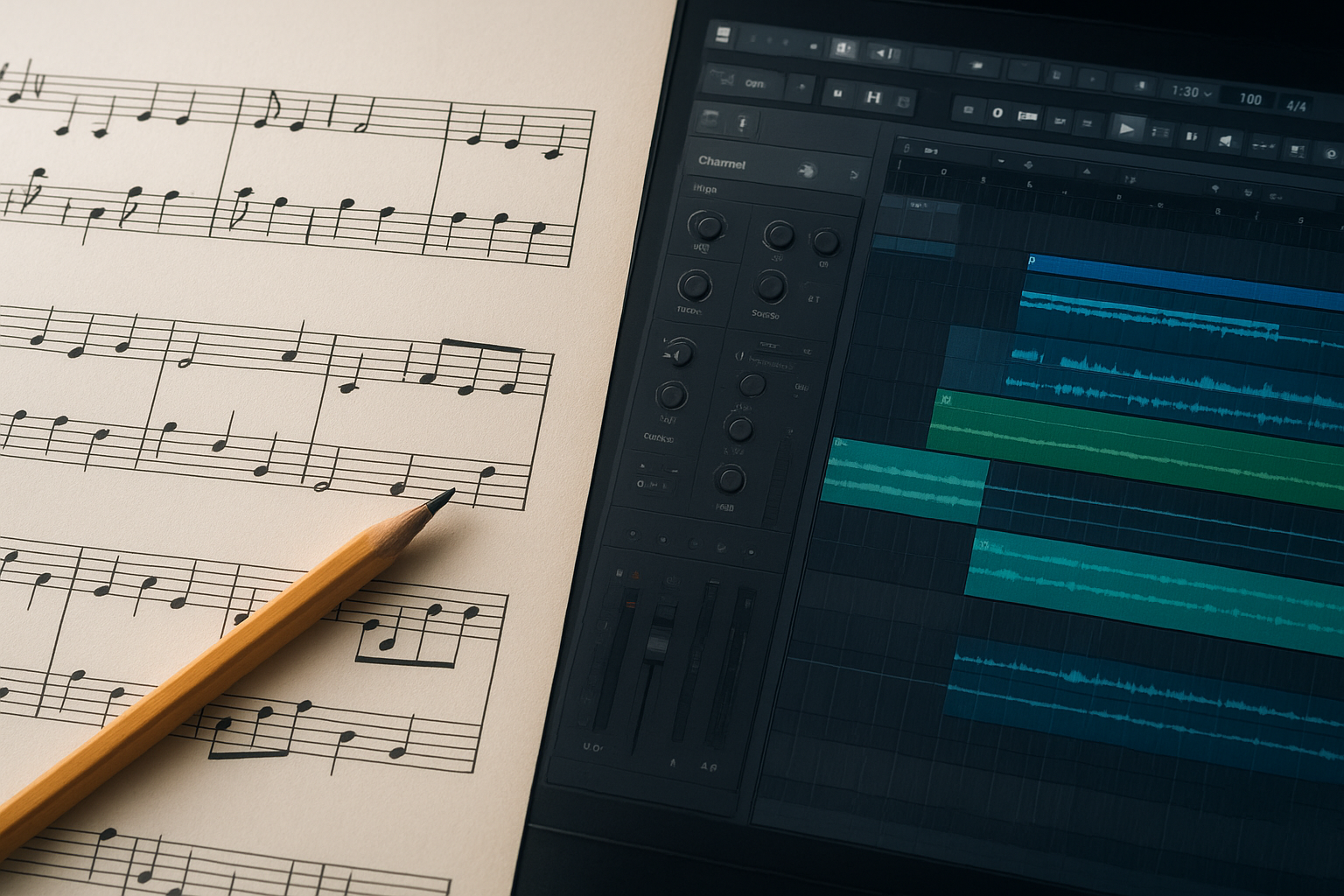
    Classical music, revered for its timeless beauty and emotive power, does not merely happen; it is crafted with precision and intention. Behind the orchestral texture and harmonic richness lies a team of producers who meticulously shape the emotional experience for the listener.

    The Subtle Art of Sound Engineering

    At the heart of this process is sound engineering, where producers wield technology to capture and enhance the nuances of a live performance. The placement of microphones can drastically alter the auditory experience. A closer placement might capture the intimacy of a soloist’s technique, while a strategic distance offers a more blended orchestral sound.

    Producers also manipulate reverb to recreate the acoustics of grand halls or intimate salons, enveloping listeners in environments that augment the emotional impact of compositions. As producer Steve Epstein once noted in an interview with NPR, “The way sound is captured can make a world of difference in how a piece of music is perceived and felt.”

    Interpreting the Composer’s Vision

    Producers work closely with conductors and musicians to ensure that the composer’s intent is honored while balancing modern expectations. This involves decisions about the tempo, dynamic range, and even the orchestration choices that can allude to historical practices or contemporary innovation.

    “We acknowledge the past, but our approach must also resonate with today’s audiences,” says renowned producer Maria Triantos, during a panel discussion at the Classical Music Conference.

    Balancing Tradition and Innovation

    In the modern era, producers are also tasked with attracting new audiences without alienating purists. This tightrope walk involves innovative practices such as remixing classical pieces or incorporating digital elements that do not disrupt the original composition’s integrity.

    • Remixes bring classical works into new genres, offering fresh perspectives.
    • Digital Elements integrate subtle electronic sounds, creating a fusion that respects ancient melodies while experimenting with contemporary textures.

    Ultimately, the goal remains to preserve the core emotion of the music while exploring its limitless potential. In doing so, producers ensure that classical music continues to evoke a powerful response, bridging the past and the present.

    The engineering of emotion in classical music is a delicate dance of sound, tradition, and technology, one that producers continue to master as they shape the emotional landscapes that these masterpieces paint.