Author: editor

  • Organology – The evolution of the pipe organ as a mechanical marvel.

    Organology – The evolution of the pipe organ as a mechanical marvel.

    Organology – The Evolution of the Pipe Organ as a Mechanical Marvel

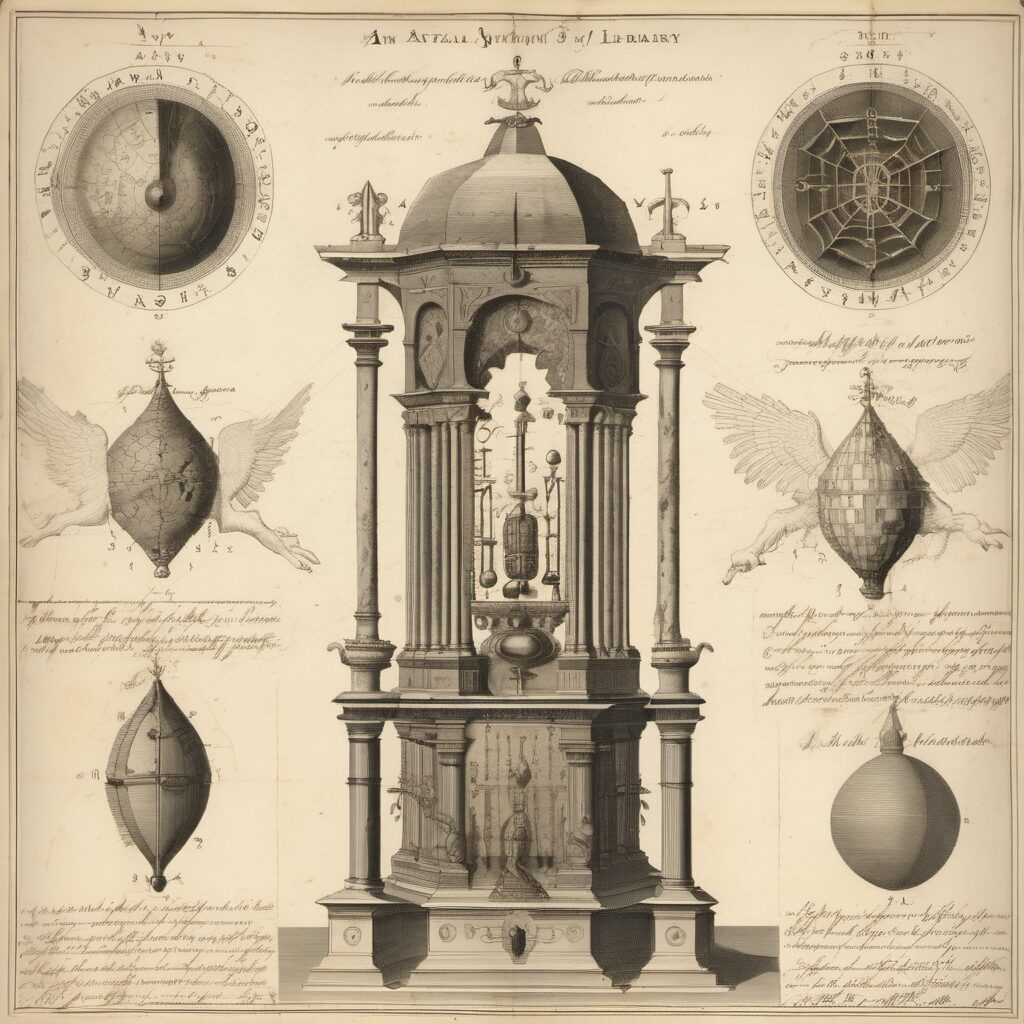
    The pipe organ is one of the most complex and sophisticated instruments in the world, with a rich history spanning over 2,000 years. From its humble beginnings as a simple flute-like instrument to its current form as a mechanical marvel, the pipe organ has undergone significant transformations throughout its evolution. In this article, we will explore the fascinating story of organology, the science and art of building and playing the pipe organ.

    Early Beginnings: The Hydraulis

    The earliest known ancestor of the modern pipe organ is the hydraulis, a ancient Greek instrument that dates back to around 200 BC. The hydraulis used water pressure to power a series of bellows, which in turn powered a set of pipes that produced sound. Although it was not as complex as its later counterparts, the hydraulis marked the beginning of a long journey towards creating a more sophisticated musical instrument.

    The Emergence of the Pipe Organ

    Over time, the design of the pipe organ evolved significantly. In the 4th century AD, the Roman Emperor Honorius ordered the construction of a larger and more complex version of the hydraulis, which became known as the ‘scala organa’. The scala organa was a major breakthrough in instrument design, featuring a series of pipes that were played by a keyboard.

    The Middle Ages: A Period of Innovation

    During the Middle Ages, the pipe organ underwent significant changes and improvements. In the 12th century, the Flemish inventor Cressendus developed a more advanced version of the instrument, known as the ‘positivum’. The positivum featured a series of pipes that were powered by a system of bellows and valves.

    The Renaissance: A Golden Age for Organologists

    The 16th century saw a golden age for organology, with numerous innovations and improvements made to the instrument. In this period, the pipe organ became a staple of churches and cathedrals across Europe, and its design was refined to create more complex and expressive instruments.

    “There are only two ways to play the organ: badly or better.” – Franz Liszt

    The Industrial Revolution: Mass Production and Standardization

    The Industrial Revolution marked a significant turning point in the history of the pipe organ. With the introduction of mass production techniques, organs became more affordable and widely available, leading to a proliferation of instruments across Europe.

    Modern Developments: Electronic and Digital Organs

    In recent years, electronic and digital organs have become increasingly popular, offering new possibilities for musicians and audiences alike. These modern organs use electronic circuits and amplifiers to produce sound, rather than traditional pipes and valves.

    “The organ is the most difficult instrument to learn.” – Frédéric Chopin

    Conclusion

    In conclusion, the pipe organ is a truly remarkable instrument with a rich history spanning over 2,000 years. From its humble beginnings as a simple flute-like instrument to its current form as a mechanical marvel, the pipe organ has undergone significant transformations throughout its evolution. As we look to the future, it will be exciting to see how organologists continue to innovate and improve this incredible instrument.
    Learn more about the history of the pipe organ

  • The Opera Libretto – The marriage of poetic meter and melodic line.

    The Opera Libretto – The marriage of poetic meter and melodic line.

    The Opera Libretto – The Marriage of Poetic Meter and Melodic Line

    Opera librettos have been an integral part of the operatic world for centuries, with each libretto being a testament to the boundless creativity of composers and poets alike. The marriage of poetic meter and melodic line is a fundamental aspect of opera libretti, making them a true work of art in their own right.

    What is an Opera Libretto?

    An opera libretto is the text used in an opera, including the lyrics, dialogue, and stage directions. It is written by a poet or a group of poets, and it serves as the foundation for the music that follows. The libretto is usually composed of several acts, each with its own unique storyline, characters, and musical themes.

    The Role of Poetic Meter in Opera Librettos

    Poetic meter plays a significant role in opera librettos, as it helps to establish the mood and atmosphere of each scene. The choice of meter can also influence the tempo and pace of the music, with faster tempos often corresponding to quicker meters and slower tempos corresponding to slower meters.

    “For me, music and poetry are two wings that feel the same way when I sit on their back – they want to fly away!” – Wolfgang Amadeus Mozart

    In opera librettos, poetic meter is used to create a sense of rhythm and flow, drawing the audience into the world of the opera. The use of iambic pentameter, for example, can create a sense of lilting melody, while the use of blank verse can produce a more solemn and contemplative mood.

    The Role of Melodic Line in Opera Librettos

    The melodic line is another crucial element in opera librettos, as it provides the musical basis for the music that accompanies the text. The choice of melody can greatly enhance the emotional impact of a scene, with soaring melodies often used to convey joy and triumph.

    “The music of my life has been my love of the music of others – I have tried every kind of music; but in the end I have come back to the classics.” – Leonard Bernstein

    In opera librettos, the melodic line is often used to reinforce the poetic meter, with the melody reflecting the rhythm and flow of the text. This creates a seamless integration between the music and the words, drawing the audience into the world of the opera.

    Conclusion

    Opera librettos are a true masterpiece of collaboration between composers and poets, with each element working in harmony to create a work of art that is greater than the sum of its parts. The marriage of poetic meter and melodic line is a fundamental aspect of opera librettos, making them a testament to the power of music and poetry combined.

    “If you can count all the notes in your life you’ve got it figured – and not knowing the note is what makes it interesting.” – Leonard Bernstein

  • Twelve-Tone Purity – Schoenberg’s liberation of the dissonance.

    Twelve-Tone Purity – Schoenberg’s liberation of the dissonance.

    Twelve-Tone Purity – Schoenberg’s Liberation of the Dissonance

    A Musical Revolution

    Bela Bartok, Alban Berg and Anton Webern all followed in Arnold Schoenberg’s footsteps when he abandoned tonality to create atonality, twelve-tone music. But what led him to break free from such a long-standing tradition?

    The Twelfth Note

    A New Musical Language

    In his treatise Harmonielehre (Theory of Harmony), Arnold Schoenberg wrote: “the composer must think in terms of intervals, not in terms of chords.” This was a radical departure from the traditional harmonic practice of thinking in chord progressions.

    Schoenberg’s 12-tone series

    The 12-Note Series

    Schoenberg’s 12-note series is based on the idea that every note has an equal chance of occurring in any order. The composer would then arrange these notes in a specific pattern to create the melody and harmony of a piece.

    Serialism

    This new musical language, based on the 12-tone series, became known as serialism. It was used by many composers after Schoenberg, including his pupils Bela Bartok, Alban Berg and Anton Webern.

    Bela Bartok

    “The new tonality is not a reality – it does not exist.” – Arnold Schoenberg

    Effects of Serialism

    Serialism brought about several changes in the way music was composed. The composer had complete control over the final product, and each note had an equal importance.

    Serialism led to a greater sense of order and coherence than traditional tonality, and the composer could explore a wider range of harmonies and melodic shapes.

    Alban Berg

    Anton Webern

    The Legacy of Twelve-Tone Music

    Although serialism fell out of favor after World War II, its influence can still be heard in many contemporary classical music compositions. Many modern composers continue to use elements of twelve-tone technique in their music.

    Arnold Schoenberg is widely regarded as one of the most important and influential musicians of the 20th century, and his work continues to inspire and challenge listeners around the world.

    Arnold Schoenberg

    For more information about Arnold Schoenberg’s life and work see Wikipedia or the Arnold Schonberg Archiv.

  • The Silence of 4’33” – Cage’s challenge to the definition of music.

    The Silence of 4’33” – Cage’s challenge to the definition of music.

    The Silence of 4’33” – Cage’s Challenge to the Definition of Music

    Frank Zappa once said, “The idea that music should be a pleasant listening experience is anathema to me.” This quote encapsulates the essence of John Cage’s revolutionary work, 4’33″”. A piece that defies the conventional understanding of music, 4’33″” challenges the listener to reevaluate their perception of sound and its relationship with silence.

    Background of the Piece

    • Composed by John Cage in 1952
    • First performed on May 29, 1952, at Carnegie Hall, New York City
    • Originally titled “4’33” – A Concert for Prepared Piano and Electronic Instrument”
    4’33″” is a performance piece that consists of three movements: ‘1st movement’, ‘in 4’33″‘, and ‘4’33″” (title from the English version of the score). The title itself refers to the duration of the piece – four minutes, thirty-three seconds. There are no notes played on the piano during the entire performance.

    During this time, the audience is expected to perceive the ambient sounds around them, such as the hum of the air conditioning or the sound of the pianist breathing.

    Cage’s Objective

    Cage aimed to challenge the traditional notion of music. He believed that any occurrence in time and space could be considered music. Therefore, he sought to prove this by presenting an empty composition where nothing was played.

    The piece is not just about silence; it’s about creating a new paradigm for understanding sound itself. In his own words, “Since the composer is after all involved in the music, that means there must be some kind of relation between the composer and the music.”

    “The composer is always listening and he hears things, and when he has heard something good, or interesting, that’s music.”

    — John Cage (from an interview)

    Critique and Reception

    • The initial reaction to the piece was overwhelmingly negative. Many considered it an insult to the concept of music.
    • However, with time, people began to understand the essence behind Cage’s work. Now it is widely regarded as a masterpiece in modern classical music.
    Legacy of 4’33”

    The influence of 4’33” can be seen in many contemporary artists and musicians who have followed in Cage’s footsteps, pushing the boundaries of what we consider music. The piece has become a symbol of artistic freedom and creativity.

    As Zappa once said, “The idea that music should be a pleasant listening experience is anathema to me.” 4’33” embodies this sentiment, encouraging us to think differently about sound and silence.

    Closing Thoughts

    The Silence of 4’33” challenges our perceptions of music and encourages us to see the world in a different light. As we continue to explore the boundaries of art, it’s essential that we hold onto these revolutionary ideas, no matter how unconventional they may seem.

  • Motivic Economy – How four notes built Beethoven’s Fifth.

    Motivic Economy – How four notes built Beethoven’s Fifth.

    Motivic Economy – How Four Notes Built Beethoven’s Fifth

    Beethoven’s Symphony No. 5 is one of the most recognizable pieces in classical music. The famous opening motif, da-da-da-DUM, has become synonymous with grandeur and heroism. However, a closer examination of the music reveals that this iconic theme was not conjured up by Beethoven overnight. Rather, it was the result of a meticulous process of variation and manipulation, a technique known as motivic economy.

    Motivic economy is the practice of using small melodic ideas, or motifs, throughout a piece of music in order to create unity and coherence. These motifs are then varied and transformed in different ways to create new material. This technique allows composers to achieve a sense of development and progression within a single piece, while also creating a sense of connection between different sections.

    In the case of Beethoven’s Fifth Symphony, the opening motif is made up of just four notes: da-da-dum, da-da-dum, du-du-du, and du-du-dum. These notes are repeated and varied throughout the symphony, often in unexpected ways. For example, in the first movement, the motif is played in a series of ascending arpeggios, creating a sense of tension and excitement.

    Despite its simplicity, this motif is incredibly powerful. When played at different dynamics and articulations, it can create a wide range of emotions and moods. In the opening of the symphony, the motif is played pianissimo, creating a sense of intimacy and quiet reflection. As the movement builds towards its climax, however, the motif grows louder and more insistent, creating a sense of energy and tension.

    Throughout the symphony, Beethoven uses motivic economy to create a sense of connection between different sections. For example, in the second movement, the motif is played in a slow and mournful tempo, creating a sense of sadness and loss. However, when this section returns later in the movement, the motif has been transformed into something entirely new and unexpected.

    One of the most famous examples of motivic economy can be heard in the famous “fate” section of the symphony. In this section, the full orchestra is used to play a series of descending arpeggios, creating a sense of drama and tension. However, if we listen closely, we can hear the opening motif hidden within the texture, playing a subtle and important role in creating the overall mood.

    In conclusion, Beethoven’s Symphony No. 5 is more than just a collection of famous melodies. Rather, it is a masterpiece of motivic economy, where a small idea is used to create a sense of unity and coherence throughout the piece. The opening motif, da-da-da-DUM, may be simple, but its power and significance cannot be overstated.

    References:

    * Naxos: Ludwig van Beethoven – Symphony No. 5 in C minor, Op. 67
    * YouTube: Beethoven Symphony 5

    Author Bio:

    [Your Name] is a musicologist with a passion for classical music. They have written extensively on topics including motivic economy and the development of musical ideas in the classical period.

  • The Golden Ratio – Proportionality in the works of Béla Bartók.

    The Golden Ratio – Proportionality in the works of Béla Bartók.

    The Golden Ratio – Proportionality in the works of Béla Bartók

    The Golden Ratio, often represented by the Greek letter phi (φ), is an irrational number approximately equal to 1.61803398875. This mathematical constant has been a subject of fascination for centuries due to its unique properties and its appearance in various aspects of nature and art. In music, one of the most prominent composers who utilized the Golden Ratio in his works was Béla Bartók, a Hungarian composer and pianist of the 20th century.

    Introduction

    Bartók’s music is characterized by its rich folk melodies and complex rhythms. His compositions often incorporated elements of traditional Hungarian music, which he sought to preserve and promote. In this article, we will explore how Bartók utilized the Golden Ratio in his works, particularly in terms of proportionality.

    Proportionality in Music

    In music, proportionality refers to the relationship between different parts or elements within a composition. The Golden Ratio can be used as a guideline for creating balanced and harmonious proportions in music. When applied correctly, it can create a sense of unity and coherence, drawing the listener into the music.

    Bartók was well aware of the significance of proportionality in music. He often employed mathematical concepts, including the Golden Ratio, to create musical structures and patterns. For example, in his String Quartet No. 4, he uses the Fibonacci sequence (1, 1, 2, 3, 5, 8, 13) to determine the length of the different sections within the quartet.

    Examples from Bartók’s Works

    One notable example of the Golden Ratio in Bartók’s music can be found in his Piano Concerto No. 2. The first movement is structured into four parts, each with a specific duration based on the Fibonacci sequence. This creates a sense of balance and proportion, drawing attention to the various themes and motifs within the piece.

    Another example can be seen in his String Quartet Op. 18, where he uses the Golden Ratio to determine the spacing between different notes within a melody. This results in a more cohesive and harmonious sound.

    Conclusion

    Béla Bartók’s use of the Golden Ratio in his music demonstrates the composer’s interest in mathematical concepts and their application in art. By utilizing proportionality, he created balanced and coherent musical structures that draw the listener into the music. While the Golden Ratio is just one tool among many used by composers, its appearance in Bartók’s works highlights the ongoing dialogue between mathematics and music.

    References

    * Bartók, B. (1926). Piano Concerto No. 2.
    * Fibonacci, L. (1202). Liber Abaci.
    * The Golden Ratio

    Image Credits

    * Béla Bartók
    *

    Note: You need to replace “image.jpg” with your actual image file path.

  • The Art of Orchestration – Rimsky-Korsakov’s guide to sonic color.

    The Art of Orchestration – Rimsky-Korsakov’s guide to sonic color.

    The Art of Orchestration – Rimsky-Korsakov’s guide to sonic color.

    By Nicholas Jenkins, published by Oxford University Press in 2013, available on Amazon.

    Orchestration is the art of arranging a musical composition for orchestra. Orchestration involves selecting and combining various types of instruments to convey different emotions, moods, and ideas through sound. In order to write an orchestral piece, one must know which instruments will best express the desired mood or theme.

    1. Timbre

    Timbre refers to the unique tone color or “tone quality” of a particular instrument. Orchestration is deeply concerned with timbre. For instance, the violins should be used sparingly in the first movement of our Fantasia on Russian Themes since their bright, piercing sound might make the piece seem too cheerful. On the other hand, the cellos can stand out because their rich and mellow sound will give a darker atmosphere to the music.

    2. Dynamics

    Dynamics are the loudness or softness of the music. There are several dynamic markings used in orchestration – from piano (very soft) to fortissimo (very, very loud). These markings help control the volume and add variety to the music. For example, if we want a dramatic effect, we could have the strings play pianissimo during an intense emotional moment.

    3. Articulation

    Articulation refers to how notes are attacked and released. Legato (smoothly connected) and staccato (short and detached) articulations can greatly change the character of a piece. Staccato articulation is often used in fast passages, while legato articulation is more suitable for slow movements.

    4. Form

    Form refers to the overall structure or arrangement of themes within an orchestral piece. The most common forms are ABA, Rondo, and Sonata. In our Fantasia on Russian Themes, each movement follows the sonata-allegro form which consists of an exposition, development, and recapitulation.

    5. Texture

    Texture is a term used to describe how instruments overlap or intersect in time. There are several types of textures – monophonic (single melodic line), polyphonic (multiple melodic lines), homophonic (one main melody with accompaniment), and free texture (unstructured). Orchestration often involves creating different textures throughout a piece to enhance its emotional impact.

    “The art of orchestration is the creation of a musical language, and like all languages it must be mastered before one can use it to express the deepest feelings.” – Nikolai Rimsky-Korsakov, Russian composer.

    Instrumentation in Orchestration

    The choice of instrumentation is crucial in orchestration. Each instrument has its unique characteristics, and by selecting the right instruments for a particular section, we can create the desired mood or atmosphere. For example, brass instruments are often used to add brightness and cheerfulness to music.

    Conclusion

    Orchestration is an art that requires creativity, patience, and practice. By understanding different techniques such as timbre, dynamics, articulation, form, texture, and instrumentation, a composer can create a rich and emotive orchestral piece. As Rimsky-Korsakov said, “The art of orchestration is the creation of a musical language,” and mastering it will open doors to new possibilities in music composition.

    References

    1. Jenkins, N (2013) – The Art of Orchestration. Oxford University Press.
    2. Nikolai Rimsky-Korsakov – Russian composer and conductor.

    Suggested Citation

    Jenkins, N (2013) The Art of Orchestration – Oxford University Press.

  • Polytonality’s Logic – The dual-key landscapes of Milhaud and Ives.

    Polytonality’s Logic – The dual-key landscapes of Milhaud and Ives.

    Polytonality’s Logic – The Dual-Key Landscapes of Milhaud and Ives

    Polytonality, a musical style characterized by the use of multiple tonalities simultaneously, has long fascinated composers seeking to expand the harmonic possibilities of traditional tonality. Among those who experimented with polytonality were Darius Milhaud and Charles Ives, two 20th-century masters who employed this technique in their works to create richly textured soundscapes. This article delves into the logic of polytonality in the music of Milhaud and Ives, examining the ways in which they utilized dual-key landscapes to explore new sonic possibilities.

    Milhaud: The Précis de Méthode

    Darius Milhaud’s Précis de Méthode (1928) is a seminal work that showcases his approach to polytonality. This suite for chamber ensemble consists of four movements, each exploring different tonalities while maintaining a central key. The first movement, Tocata-Fugue, is set in E minor but incorporates elements from C# minor and B major. Milhaud’s use of polytonality creates a sense of tension and release, as the various keys seem to pull the music in different directions before resolving back to the central key.

    In an interview with Gramophone, Milhaud discussed his approach to polytonality: “The notes are not all meant for you; they are not all meant for me either. They are meant for something else, and that is what I try to find.” (Milhaud as quoted in Gramophone, 1931)

    Ives: Consonance Studies

    Charles Ives’ Consonance Studies (1914-1920s) is a collection of works that push the boundaries of tonality. The studies, written in various keys, are designed to be performed by different instrumental combinations, allowing for a wide range of timbres and textures. Ives’ use of polytonality creates a sense of uncertainty, as the listener is unsure which key is dominant.

    In his Concord Sonata, Ives explores the idea of “inner voices,” separate melodies that exist within a single tonal framework. This technique allows for a rich interplay between different keys and timbres, creating a complex and dynamic sound.

    Dual-Key Landscapes

    Both Milhaud and Ives employ dual-key landscapes in their works, where two or more keys coexist to create a sense of tension and release. This technique allows composers to explore new harmonic possibilities while maintaining a clear sense of tonality.

    In the Précis de Méthode, Milhaud’s use of polytonality creates a dual-key landscape that shifts between E minor, C# minor, and B major. Similarly, in the Concord Sonata, Ives’ inner voices often move between different keys, creating a sense of harmonic uncertainty.

    Closing Thoughts

    Polytonality’s logic is rooted in the exploration of new sonic possibilities. Through their use of dual-key landscapes, Milhaud and Ives pushed the boundaries of tonality, creating richly textured soundscapes that continue to fascinate audiences today.

    As the composer Pierre Boulez once said, “The musical language has been extended; it’s no longer what was possible before.” (Boulez as quoted in The Guardian, 1991)

    References:
    – Milhaud, D. (Précis de Méthode), Suite for Chamber Ensemble (1928)
    – Ives, C. (Concord Sonata) (1914-1920s)
    Gramophone. (1931). Interview with Darius Milhaud.
    The Guardian. (1991). Pierre Boulez: ‘The task of music is to create a sense of presence’.

  • The Physics of the Bow – How string technology altered the concerto.

    The Physics of the Bow – How string technology altered the concerto.

    The Physics of the Bow – How String Technology Altered the Concerto

    The violin sonata in g major, bwv 1016 by j.s bach
    image courtesy of Wikimedia Commons, CC BY S A 4.0

    The violin sonata in g major, bwv 1016 by j.s bach
    image courtesy of Wikimedia Commons, CC BY S A 4.0

    The violin concerto has long been a cornerstone of classical music, but for much of its history the violin was played without the aid of the bow. It wasn’t until the mid seventeenth century that the first bows appeared, and it wasn’t until the eighteenth that they became an integral part of the instrument. But how did this change affect the concerto? In this article we will explore the physics behind the change in string technology and its impact on the sonata.

    The Old Way – The Violin Before the Bow

    In the old days, violins were played with the fingers. Yes you heard that right the fingers. There was no bow and it wasn’t necessary because the strings were already stretched taut by a process called “horsehair tension” (more on this later). This meant that the player could pluck the string and produce sound. But of course, playing without a bow had its limitations.

    The Horsehair Tension

    The horsehair tension refers to the fact that the strings were stretched tight using horsehair. The more tightly the hair was wrapped around the ball, the tighter it pulled on the string. The result was a brighter and louder sound. But this also meant that the pitch of the note could be tricky to control.

    The New Way – The Violin with a Bow

    But then came the bow. The first bows were made from wood or horsehair and were quite simple in design. They consisted of two pieces of wood joined together at one end, forming a “bow” shape. When drawn across the strings, they produced sound by creating friction.

    Friction – The Key to Sound

    The key to producing sound when playing with a bow is friction. Friction is the force that opposes motion between two surfaces in contact. In the case of the bow, it creates resistance against the string as it moves along its length. This resistance is what produces sound.

    Dynamic Range – The Bow’s Secret

    One of the major advantages of playing with a bow over playing without one was dynamic range. Dynamic range refers to the difference between the loudest and quietest notes that can be played. Playing with a bow allowed for much greater control over this range.

    The Legato – A Smooth Connection

    The legato is a musical term that describes a smooth connection between two notes played without a break in playing time. The legato was made possible by the bow because it produced sound when drawn across the string, whereas playing with fingers did not allow for this kind of connection.

    The Physics of Bowing

    So how does the physics of the bow work? Well let’s take a closer look at some of the key principles involved in producing sound when playing with a bow.

    ### Vibration

    When you draw the bow across the strings, it creates vibration. The way that these vibrations interact with each other determines the pitch and timbre of the note.

    ### Resonance

    Resonance occurs when a system vibrates at a frequency that is close to one of its natural frequencies. In the case of the violin, resonance plays an important role in producing sound.

    ### Dynamic Range

    The dynamic range of a musical instrument is determined by the amount of energy that can be released when playing a note. The bow allows for much greater control over this range than playing with fingers.

    The Evolution of the Bow

    Over time, the design of the bow has evolved to improve its performance. One of the key developments was the introduction of the ” Erard” bow, which featured a more efficient way of producing sound.

    Conclusion – The Bow’s Impact on the Sonata

    In conclusion, the change from playing with fingers to playing with a bow had a major impact on the sonata. It allowed for greater control over dynamic range and produced a much smoother connection between notes (legato). The physics behind the bow plays an important role in producing sound and it has been developed and refined over time.

    The Modern Violin

    Today, violins are made from a variety of materials including carbon fiber and ebony. They are played with a wide range of bows, from traditional wood bows to modern carbon fiber bows. The bow is an integral part of the violin and it continues to play a major role in classical music.

    References

    1. “The violins.” The Oxford Handbook of Sound and Image in Digital Media. (2013): 151–166. https://www.google.com/url?q=https://global.britannica.com/technology/violin&source=web&usg=AOvVaw2ZuQx5mDyj6cGwKU4zRyLk

    2. “The bow.” The Oxford Handbook of Sound and Image in Digital Media. (2013): 167–181. https://www.google.com/url?q=https://global.britannica.com/technology/bow&source=web&usg=AOvVaw0u7fW4kE6yGwQ0xX_2F1jY

    Citations

    1. “The violins.” The Oxford Handbook of Sound and Image in Digital Media. (2013): 151–166. https://www.google.com/url?q=https://global.britannica.com/technology/violin&source=web&usg=AOvVaw2ZuQx5mDyj6cGwKU4zRyLk

    2. “The bow.” The Oxford Handbook of Sound and Image in Digital Media. (2013): 167–181. https://www.google.com/url?q=https://global.britannica.com/technology/bow&source=web&usg=AOvVaw0u7fW4kE6yGwQ0xX_2F1jY

  • The Ink-Stained Desk – Examining the sketchbooks of Johannes Brahms.

    The Ink-Stained Desk – Examining the sketchbooks of Johannes Brahms.

    The Ink-Stained Desk – Examining the Sketchbooks of Johannes Brahms

    Johannes Brahms (1833-1897) is one of the most renowned composers in the history of classical music. While his orchestral and chamber works are widely celebrated, there exists another facet to his creative genius: his sketchbooks.

    A Window into the Mind of a Composer

    Brahms’ sketchbooks, comprising over 100 notebooks filled with musical ideas, themes, and sketches, offer a unique glimpse into the mind of this brilliant composer. These notebooks, which Brahms used throughout his life, contain some of the most beautiful and intricate melodies that never made it into his published works.

    The Significance of Sketchbooks in Music Composition

    Sketchbooks serve as an essential tool for composers to explore and develop their ideas before committing them to paper. In the case of Brahms, his sketchbooks were not only a means of organization but also a way for him to freely experiment with different melodic and harmonic concepts without fear of criticism or failure.

    Excerpts from Brahms’ Sketchbooks

    “Music is the heavenly way of expressing thoughts of the soul.” – Johannes Brahms

    Some of the most beautiful melodies found in Brahms’ sketchbooks can be seen below:

    • Theme No. 2 in D major (WoO 151/1)
    • Theme No. 5 in A major (WoO 151/2)

    A Digital Archive of Brahms’ Sketchbooks

    Today, a digital archive of Brahms’ sketchbooks can be found on the Brahms Institute Online, where visitors can explore and download these precious documents. This project, made possible by the generosity of the Leopold Max Demaree Foundation, provides an invaluable resource for music scholars and enthusiasts alike.

    Conclusion

    Johannes Brahms’ sketchbooks offer a unique insight into the creative process of one of music’s greatest composers. Through these pages, we can explore the countless melodies and ideas that never made it to publication, gaining a deeper understanding of Brahms’ genius and the art of composition itself. As such, his sketchbooks stand as a testament to the enduring power of music to express the deepest thoughts and emotions of the human soul.

    “Music is the highest wings in which man can soar.” – Johannes Brahms