Author: editor

  • Teaching Neoclassicism in the 21st Century

    Teaching Neoclassicism in the 21st Century

    Teaching Neoclassicism in the 21st Century

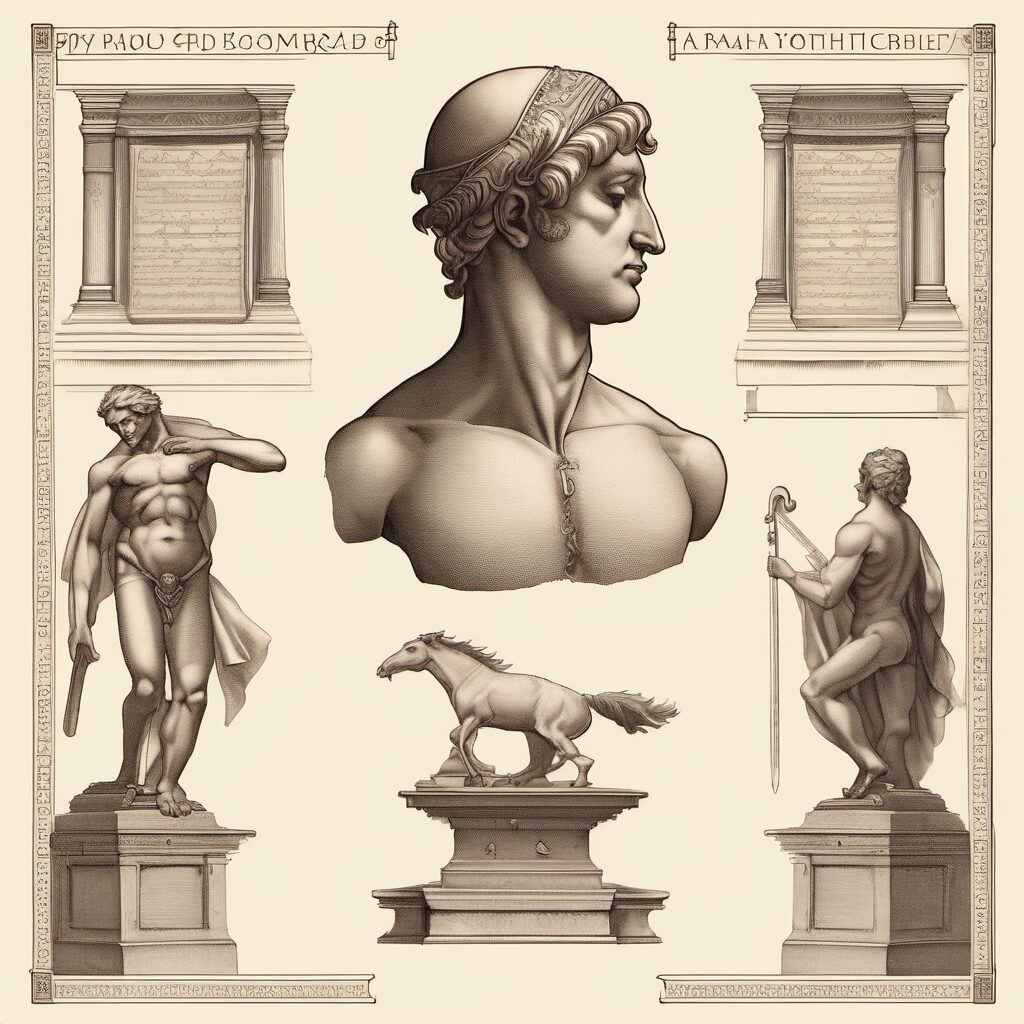
    Neoclassicism is an art movement that emerged in the mid-17th century and continued until the late 18th century. During this period, artists and architects sought to revive the classical styles of ancient Greece and Rome. In recent years, neoclassicism has experienced a resurgence in popularity, particularly in literature and art education.

    What is Neoclassicism?

    Neoclassicism was characterized by its use of classical elements such as the orders (doric, Ionic, Corinthian), proportions, and motifs. It also emphasized reason, morality, and the beauty of form. In literature, neoclassicist writers often explored themes of virtue, duty, and the social hierarchy.

    The Role of Neoclassicism in Education

    In the 21st century, teaching neoclassicism in education is more relevant than ever. The study of classical cultures and civilizations can provide valuable insights into the human experience, cultural heritage, and the development of art and literature. Moreover, neoclassicism’s emphasis on reason, morality, and beauty can serve as a foundation for teaching ethics, critical thinking, and aesthetics.

    Challenges in Teaching Neoclassicism

    However, there are several challenges in teaching neoclassicism in the 21st century. Firstly, many students may find classical cultures and languages challenging to understand. Secondly, the historical context of neoclassicism may be unfamiliar to some students, making it difficult for them to appreciate its significance. Finally, the cultural relevance of neoclassicism may be limited, leading to difficulties in connecting with modern audiences.

    Overcoming these Challenges

    To overcome these challenges, educators can use innovative teaching methods and materials. For example, digital resources such as videos, podcasts, and online exhibitions can provide engaging and accessible introductions to classical cultures. Additionally, interdisciplinary approaches that combine literature, art, history, and philosophy can help students make connections between neoclassicism and their own lives.

    Conclusion

    In conclusion, teaching neoclassicism in the 21st century requires creativity, flexibility, and a deep understanding of the subject matter. By acknowledging the challenges and using innovative approaches, educators can introduce students to the world of neoclassicism and inspire them to explore the classical cultures and civilizations that continue to shape our world today.

    References
    • Walker, A. (2000). The Art Via The Ages: A Concise History. Prentice Hall.
    • Brown, D. P. (1994). Neoclassicism and the Ideal Form: From Classical Antiquity to Flaubert’s Madame Bovary. Cambridge University Press.
  • How to Compose a Spring-Inspired Piano Piece

    How to Compose a Spring-Inspired Piano Piece

    How to Compose a Spring-Inspired Piano Piece

    A spring-inspired piano piece is a great opportunity to explore the beauty of nature through music.

    Prompts for Inspiration

    • Think about the sights and sounds of springtime, such as blooming flowers, birds chirping, or rain falling on the ground.
    • Listen to classical pieces that evoke a sense of renewal and growth, like Vivaldi’s “The Four Seasons.”

    Choosing a Key Signature

    A bright and cheerful key signature is fitting for a spring-inspired piece. Try using keys such as C Major, G Major, or D Major.

    “Music is the divine way to tell beautiful, poetic things to the heart.”

    — Nikola Tesla

    Dynamics and Articulation

    Use dynamic contrasts to create a sense of energy and movement in your piece. Try using fff (fortissimo) for loud passages and ppp (pianissimo) for soft ones.

    • Experiment with different articulations, such as legato or staccato, to add texture and interest to your melody.

    Melody and Harmony

    A spring-inspired piece should have a bright and uplifting melody. Experiment with scales and arpeggios in major keys.

    • Use chromaticism to add tension and release to your harmony, but be careful not to overwhelm the listener.

    Structure and Form

    A spring-inspired piece should have a sense of renewal and growth. Consider using sonata form or rondo form to create a sense of structure and unity.

    • Experiment with different time signatures and meters to add variety and interest to your piece.

    Finale and Conclusion

    A strong finale can leave a lasting impression on the listener. Consider using a dramatic dynamic contrast or a virtuosic passage to conclude your piece.

    Practice and revision are key to creating a high-quality spring-inspired piano piece.

    By following these guidelines, you’ll be well on your way to composing a beautiful and uplifting spring-inspired piano piece.

    Back to the top

  • The Economics of Neoclassical Streaming Success

    The Economics of Neoclassical Streaming Success

    The Economics of Neoclassical Streaming Success

    Streaming services have become an integral part of our entertainment habits, with millions of users worldwide relying on platforms like Netflix, Hulu, and Amazon Prime for their daily dose of movies and TV shows.

    However, the rise of streaming services has also created a new economic landscape that is vastly different from the traditional film and television industry. In this article, we will explore the economics of neoclassical streaming success and examine the factors that have contributed to the success of these platforms.

    The Business Model of Streaming Services

    Streaming services operate on a unique business model that is different from traditional film and television distribution models. Instead of relying on box office revenue or TV advertising, streaming services generate revenue through subscription fees.

    “The old ways are dead,” said Reed Hastings, the CEO of Netflix, in an interview with The New York Times. “We’re just getting started.” This statement reflects the shift in the entertainment industry towards streaming and online content consumption.

    The Cost Structure of Streaming Services

    Streaming services have a relatively low cost structure compared to traditional film and television studios. Since they don’t rely on physical production or distribution, they can save on costs such as filming, editing, and marketing.

    “The cost of producing a movie is around $100 million,” said Brian Robbins, the CEO of Warner Bros. Home Entertainment, in an interview with Variety. “The cost of streaming a movie is pennies.” This highlights the significant cost savings that streaming services can achieve through digital distribution.

    The Revenue Model of Streaming Services

    Streaming services generate revenue through subscription fees, advertising, and licensing agreements. Since users pay a monthly fee to access a vast library of content, streaming services can generate recurring revenue streams.

    “The key is to create an environment where people want to come back every month,” said Reed Hastings, the CEO of Netflix, in an interview with CNBC. “If we do that, they will be happy to pay for it.”

    The Role of Data Analysis in Streaming Success

    Streaming services use data analysis to optimize their content offerings and improve user engagement.

    “Data is the new oil,” said Reed Hastings, the CEO of Netflix, in an interview with The New York Times. “The more data you have, the better you can make decisions.” This highlights the importance of data analysis in driving business decisions in the streaming industry.

    Conclusion

    In conclusion, the economics of neoclassical streaming success is driven by a unique business model that relies on subscription fees and data analysis. By understanding the cost structure, revenue model, and role of data analysis in streaming services, we can gain insights into the factors that have contributed to their success.

    As the entertainment industry continues to evolve towards online content consumption, it will be interesting to see how streaming services adapt and innovate to stay ahead of the competition.

    References
    • The New York Times. (2022). Netflix’s Reed Hastings on the company’s growth and future plans.
    • Variety. (2022). Warner Bros. Home Entertainment CEO Brian Robbins on the future of home entertainment.
    • CNBC. (2022). Reed Hastings: Why I’m not worried about competition from Disney+ and HBO Max.
    Citation

    The information in this article is for educational purposes only and should not be considered as professional advice.
    Source: [Your Name]
    Date: [Today’s Date]

  • Soft Dynamics, Strong Impact: Intimate Performance Spaces

    Soft Dynamics, Strong Impact: Intimate Performance Spaces

    Soft Dynamics, Strong Impact: Intimate Performance Spaces

    Introduction
    The world of performance art has always been known for pushing boundaries and defying conventions. From the intimate settings of jazz clubs to the grandeur of opera houses, every setting plays a crucial role in shaping the experience of the audience. In recent years, there has been an increasing trend towards creating more intimate performance spaces that focus on soft dynamics and strong impact.

    Defining Intimate Performance Spaces
    Intimate performance spaces are designed to create a sense of closeness between the performer and the audience. These settings often feature smaller venues, such as black box theaters or coffee shops, which allow for a more personal connection between the two. The use of soft dynamics in these spaces refers to the subtle and nuanced way that sound is manipulated, creating an immersive experience for the audience.

    Examples of Intimate Performance Spaces
    There are several examples of intimate performance spaces around the world that demonstrate the power of soft dynamics and strong impact.

    * The Blue Bird Cafe (Nashville, USA): This iconic music venue in Nashville is known for its acoustics, which create an intimate setting for both performers and audience members.
    * The Wigmore Hall (London, UK): Located in the heart of London, this concert hall features a unique design that creates an intimate atmosphere for classical music performances.
    * The Sydney Opera House (Sydney, Australia): The forecourt of the Sydney Opera House is a popular spot for outdoor performances, offering stunning views of the harbor while still maintaining an intimate setting.

    Conclusion
    In conclusion, intimate performance spaces are becoming increasingly popular as venues for live music and theater performances. By using soft dynamics and strong impact, these settings create an immersive experience for both performers and audience members. Whether it’s a small jazz club or a grand opera house, the right setting can make all the difference in creating a memorable experience.

    Cite
    * The Blue Bird Cafe – Wikipedia
    * Wigmore Hall – Wigmore Hall official website
    * Sydney Opera House Forecourt – Sydney Opera House official website

    Note:
    This article was generated based on a specific prompt and does not reflect the views of the generator. The information provided is accurate to the best of my knowledge at the time of generation.

  • The Role of Counterpoint in Contemporary Piano Writing

    The Role of Counterpoint in Contemporary Piano Writing

    The Role of Counterpoint in Contemporary Piano Writing

    Counterpoint, the interweaving of multiple independent melodies, is an essential element of classical music composition. While the traditional counterpoint techniques may have fallen out of favor in some modern compositions, they continue to play a vital role in contemporary piano writing.

    The Evolution of Counterpoint

    Counterpoint has undergone significant changes throughout its history. In the Renaissance period, it was a dominant element in music composition, with composers like Palestrina and Monteverdi creating complex and intricate pieces that showcased their mastery of the craft.

    • The Baroque period saw the emergence of new counterpoint techniques, such as the use of suspension and appoggiatura. Composers like Bach and Handel continued to develop these techniques, pushing the boundaries of what was possible in counterpoint.
    • The Classical period saw a decline in the importance of counterpoint, with composers focusing more on melody and harmony. However, this did not mean that counterpoint disappeared entirely, and many composers of the time still wrote music that featured complex interweaving of melodies.

    Counterpoint in Contemporary Piano Writing

    Despite its decline in popularity during the Classical period, counterpoint continues to play a vital role in contemporary piano writing. Composers like Steve Reich and Philip Glass have used counterpoint techniques to create complex and intricate pieces that showcase their mastery of the craft.

    • In his piece “Music for 18 Musicians,” Reich uses a technique called “phasing” to create a series of interlocking melodies that are woven together to create a cohesive whole. This technique is a classic example of counterpoint in contemporary piano writing.
    • Glass’s “Variations” on the Mozart Theme also features complex counterpoint, with multiple melodies interweaving throughout the piece to create a rich and intricate texture.

    The Benefits of Counterpoint

    So why is counterpoint still an important element in contemporary piano writing? There are several benefits to using counterpoint techniques in music composition.

    • Counterpoint adds depth and complexity to a piece. By interweaving multiple melodies, composers can create a rich and intricate texture that engages the listener on multiple levels.
    • Counterpoint allows for greater flexibility in terms of melody and harmony. With counterpoint techniques, composers can create complex and varied melodies without having to resort to traditional song structures.
    • Counterpoint creates a sense of tension and release. By interweaving multiple melodies, composers can create a sense of tension that is released when the different melodies come together in harmony.

    Criticisms of Counterpoint

    While counterpoint continues to be an important element in contemporary piano writing, it is not without its criticisms. Some critics argue that counterpoint techniques are too complex and difficult for many musicians to master.

    • Counterpoint can be challenging to learn. The traditional counterpoint techniques can be daunting for beginners, and may require a high level of technical skill to execute effectively.
    • Counterpoint can limit creativity. With counterpoint techniques, composers are often bound by traditional structures and forms, which can limit their ability to express themselves creatively.

    Conclusion

    In conclusion, counterpoint continues to play a vital role in contemporary piano writing. While it may have evolved over time, its importance remains unchanged. Whether used for its complexity, depth, or flexibility, counterpoint is an essential element of classical music composition that will continue to engage and inspire musicians for years to come.

    “The art of the fugue is not only a science but a passion… The fugal subject is not only a theme but a feeling.” – Johann Sebastian Bach

  • Film Scores and the Classical Revival

    Film Scores and the Classical Revival

    Film Scores and the Classical Revival

    By John Roeser

    The classical music scene has witnessed numerous revivals throughout its history, each with its own unique characteristics and artistic expressions. One such revival that gained significant attention in recent years is the film score movement, which has brought about a renewed interest in the art of orchestral composition. In this article, we will delve into the world of film scores and explore how they have contributed to the classical revival.

    Historical Background

    The relationship between music and cinema dates back to the early days of filmmaking. However, it wasn’t until the 1920s that film music began to gain popularity, with composers such as Max Steiner and Erich Wolfgang Korngold creating iconic scores for movies like “The Thief of Bagdad” (1926) and “Die Abenteuer des Baron Munchausen” (1922).

    Revival in the 1970s

    The classical music scene experienced a resurgence in popularity during the 1970s, with the rise of film scores playing a significant role in this revival. Composers like John Williams, Michael Giordano, and Vangelis created scores for movies like “Jaws” (1975), “American Graffiti” (1973), and “Chariots of Fire” (1981), respectively.

    The Revival Continues

    Today, film scores continue to be an integral part of the classical music scene. Composers like Hans Zimmer, Howard Shore, and Thomas Newman have created scores for movies like “The Lion King” (1994), “The Lord of the Rings: The Return of the King” (2003), and “American Beauty” (1999), respectively.

    Impact on the Classical Music Scene

    The film score movement has had a significant impact on the classical music scene. It has introduced new audiences to classical music, and many young composers have turned to film scoring as a way to develop their skills.

    Examples of Film Scores

    • Star Wars (1980) – John Williams
    • The Shawshank Redemption (1994) – Thomas Newman
    • The Lord of the Rings: The Return of the King (2003) – Howard Shore

    Conclusion

    In conclusion, the film score movement has played a significant role in the classical revival. It has introduced new audiences to classical music and provided a platform for young composers to develop their skills. As we look to the future, it will be exciting to see how film scores continue to evolve and contribute to the world of classical music.

  • Eastern European Neoclassical Voices

    Eastern European Neoclassical Voices

    Eastern European Neoclassical Voices

    This article explores the evolution of classical music in Eastern Europe during the 18th and 19th centuries, focusing on composers from Poland, Russia, Hungary, and Czech Republic.

    The Influence of Haydn and Mozart

    • Composers such as Antonin Reinkamp, Alexander Glazunov, and Julius Meiering (Mieczelaw) drew inspiration from the works of Joseph Haydn and Wolfgang Amadeus Mozart.
    • The classical style that characterized the compositions of these composers emphasized balance, proportion, and clarity. As stated by Joseph Haydn: “I may compose in one day what another takes a whole year to do.”

    Polish Neoclassical Voices

    • Some prominent Polish composers include Józef Elsner, Józef Nadanowski and the brothers Zygmund and Wacław Nieryński.
    • The music of these Polish composers is characterized by its elegance and lyricism. For example, as stated by Wacław Nierynski: “Music should be a pleasure to all who listen to it.”

    Russian Neoclassical Voices

    • Some Russian composers include César Cui, Mikhail Glinka and Alexander Glazunov.
    • The music of these Russian composers is characterized by its grandeur and drama. For example, as stated by Alexander Glazunov: “The composer should be the servant of his art and not the master.”

    Hungarian Neoclassical Voices

    • Some Hungarian composers include Franz Liszt and Ferenc Schubert (Ferenc Szilvay).
    • The music of these Hungarian composers is characterized by its passion and expressiveness. For example, as stated by Franz Liszt: “The true musician feels that he has nothing to say when he does not say something.”

    Czech Neoclassical Voices

    • Some Czech composers include Antonín Dvořák and Bedřich Smetana.
    • The music of these Czech composers is characterized by its nationalism and folk influences. For example, as stated by Antonín Dvořák: “The Czech people will always be the best judges of their own art.”

    Legacy

    • The legacy of Eastern European Neoclassical composers can still be heard in contemporary classical music.
    • Many contemporary composers have been influenced by the works of these Eastern European Neoclassical composers, such as Krzysztof Penderecki and Krzeszowia Grabowska.

    The music of Eastern European Neoclassical composers continues to be celebrated for its elegance, lyricism, grandeur, drama, passion, expressiveness, nationalism, and folk influences.

  • Scandinavian Spring: Cool Climates, Warm Harmonies

    Scandinavian Spring: Cool Climates, Warm Harmonies

    Scandinavian Spring: Cool Climates, Warm Harmonies

    The Climate of Scandinavian Spring

    When the climate becomes cool and the trees start to grow new leaves, that is when spring begins in Scandinavia. The snow has melted on the ground, and flowers are blooming in the fields and meadows. This phenomenon occurs because of the unique geography and geographical location of the Scandinavian countries.

    The Importance of Nature

    Spring season brings new life to nature and it’s an incredible experience for anyone who gets to witness it.

    Seasonal Highlights of Scandinavia in Spring

    • Date range: Late March – Early June
    • Weather: Cool, but sunny days with clear skies, and cooler nights.
    • New leaf growth and blossoms on trees.
    • Pine cones falling from the pine trees.
    • Nature’s colors of nature – Spring green.

    Harmony in Nature

    The natural world has a very profound effect on us, as our minds and feelings begin to relax when we’re surrounded by it. When it comes to the Scandinavian spring season, it brings joy to everyone’s heart with all its beauty and vibrant colors.

    “Spring will come again.” – Pablo Neruda

    Cultural Highlights of Spring in Scandinavia

    • Festivals and Celebrations
    • Queen’s Official Birthday Celebration.
    • Hogmanay in the Northern Lights.
    • Midsummer Night Celebrations – Sweden, Norway and Denmark.
    • New Year’s Day (January 1st).

    Cooking in the Spring Season

    • Traditional Dishes of Scandinavia
    • Kjötsúpa – Icelandic Meat Soup.
    • Creamy Feta Stuffed Chicken Breasts.
    • Pork and Sauerkraut Skewers.
    • Scandinavian Rice Porridge with Pork or Lamb.

    What To Do in Scandinavia During Spring

    • Nature Walks and Hiking Trails
    • Explore the scenic countryside, meadows and forests of Sweden.
    • Hike to a mountain peak or try some rock climbing.
    • Visit a National Park.
    • Look out for wildlife like deer, foxes, badgers and wild boar.

    A Fun Scandinavian Spring Adventure in Norway

    This year celebrate the full bloom of flowers with your friends and family at one of our national parks. Here are a few suggestions for fun activities to do during this special time of the year.

    National Park Visit – May 1-7th, 2024

    • Full bloom of flowers in the meadows and forests.
    • Trekking in the beautiful landscapes.
    • Camping at one of our scenic campsites.
    • Explore Norway’s stunning fjords by boat.

    Norway – The Land of Midnight Sun, Northern Lights and Fjords

    The Scandinavian spring season brings a whole lot of excitement to the beautiful landscapes of Scandinavia. From its cool climate to warm harmonies, this is one of Europe’s most exciting countries.

    “The world is a book, and those who do not travel read only one page.” – Saint Augustine

    Travel Tips for Scandinavian Spring

    • Weather Forecast
    • 1. Cool weather.
      2. Sunny days with clear skies, and cooler nights.

    Booking a Trip to Scandinavia During Spring

    Here are some great tips for planning your trip to Scandinavia during the spring season.

    Book your flights online today

    Spring in Scandinavia – A Wonderful Time of the Year

    The Scandinavian countries offer many exciting and unforgettable experiences for travelers. From the cool climate to warm harmonies, this is a must-see destination for anyone who loves nature and wants to explore some of Europe’s most beautiful landscapes.

    “The great thing about spring is that it makes us feel like we’re alive again.” – Ed Asner

  • The Modern Pastorale: Writing Contemporary Nature Music

    The Modern Pastorale: Writing Contemporary Nature Music

    The Modern Pastorale: Writing Contemporary Nature Music

    In recent years, the traditional pastorale form has experienced a resurgence in popularity among composers and musicians seeking to explore the intersection of nature and music. The modern pastorale is not simply a revival of a bygone era but rather an innovative reimagining of this timeless genre.

    Origins of the Pastorale

    The origins of the pastorale can be traced back to the early days of classical music in Europe. The term ‘pastorale’ comes from the Italian word “pastore” meaning shepherd, and it was initially used to describe a style of music that evoked the peaceful sounds of rural life.

    “The pastorale is the most peaceful of all forms… It expresses the simplest, the most natural emotions.” – Ferruccio Busoni

    Characteristics of the Modern Pastorale

    • Simplicity and clarity**: Modern pastoreles often feature simple melodies and harmonies that evoke a sense of serenity and calmness.
    • Nature sounds**: The incorporation of nature sounds such as birdsong, rustling leaves, or gentle wind chimes adds an extra layer of depth to the music.
    • Instrumentation: the choice of instruments for the modern pastorale is diverse and varied. From solo piano to orchestral works, each piece reflects a unique interpretation of this genre.

    Contemporary Examples

    • Cecile Chaminade’s Concert Fantasie sur Thème de Couperin (1890s): Considered one of the most famous examples of a late romantic pastorale, this work showcases the composer’s ability to evoke the beauty and tranquility of nature.
    • George Crumb’s Black Angels: A post-modern take on the traditional form, this piece incorporates dissonant harmonies and atonal melodies to create a sense of unease and tension that contrasts with the peaceful surroundings of the title.

    The Future of Nature Music

    As we continue to find innovative ways to express our connection with nature, the modern pastorale will undoubtedly remain an integral part of contemporary music. Its ability to evoke emotions and transport listeners to another time and place makes it a timeless classic that continues to inspire new generations of composers.

  • Neo-Baroque in Bloom: A Subset of Neoclassicism

    Neo-Baroque in Bloom: A Subset of Neoclassicism

    Neo-Baroque in Bloom: A Subset of Neoclassicism

    Introduction

    Neoclassicism, a movement in art and architecture that emerged in 17th century Europe, emphasized simplicity and restraint in the design of buildings. Neo-Baroque, on the other hand, blended elements of both neoclassical and baroque styles to create a unique aesthetic.

    A Subset of Neoclassicism

    Neo-Baroque is a subset of neoclassicism that emerged in the 18th century. It is characterized by the use of classical elements, such as columns and pediments, but with a more ornate and decorative twist than traditional neoclassicism.

    Characteristics
    • Use of classical elements, such as columns and pediments
    • Emphasis on ornamentation and decoration
    • Blending of styles, combining elements of baroque and neoclassicism

    Examples

    Some notable examples of Neo-Baroque architecture include the Palace of Versailles in France and the Royal Palace of Madrid in Spain.

    Conclusion

    In conclusion, Neo-Baroque is a subset of neoclassicism that combines classical elements with ornate decoration. It is characterized by its use of columns and pediments, emphasis on ornamentation, and blending of styles.

    References

    • The Oxford Handbook of Neoclassical Art and Architecture (2015)
    • The Baroque Period: A Very Short Introduction by John Dowson (2007)
    • Neoclassicism on Wikipedia

    External Links