Author: editor

  • The Unfinished: Schubert’s Symphony and the Mysteries of Its Score

    The Unfinished: Schubert’s Symphony and the Mysteries of Its Score

    The Unfinished: Schubert’s Symphony and the Mysteries of Its Score

    The Unfinished: Schubert’s Symphony and the Mysteries of Its Score

    “It seems to me that this is related to a human word: a pure confession, perhaps the purest that was ever spoken.” — Hans Gál, in reference to Schubert’s Eighth Symphony

    Franz Schubert, the Austrian composer known for his prolific contributions to classical music, left behind a puzzling legacy through his Symphony No. 8 in B minor, commonly referred to as the “Unfinished Symphony.” The symphony, composed in 1822, comprises only two completed movements, yet it remains one of Schubert’s most celebrated works. This unfinished composition raises many questions about its intended completion and the profound emotional depth it communicates.

    The Inception of a Masterpiece

    Schubert began working on his Symphony No. 8 in 1822, during a period of prolific creativity. However, only two movements were completed before he abandoned the project for reasons that are still debated among scholars. This symphony is characterized by its lyrical and melodic richness, hallmarks of Schubert’s unique style.

    • First Movement: Allegro moderato
    • Second Movement: Andante con moto

    The first movement, Allegro moderato, opens with a hauntingly beautiful theme. Derek Watson, a renowned musicologist, describes the symphony as containing a duality and depth that peer into the “soulful melancholy” of Schubert’s world.

    The Obscurity of Abandonment

    The reasons for Schubert’s abandonment of the symphony are speculative. Some scholars suggest that he may have felt overwhelmed by his own lofty compositional standards, while others propose that his declining health, exacerbated by syphilis, might have contributed to the cessation of work on the symphony.

    Various theories persist about whether the symphony was indeed intentionally left unfinished or if the final movements were simply lost over time. As Brian Newbould, an expert on Schubert, has suggested, “The Unfinished Symphony is a unique window into the complexities of Schubert’s compositional practice.”

    Legacy of the Unfinished

    Despite its incomplete status, Schubert’s symphony has inspired generations of musicians and composers. The piece was first performed posthumously in 1865, long after Schubert’s untimely death at the age of 31. It quickly gained acclaim, and its melancholic beauty captivated audiences worldwide.

    “Schubert’s legacy rests on his ability to convey deep emotion with simple yet profound musical gestures,” says Kathryn Wekselman, music theorist at the University of Vienna.

    The symphony’s widespread influence can be traced in the works of composers such as Gustav Mahler and Anton Bruckner. Its mysterious aura and unfinished state have continued to evoke curiosity and admiration.

    Interpretations and Speculations

    Various attempts have been made to complete the symphony in Schubert’s style, with some contemporary composers offering their interpretations of what the final movements might have sounded like. These additions, while intriguing, often highlight the ineffable quality of what has been left behind.

    For many, the incomplete nature of the symphony contributes to its mystique and allure. Scholar Julian Horton observes, “In some ways, the lack of a conclusive ending allows listeners to imprint their own emotions onto the music, making each experience with the symphony uniquely personal.”

    A Timeless Enigma

    Schubert’s Symphony No. 8 in B minor stands as a testament to the composer’s genius and the enigmatic nature of unfinished art. Its haunting beauty continues to resonate with audiences today, inviting them to explore the depths of its incomplete narrative.

    The Unfinished Symphony serves as a reminder of the human condition—of dreams unrealized and endeavors left in perpetuity. As Schubert’s notes linger in the air, they leave behind an indelible mark, a melodious whisper of what might have been.

    For more on the intriguing history of this symphony, you can visit Schubert.org, a valuable resource for exploring the life and works of Franz Schubert.
  • The Formal Clarity of Eine kleine Nachtmusik: Mozart’s Perfect Serenade

    The Formal Clarity of Eine kleine Nachtmusik: Mozart’s Perfect Serenade

    The Formal Clarity of Eine kleine Nachtmusik: Mozart’s Perfect Serenade

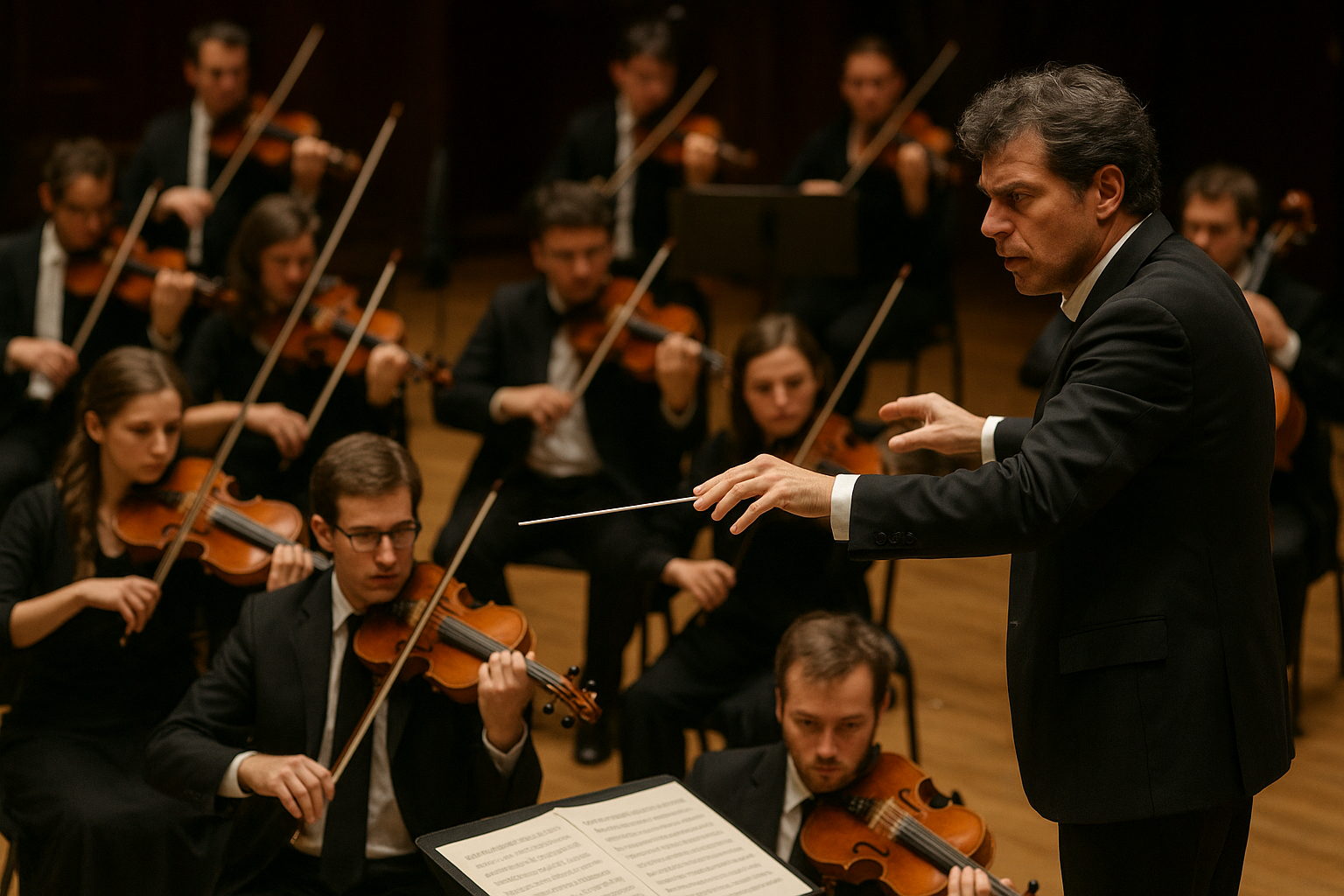
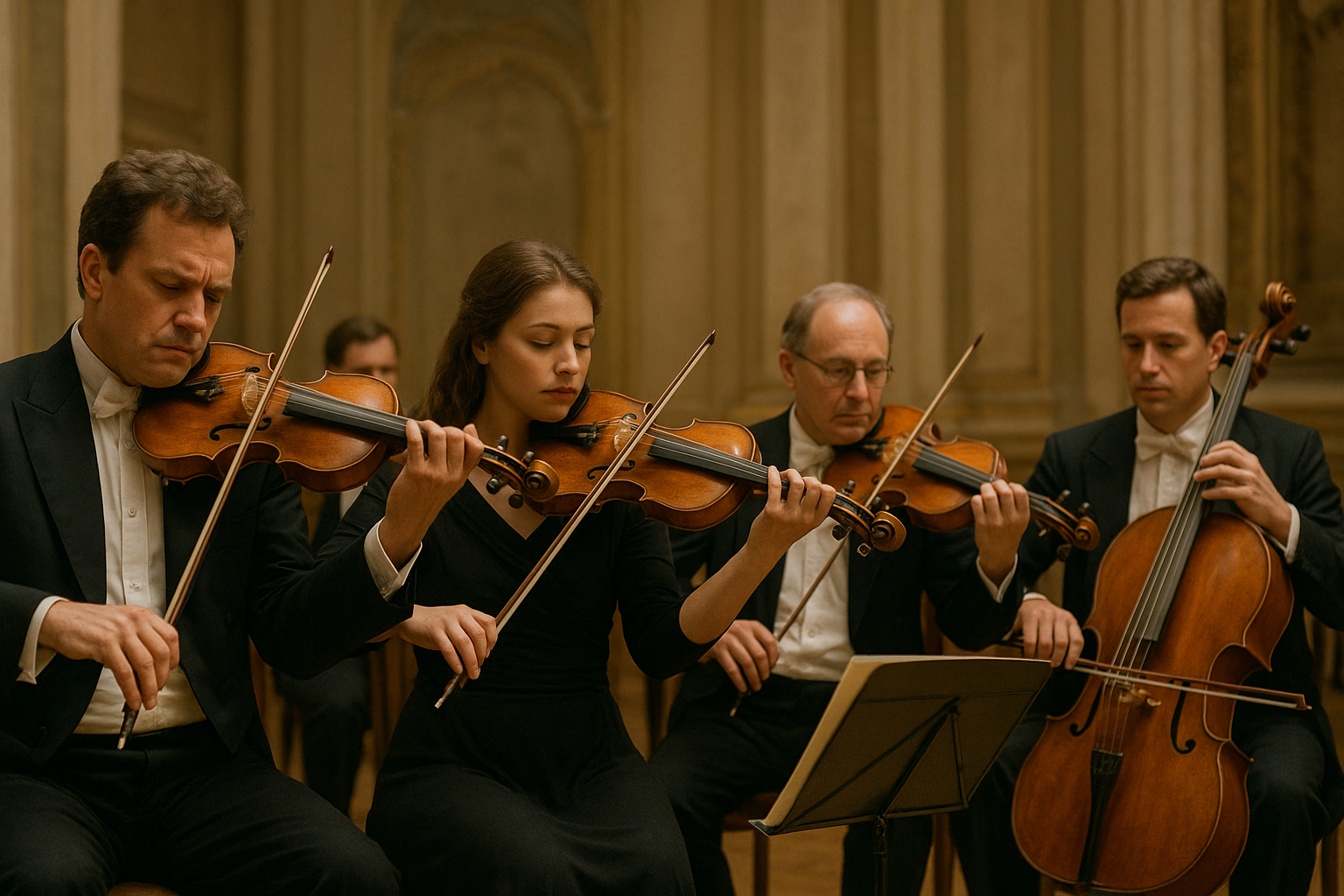
    When discussing the most compelling compositions of Wolfgang Amadeus Mozart, Eine kleine Nachtmusik (Serenade No. 13 for strings in G major, K. 525) often stands out as a prime example of musical form and elegance. Though it’s one of Mozart’s shorter works, its structure and melodic brilliance make it one of the most celebrated pieces in the classical repertoire.

    Composed in 1787, during a remarkably productive period for Mozart, Eine kleine Nachtmusik is underscored by a clarity and simplicity that belie its exquisite technical sophistication.

    The Structure

    The serenade is typically performed in its standard four-movement version, although Mozart’s original manuscript suggests a possible fifth movement. The movements are:

    • Allegro: The first movement opens with a lively, dance-like theme that immediately captures the listener’s attention. It adheres to a sonata-allegro form, a hallmark of classical architecture, featuring an exposition, development, and recapitulation.
    • Romanze. Andante: This second movement shifts into a more tender mood with a lyrical melody that’s both serene and emotive. The contrasts between the A and B sections showcase Mozart’s ability to balance tonal colors.
    • Menuetto. Allegretto: The third movement brings a rustic charm with its minuet and trio, offering a danceable rhythm deeply rooted in the social functions of the time.
    • Rondo. Allegro: In the closing movement, Mozart returns to a bright, vivacious theme with a rondo form that encapsulates the piece’s energetic spirit. The recurring refrain alternates with contrasting episodes, ensuring a delightful finale.

    Clarity and Expression

    Mozart’s skillful use of counterpoint and thematic development is evident throughout Eine kleine Nachtmusik. Scholar Julian Rushton notes, “The opening movement is remarkable for its harmonic logic and thematic imagination.” This expertly balances innovation with adherence to classical form, making it a prime example of Mozart’s mature style.

    Its clarity has made it a favored piece for introductory music appreciation courses and a staple of chamber music performances worldwide. A review from The New York Times highlights the piece’s enduring popularity, “It is music that speaks directly to the heart, simplicity wrapped in elegance.”

    “Listening to Eine kleine Nachtmusik unfolds like a conversation: each movement has something distinct yet interconnected to convey. It’s a dialogue that remains engaging from the first note to the last.” — Classical Music Magazine

    Historical Context

    When Mozart composed Eine kleine Nachtmusik, he was immersed in the vibrant cultural tapestry of Vienna. The classical serenade was often intended as light entertainment for social gatherings, yet this piece transcends such contexts, frequently performed in concert halls worldwide. Mozart composed it the same year he started work on the more dramatic opera Don Giovanni, demonstrating his ability to shift seamlessly between different musical genres.

    Despite its apparent simplicity, the serenade features complex layers underneath its genial surface. Scholar Stanley Sadie noted, “Beneath its affable exterior, it challenges performers and listeners with rapid shifts in dynamics and tone.”

    Enduring Legacy

    Today, Eine kleine Nachtmusik remains one of Mozart’s most recorded and performed works. Its appeal is universal; whether it’s an orchestral version for expansive concert settings or an intimate string performance in a chamber setting, the serenade continues to enchant audiences.

    Critics and casual listeners alike are drawn to its balance of emotional depth and joyous expression. As noted by the Gramophone, “It is the quintessential Mozart: clear, balanced, and brimming with an inner joyful light.”

    In an era where complexity often reigns, the formal clarity and aesthetic beauty of Eine kleine Nachtmusik offer a refreshing return to the fundamentals of musical excellence, showcasing why Mozart remains an unmatched maestro of the classical form.

  • Das Lied von der Erde: Mahler’s Farewell in Song and Symphony

    Das Lied von der Erde: Mahler’s Farewell in Song and Symphony

    Das Lied von der Erde: Mahler’s Farewell in Song and Symphony

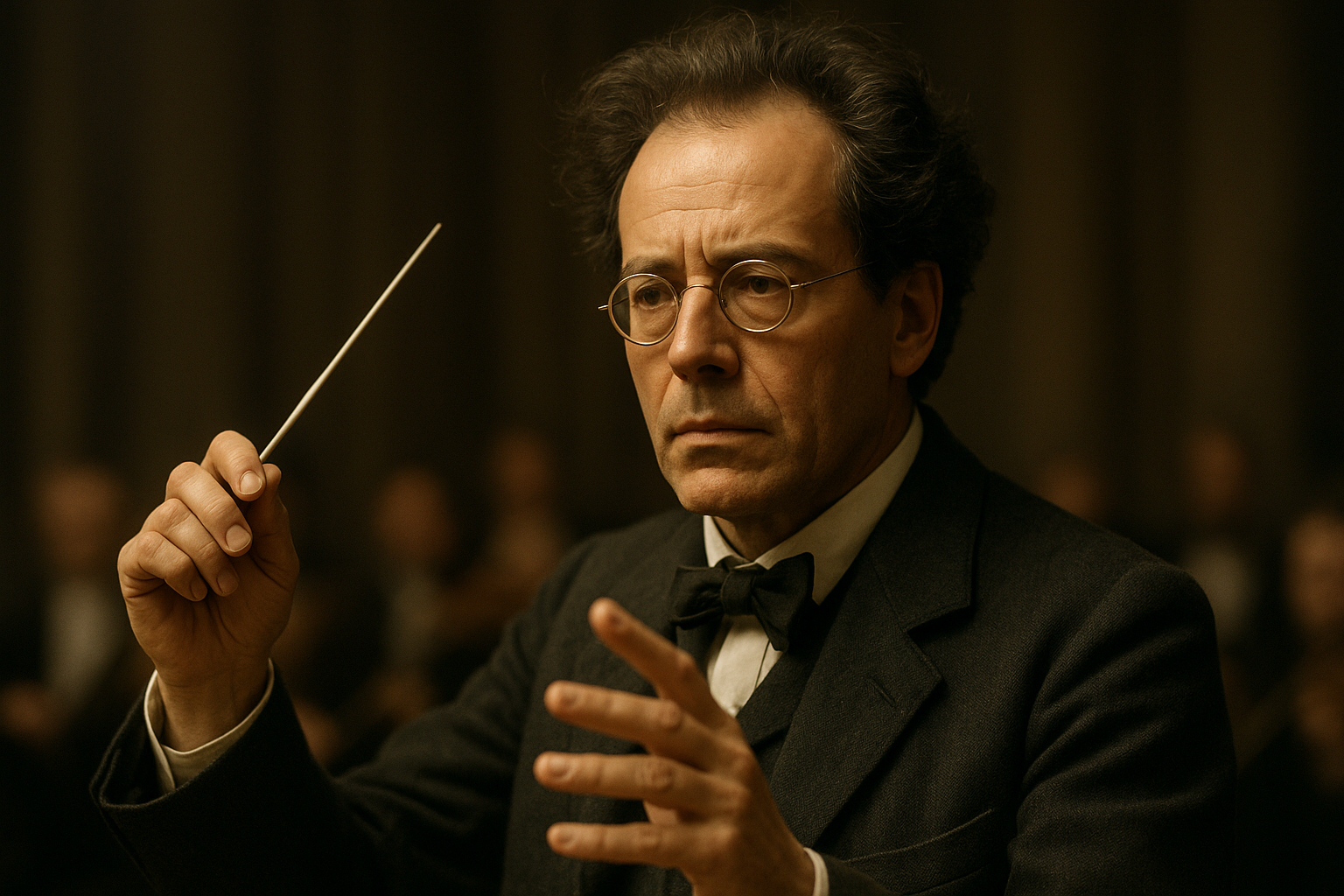
    Gustav Mahler, often dubbed as one of the last great Austro-Germanic symphonists, is renowned for his profound symphonic works that explore the depths of human emotion and the mysteries of existence. Among his many masterpieces, “Das Lied von der Erde” (“The Song of the Earth”) stands out as a poignant fusion of song and symphony, capturing Mahler’s complex reflection on life, death, and eternity.

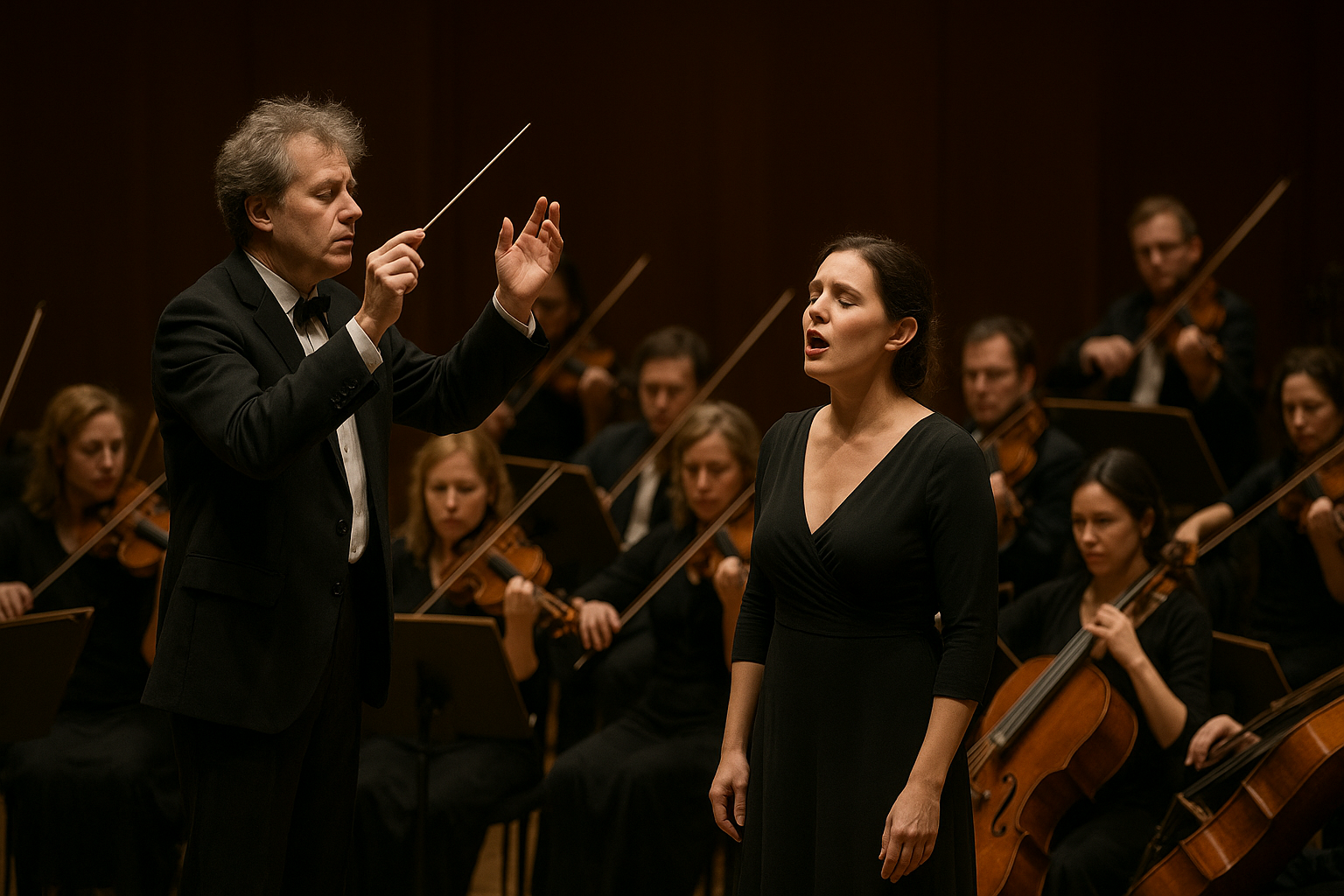
    Composed between 1908 and 1909, “Das Lied von der Erde” is not merely a symphony, nor just a song cycle. Mahler subtitled this work a “Symphony for Tenor, Alto (or Baritone), and Orchestra”, blending the expansive character of symphonic music with the intimate, expressive world of Lieder. This innovative form underlines the hybrid nature of Mahler’s late works, offering a canvas for deeply personal themes.

    “A symphony must be like the world. It must contain everything,”

    — Gustav Mahler, quoted in The Mahler Companion

    The texts for “Das Lied von der Erde” are based on ancient Chinese poems, primarily drawn from “The Chinese Flute”, a translation by Hans Bethge. These poems, rich with imagery of nature and poignant musings on the transience of life, resonated deeply with Mahler. In his music, he transforms these verses into a profound meditation, particularly with movements like “Der Abschied” (“The Farewell”). Here, Mahler confronts his own mortality, juxtaposing the beauty of the natural world with a melancholic farewell.

    Tragically, Mahler was aware of his declining health while working on this composition. In 1907, he had been diagnosed with a severe heart condition, an affliction that casts a long shadow over “Das Lied von der Erde”. Given this context, the piece is often interpreted as Mahler’s poignant farewell to the world, providing an eerie premonition. In “Der Abschied”, the concluding words “Ewig… ewig…” (“Forever… forever…”) resonate like an eternal farewell.

    • Innovative Structure: Combining symphonic depth with lyrical intimacy.
    • Textual Inspiration: Ancient Chinese poetry infused with European orchestration.
    • Personal Context: Composed during Mahler’s struggle with fatal illness.

    While “Das Lied von der Erde” stands independently of Mahler’s nine numbered symphonies, its legacy as a seminal work in the symphonic and song canon remains unparalleled. Through its exploration of life’s impermanence and beauty, Mahler allows listeners to confront their mortality and ultimately, find solace in the eternal cycle of nature and art.

    For more insights about Mahler’s works and their impact, consider exploring The Mahler Foundation.

  • Comparing Editions: Which Score of Handel’s Water Music is Best?

    Comparing Editions: Which Score of Handel’s Water Music is Best?

    Comparing Editions: Which Score of Handel’s Water Music is Best?

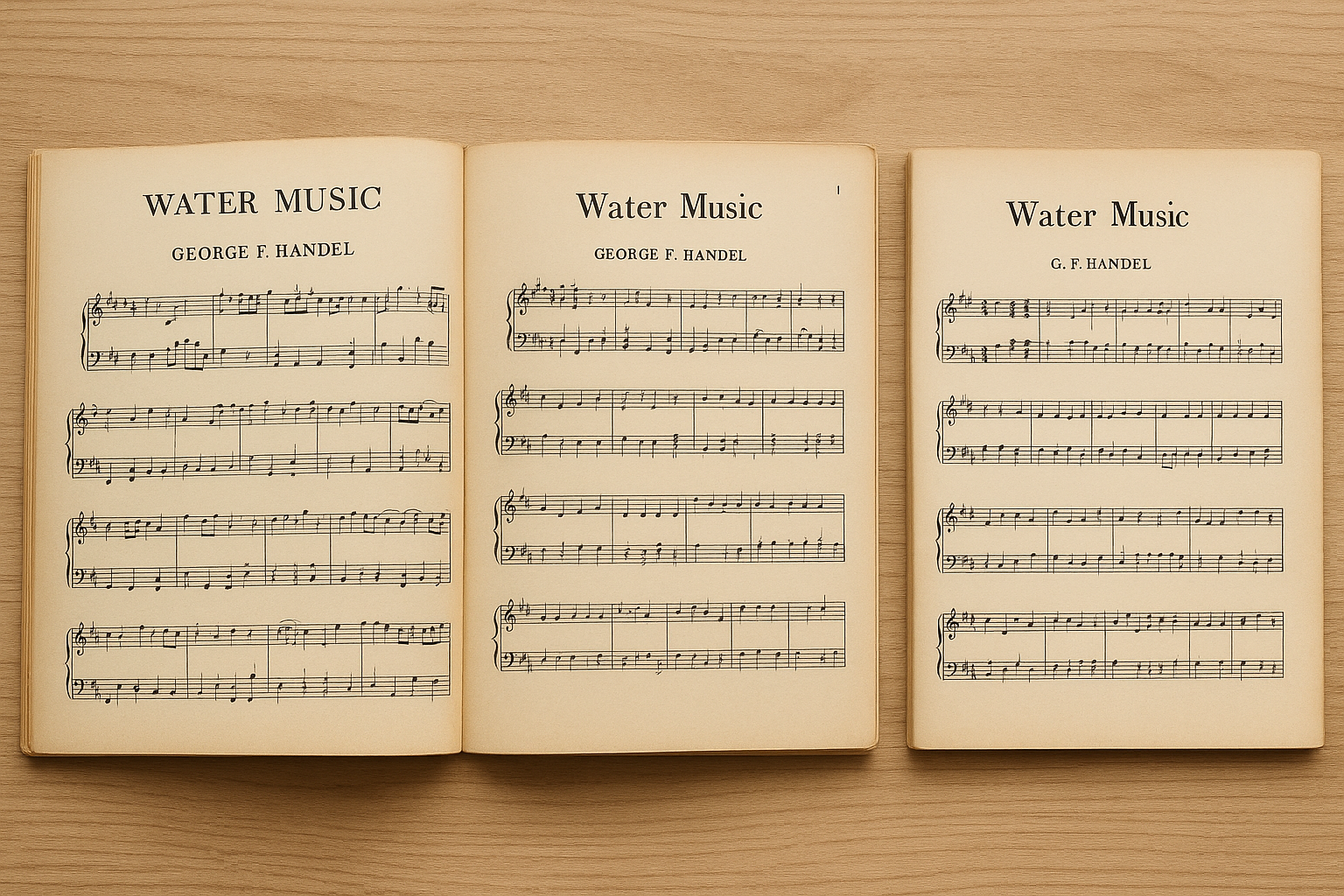
    George Frideric Handel’s Water Music remains one of the most enduring works in the Baroque orchestral repertoire. Since its debut performance on the River Thames in 1717, musicians and scholars alike have debated the merits of various scores of this iconic collection. Here, we explore the key editions available and consider which one might be the best choice for performers and enthusiasts.

    The Choices in Editions

    • The Bärenreiter Edition: Known for its scholarly approach, the Bärenreiter edition offers a critical view of Handel’s original intentions. Built on comprehensive analysis, it is often the preferred choice for those seeking historical fidelity.
    • Henle Verlag: This edition is celebrated for its meticulous attention to detail and its emphasis on performance practice. Henle’s scores are praised for their clarity and accuracy, making them a favorite among musicians.
    • Oxford University Press: With detailed editorial notes, this edition is ideal for academic study. It balances historical context with practical insights for performers.
    • IMC (International Music Company): Offering a more accessible approach, the IMC score is often favored by students and amateur orchestras for its affordability and ease of use.

    What Experts Say

    “The Bärenreiter edition captures the essence of Handel’s own manuscripts with unparalleled precision,” says musicologist John Roberts, an authority on Baroque music. “Its critical commentary is invaluable for understanding the nuances of Handel’s writing.”[Source]

    On the other hand, renowned conductor Jane Glover appreciates the practicality of the Henle Verlag score. “For conductors who wish to delve deeper into the performance aspects, Henle is exceptional. It’s beautifully laid out and highly reliable,” she notes.[Source]

    Final Verdict

    The choice of edition ultimately depends on the intended use. For rigorous scholarly study, the Bärenreiter edition might be most beneficial, while performers seeking guidance on performance practice might prefer Henle Verlag. Those looking for a blend of insightful commentary and user-friendly presentation might find the Oxford edition satisfying.

    In conclusion, when choosing a score for Water Music, consider your goals—be it historical research, educational purposes, or performance. Each edition offers distinct benefits that cater to different needs. As Handel once wrote, “Music is the food of soul”—choosing the right edition can significantly enhance this nourishment.

  • La Mer: Debussy’s Orchestral Painting of the Ocean’s Moods

    La Mer: Debussy’s Orchestral Painting of the Ocean’s Moods

    In the shimmering expanse of orchestral repertoire, Claude Debussy’s La Mer emerges as a masterful depiction of the sea, capturing its varying moods with a palette of musical colors. Composed between 1903 and 1905, this orchestral piece is widely regarded as a landmark in Impressionist music, echoing the era’s artistic movements that sought to emulate the subtleties and nuances of light and sound.

    A Symphony in Three Movements

    La Mer is conceived as a triptych, consisting of three movements: “De l’aube à midi sur la mer” (“From Dawn to Noon on the Sea”), “Jeux de vagues” (“Play of the Waves”), and “Dialogue du vent et de la mer” (“Dialogue of the Wind and the Sea”). Each movement vividly illustrates a scene from the titular subject, orchestrating a symphony that resonates with the listener’s imagination and emotions.

    • “From Dawn to Noon on the Sea” begins with the gentle awakening of the ocean. Debussy employs serene textures and gradual crescendos that paint an aural sunrise, drawing parallels to the descriptive brushwork found in Impressionist paintings by artists like Claude Monet.
    • “Play of the Waves” is an effervescent and lively movement that mirrors the capricious dance of sunlight on water. The intricate orchestration entwines notes like sunlight sparkling on the sea’s surface.
    • “Dialogue of the Wind and the Sea” concludes the piece with a dynamic interplay between elemental forces. The music shifts dramatically, illustrating the unpredictable fury of the ocean as it battles the stormy winds.

    Innovative Techniques

    Debussy’s inventive techniques are crucial to the evocation of the sea. He uses modalities, whole-tone scales, and unconventional orchestration to break away from traditional harmonies, generating textures that mimic the fluidity and unpredictability of the ocean. The sensory experience of La Mer is akin to standing on the shore, enveloped by the sounds of waves crashing and retreating.

    “Music is the expression of the movement of the waters, the play of curves described by changing breezes.” —Claude Debussy

    This quote by Debussy, referenced in his biography on Biography.com, encapsulates his vision for music as an elemental force parallel to nature’s own symphonic qualities.

    Legacy

    Since its premiere, La Mer has been celebrated for its innovation and expressive depth. It stands as a testament to Debussy’s genius, encapsulating the essence of the sea with a timelessness that continues to captivate audiences across the globe. His orchestration in La Mer defies traditional constraints, allowing listeners to drift into a world of auditory landscapes where the ocean’s moods are eternally alive.

  • The Rite of Spring: Rhythmic Complexity and Harmonic Dissonance Explained

    The Rite of Spring: Rhythmic Complexity and Harmonic Dissonance Explained

    The Rite of Spring by Igor Stravinsky is hailed as a groundbreaking work in the world of classical music. First performed in 1913, this ballet and orchestral concert transformed musical norms through its innovative use of rhythm and harmony. Today, it remains a staple of 20th-century music analysis and appreciation.

    Rhythmic Complexity

    One of the most striking features of The Rite of Spring is its complex rhythms. Stravinsky broke away from traditional metrical patterns, introducing shifting accents and irregular time signatures that challenged both performers and audiences.

    • In the celebrated “Dance of the Adolescents,” Stravinsky employs constantly changing meters, creating a sense of unpredictability and excitement. The pattern often alternates between 2/4, 3/4, and even 5/8 times, rendering it almost impossible for listeners to settle into a regular beat.
    • The introduction of techniques such as polyrhythms, where multiple contrasting rhythms occur simultaneously, adds to the layers of complexity. This often mirrors the chaotic and primal themes of the music.

    “The idea of a solo bassoon opening a concert while playing in the highest part of its register was absurd… yet somehow this created a haunting and unforgettable sound.” — CNN

    Harmonic Dissonance

    Stravinsky also embraced harmonic dissonance, which was largely unconventional at the time. His use of polytonality, where two or more keys are played simultaneously, creates a jarring yet fascinating sonic tapestry.

    • The notorious chord that opens “The Augurs of Spring” consists of a dissonant combination of E-flat and F-flat major triads played together, creating tension and energy.
    • By embracing dissonance, Stravinsky was able to evoke the primal themes and raw emotional landscapes that characterize The Rite of Spring.

    Despite the initial uproar at its premiere, where audiences reacted with shock and disapproval, the piece has become one of the most influential in contemporary music. Stravinsky’s bold innovations in rhythm and harmony paved the way for future composers to explore unconventional techniques.

    “The immediate reaction by the audience was hostility, but within a year, its genius was acknowledged even by its detractors.” — The Guardian

    Today, The Rite of Spring continues to captivate audiences, offering a timeless exploration of the limits of musical language and expression.

  • Appalachian Spring: Copland’s Score and the Sound of American Hope

    Appalachian Spring: Copland’s Score and the Sound of American Hope

    Appalachian Spring: Copland’s Score and the Sound of American Hope

    In the rich tapestry of American classical music, few works capture the essence of the nation’s spirit as vividly as Appalachian Spring. Composed by Aaron Copland, this iconic piece evokes the landscapes, aspirations, and identity of America during a turbulent period. As we delve into the intricacies of Copland’s masterpiece, we uncover how his music became a beacon of hope and a symbol of national resilience.

    The Genesis of Appalachian Spring

    In 1943, the renowned choreographer Martha Graham approached Aaron Copland to compose the score for a new ballet. Funded by the Elizabeth Sprague Coolidge Foundation, the work was intended to celebrate the pioneer spirit of America. Copland crafted a musical landscape that would come to symbolize American hope during the uncertain years of World War II.

    Initially, the piece was titled simply Ballet for Martha, but it was later renamed Appalachian Spring after a phrase in Hart Crane’s poem The Bridge, chosen by Graham herself. The title connotes both the freshness of a new beginning and the rugged, natural beauty of the Appalachian region. As Graham remarked, the title’s ambiguity allowed the music to transcend specific narratives and resonate with universal themes of renewal and hope.

    A Score Rooted in Simplicity

    At the heart of Copland’s Appalachian Spring lies a profound simplicity—a deliberate choice that allows the music to speak directly to the listener. His use of folk-based melodies and rhythms reflects the resilience and optimism of the American frontier spirit. One of the most striking examples of this is the incorporation of the Shaker melody Simple Gifts, a tune that epitomizes simplicity and humility.

    In the tapestry of the score, Copland weaves together spacious harmonies and open intervals, creating a soundscape that reflects the vast American landscape. This technique, often referred to as the “American sound,” embodies the openness and boundless possibilities of the New World. As music historian Neil Lerner notes, “Copland’s open textures and uncluttered orchestration evoke the geographical and emotional expanse of the American land.”

    The First Performance and Reception

    Appalachian Spring premiered on October 30, 1944, at the Library of Congress in Washington, D.C. Martha Graham’s choreography, coupled with Copland’s evocative score, brought to life the story of a young pioneer couple building a new farmhouse in Pennsylvania. The performance was met with immediate acclaim, and Copland’s music was lauded for its ability to transcend the medium of dance and communicate directly with its audience.

    The Library of Congress records comments from critics of the time, who praised the work for its innovative blend of modernism and traditionalism. One reviewer, Paul Bowles, noted in The New York Herald Tribune, “The music is perfectly adapted to the ‘motif’ of a people striving to forge a new life, and it distills the essence of rural optimism.”

    Thematic Depth and American Identity

    Beyond its surface beauty, Appalachian Spring explores deeper themes of identity and communal strength. The piece’s narrative of starting anew, with its underlying tensions and resolutions, mirrored the experiences of countless Americans during the post-war period. In doing so, Copland’s score became an anthem for the American dream itself.

    Within its 14 sections, the ballet moves through moments of joyous celebration, profound introspection, and hopeful conclusion, mirroring the cycles of challenge and triumph in human endeavor. The characteristically Copland-esque augmentation of simple motifs into grand statements echoes the transformation of personal aspirations into collective achievements.

    “Copland’s music has an uncanny ability to mirror the soul—a kind of sonic empathy that can comfort and inspire.” — Alex Ross, The New Yorker

    Legacy and Influence

    In the decades since its premiere, Appalachian Spring has solidified its status not only as a staple of the orchestral repertoire but as a cultural treasure emblematic of American hope. It represents, more than any other piece, the optimistic spirit of a nation emerging from war into a future filled with promise.

    In educational settings, the work serves as an introduction to understanding American music—a seamless marriage of form, function, and national folklore. Its themes continue to reverberate, speaking to each generation anew.

    As Copland himself reflected, “To make music of a purely American character and build subject matter that could sustain itself without reliance on European ideas was a central goal.” This ambition was realized with Appalachian Spring.

    Conclusion

    Appalachian Spring stands as more than just a musical composition; it is a symbol of hope, resilience, and the unyielding spirit of America. As audiences continue to listen, they are reminded of a history of overcoming adversity and the persistent pursuit of ideals. Through its emotive power and innovative simplicity, Copland’s masterpiece continues to illuminate the enduring glow of American hope.

  • The Hidden Program: Interpreting the Meaning in Mahler’s Symphony No. 5

    The Hidden Program: Interpreting the Meaning in Mahler’s Symphony No. 5

    The Hidden Program: Interpreting the Meaning in Mahler’s Symphony No. 5

    Gustav Mahler’s Symphony No. 5 in C-sharp minor is a monumental work that embodies the complexity and depth of human emotion. Composed between 1901 and 1902, this symphony marks a significant transition in Mahler’s musical journey, shifting away from programmatic content towards a more abstract form. Despite this shift, listeners and scholars often search for the hidden narrative within its notes. But is there a secret program underlying this piece, or is its meaning purely musical?

    The Structure of Symphony No. 5

    Mahler’s Fifth Symphony is known for its bold structure and rich texture. The symphony is divided into five movements:

    • I. Trauermarsch (Funeral March): A mournful opening that sets the tone with its solemn trumpet call.
    • II. Stürmisch bewegt (With great turbulence): A turbulent movement that contrasts with passages of lightness.
    • III. Scherzo: A complex, multi-layered movement that often seems to dance with its own shadows.
    • IV. Adagietto: A serene, lyrical piece famously associated with Mahler’s wife and inspiration, Alma.
    • V. Rondo-Finale: A jubilant conclusion that resolves the symphony’s dramatic journey.

    The symphony’s intricate architecture and emotional depth invite its audience to explore possible underlying programs.

    Interpreting the Funeral March

    The opening “Trauermarsch” or “Funeral March” begins with an unmistakable call from the solo trumpet. This funeral-like procession has often led interpretations focusing on existential themes of life and death. According to Donald Mitchell in “Gustav Mahler: The Wunderhorn Years,” Mahler himself noted that music “is an expression of longing in many guises, of the joys, storms, and seasonal changes of feeling in a person’s lifetime” (source: Donald Mitchell, Gustav Mahler: The Wunderhorn Years).

    “If a composer could say what he had to say in words, he would not bother trying to say it in music,” Mahler once remarked, emphasizing the abstract nature of his compositions.

    The Role of the Adagietto

    The Adagietto, possibly the most famous movement, is often described as a love letter to Alma Mahler. Its lush, romantic strings stand out from the symphony’s more turbulent sections. Leonard Bernstein once described this movement as one capturing the “utter-simplicity, utter-beauty” of emotion (source: New York Times).

    This segment of the symphony is seen by many as a temporary respite, a moment of intimate reflection amidst chaos. The placement of the Adagietto between the tumultuous movements suggests a personal narrative of love and anxiety.

    The Scherzo and Its Dance

    The Scherzo movement presents a complex tapestry of musical ideas. Interpretations vary widely, with some viewing it as a representation of internal struggle and societal chaos, while others perceive it as a faint echo of Austrian folk music, brought to life through Mahler’s innovative use of orchestration. This movement is a reflection of what musicologist Constantin Floros describes as Mahler’s engagement with the “folk-influenced” themes found throughout his work (source: Constantin Floros, Mahler’s Symphonies).

    Finding Resolution in the Finale

    The symphony concludes with the “Rondo-Finale,” a spirited and triumphant closure. This movement is often interpreted as a return to life, echoing themes of hope and renewal. The resolution of tension through this finale brings the symphonic journey full circle, concluding with the triumph of life over despair.

    “Mahler offers universal experiences through his music,” suggests musicologist Jens Malte Fischer, portraying Mahler’s music as a canvas on which we project our own narratives (source: Jens Malte Fischer, Gustav Mahler).

    Conclusion: Program or Pure Music?

    While Mahler’s Symphony No. 5 appears to be devoid of explicit programs or narratives, its profound emotional depth and complex structure invite us to explore the depths of human consciousness. Perhaps Mahler intended for his symphony to remain elusive, inviting listeners to fill the void with their personal interpretations. Whether viewed as a hidden program or a pure exercise in musical form, Symphony No. 5 continues to captivate audiences with its ability to transform abstract emotions into a symphonic language.

  • Tristan und Isolde: Wagner’s Revolutionary Harmony and the ‘Tristan Chord’

    Tristan und Isolde: Wagner’s Revolutionary Harmony and the ‘Tristan Chord’

    Tristan und Isolde: Wagner’s Revolutionary Harmony and the ‘Tristan Chord’

    Richard Wagner’s opera Tristan und Isolde is often hailed as a pivotal moment in the history of Western music, primarily due to its groundbreaking approach to harmony. At the heart of this transformation is the famous ‘Tristan Chord,’ a musical moment that forever changed the landscape of classical music.

    The Genesis of Tristan und Isolde

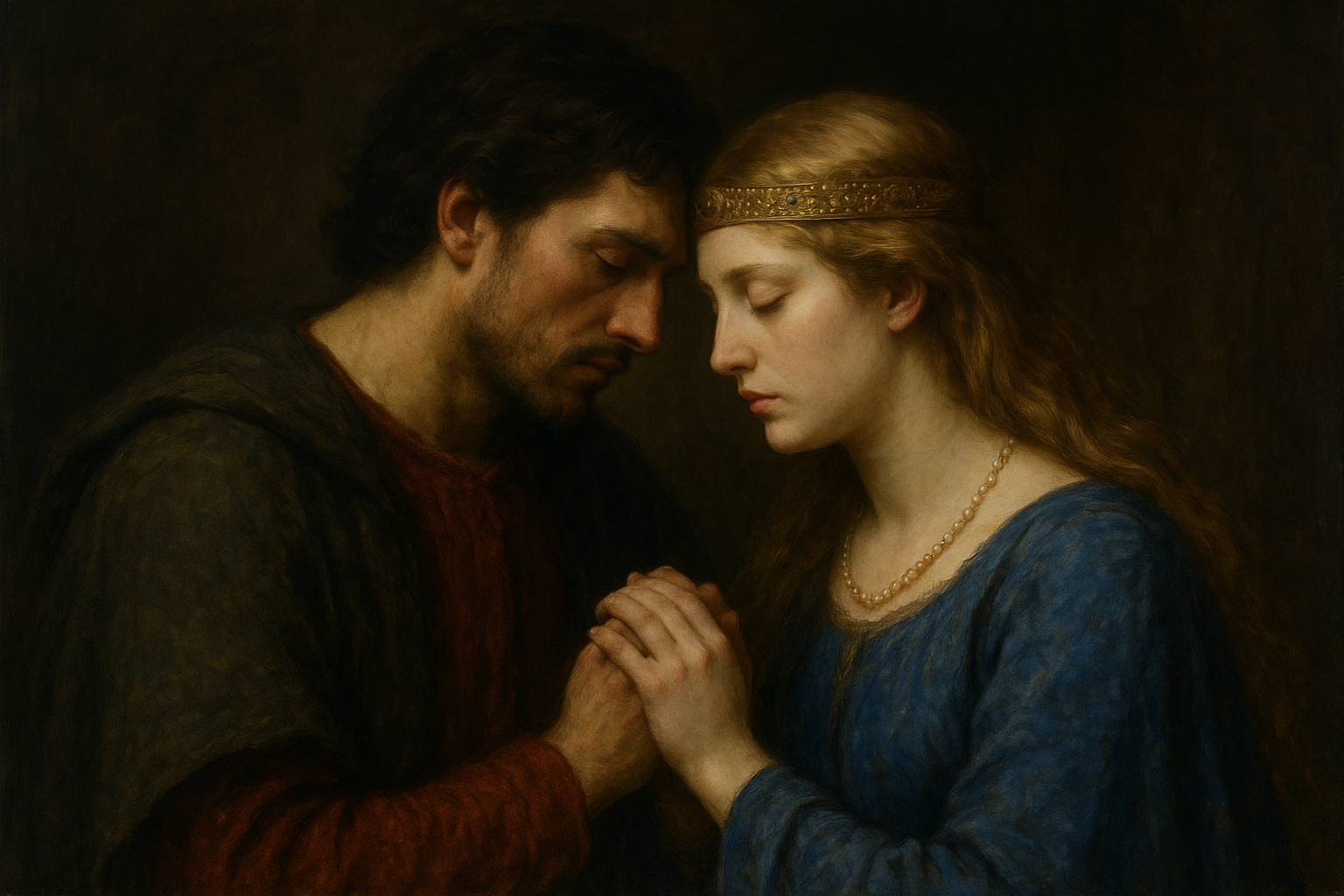
    Composed between 1857 and 1859, Tristan und Isolde is a dramatization of the medieval romance between Tristan, a Cornish knight, and Isolde, an Irish princess. Wagner, already known for his ambitious and expansive operas, pushed the boundaries of musical storytelling in Tristan, utilizing music to evoke a world of deep psychological and emotional complexity.

    According to Encyclopaedia Britannica, Wagner’s desire to create a more profound emotional experience led him to experiment wildly with harmonic language. This experimentation is most vividly embodied in the ‘Tristan Chord.’

    The Tristan Chord: A Breakdown

    The ‘Tristan Chord’ appears in the opera’s prelude and comprises four notes: F, B, D♯, and G♯. This chord is neither a straightforward major nor minor chord but suspends resolution, creating a profound sense of longing and tension. In the context of Tristan und Isolde, this tension echoes the unfulfilled yearning that defines the lovers’ tragic romance.

    “The chord is remarkable because it is the first instance of atonal harmony in a functional tonal context,” notes Classical Music Magazine.

    • F: The root note that establishes the foundation.
    • B: Adds a dissonant tension, suggesting movement.
    • D♯: Intensifies the discord, elevating the complexity.
    • G♯: Offers a chromatic pull, resolving nowhere as it enhances suspense.

    The Impact on Music

    The ‘Tristan Chord’ didn’t merely serve as a novel harmonic tool; it laid the groundwork for future composers to explore new harmonic territories. The chord’s ambiguity and unresolved nature questioned the very principles of traditional harmony established in the classical era. It anticipated many of the developments in late 19th and early 20th-century music, leading to the avant-garde explorations of composers like Arnold Schoenberg and Igor Stravinsky.

    Schoenberg, the father of twelve-tone music, considered Wagner a significant influence, particularly because Wagner’s work “broke the tyranny of tonality,” as described in The Schubertline.

    Enduring Legacy

    Today, the ‘Tristan Chord’ continues to be analyzed and revered for its innovative approach. It stands as a symbol of a critical transition in music from Romantic expressiveness toward Modernist abstraction. Wagner’s use of leitmotifs, or recurring musical themes, further solidified his position as a pioneer, influencing how music could tell the story in an operatic context.

    A performance of Tristan und Isolde is often seen as both a technical and emotional challenge for any opera company, a testament to its complexity and depth. The opera’s orchestration and vocal demands are immense, requiring a profound understanding of Wagner’s musical vision.

    Conclusion

    In sum, Tristan und Isolde and its exemplary ‘Tristan Chord’ mark a watershed moment in music history. By challenging and ultimately expanding the vocabulary of harmony, Wagner paved the way for an era of musical exploration and innovation. For composers, musicians, and audiences alike, the legacy of Tristan und Isolde endures, embodying the perpetual human quest for expression and understanding through music.

    As Richard Wagner himself suggested, music is a “magic key” that opens the door to human emotions and consciousness. Indeed, with the introduction of the ‘Tristan Chord,’ Wagner unlocked that door, inviting us into a world of unparalleled emotional depth and complexity.

  • Exploring Pierrot Lunaire: Schoenberg’s Expressionism and Sprechstimme

    Exploring Pierrot Lunaire: Schoenberg’s Expressionism and Sprechstimme

    Exploring Pierrot Lunaire: Schoenberg’s Expressionism and Sprechstimme

    Arnold Schoenberg’s Pierrot Lunaire, a landmark in 20th-century music, stands as a quintessential example of expressionism—a movement that sought to convey the deep, often chaotic, inner emotions of the human mind. Composed in 1912, Pierrot Lunaire is a cycle of 21 songs written for voice and chamber ensemble, based on poems by Albert Giraud. At its core, the work explores themes of madness, alienation, and fantasy, all through the eyes of the moonstruck Pierrot, a figure rooted deep in the tradition of the commedia dell’arte.

    The Character of Pierrot

    Pierrot, the melancholy clown, has been an enduring symbol in art and music, representing the complexities of human emotion and the tragicomic interplay of personal narratives. Schoenberg’s Pierrot deviates from traditional depictions by diving deep into the psychological and surreal facets of the character.

    Expressionism in Music

    Expressionism, prominent in early 20th-century art and literature, was characterized by the distortion of reality to evoke moods or ideas. In music, expressionism eschews traditional forms and structures, focusing instead on atonality and unconventional harmonies. Schoenberg was at the forefront of this movement, a pioneer of atonal music and later, dodecaphony. As Schoenberg himself remarked, “My works are twelve-tone compositions, not particularly easy to understand; where supported by poetry, they are easier to perceive and less readily accepted.”

    Sprechstimme: The Voice of Madness

    One of the defining characteristics of Pierrot Lunaire is its use of sprechstimme, a vocal technique that’s neither spoken nor sung. Mary E. Davis in the Journal of the American Musicological Society describes it as a “cross between speech and song,” allowing for an exaggerated emotional and psychological expression in the performance.

    The enigmatic quality of sprechstimme contributes to the fragmented and nightmarish atmosphere of the work, blurring lines between elocution and melody.

    The Legacy of Pierrot Lunaire

    With Pierrot Lunaire, Schoenberg has influenced countless artists beyond the realm of music, with its haunting aesthetics resonating through to modernist and post-modernist artistic expressions. The work remains a cornerstone in the study of how music can serve as a vessel for intense emotional and psychological exploration.

    As scholars continue to dissect the nuances and innovations of Schoenberg’s work, Pierrot Lunaire remains an iconic piece illustrating the transformative power of music guided by the principles of expressionism. It challenges its audience to confront discomfort, emotion, and the vast potential of avant-garde artistry.