Author: editor

  • The Composer as Seer – Visionary Creativity Through the Ages

    The Composer as Seer: Visionary Creativity Through the Ages

    Throughout history, composers have often been seen as visionaries, figures whose creative genius transcends the boundaries of time and culture. Their music has not only challenged existing paradigms but also envisioned new realities, offering listeners a profound connection to the unseen world. This exploration of musical visionaries will delve into how composers have embodied the role of the seer, influencing their times and ours through their innovative works.

    The Ancient Origins of Musical Visionaries

    The concept of the composer as a seer has roots in ancient civilizations, where music was often perceived as a divine gift. In Ancient Greece, Orpheus was more than a mere musician; he was considered a prophet whose music could charm all living things and even inanimate objects. As Pindar once wrote, “Orpheus’ voice could move the very stones to build.” (Encyclopedia Britannica on Orpheus).

    This mythical portrayal of Orpheus reflects the broader belief in music’s transcendent power, a theme echoed in later traditions. In China, the legendary sage Confucius emphasized music’s role in harmonizing society and personal character, suggesting a visionary quality inherent in musical composition.

    Medieval and Renaissance Visions

    During the Medieval and Renaissance periods, music took on even more overt spiritual and visionary connotations. Hildegard of Bingen, a 12th-century abbess, composer, and mystic, described her music as “visions from the Living Light.” Her compositions were imbued with ethereal beauty, reflecting her profound spiritual insights and doctoral guidance.

    “I composed and sang plainsong and chant not by human learning, but by God’s inspiration.” – Hildegard of Bingen

    Likewise, during the Renaissance, the idea of music as a universal language was popularized by Johannes Kepler and other intellectuals who spoke of the “music of the spheres,” envisioning the cosmos itself as a grand, harmonious symphony.

    Classical Innovators

    The Classical era saw composers grappling with and expanding the boundaries of musical form and expression. Ludwig van Beethoven, often considered the epitome of the musical seer, used his profound deafness to access an internal auditory world, producing works that stretched existing forms into new realms.

    “Music is the mediator between the spiritual and the sensual life.” – Ludwig van Beethoven (The Guardian)

    His 9th Symphony, with its choral culmination in “Ode to Joy,” speaks to a universal brotherhood, making a visionary statement that extends beyond mere notes and rhythms into the realm of a societal ideal.

    Romantic and Post-Romantic Visionaries

    The Romantic era embraced the idea of the composer as a lone, visionary hero. Figures like Franz Liszt and Frédéric Chopin captured the tumultuous spirit of their times through intensely personal and often revolutionary compositions.

    Richard Wagner further advanced this vision, creating epic, mythic operas that sought to embody the totality of artistic expression. His concept of the Gesamtkunstwerk (“total artwork”) was a synthesis of all art forms, aspiring to transport audiences to a different plane of understanding and experience.

    20th-Century Pioneers

    The 20th century brought new dimensions to the visionary role of the composer. The advent of new technologies and forms spurred revolutionary changes in musical creation. Igor Stravinsky, with works like The Rite of Spring, shattered classical conventions and reimagined the possibilities of rhythm and harmony. The premiere of The Rite in 1913 is legendary for inciting a riot, yet it marked a seismic shift in music and remains one of the most influential compositions of the century.

    “I have learned… that music is the best way to digest time.” – Igor Stravinsky (Brain Pickings)

    John Cage pushed these boundaries further, redefining what could be considered music with compositions like 4’33”, which consisted entirely of silence. Cage’s work asked audiences to reconsider preconceived notions of sound and silence, challenging the very nature of listening and performance.

    Contemporary Visionaries

    Today’s composers continue to push boundaries and redefine what it means to be a musical visionary. Philip Glass and Steve Reich have championed minimalist techniques, focusing on repetitive structures that open up new modes of listening and contemplation.

    Meanwhile, in other corners of the compositional world, artists like Kaija Saariaho and Tan Dun blend traditional and avant-garde techniques, drawing on their cultural heritages while crafting globally resonant works. Tan Dun’s compositions exemplify this approach, bridging Eastern and Western musical traditions in innovative ways. His work for the film Crouching Tiger, Hidden Dragon earned both popular and critical acclaim, showcasing the visionary potential of cross-cultural music.

    The Enduring Legacy of Composers as Seers

    The role of the composer as seer endures, challenging audiences to transcend the mundanity of everyday life. As technology evolves and cultures intermingle more than ever, visionary composers are uniquely positioned to guide listeners through this complex soundscape.

    Whether revisiting classical compositions or exploring new sound worlds, the visionary spirit of the seer-composer continues to inspire. By transcending time, space, and cultural boundaries, composers remind us of the limitless potential of human creativity.

    For a deeper understanding of how visionary composers have shaped our world, scholars and enthusiasts alike continue to explore their works, unraveling layers of innovation and inspiration from every era of music history.

  • Teaching AI to Feel Legato – Expressivity in Algorithmic Music

    Teaching AI to Feel Legato – Expressivity in Algorithmic Music

    As artificial intelligence (AI) continues to pervade different aspects of human life, its presence in art and music opens intriguing possibilities, especially in terms of expressivity—a domain traditionally dominated by human sensitivity and creativity. One cornerstone of musical expressivity is the concept of legato, an Italian term meaning “tied together,” which refers to the seamless connection between notes. This article explores the journey of teaching AI to master this nuanced aspect of music, driving towards a future where algorithms can emulate, and even augment, human expressivity in melodic performances.

    The Quest for Expressive Algorithms

    Expressivity in music refers to the way artists manipulate musical elements to convey emotion and meaning. Beyond merely playing the correct notes, musicians employ techniques like dynamics, phrasing, and articulation to infuse their performances with personal touch and emotion. Among these techniques, legato playing is crucial, characterized by smooth transitions with minimal perceptible breaks between notes.

    • Legato: Involves connecting notes closely, ensuring a fluid and continuous sound.
    • Staccato: The opposite of legato, where notes are played in a short and detached manner.

    AI’s Growing Musical Repertoire

    The development of AI in music initially focused on composition, such as generating new pieces that imitated specific styles or genres. However, recent advancements are turning towards the realm of performance. AI now strives to not only create music but also to perform it expressively.

    Projects like OpenAI’s Jukebox illustrate the progress in this domain by generating music with complex structures and artistic style. Similarly, Google’s Magenta project leverages deep learning to explore the creative potential of machines in music-making, including efforts to make AI systems understand and replicate musical emotions and techniques.

    Codec of Musical Emotion

    The key to teaching AI to “understand” legato lies in its ability to perceive music not merely as data but as a language of emotion and expression. Through deep learning and neural networks, AI systems are exposed to vast datasets of musical recordings, enabling them to identify patterns associated with expressivity.

    “Machines are learning to listen and understand the nuances in human performance that convey emotion, effectively bridging the gap between technical proficiency and expressiveness.” — From a study published in Scientific Reports.

    Challenges in Emulating Human Touch

    However, bridging this gap is no small feat. The human touch involves subtle variations and micro-timing that are challenging to quantize or code. AI must navigate the complex web of tempo, rhythmic intricacies, and dynamic shading intrinsic to legato playing. Additionally, human musicians often draw from personal experiences and emotional contexts, qualities that AI systems struggle to replicate authentically.

    These challenges necessitate innovative approaches, such as incorporating feedback from professional musicians to fine-tune AI models and using complex algorithms that can process and mirror human emotion in their output.

    A Collaborative Future

    The ultimate goal of embedding legato and other expressive techniques into AI-driven music is not to replace human musicians but to complement their craft. Musicians can collaborate with AI to create music that is as emotive as it is technically perfect, pushing the boundaries of what is possible in musical expression.

    Dan Tepfer, a jazz pianist known for collaborating with AI, highlights the potential of this partnership by noting, “The possibility of introducing AI into musical research not only challenges us to understand, more deeply, the nature of musical taste and expression, but also helps us discover what it truly means to express emotion.”

    Conclusion

    In conclusion, teaching AI to feel and perform legato entails more than just mastering technical prowess; it requires a profound understanding of the art of expression. As AI systems evolve, they hold the promise of producing performances that resonate with human audiences, expanding our appreciation and understanding of music. This intersection of technology and artistry not only enriches the musical landscape but also redefines our relationship with both music and machines, heralding an era where human and artificial musicianship coalesce in expressive harmony.

  • Virtuosity Reimagined – The New Frontier of Human–Machine Performance

    Virtuosity Reimagined – The New Frontier of Human–Machine Performance

    In the past decade, the convergence of technology and art has given rise to a new frontier in performance arts: human-machine collaboration. This realm, where human creativity intertwines with machine precision, has sparked a revolution in how virtuosity is defined and experienced. From music to dance, machines are not just tools but partners in creativity, expanding the boundaries of what is possible on stage.

    The Anatomy of Human-Machine Collaboration

    Human-machine performances leverage cutting-edge technologies, such as artificial intelligence (AI), robotics, and real-time data processing, to enhance and evolve traditional art forms. These technologies contribute in several ways:

    • AI and Machine Learning: Algorithms analyze and learn from vast datasets, enabling machines to compose music, choreograph movements, or even create visual art.
    • Robotics: Robots provide precision and consistency in performance, executing complex tasks that are beyond human capabilities.
    • Augmented Reality (AR) and Virtual Reality (VR): These technologies create immersive environments that transform audience experiences by blending real and virtual worlds.

    By integrating these technologies with human talent, performers can push the limits of their mediums, exploring uncharted territories in both expression and technical skill.

    Revolutionizing the Stage: Noteworthy Collaborations

    Some pioneers in the field have demonstrated the profound impact of human-machine collaborations:

    1. AIVA – Artificial Intelligence Virtual Artist

    AIVA is an AI developed to compose classical music. Learnt through thousands of pieces by legendary composers, AIVA creates original compositions that blend tradition with innovation. In collaboration with human musicians, AIVA’s compositions are performed live, testing the authenticity and emotion machine-generated music can evoke.

    2. Choreographic Coding

    Dance artist Wayne McGregor partnered with Studio Wayne McGregor and technologists to explore coding as a choreographic tool. By employing algorithms to generate movement patterns, McGregor redefines choreography, allowing dancers to explore unanticipated motion paths influenced by the machine’s “creativity.”

    3. Darmstadt: Music In Cyberspace

    The International Summer Course for New Music in Darmstadt has included concerts like ‘Music in Cyberspace,’ where composers and AI collaborate. AI’s ability to “listen” and adapt in real-time has posed intriguing questions about authorship and agency in the realm of music.

    “The boundaries between human and artificial creativity are blurring, offering a new understanding of what can be achieved when both entities collaborate,” notes Max Richter, a contemporary composer known for integrating technology in his work.

    The Symbiosis of Creativity and Technology

    Human-machine interactions can result in a symbiotic relationship where each complements the other:

    • Augmenting Human Capability: Machines handle repetitive tasks, leaving humans free to explore more creative and strategic thinking.
    • Inspiring Human Innovation: Machines offer unexpected solutions and innovations, helping to spark new ideas in human creators.
    • Reimagining Performance Norms: The inclusion of machines challenges traditional notions of authorship and performance, leading to avant-garde art forms that are reflective of contemporary society.

    This model of collaboration emphasizes more than mere augmentation. It embodies an evolution toward a new form of virtuosity—one that transcends individual skill and embraces a collective intelligence.

    Ethical and Philosophical Considerations

    The integration of machines in performance arts also introduces various ethical and philosophical debates:

    • Authorship and Authenticity: Who owns the creative output when machines are involved? How does this affect our perception of creativity and talent?
    • Emotional Engagement: Can a machine replicate the nuanced emotional expressions that are innately human? What value does this add or detract from performances?
    • Accessibility vs. Exclusivity: While technology can democratize access to the arts, it also risks creating a divide between those with access to cutting-edge tools and those without.

    Addressing these questions requires a thoughtful approach, considering not only technological advancements but also their implications on society and human identity.

    The Path Forward

    As we look toward the future, the possibilities of human-machine performance are limitless. The challenge lies in nurturing this symbiosis responsibly. Artists, technologists, and audiences should actively engage in dialogue to ensure that this evolution respects the integrity of human artistry while embracing technological innovation.

    Going forward, performances will likely become even more interactive, possibly incorporating audience feedback in real-time through connected devices or sensors. Each performance wouldn’t just be a display but a living, evolving experience shaped dynamically by both the performers and the audience—a testament to the digital age’s impact on the arts.

    Conclusion

    Virtuosity reimagined through human-machine performance represents a bold step into uncharted artistic realms. By harnessing technology, artists expand their creative tools, open new doors for audience engagement, and redefine the essence of performance. As we navigate this evolving landscape, it is our shared commitment to creativity, openness, and reflection that will illuminate the path forward.

  • Emotion in Motion – How Classical Rhythms Shape Inner Worlds

    Emotion in Motion – How Classical Rhythms Shape Inner Worlds

    Emotion in Motion: How Classical Rhythms Shape Inner Worlds

    From the grand concert halls of Vienna to the intimate settings of chamber music ensembles, classical music has been a cornerstone of human culture for centuries. As we journey through the intricate compositions of Mozart, Beethoven, Tchaikovsky, and countless others, we begin to unravel the profound impact these rhythms have on our emotional and mental landscapes.

    The Power of Classical Rhythm

    Classical music’s ability to evoke deep emotional responses is not a mere coincidence. It’s the result of carefully crafted compositions that utilize rhythm, melody, and harmony to communicate profoundly. Psychiatrist and researcher Dr. Oliver Sacks once mused, “The inmost joy of music is in its rhythm and motion shared between players and audience, binding them together in a shared experience.”

    The Role of Rhythm in Emotional Response

    At its core, rhythm in music is a reflection of life itself—heartbeat, breathing, and walking are all rhythmic patterns that naturally resonate with us. Dr. Aniruddh Patel, a prominent researcher in the field of music neuroscience, explains that “rhythmic structure can essentially capture elements of emotion that are associated with dynamic bodily motion.” This intrinsic connection means that when we engage with the rhythms of classical music, our emotional response is not just likely but expected.

    The Emotional Spectrum of Classical Composers

    Different composers have different emotional signatures that they impress upon their compositions. Let’s explore a few:

    • Mozart: Known for his precision and clarity, Mozart’s rhythms often evoke feelings of joy and serenity. His compositions are meticulously structured, providing a sense of order and balance that listeners find comforting.
    • Beethoven: With Beethoven, the listener is taken on an emotional rollercoaster that swings from turmoil to triumph. His use of rhythm is often bold, almost defiant, reflecting the personal struggles he faced throughout his life.
    • Tchaikovsky: The rich, flowing rhythms in Tchaikovsky’s work often evoke raw emotion—passion, longing, and sometimes anguish. His ballets, such as The Nutcracker, blend lyrical melodies with dynamic rhythms that captivate the listener.

    Impact on Mental Health

    The therapeutic benefits of classical music have been acknowledged throughout history. Recent scientific studies have further illuminated its positive effects on mental health.

    Reduction in Stress and Anxiety

    Classical music, with its soothing and predictable rhythms, has been shown to aid in reducing stress and anxiety. A study from the University of Maryland found that listening to classical music can lower blood pressure and decrease the levels of cortisol, a stress hormone. The repetition and structure in the music provide a mental escape, allowing listeners to step away from daily stressors into a more peaceful mental space.

    Enhancing Cognitive Function

    The “Mozart Effect,” a term coined after a study in the early 1990s, suggests that listening to classical music may temporarily enhance one’s cognitive abilities. This enhanced cognitive function is not solely attributed to Mozart but is a testament to classical music’s ability to engage the brain’s auditory cortex, thus fostering improved spatial reasoning skills.

    Assisting with Depression

    Additionally, music therapy, which often includes components of classical music, is used as a complementary treatment for depression. The rhythms and harmonies provide not just distraction but also a medium for expressing and processing emotions—unlocking inner worlds that words alone cannot reach.

    The Emotional Landscape of Listeners

    One of the most captivating aspects of classical music is its ability to paint vivid emotional pictures in the mind of the listener. A piece of music can transport individuals into entirely different worlds, each shaped by personal experiences and imaginations.

    Customized Emotional Interpretations

    Listening to a symphony, no two individuals will experience it the same way. One listener might find peace in Beethoven’s “Moonlight Sonata”, while another experiences a profound sense of nostalgia. As Ken Wilber, a philosopher and psychologist, noted, “Music is to the mind as air is to the body.” It breathes life into our emotional states, constantly evolving with every listen.

    Creating a Personal Narrative

    Each rhythm and note becomes a chapter in a personal story, allowing for endless possibilities in narrative construction. It offers an impetus for listeners to explore their inner worlds, sometimes even deriving introspective insights into their feelings and motivations.

    Conclusion: A Timeless Connection

    The dialogue between classical rhythms and human emotion is a testament to music’s universal language. For centuries, these harmonious conversations have inspired passion, soothed souls, and kindled creativity. As we continue to unravel and appreciate these rhythms, we participate in a timeless tradition of emotional connection and personal growth.

    Whether you’re a frequent concertgoer or a casual listener, the impact of classical music on your inner world is profound and personal. As Claude Debussy insightfully put it, “Music is the silence between the notes.” It is in these silences, and the rhythms that fill them, where our deepest emotions reside.

    For further insights into the exploration of how music shapes our brains and emotions, visit this link.

    The legacy of classical music is far from static; it is dynamically evolving in the inner worlds of those who listen, a beacon of timeless emotional resonance. Truly, it is emotion in motion.

  • The Divine Breath in Sonata Form – Spiritual Logic in Musical Structure

    The Divine Breath in Sonata Form – Spiritual Logic in Musical Structure

    The Divine Breath in Sonata Form – Spiritual Logic in Musical Structure

    The sonata form has long been considered one of the most significant structures in Western music, admired for both its aesthetic beauty and its structural logic. But what if this rigorous form is more than just a compositional tool? What if it reflects a deeper spiritual logic, a divine breath that weaves through the fabric of music? This article delves into the intricate interplay between spirituality and musical structure, with a focus on the sonata form.

    The Anatomy of Sonata Form

    Before exploring the spiritual dimensions, it’s important to understand the basic structure of the sonata form. Typically, it consists of three main sections:

    • Exposition: This section introduces the main themes, typically two contrasting themes connected harmonically and motivically.
    • Development: Here, the themes undergo various transformations, exploring different keys and moods, creating tension and complexity.
    • Recapitulation: The themes return, usually in the original key, resolving the tension created in the development and bringing the piece to a satisfying conclusion.

    This tripartite structure of exposition, development, and recapitulation can be seen as a logical progression, almost like a narrative arc in literature. But beneath this logic lies a potential for expressing the ineffable, a spiritual journey mapped out in musical form.

    Music as a Vessel for the Divine

    Throughout history, many composers have imbued their works with spiritual significance. Ludwig van Beethoven, for example, is famously quoted as saying, “Music is the mediator between the spiritual and the sensual life” (AZ Quotes).

    Sonata form, with its balance between order and creativity, can be viewed as a microcosm of the human spiritual journey—an odyssey from chaos to clarity, from tension to resolution. Just as spiritual practices involve both a structured path and personal exploration, so too does sonata form allow for both formal constraints and imaginative freedom.

    The Exposition: Dawn of Creation

    The exposition can be likened to the act of creation itself, where the initial seeds of divine inspiration take form. Like the opening stanzas of a sacred text, the themes are introduced, planting the ideas that will be elaborated and transformed. Some musicians and theologians see this as reflecting the Genesis moment, where the cosmos emerges from chaos. The duality of the themes—often juxtaposing a lyrical melody with a more rhythmic counterpart—mirrors the dualities present in many religious philosophies, such as the yin-yang or the material-spiritual dichotomy.

    The Development: The Wilderness of Transformation

    The development section is where the true spiritual journey begins. It is analogous to the trials and tribulations of life, akin to religious notions of the ‘desert experience’—a period of testing, transformation, and growth. In the development, themes are fragmented, modulated, and explored in various keys, symbolizing the soul’s journey through different stages of enlightenment or despair.

    “Music gives a soul to the universe, wings to the mind, flight to the imagination and life to everything.” — Plato

    The development is an opportunity for the composer to explore deeper spiritual questions, unsettle the listener, and prompt meditation on the nature of existence and divinity. It is chaos, but it’s also creativity, reflecting the often tumultuous path of inner growth.

    The Recapitulation: Return and Resolution

    In the recapitulation, the themes return, united and resolved, often in the piece’s tonic key. This can represent a return to spiritual awareness, akin to achieving a state of enlightenment or harmony. The return of familiar themes provides a sense of balance and completion, symbolic of the return home after a spiritual pilgrimage.

    Here, the sonata form echoes the cyclical nature of many spiritual traditions which emphasize the return to one’s origin, enlightened and transformed by the journey. The overall structure, moving from exposition through development to recapitulation, is reminiscent of the spiritual cycles found in nature and human life: birth, growth, and renewal.

    Spirituality in Practical Application

    Many composers have consciously or unconsciously embedded spiritual narratives within their sonata compositions. For instance, Franz Schubert’s Piano Sonata in B-flat Major, D. 960, often interpreted as an exploration of existential and spiritual themes, uses sonata form to guide the listener through a deeply moving narrative, unveiling new emotional landscapes.

    John Michael Talbot, a contemporary Christian musician, has pointed out that music can invoke a “sacramental experience” that transcends the purely auditory, connecting us with deeper truths and divine presence (Christianity Today).

    Conclusion: The Harmony of Logic and Spirit

    The beauty of the sonata form lies in its ability to serve both as a structured musical framework and as a vessel for spiritual exploration. Its logical structure can mirror the logic of spiritual truths, while its expressive potential allows for profound emotional and spiritual experiences.

    As we listen to or perform works in sonata form, we participate in a practice that is not just about notes or rhythms, but about engaging with the divine breath that animates the cosmos. In doing so, we discover that music does not merely entertain, but elevates, offering a conduit through which we glimpse the eternal.

    In the fusion of musical logic and spiritual insight, sonata form stands as a testament to the profound ways in which art can reflect the divine workings of the universe, leading us to a richer understanding of both music and the spiritual dimension of our existence.

  • When Technology Becomes Timbre – Digital Tools Shaping Classical Sound

    When Technology Becomes Timbre – Digital Tools Shaping Classical Sound

    When Technology Becomes Timbre: Digital Tools Shaping Classical Sound

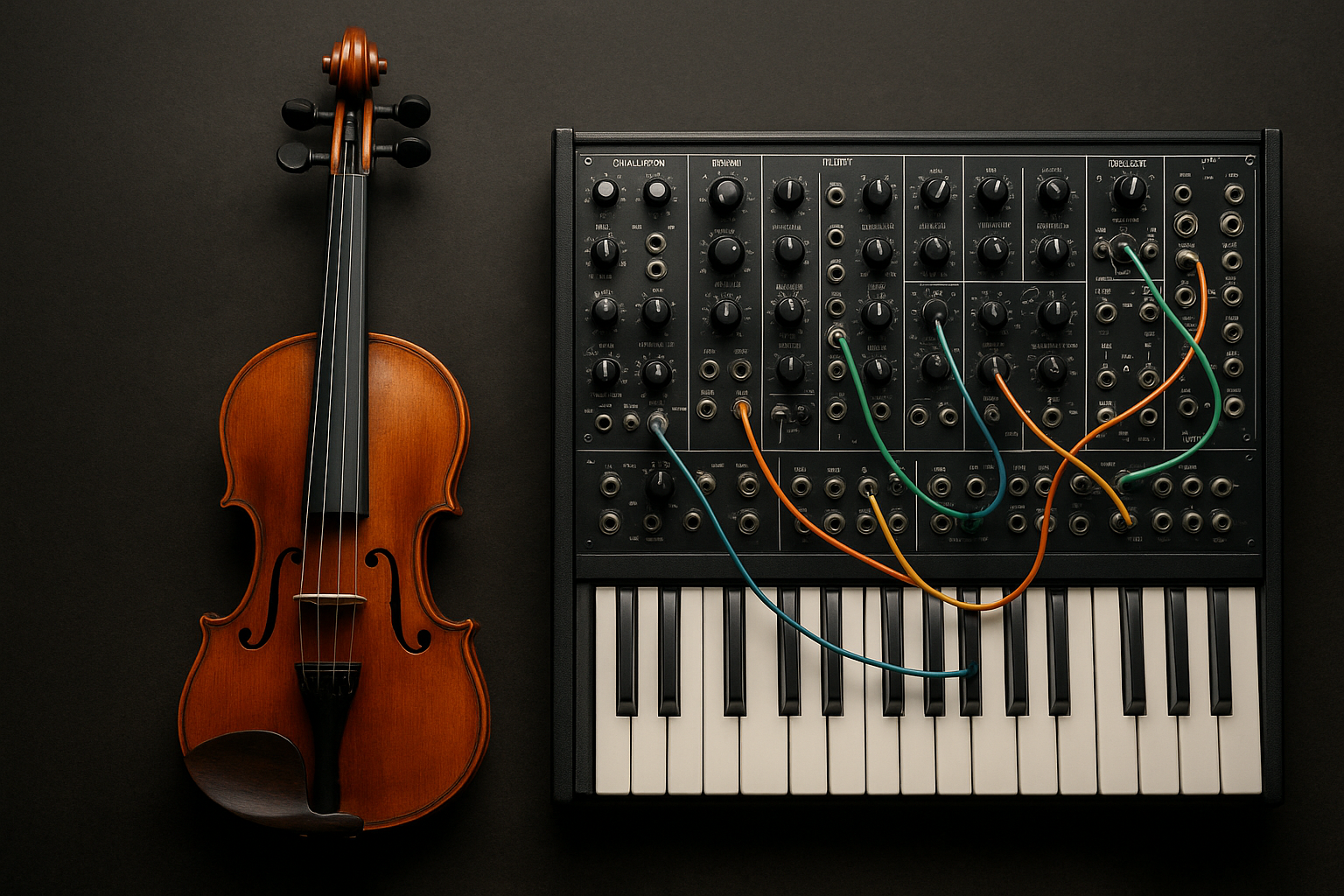
    The storied realm of classical music, known for its timeless elegance and profound emotional depth, is undergoing a revolution. In recent years, digital technology has woven itself into the very fabric of classical sound, offering new dimensions to an age-old art form. From composition to concert performance, modern tools are redefining what is possible.

    The Digital Symphony: Compositional Innovations

    Composers today increasingly harness digital tools to expand their creative potential. Software like Sibelius and Finale allows composers to simulate orchestral sounds with remarkable accuracy, enabling them to experiment with complex arrangements and instrumentation at the click of a button. These platforms not only improve efficiency but also inspire creativity by offering a vast palette of sounds.

    “Technology doesn’t just change how we write music, but what music we can conceive,” says Grammy-winning composer Eric Whitacre (MusicTech).

    Performance in the Digital Age

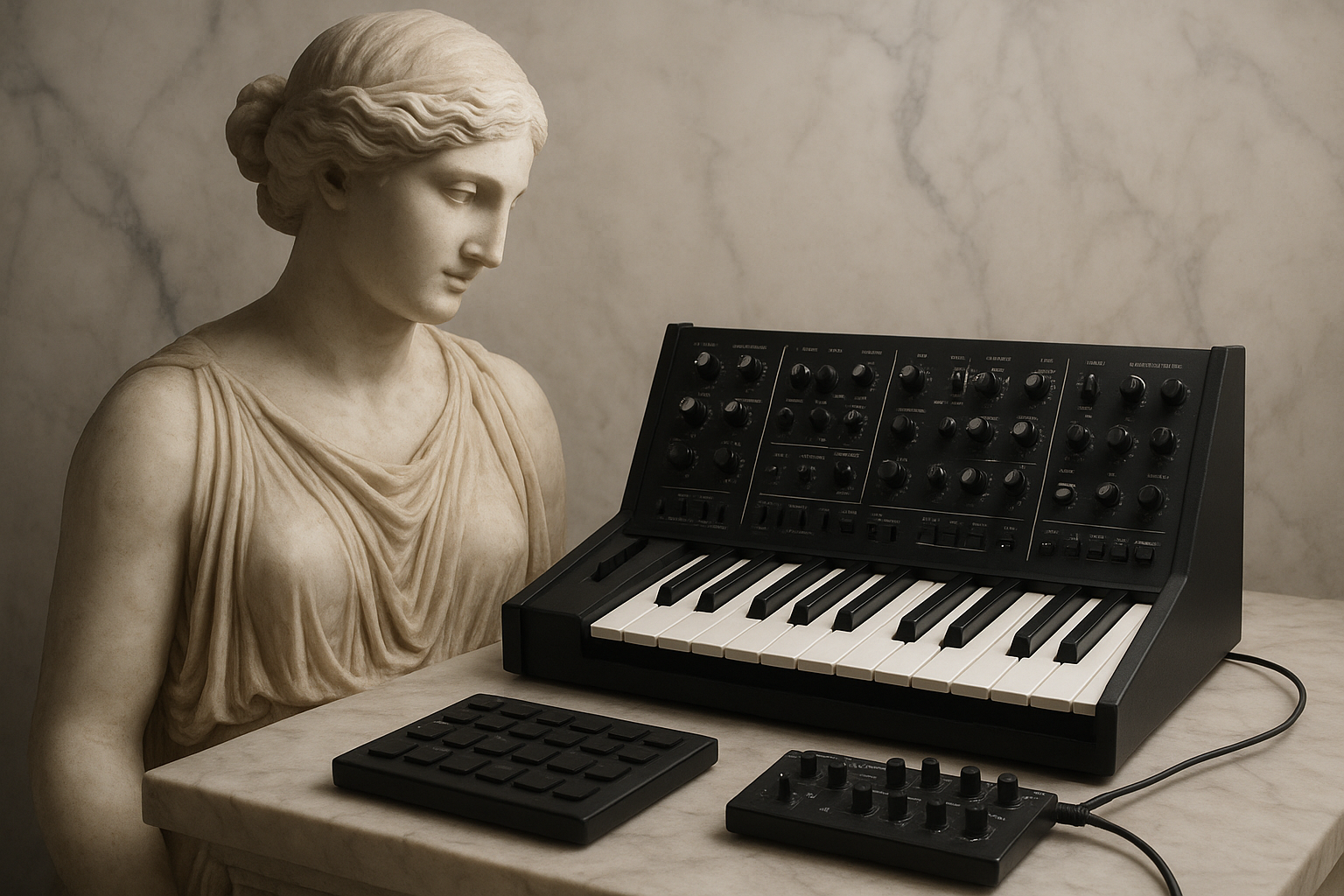
    The impact of technology goes beyond composition. Digital advancements are reshaping live performances, offering musicians a plethora of new possibilities. Electronic interfaces and MIDI-controlled instruments have made it possible for performers to incorporate previously unimaginable sounds into their repertoire. This fusion of classical and electronic music has given rise to a new genre known as “Electro-Classical.”

    Virtual Reality (VR) and Augmented Reality (AR) are emerging as transformative tools in the classical music arena. VR and AR can create immersive concert experiences that engage audiences in novel ways, allowing them to virtually step inside an orchestra or relate more viscerally to the performance. This not only broadens access to live music but can also enhance audience understanding and appreciation.

    The Global Stage: Accessibility and Collaboration

    The internet and digital platforms have democratized classical music, providing composers and musicians unprecedented access to global audiences. Social media and streaming services like Spotify and Apple Music bring classical music to millions of listeners worldwide, breaking down geographical barriers and inviting new generations to explore the genre.

    Additionally, platforms like YouTube and SoundCloud have fostered international collaboration. Musicians across continents can now work together virtually, sharing ideas and innovations as never before. As conductor Marin Alsop notes (NPR), “There are no boundaries anymore. We are all part of a global musical ecosystem.”

    The interplay between technology and classical music signifies not just a change in how music is made and consumed, but an evolution in the very essence of the sound itself. As digital tools continue to develop, they promise to further enrich the timbre of classical music, ushering this iconic genre into a resonant future.

  • The Psychology of the Prelude – Opening the Listener’s Inner Door

    The Psychology of the Prelude – Opening the Listener’s Inner Door

    The Psychology of the Prelude: Opening the Listener’s Inner Door

    The prelude, a brief piece often serving as an introduction to larger compositions, holds a unique power in music. It acts as a gateway, gently leading the listener into the complex landscape of emotions and ideas that follow. But what makes the prelude so psychologically significant? Understanding the nuances can enhance our appreciation of this musical form and its effect on our psyche.

    The Role of Anticipation

    One of the primary psychological mechanisms at play in a prelude is anticipation. By setting expectations and priming the listener’s mind, a prelude effectively enhances the emotional experience of the subsequent music. According to musicologist David Huron, “Anticipation heightens emotions and amplifies the listener’s engagement” (DavidHuron.com).

    This sense of anticipation acts almost like a cognitive appetizer, preparing the mind for a more profound and immersive experience. The brief yet evocative nature of a prelude can invoke curiosity and wonder, allowing the listener to be more receptive to the musical journey ahead.

    Creating Emotional Context

    The prelude also serves an essential role in establishing emotional context. Through its melody, harmony, and rhythm, the prelude sets the mood and tone for the piece. In the words of composer Claude Debussy, “The music is not in the notes, but in the silence between” (Letter to Georges Hartmann, 1901). This concept underscores the idea that the prelude uses subtlety and space to evoke deep-seated emotions in the listener.

    Mental Preparation and Focus

    Besides setting the emotional and anticipatory stage, the prelude aids in mental preparation. It acts as a form of psychological segue, helping listeners shift focus from external distractions to the nuanced soundscape about to unfold. The brevity and clarity of a prelude allow it to function as an auditory cue, prompting a meditative state conducive to deeper listening.

    “In a sense, the prelude can be likened to the transitional moments we experience in life—a chance to pause, reset, and approach the coming moments with a clear mind and an open heart.” – Anonymous

    The Universal Appeal of Preludes

    • Preludes are often accessible, offering a snapshot of the musical style or mood.
    • They cater to diverse audiences, from classical purists to modern listeners.
    • Their universality lies in their ability to convey complex emotions in a succinct form.

    Understanding the psychology of the prelude can enrich not only our musical appreciation but also our personal introspection. By engaging with the prelude consciously, we invite it to open our inner doors, allowing us to explore the symphony of emotions that life presents.

  • Crafting Orchestral Space – Depth and Dimension in Classical Production

    Crafting Orchestral Space – Depth and Dimension in Classical Production

    Crafting Orchestral Space: Depth and Dimension in Classical Production

    The allure and grandeur of orchestral music rest not only in its melodic and harmonic complexity but also in its ability to create a sense of space, depth, and dimension. From the intricate interplay of instruments to the subtle nuances captured in the acoustics of a concert hall, the production of classical music is a meticulous art that transcends time.

    The Acoustic Architecture of the Orchestra

    Understanding the physical layout of an orchestra is integral to appreciating how depth is achieved in classical production. Typically, orchestras are arranged with strings at the front, followed by woodwinds, brass, and percussion seated at the back. This arrangement, noted as early as the Classical period, is not arbitrary. It allows the more penetrating sounds of brass and percussion to blend with, rather than overpower, the delicate tones of the strings.

    “The arrangement of instruments in an orchestra is fundamentally a study in sound physics.” – Music Theory Today

    The Role of Acoustics

    Concert halls are designed with specific acoustic properties that amplify the intricate details of an orchestral performance. Renowned halls like Vienna’s Musikverein and the Berliner Philharmonie are celebrated for their superior acoustics, which enhance the richness of sound and provide clarity even in the softest passages. Designing these spaces requires a deep understanding of acoustics, which involves managing variables such as reverberation time, sound reflection, and diffusion.

    Reverberation and Its Impact

    Reverberation time is crucial in creating a sense of depth, described by Virginia Tech Acoustics as the time it takes for sound to “fade away” in a space. In a large hall, longer reverberation provides a fuller sound, while shorter reverberation creates clarity. This balance is vital for orchestral music, where clarity and richness must coexist.

    The Art of Orchestration

    Beyond physical arrangements and acoustic settings, the composer’s skill in orchestration plays a vital role in creating spatial depth. Composers like Maurice Ravel and Igor Stravinsky were masters at exploiting the timbre and range of orchestral instruments to craft a multi-dimensional sonic landscape.

    • Layering sounds: Orchestrators manipulate instrument sections to create layers, leading to a three-dimensional sound. For instance, the use of sustained string passages sets a sonic foundation, over which woodwinds or brass might introduce harmony and melody, giving depth to the auditory experience.
    • Dynamic contrasts: Dynamic variations contribute to the perception of space. A sudden pianissimo after a forte creates an auditory “illusion” of distance, much like visual perspective in painting.
    • Use of register: The employment of various instrument registers can effectively suggest space. Higher registers can signal distance while lower pitches can provide grounding proximity.

    “Color is the keyboard, the eyes are the harmonies, the soul is the piano with many strings.” – Wassily Kandinsky (in context with music as an art form related to orchestration)

    The Recording Revolution

    With the advent of recording technology, capturing and reproducing the depth of orchestral space became both a challenge and an opportunity. Stereo recording, for instance, allows for the placement of sound within a spatial field. Modern surround sound and 3D audio technologies have further advanced the possibilities, enabling listeners to experience orchestral music in ways that more accurately reflect live performances.

    Stereophonics and Multichannel Audio

    • Stereophonic recordings: Introduced in the 1950s, stereo recordings enhanced depth perception through two-channel audio, offering listeners a sense of directionality and space.
    • 3D and surround sound: Technologies like Dolby Atmos and DTS:X provide multi-dimensional audio experiences by placing listeners at the center of a spherical sonic field, thus replicating how sound is naturally heard in a concert hall.

    As described by Classical Music Magazine, these advancements are not just about technical evolution but also about the artistic intent to craft experiences that are closer to the emotional resonance found in live performances.

    Modern Challenges and Techniques

    Today’s producers and sound engineers adopt innovative techniques to overcome challenges in classical music production. With digital audio workstations (DAWs), intricate soundscapes can be created, edited, and mixed to enhance spatial perception and provide new dimensions to classical works.

    • Sample libraries: High-quality orchestral sample libraries offer a virtual representation of an orchestra, often recorded in renowned halls, allowing for experimentation with space and depth in ways not possible with live recordings alone.
    • Artificial reverb and delay: These effects can simulate the acoustics of varying environments, from large cathedrals to intimate chambers, thus crafting the desired spatial ambiance.
    • Panning and balance: Adjusting the stereo field and balance of individual tracks allows even further manipulation, reinforcing the immersive quality of orchestral performances.

    “The beauty of music is that it’s a moving, living thing – it’s continually shifting and being reinvented through technological advances and artistic exploration.” – David Robertson, Conductor

    Conclusion

    Crafting orchestral space is both a science and an art, intertwining the geography and physics of sound with the creative vision of composers, conductors, and producers. As the industry continues to evolve with new technologies, the transcendent nature of orchestral music will continue to inspire, drawing listeners into a world where sound possesses space, depth, and dimension.

  • The Illumined Composer – Enlightenment-Era Mystics and Their Music

    The Illumined Composer – Enlightenment-Era Mystics and Their Music

    The Enlightenment, a historical period spanning roughly the 17th to 19th centuries, is often characterized by its emphasis on reason, science, and individualism. However, less frequently discussed is the period’s intricate relationship with mysticism and how this relationship manifested in the music of the time.

    While the Enlightenment sought to challenge traditional doctrines and promote empirical thought, it was also a time when composers imbued their works with the spirituality and wonder that mystical thought embraced. The illumined composer refers to those who, inspired by mysticism, sought to transcend the mundane through their compositions.

    Mysticism in the Age of Reason

    Mysticism during the Enlightenment took on a unique form. While traditional religious structures were scrutinized, personal spiritual experiences and the notion of an inner divine presence gained traction. The writings of Jacob Boehme, a 17th-century German mystic, influenced many Enlightenment thinkers, challenging the rigid frameworks of organized religion and inspiring individuals to seek divine truths within themselves.

    As noted by historian Dame Frances Yates:

    “The deep and widespread study of Christian Hermeticism is one of the most important aspects of Enlightenment thought, influencing the great philosophers and composers alike.” (Cambridge University Press)

    The Symbiosis of Music and Mysticism

    Music, often seen as the most abstract of the arts, became a perfect medium for expressing mystical sentiments. Several composers during this era were profoundly influenced by mystical ideas and sought to reflect them in their works. Their music provided a sanctuary where mystical contemplation could flourish beyond the confines of reason and logic.

    • Johann Sebastian Bach: Bach’s Mass in B Minor and The Well-Tempered Clavier are laden with religious and mystical symbolism, inviting the listener to experience the divine.
    • Wolfgang Amadeus Mozart: Besides being a musical genius, Mozart was connected to the Freemasons, an organization known for its mystical and secretive rites. His opera The Magic Flute is a celebration of Masonic symbols and spiritual enlightenment.
    • Ludwig van Beethoven: Beethoven’s works often reflect his attempts to grapple with existential and spiritual questions. His Symphony No. 9, with its choral finale set to Friedrich Schiller’s “Ode to Joy,” is a powerful anthem to the unity of mankind.

    In their music, these composers transcended the empirical focus of their age, capturing the ineffable essence of mystical experience.

    The Legacy of Enlightenment Mysticism in Music

    The impact of Enlightenment-era mysticism on music stretches far beyond the period itself. It laid the groundwork for future generations of composers and musicians who continued to explore themes of spirituality and transcendence.

    Echoes of mystical themes can be found in the works of later composers such as Gustav Mahler, whose symphonies are imbued with existential and spiritual questioning, and Olivier Messiaen, known for his deep Catholic faith and integration of religious themes in his music.

    Even today, the influence of mysticism persists in contemporary music, where artists often seek to explore inner universes and spiritual trials through sound. This continual exploration reflects a fundamental human desire to connect with something beyond the self, a theme that Enlightenment-era mystic composers both recognized and endeavored to express through their compositions.

    Conclusion

    The Enlightenment, while a period renowned for its rational advancements, was also a time rich with mystical exploration and expression. Composers of this era, inspired by the mysteries of existence and the pursuit of the divine, created music that transcended rational thought.

    By examining their works, one gains insight into how these illumined composers harmonized the dichotomies of reason and mysticism, crafting legacies that continue to resonate with the profound mysteries of humanity’s spiritual quest.

    As Goethe famously observed:

    “Music is the mediator between the spiritual and the sensual life.” (Encyclopedia Britannica)

    In this way, the music of Enlightenment-era mystics serves not only as an artistic triumph but also as a lasting testament to the enduring power of spirituality in the face of reason.

  • Music as Metaphysics – Classical Attempts to Describe the Ineffable

    Music as Metaphysics – Classical Attempts to Describe the Ineffable

    Throughout history, music has transcended the realm of mere acoustics to become a profound form of expression that resonates with the depths of human consciousness. Many philosophers, composers, and musicologists have attempted to articulate the indescribable impact of music on the human soul. This exploration into music as a form of metaphysics seeks to understand why this art form reaches where words often fail.

    The Philosophical Foundations

    The idea that music is linked to a metaphysical world is not new. In fact, it dates back to Ancient Greece, where philosophers like Pythagoras suggested that music reflects the divine order of the universe. According to Pythagorean thought, the harmony of musical intervals mirrored the harmony of the cosmos, a concept known as the “Harmony of the Spheres.”

    Plato shared a similar regard for music as an extension of spiritual truth. In his Republic, he argued:

    “…Musical training is a more potent instrument than any other, because rhythm and harmony find their way into the inward places of the soul.”

    Plato believed that music was an essential element of education, capable of shaping moral character and fostering an understanding of ideal forms that are otherwise elusive.

    Romanticism and the Ineffability of Music

    The Romantic era brought with it a heightened appreciation of music as a mysterious, ineffable force. Composers like Ludwig van Beethoven and Franz Schubert created works that communicated emotions and ideas beyond the capacity of language.

    • Beethoven famously articulated his belief in music’s metaphysical power when he said, “Music is the one incorporeal entrance into the higher world of knowledge which comprehends mankind but which mankind cannot comprehend.”
    • Schubert’s compositions, imbued with melancholy and longing, have been described by critics as touching “the margin of the ineffable.”

    For these composers, the quintessence of music lay in its ability to evoke profound emotional experiences and transcend the limitations of verbal expression.

    The 20th Century: Music as Universal Language

    The 20th century saw a shift in the metaphysical understanding of music, with composers like Igor Stravinsky and Arnold Schoenberg challenging the tonal systems that had dominated Western music for centuries. Stravinsky reflected on the philosophy of music and its ineffable qualities:

    “Music is, by its very nature, essentially powerless to express anything at all.”

    This radical view underscores the idea that the mystery of music does not lie in providing answers but in its capacity to evoke a universal human experience that transcends cultures and individual differences.

    The Modern Perspective

    Today, music continues to be seen as a form of metaphysics that captures the ineffable. With advances in technology and a deeper understanding of psychology and neuroscience, we begin to grasp the complex interactions between music and the brain.

    • Neuroscientists have found that music activates every known part of the brain, suggesting that it has a deep evolutionary significance.
    • Psychologists propose that the abstract nature of music allows listeners to project their own meaning onto it, making it a personal, mystical experience.

    Lisa Feldman Barrett, neuroscientist and psychologist, explains in her book, How Emotions Are Made, that music is “the language of emotion,” serving as a vehicle through which we can understand and articulate our latent feelings.

    Conclusion

    Throughout centuries, the enduring allure of music as a metaphysical pursuit persists. It continues to be a sacred thread that weaves through the fabric of human spirituality and is cherished for its ability to articulate the unutterable and evoke the profound.

    Despite countless attempts to rationalize and describe its power, music remains one of humanity’s most beautiful mysteries—an ineffable link to the metaphysical realm that defies the confines of language. In the words of Victor Hugo:

    “Music expresses that which cannot be put into words and that which cannot remain silent.”