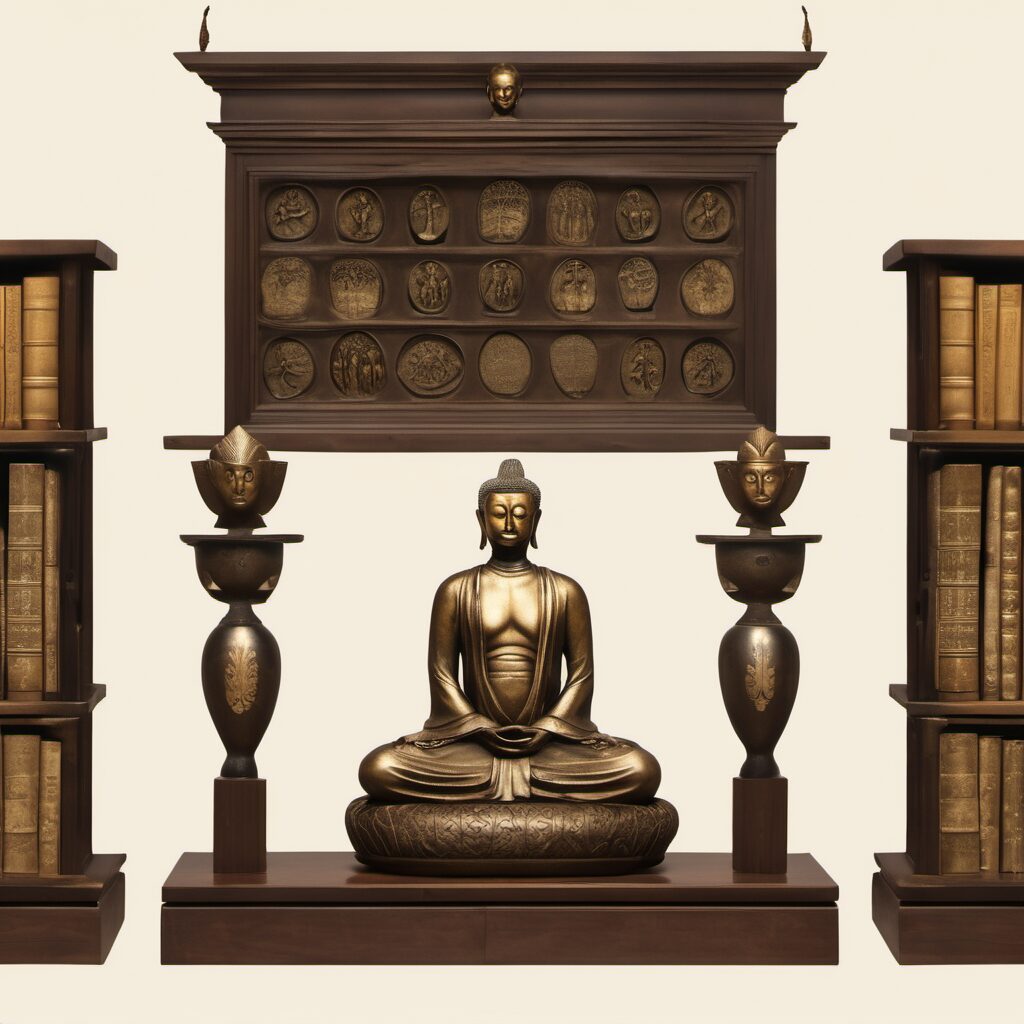
The Minimalism of Zen – Eastern influence on the Western Neoclassicism
A journey through time and space, from ancient China to 18th century Italy, a path that connects the philosophical ideas of Zen with those of neoclassical architecture.
Zen Buddhism, born in China during the Tang dynasty (618-907), arrived in Japan in the 12th century. Initially focused on meditation and detachment, its teachings evolved over time. In the 18th century, a new movement emerged: the Minimalism of Zen.
The Concept of “Wabi-Sabi”
- Wabi-sabi is an aesthetic that appreciates the beauty in imperfection. It values the simple and the ordinary, finding beauty in the imperfect, the incomplete, and the ephemeral.
- “The lotus flower blooms most beautifully in muddy water yet remains unsoiled.” – Zen proverb
- Wabi-sabi represents a rejection of excess and a preference for simplicity. This philosophy is not limited to art but applies to everyday life as well.
The Influence on Western Neoclassicism
During the 18th century, neoclassicism emerged in Europe as an artistic movement that sought to revive classical Greek and Roman styles. Zen Minimalism’s emphasis on simplicity influenced this new wave of art and architecture.
- Neoclassical architects rejected ornate decoration, emphasizing clean lines and proportion.
- “Form follows function” was the motto behind neoclassicism. The idea being that a design should be useful and functional before it is beautiful.
The Minimalist Style in Italy
Italy experienced an influx of Japanese artists and artisans during the 18th century, introducing Zen Minimalism’s principles to the country.
- Antonio Canova (1757-1822) was a renowned Italian sculptor influenced by Eastern art. His sculptures often featured simple shapes and clean lines.
- “The greatest glory in living lies not in never falling, but in rising every time we fall.” – Nelson Mandela
A Legacy of Influence
The Minimalism of Zen has left a lasting legacy on Western neoclassicism. Architects and artists continue to draw inspiration from this Eastern philosophy.
- The emphasis on simplicity, proportion, and functionality remains a cornerstone of neoclassical architecture.
- Wabi-sabi’s appreciation for imperfection continues to influence art and design today.
Bibliography
- Graham, John. (2017). The Art of Japanese Design . London: Phaidon. ISBN 978-0500096229.
- Knapp, Augustin. (2020) "Wabi-sabi". Wikipedia.
Disclaimer
This article is for educational purposes only and does not aim to provide a definitive overview. For in-depth analysis, please consult academic sources.