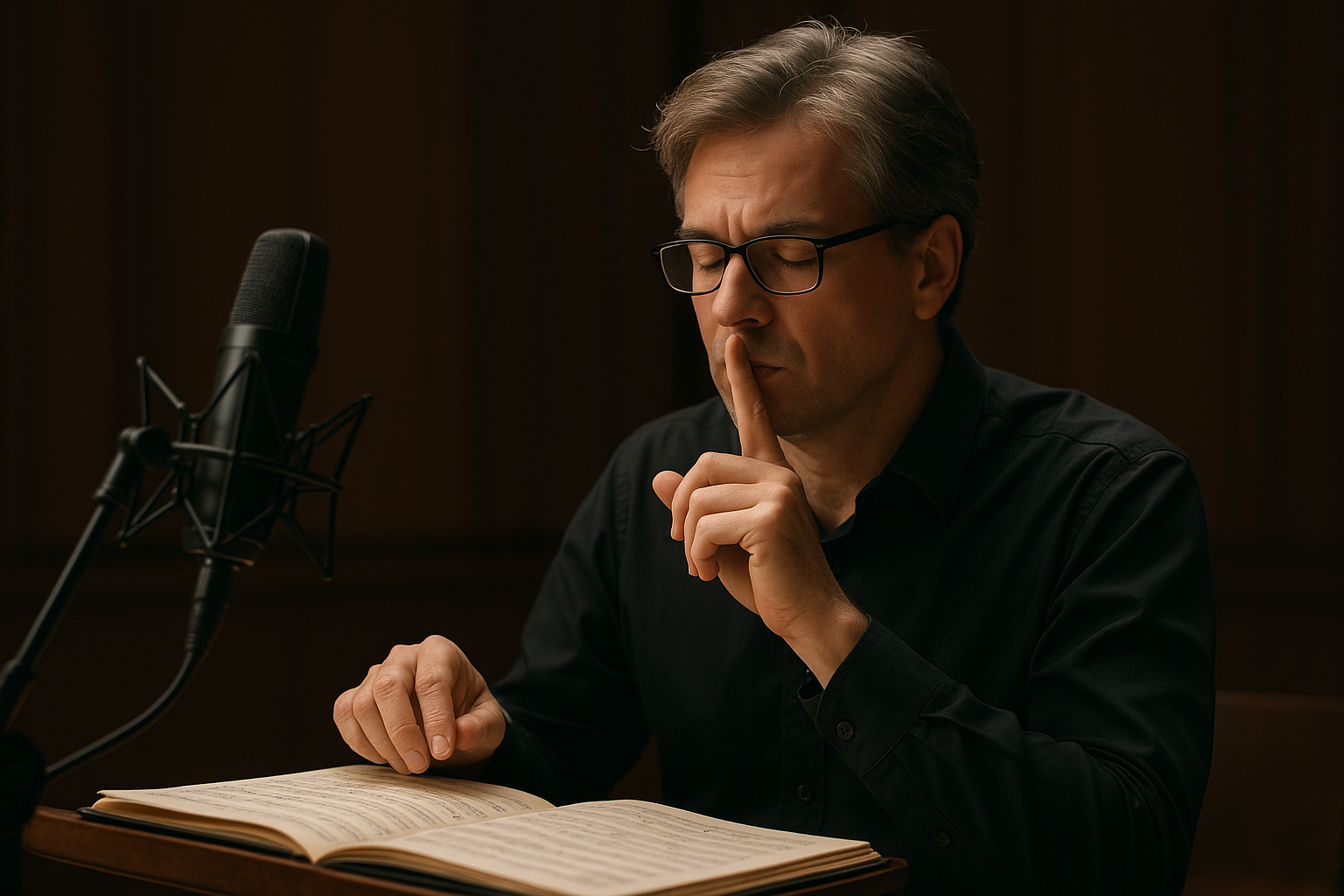
The Composer as Curator: Choosing Silence as Material
In the vast symphony of human experience, silence often stands as one of the most powerful, yet underappreciated, forces. In the realm of music, where sound is the primary medium of expression, the role of silence might appear counterintuitive. Yet, for many composers, silence acts not only as a bridge between notes but as a potent material in itself. This concept of “The Composer as Curator” emerges as more creators embrace silence to shape and define their musical narratives.
The Historical Perspective
The use of silence in music has a storied history, dating back to classical icons who understood its impact. Ludwig van Beethoven, for instance, was known for his strategic placement of silence to heighten tension and expectation in his compositions. Philosopher Friedrich Nietzsche once noted, “The most intense joys and the deepest sorrows have moments of silence, during which the soul refines its emotions and fortifies itself.”
Fast forward to contemporary music, and we find artists who have further elevated silence from contextual device to central material. One of the most significant figures in this journey is John Cage, whose 1952 piece 4’33” thrust silence into the spotlight. Cage’s bold assertion that environmental sounds and unintentional audience noises are part of the music redefined the ways in which silence can be integrated into compositions.
Silence as Material
For modern composers, treating silence as a curatorial choice involves embracing the full spectrum of sound—or its deliberate absence—as a tool for crafting a unique auditory landscape. This approach can evoke a variety of responses from audiences: introspection, tension, or even discomfort.
- Peter Ablinger: Known for his experimental works, Ablinger once recorded silence by filtering environmental sounds. This transformed ordinary ambient noise into an active participant in his compositions, illustrating how silence can be curated just as meticulously as sound.
- Max Richter: His celebrated album “Sleep” effectively utilizes silence to mirror the natural state of human rest, creating an immersive soundscape that encourages listeners to exist alongside the silences.
- Olga Neuwirth: A contemporary composer frequently employing silence as an expressive tool. Neuwirth has noted that silence can articulate as much, if not more, than any note.
The Curatorial Role of the Composer
When a composer decides to use silence, they place themselves in a curatorial role, sculpting aural environments with intentional gaps and deliberate pauses. This technique allows them to guide the audience’s emotional journey actively. As John Cage elucidated, “Music is the space between the notes.” By this reasoning, silence becomes just as essential as any melody or harmony, shaping how listeners perceive the passage of time and space within the piece.
“In music, silence is not the absence of something but the presence of something else.” — John Cage
The Audience’s Role
Silence in music demands active engagement from the audience, inviting them to participate in meaning-making. Rather than providing a straightforward narrative, silence asks listeners to fill in the gaps, to bring their personal interpretations and responses to the experience. This collective process of co-creation enhances the listening experience, transforming it into a two-way dialogue between creator and observer.
In a world saturated with sound, silence offers a rare refuge—a place for contemplation and connection. For composers acting as curators, harnessing the power of silence allows them to craft more nuanced and profound musical experiences.
Conclusion
The deliberate incorporation of silence into compositions illustrates a composer’s ability to curate experiences that transcend traditional soundscape boundaries. As echoed in the works of pioneers like John Cage, the power of silence lies not in its emptiness, but in its capacity to hold and convey depth and emotion. Through silence, composers extend an invitation to audiences: to listen, to reflect, and to become part of the unfolding story. Indeed, it is within the curated spaces of silence that music often finds its heart and meaning.