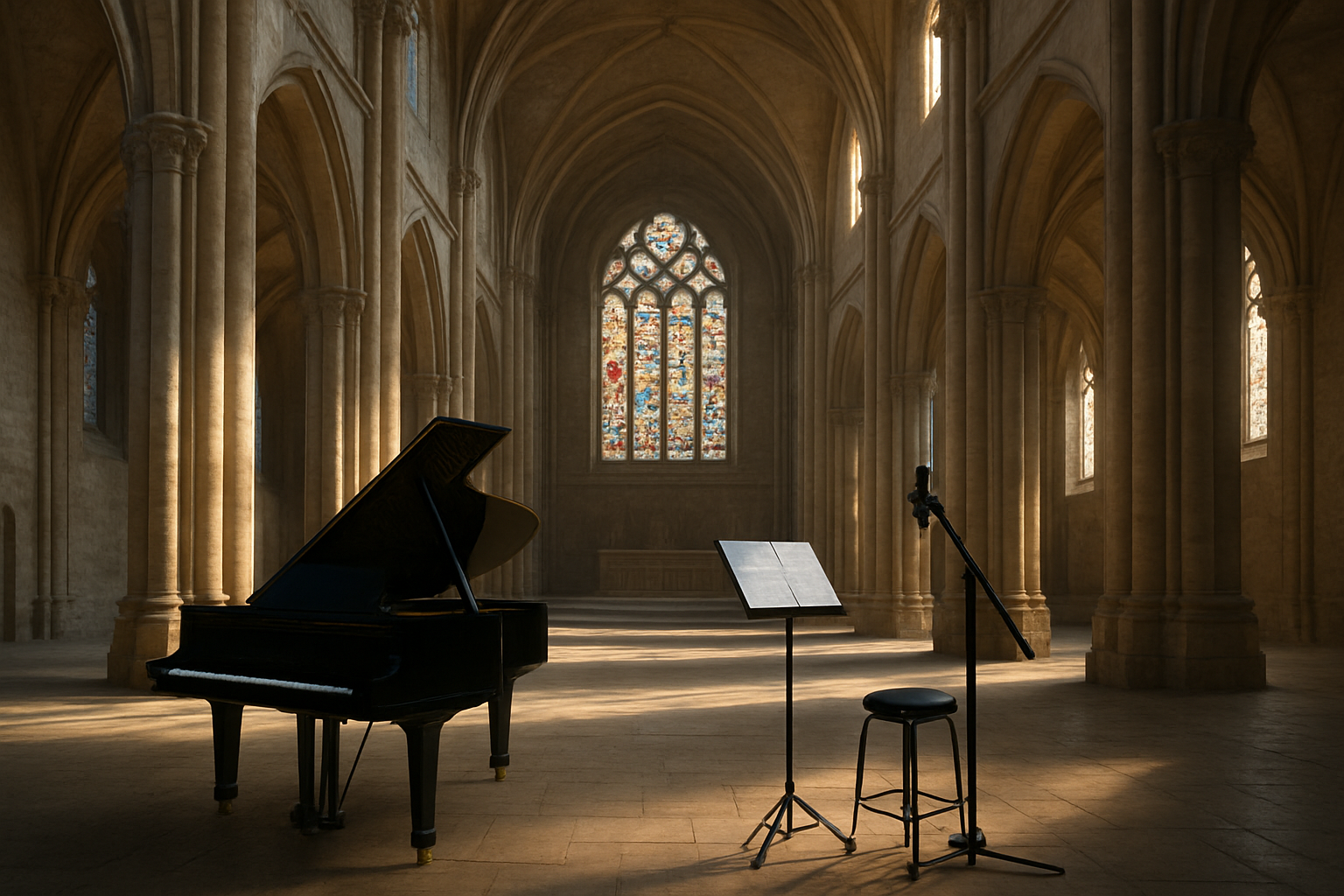
Architectures of Sound: Composing Music Like Sacred Space
In the serene silence of a cathedral, the architectural finesse creates an ambiance that elevates the senses. The reverberating echoes in sacred spaces have long inspired musicians and composers alike to treat sound as a structural element akin to physical architecture. This intricate interplay between music and space prompts the fascinating concept of composing music as an aural sculpture.
Throughout history, places of worship have embraced the concept of acoustics as a divine element. The Abbey of Saint Gall in Switzerland, for instance, exemplifies this intimate relationship between sound and space. Built in the 8th century, the vaults and stone corridors were designed to capture and enhance harmonics, a masterpiece of spiritual sound engineering.
In an era where digital technology enables boundless creativity, modern composers seek to encapsulate that very essence. Brian Eno, an innovator in ambient music, once described his approach as creating “the music that you can live in.” He likened his compositions to architectural spaces, where sound design mirrors the contemplative serenity of a cathedral’s acoustical plan.
“For me, music-making is the capacity to make something that you can live in; something that’s as real and helpful and brilliant and insightful as a house or a chair or a painting.” — Brian Eno
Sonorous Structures
The successful merging of architecture and music requires both creative vision and technical expertise. Here are a few elements composers consider when trying to emulate sacred spaces:
- Reverb: Just as the domes and arcs of cathedrals prolong sound, digital reverb can add depth and sustain, creating an aural ethereal experience.
- Spatialization: Using surround sound techniques, composers can simulate the directional clarity and movement often felt within grand religious structures.
- Timbre: Selecting instrumentation that resonates with and fills a space can transform the auditory experience, much like stained glass transforms light.
Through these techniques, musicians can evoke the sacred, transporting listeners to a space of reflection and introspection. As Philip Glass, a pioneer of minimalist composition, eloquently states, “Music is a place that we can both inhabit and move through.” Thus, in the convergence of sound and architecture, we discover music not only as an art form but as a spiritual journey.
Photo by Unsplash