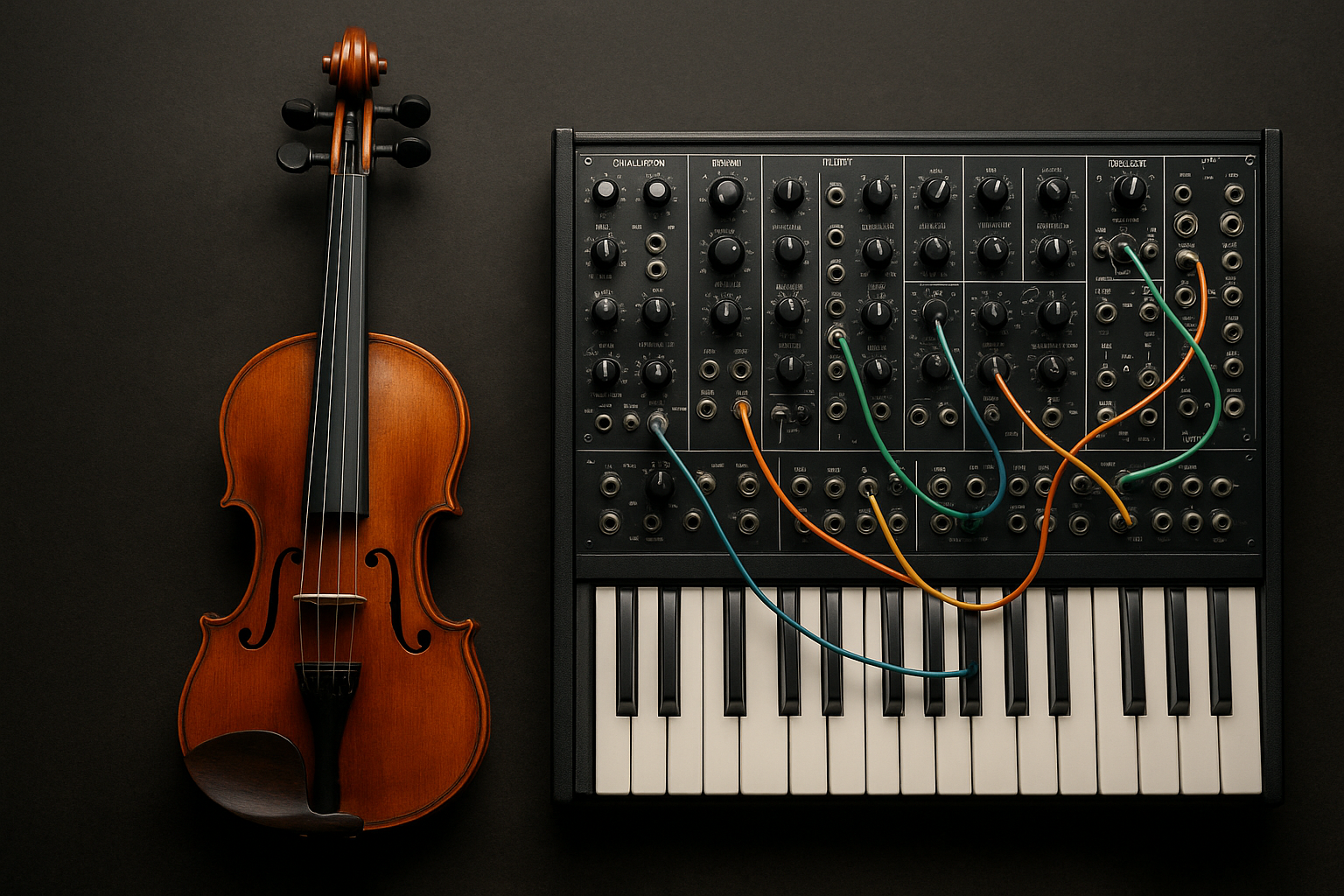
Strings and Circuits: Where Chamber Music Meets Modern Synthesis
In the vast and dynamic universe of music, the intermingling of traditional forms with modern innovations creates a realm where historical lineage meets futuristic soundscapes. This article explores the fusion of chamber music’s intimate elegance with the boundary-pushing potential of modern synthesis, illuminating how these seemingly disparate musical worlds converge.
A Brief Overview of Chamber Music
Chamber music is a form of classical music composed for small ensembles, typically performed in intimate settings. Traditionally, it is seen as a “conversation” between musicians, reflecting a high level of artistic precision and emotional depth. As music critic Richard Wigmore notes in The Guardian, “Chamber music is one of the tenets of classical music’s rich tapestry—a genre rooted in collaboration and dialogue.”
- Origins: Emerging from the salons and courts of the late Renaissance and Baroque periods, chamber music was designed for small auditoriums where composers like Beethoven and Mozart found fertile ground for innovation.
- Instrumentation: Ensembles typically comprise strings (such as violins and cellos), along with woodwinds or pianoforte, offering a rich textural palette.
- Significance: This genre champions a personal and conversational musical form, often highlighting the technical prowess and interpretative subtleties of its performers.
The Synthesis Revolution
Modern synthesis represents a pivotal shift in musical creation, leveraging electronic technology to generate, alter, and simulate sounds. From the analog synths of the 1960s to today’s digitally mastered software instruments, synthesis has redefined the boundaries of auditory creativity. According to Mark Vail in his book Vintage Synthesizers, “Synthesis has opened new sonic frontiers for composers, allowing them to explore concepts beyond traditional acoustic limitations.”
- Synth Evolution: Innovators like Robert Moog and Don Buchla were instrumental with their eponymous synths, reshaping the musical landscape.
- Notable Techniques: Frequency modulation, subtractive synthesis, and sampling are some methods synths utilize to craft their unique auditory landscapes.
- Contemporary Use: Modern synthesizers appear in every conceivable music genre, from EDM to film scores, showcasing their versatile appeal.
The Intersection: A Symbiotic Relationship
The fusion of chamber music with modern synthesis represents an intriguing cultural and technical dialogue. This synthesis is not without precedence; artists and composers are increasingly exploring how the acoustic textures of chamber music can blend with the electronic hues of synthesizers.
Melodies Transcending Time
Incorporating synths into chamber music compositions allows musicians to reinterpret traditional melodies, offering audiences different realms of experience. Composer Eric Whitacre, known for his inventive approach to choral music, has lauded the “rich, expansive horizons” that electronic elements can introduce into classical compositions.
“Adding synthesized textures to the lush harmonies and intricate counterpoints of chamber music broadens its emotional vocabulary and extends its reach beyond conventional boundaries.” — Eric Whitacre
Technological Enhancements
The fusion goes beyond mere layering of sounds. Advanced synthesis techniques provide exciting enhancements to traditional instruments. For instance, live signal processing allows real-time manipulation of music as it’s being performed, blending acoustic sounds with digital effects to create a truly unique performance experience.
Case Study: Bowed and Circuitry
A profound example of this intersection is the ensemble known as Bowed and Circuitry. This group has pioneered the integration of strings with electronic elements, crafting performances that blur the line between acoustic purity and synthesized complexity.
- Experimental Projects: The ensemble often commissions new works that challenge conventional approaches, incorporating loop pedals, granular synthesis, and soundscapes generated via computer algorithms.
- Audience Engagement: By integrating visual elements, such as synchronized light shows and interactive digital media, Bowed and Circuitry revitalizes classical pieces for modern audiences.
Challenges and Opportunities
While the blend of chamber music and synthesis offers immense creative potential, it also presents challenges:
- Cultural Acceptance: Purists within the classical community may resist merging electronics with acoustic performances, fearing it undermines traditional artistry.
- Technical Barriers: Mastery of both acoustic instruments and complex sound design technologies demands a high level of skill, often placing it beyond the reach of many musicians.
However, the opportunities provided by this musical marriage are significant. By expanding musical horizons and reaching broader audiences, this genre fusion could play a key role in the future evolution of classical music.
Conclusion: The Future Symphony
The marriage of chamber music’s storied past with the avant-garde sound of modern synthesis heralds a new era. It challenges musicians to explore unprecedented possibilities, offering audiences a sensory-rich experience that honors the old while welcoming the new.
As we move forward, embracing technological advancements while respecting musical heritage, this fusion exemplifies how tradition and innovation can inspire and elevate each other, tapping into the universal language of music in exciting and memorable ways.
The echo of strings and the pulse of circuits remind us that music, in all its forms, is an evolving conversation—a vibrant dialogue that defies boundaries and continually celebrates the art of sound.