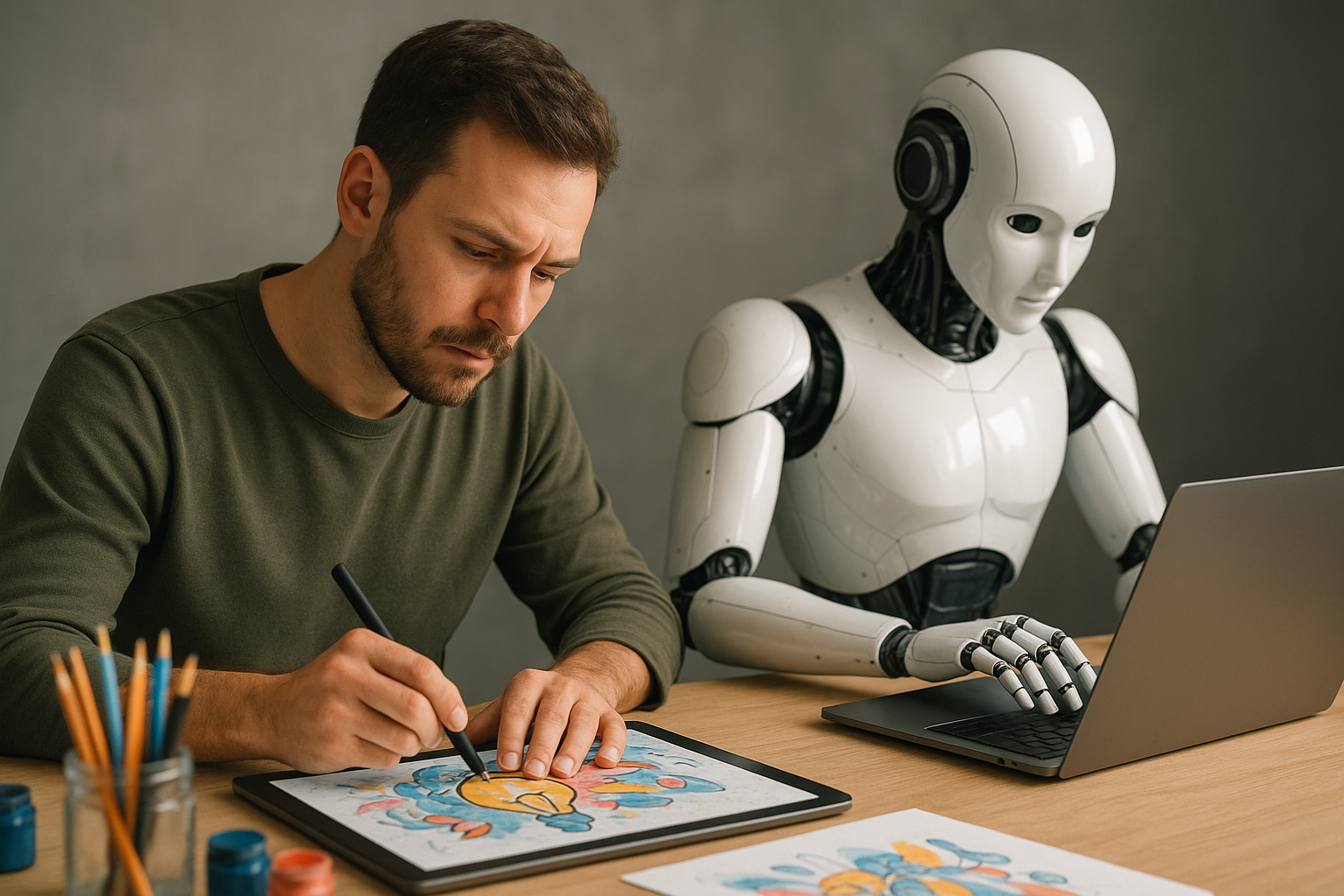
Creativity has long been regarded as a uniquely human trait, fueled by the intricate workings of our imagination, emotions, and experiences. However, the advent of artificial intelligence (AI) challenges this notion by introducing machine logic into the creative process. As AI technologies continue to evolve, they are reshaping how we perceive and engage in creative endeavors, blending human inspiration with machine efficiency. This intersection of human and machine is ushering in a new era of innovation and artistic expression, revealing possibilities that were once unimaginable.
The Convergence of Human Creativity and Machine Logic
AI-mediated creativity finds its roots in the augmentation of human capabilities through computational power. By processing vast amounts of data and recognizing patterns beyond human capacity, AI systems can offer a fresh perspective on creativity. Here are some ways in which AI is transforming creative processes:
- Co-Creation: AI tools work alongside artists, writers, and musicians, offering suggestions, generating content, or even completing tasks. For instance, AI systems like GPT-3 by OpenAI can assist authors in developing story ideas or generating dialogue.
- Personalization: By analyzing user data, AI algorithms can tailor creative content to individual preferences, enhancing the audience’s connection with the work.
- Exploration: AI enables artists to explore creative avenues they might not have considered, pushing the boundaries of traditional art forms. Generative adversarial networks (GANs), as demonstrated in projects like Edmond de Belamy, allow for the creation of unique artworks.
Case Studies: AI in Creative Industries
Several industries are witnessing a paradigm shift as they incorporate AI into their creative processes. Below are notable examples:
- Music: AI composition tools like AIVA assist musicians in creating music by suggesting harmonies, rhythms, and melodies. For instance, the album “Hello World” by the French collective SKYGGE features AI-generated compositions.
- Visual Art: The $432,500 sale of an AI-generated portrait at Christie’s auction house in 2018 marks a significant milestone. This sale highlights the growing acceptance of AI as a legitimate tool in the art world.
- Writing: Publications are increasingly using AI-driven tools to draft articles, edit content, and even generate headlines. The Washington Post’s AI reporter, Heliograf, was responsible for over 850 articles during the 2016 U.S. elections.
Challenges and Ethical Considerations
“As AI begins to have a richer understanding of the world, it can be a great assistant and a great collaborator. But we need to be vigilant about the ethical implications of AI.” – Fei-Fei Li, Co-Director of the Stanford University Human-Centered AI Institute
While AI presents exciting opportunities for creativity, it also poses significant ethical challenges:
- Intellectual Property: The question of who owns the copyright of AI-generated content remains unresolved. As AI systems become more autonomous, the line between human and machine authorship blurs.
- Bias: AI algorithms may inadvertently perpetuate existing biases present in the data they are trained on, leading to skewed creative outputs that do not represent diverse perspectives.
- Devaluation of Human Artistry: As AI becomes more proficient at imitating human creativity, concerns arise about the potential devaluation of human talent and the uniqueness of human-produced art.
The Role of Human Creativity in an AI-Driven World
Despite concerns, AI-mediated creativity has the potential to enhance human creativity rather than replace it. AI can serve as a powerful tool that augments human imagination, offering new ways to express ideas and develop artistic concepts. Human creativity remains indispensable, as it provides the emotional depth, cultural context, and ethical considerations that AI tools currently lack.
Conclusion: Embracing the Synergy
In conclusion, the union of human inspiration and machine logic presents a transformative potential that redefines creativity across various disciplines. AI-mediated creativity encourages collaboration between humans and machines, resulting in innovative outcomes that neither could achieve alone. As we continue to integrate AI into our creative processes, it is vital to address ethical concerns and ensure that the technology is used to enrich human experiences and foster artistic exploration.
The future of creativity lies in embracing the synergies between human and machine, acknowledging that each has its unique strengths. Rather than viewing AI as a competitor, we should see it as an enabler that propels human creativity into uncharted territories.