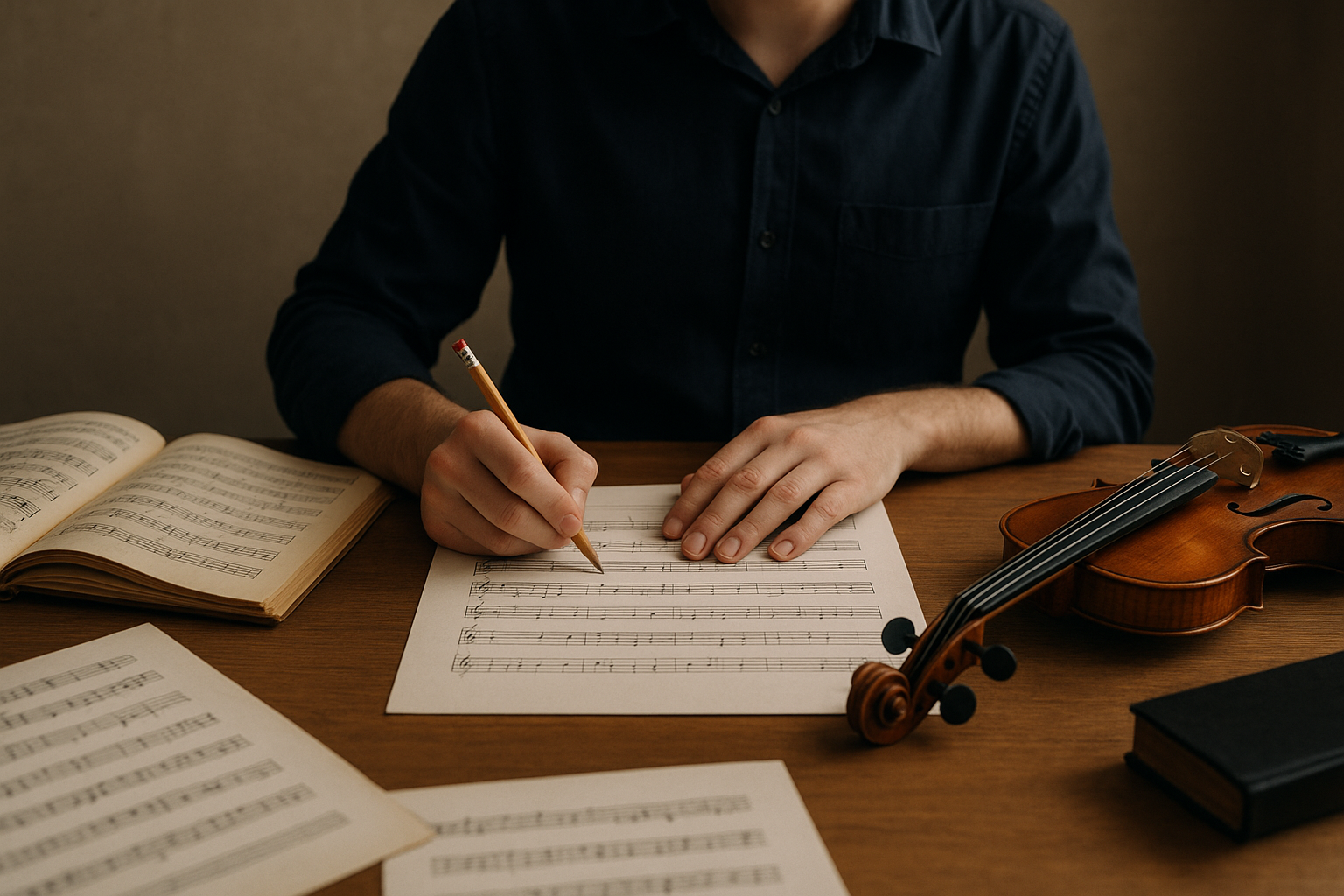
In the realm of creative pursuits, constraints often appear as stifling limitations. However, artists and musicians throughout history have demonstrated that boundaries can be catalysts for innovation. Composing with constraints, especially in classical music, exemplifies how limitations can inspire unparalleled creativity.
The Power of Constraints in Classical Music
Classical composers have long utilized constraints as a framework for creativity. One of the most famous examples is the fugue. A fugue is a compositional technique characterized by one or two themes repeated and developed across interwoven voices. Johann Sebastian Bach, celebrated for his mastery of the fugue, demonstrated how sticking to a strict structural form could lead to the creation of complex and compelling music.
In the words of Igor Stravinsky, “The more constraints one imposes, the more one frees oneself of the chains that shackle the spirit.” This encapsulates the paradox many artists and composers embrace: constraints push the artist to explore deeper within their constructs, leading to unexpected innovation.
Modern Interpretations and Techniques
Contemporary composers continue to explore the rich potential of composing within constraints. Arvo Pärt, for instance, is known for his minimalist and deeply contemplative works. His style, Tintinnabuli, employs simple tonal constraints that allow the spiritual essence of his music to emerge. This technique illustrates how modern composers adapt classical discipline to create evocative music in the modern context.
Constraints Beyond Classical Borders
While constraints are a hallmark of classical music, their benefits extend beyond it. In his work across various media, Brian Eno has reiterated Stravinsky’s sentiment, suggesting that restrictions encourage creative solutions. Eno’s concept of “Oblique Strategies”, a set of cards with prompts to help musicians overcome creative blocks, is a popular tool that applies the principle of constraint in a creative context. Eno explains, “It is in the limitations that the artist finds their infinite potential.”
Oblique Strategies encourages the artist to seek freedom within constraints.
Finding Creativity Within Boundaries
Whether through the rigid formalism of a classical sonata or the sparse simplicity of minimalist compositions, constraints encourage innovation. Artists, regardless of their chosen medium, can find untapped potential by embracing limitations as a vehicle for self-expression. Far from restricting creativity, working within a framework can open new vistas for exploration, discovery, and originality.
Composing with constraints remains a powerful testament to the enduring synergy between discipline and creativity, reminding artists of all stripes that true freedom often resides within the confines of their chosen boundaries.