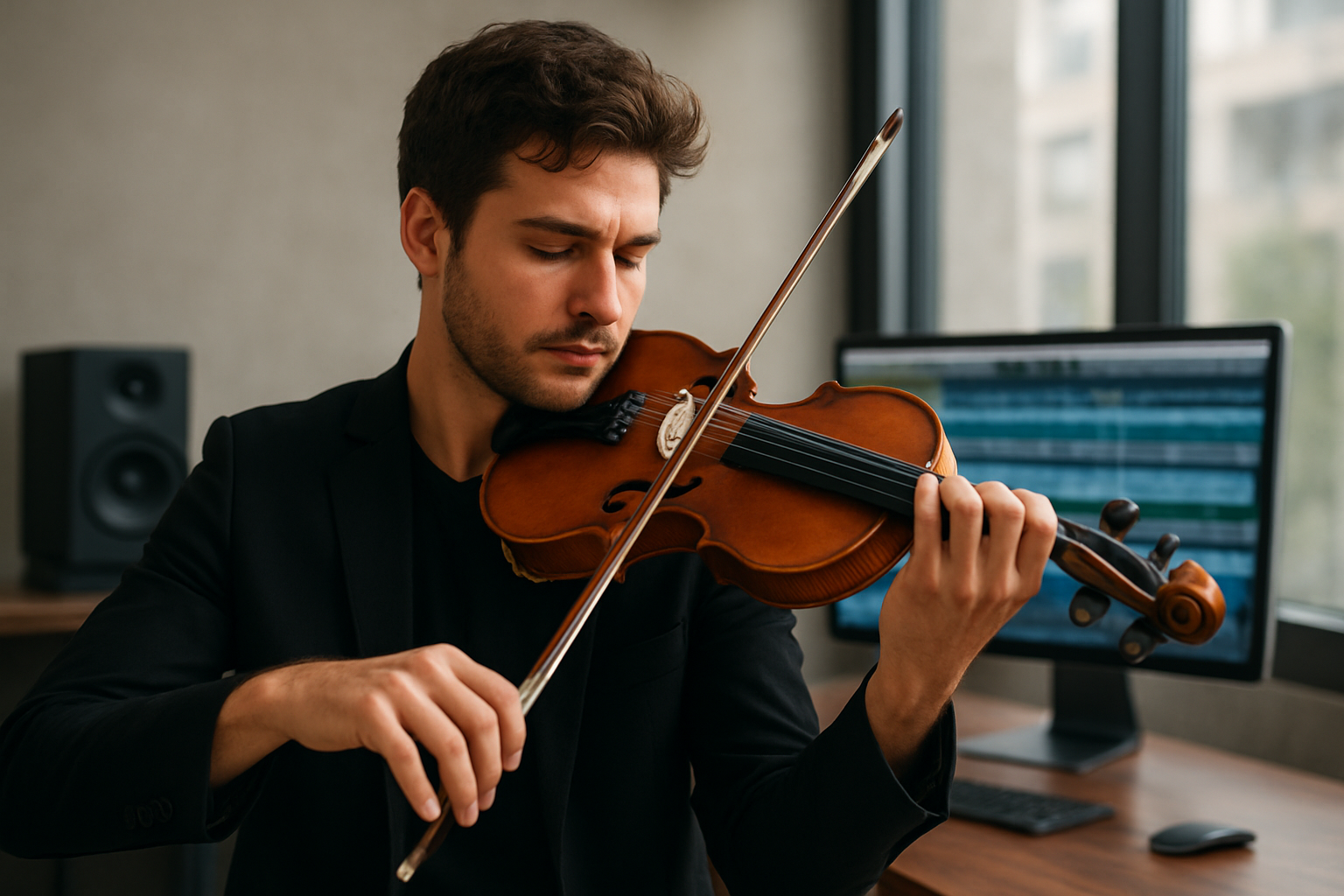
The Virtuoso’s Evolution: Technical Mastery in the Modern Era
In the realm of music, the term virtuoso has traditionally signified a performer of exceptional skill, someone capable of extraordinary technical feats. From the Baroque brilliance of Vivaldi to the Romantic fervor of Liszt, virtuosos have long captivated audiences with their ability to transcend the ordinary and achieve the seemingly impossible on their instruments. However, as we progress further into the 21st century, the concept of virtuosity is undergoing an evolution, shaped by new technological advancements and societal shifts.
Historical Roots of Virtuosity
The lineage of virtuosity can be traced back to figures like Niccolò Paganini, whose astonishing performances on the violin in the 19th century set a new standard for technical achievement. As an Italian composer and violinist, Paganini was famed not just for his compositions but for his unparalleled showmanship and dexterity. The musical community viewed him as the epitome of what human creativity and perseverance could accomplish—qualities quintessential to the definition of a virtuoso.
“Paganini’s technique was extraordinary, pushing the boundaries of what the instrument could do and setting a precedent for future generations of musicians,” The Oxford Dictionary of Music notes.
Following Paganini, pianists like Franz Liszt continued to expand the boundaries of technical mastery, contributing greatly to the romantic repertoire with works that required specialized skills. These musicians not only redefined the capabilities of their instruments but also the expectations of what a performer could achieve.
Technical Mastery in the Age of Technology
With the onset of the digital age, we find ourselves at a unique intersection where classical notions of virtuosity meet modern technology. Today’s musicians are increasingly required to be proficient with digital tools and platforms. Whether it’s mastering the intricacies of sound editing software or performing live using electronic instruments, modern virtuosos are carving out a new definition of technical mastery.
- Integrating Technology: Musicians like Jacob Collier blend traditional musical skills with advanced technology to create complex, layered compositions that defy genre classifications.
- Online Platforms: Platforms like Twitch and YouTube have become venues for musical virtuosity, where artists showcase their talents in real-time to global audiences.
- Virtual Collaborations: As exemplified by projects like “Playing for Change,” musicians from widely different backgrounds and locations collaborate through digital means to create unified performances.
The New Frontier: AI and Music
Artificial Intelligence (AI) is another frontier where musical virtuosity evolves. AI-driven applications like OpenAI’s MuseNet have demonstrated the ability to compose complex pieces that mimic various styles and traditions. The potential implications for virtuosity are immense, blending human creativity with computational power to redefine what’s possible in musical composition and performance.
“AI in music could well become the compass that points toward new genres and styles of music creation, expanding horizons and breaking down barriers,” suggests Bernard Marr in Forbes.
Pedagogical Shifts and Skill Acquisition
In the realm of music education, the evolution of virtuosity is also visible. Schools and conservatories now incorporate technology into their curricula to prepare students for the dynamics of contemporary music practice. The focus has broadened from merely perfecting traditional skills to mastering digital tools and adapting to ever-evolving musical landscapes.
- The inclusion of music production courses using software like Ableton Live or Logic Pro X prepares students for real-world music production.
- The rise of courses focusing on MIDI programming and sampling techniques equips students with skills to navigate digital instruments.
- Workshops and seminars often invite successful digital-era musicians to share their experiences and techniques, enriching the learning ecosystem.
Challenges and Criticisms
Despite the exciting prospects, the shift in focus toward technology-enhanced skills has been met with criticism. Some purists argue that the essence of musical virtuosity—a focus on deeply understanding and performing with traditional instruments—may get diluted in the blend with technological proficiencies.
Moreover, issues of access and equity arise as digital tools and platforms often require significant financial investment, potentially creating disparities in who can participate and excel in this new form of virtuosity.
The Virtuoso of Tomorrow
As we look to the future of musical performance and creation, the idea of the virtuoso will likely continue to evolve. With new discoveries and inventions perpetually on the horizon, today’s digital-savvy musicians are not just virtuosos in the traditional sense but are master innovators, blending their innate musical talents with the endless possibilities offered by technology.
Like their historical predecessors, these modern virtuosos hold the power to push the boundaries of their art. By embracing both the time-honored traditions of the past and the cutting-edge technologies of the present, they pave the way for musical genius in a rapidly changing world. The virtuoso of the future is one that can effortlessly straddle worlds, blending the old with the new to create something uniquely magnificent—and in doing so, they continue an age-old legacy of mastery and innovation.
Thus, the evolution of the virtuoso is not merely a story of technological assimilation but rather a testament to human adaptability and enduring creative spirit.