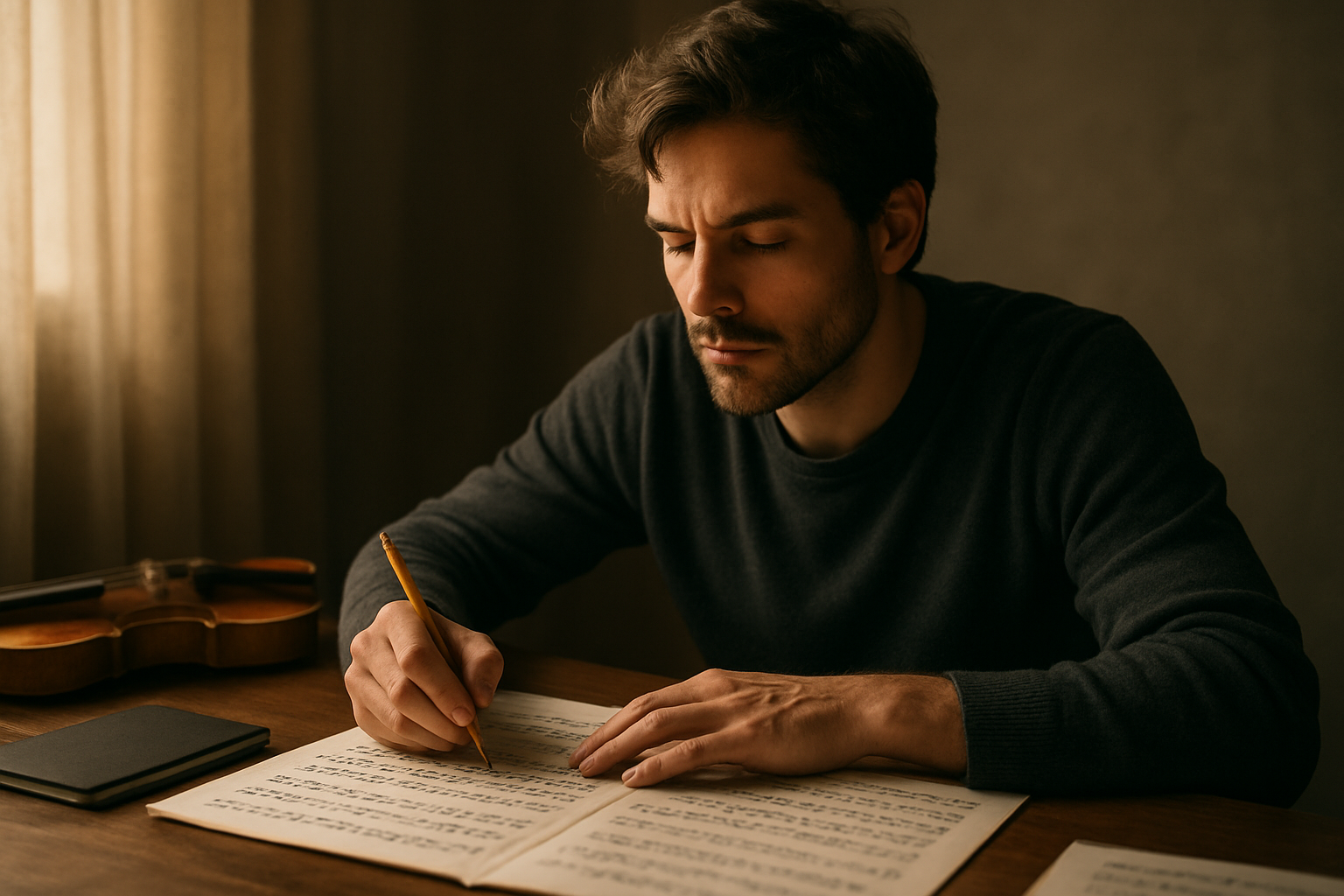
The Composer’s Consciousness: Flow States and Sacred Creativity
In the realm of music composition, there lies a profound intersection between creativity and consciousness. This intersection is characterized by a fascinating state of mind known to many composers and artists: the flow state. Through understanding this state and recognizing the sacred nature of creativity, composers can harness their full potential to produce sublime works that resonate deeply with audiences.
Understanding Flow States in Music Composition
Psychologist Mihaly Csikszentmihalyi first introduced the concept of flow, a mental state where a person is fully immersed and involved in an activity, with a heightened focus and enjoyment in the process. Csikszentmihalyi described flow as a state in which people are so involved in an activity that nothing else seems to matter. He famously stated, “The best moments usually occur when a person’s body or mind is stretched to its limits in a voluntary effort to accomplish something difficult and worthwhile.” (Project Authenticity)
For composers, flow can manifest during intense periods of creativity where time seems to lose its grip, and music flows effortlessly from the psyche. This state is not only crucial for enhancing creativity but also for achieving breakthroughs in musical compositions that go beyond technical expertise.
Characteristics of Flow in Composition
- Loss of Self-Consciousness: During the flow state, composers often experience a detachment from the self, where their identity becomes one with the creation process, allowing for more authentic expression.
- Time Distortion: Time may appear to warp, enabling hours of work to pass in what feels like mere minutes, facilitating long and immersive creative sessions.
- Effortlessness: Tasks seem almost effortless, and ideas flow naturally without the intrusion of doubt or self-criticism, which can stifle creativity.
- Immediate Feedback: Composers receive direct feedback from their work, as they can hear and feel the music taking shape, allowing for on-the-spot adjustments and inspiration.
The Sacred Nature of Creativity
Creating music is often viewed as a sacred act, a process through which composers bridge the gap between the finite limitations of human abilities and the infinite possibilities of the creative cosmos. Music, as an art form, has always been associated with the divine, often believed to be a universal language capable of transcending cultural and emotional boundaries.
“Music is the divine way to tell beautiful, poetic things to the heart.” — Pablo Casals
This sacred aspect of creativity is perhaps why many cultures have rituals surrounding music and sound. It’s a conduit for connection and communion with something greater than oneself, whether that be a spiritual force, the collective unconscious, or simply the mystery of inspiration itself.
How Sacred Creativity Elevates Composers
The awareness of the sacred nature of music not only adds depth to the compositional process but also elevates the composer’s consciousness. By tapping into this sacred creativity, composers may experience:
- Enhanced Intuition: With increased sensitivity, composers may find themselves guided by intuition, accessing ideas and motifs that feel ‘beyond’ themselves.
- Meaningful Expression: Infusing compositions with personal meaning and wider significance, their work resonates more deeply with listeners.
- Transcendent Experiences: Moments of epiphany or revelation that occur during composition can lead to breakthroughs in musical language and form.
Practices to Enter Flow and Sacred Creativity
While both flow states and sacred creativity might seem elusive, there are practices composers can engage in to encourage these states:
- Mindfulness Meditation: Regular practice of mindfulness can enhance focus and the ability to slip into flow more readily during the creative process.
- Ritualistic Approach: Creating a routine or ritual surrounding the act of composition can signal to the mind the sacred nature of the act, helping to prepare for deep creative work.
- Environment Optimization: Designing a space conducive to tranquility and inspiration can help foster the right mindset for creativity.
- Embrace of Spontaneity: Allowing for improvisation and embracing mistakes can lead to unexpected discoveries, enhancing flow and creativity.
Conclusion
The dance between the conscious mind’s engagement and the transcendental reach of sacred creativity defines the experience of many composers. By mastering the art of entering flow states and recognizing the sacredness of their creative endeavors, composers can continually push the boundaries of their art, creating music that speaks to the hearts of listeners across time and space.
In the words of Beethoven, “Music is the mediator between the spiritual and the sensual life.” Approach the process with reverence and openness, and you may find that your compositions not only express personal narratives but also evoke the timeless essence of the human condition.