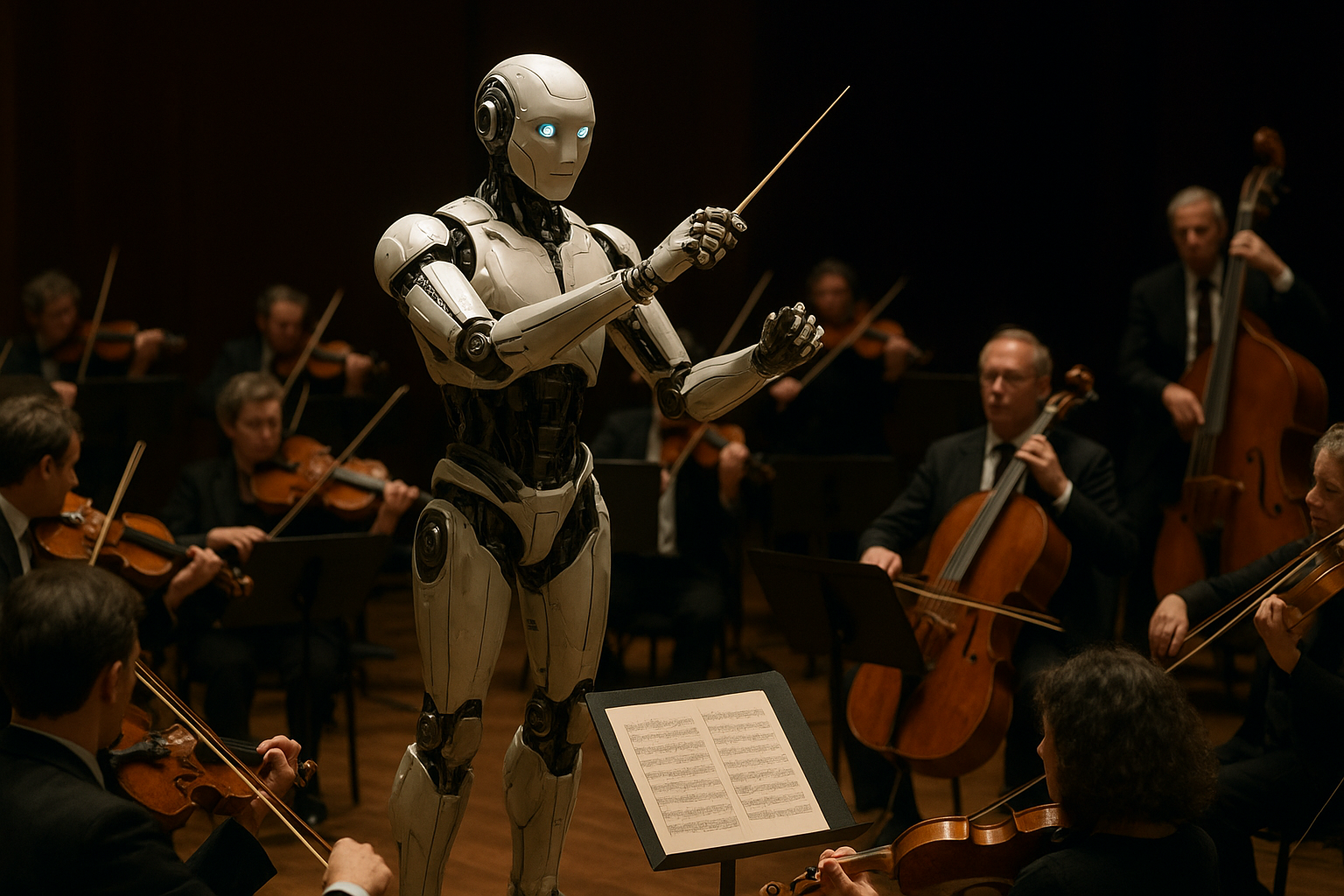
In recent years, artificial intelligence (AI) has found its place within the realms of art and music, creating exceptional and intricate symphonies that rival those produced by human composers. From Bach to Beethoven, the algorithmic echo of a computer program aims to capture human creativity in its code-driven clutches. But how does AI simulate such grand compositions, and what does this mean for the future of music?
A Symphony of Data
To understand AI-composed music, it is crucial to appreciate the vast datasets required for training. Machine learning models learn from tens of thousands of pieces, identifying patterns, harmonies, and the intricacies involved in music composition. This deep learning process allows AI to generate new music pieces that are stylistically similar to the classical greats.
- Training Data: AI absorbs a wide repertoire of existing compositions, learning the nuances of musical scales, tempo, and rhythm.
- Compositional Algorithms: The algorithms utilize neural networks to process and replicate the complex patterns found in renowned symphonies.
- Real-time Adaptation: Machines can simulate compositional processes in real-time, allowing for dynamic and responsive music creation.
The Creators Behind the Code
Several companies and research groups are pioneering AI music. For example, OpenAI has delved into the world of musical AI with its diverse array of projects, exploring AI’s potential to compose music with the emotional depth of a human artist. Their model, DALL·E, known mostly for visual art, sets intriguing precedence for music as well.
Another key player is Sony’s Computer Science Laboratory and their project Flow Machines, which produced “Daddy’s Car,” an AI-generated song inspired by The Beatles. Experiments like these showcase how deeply AI can emulate human-like creativity.
Embracing the Influence of AI
The question arises whether AI-generated compositions can touch the expressive hearts of human listeners. Renowned music professor David Cope once said, “What we’re dealing with is the relationship between the mechanistic and the spiritual.” This delicate balance challenges the traditional beliefs about artistic ingenuity.
“Given that music is both math and feeling, the question is whether computers will ever be able to generate a feeling, and not just a facsimile of one,” noted Mark Swans in The Guardian.
As we venture further into this technological era, AI’s symphonic creations may either enhance human artistry or redefine it. For now, the orchestra within the machine plays on, creating a new harmony between man and technology.