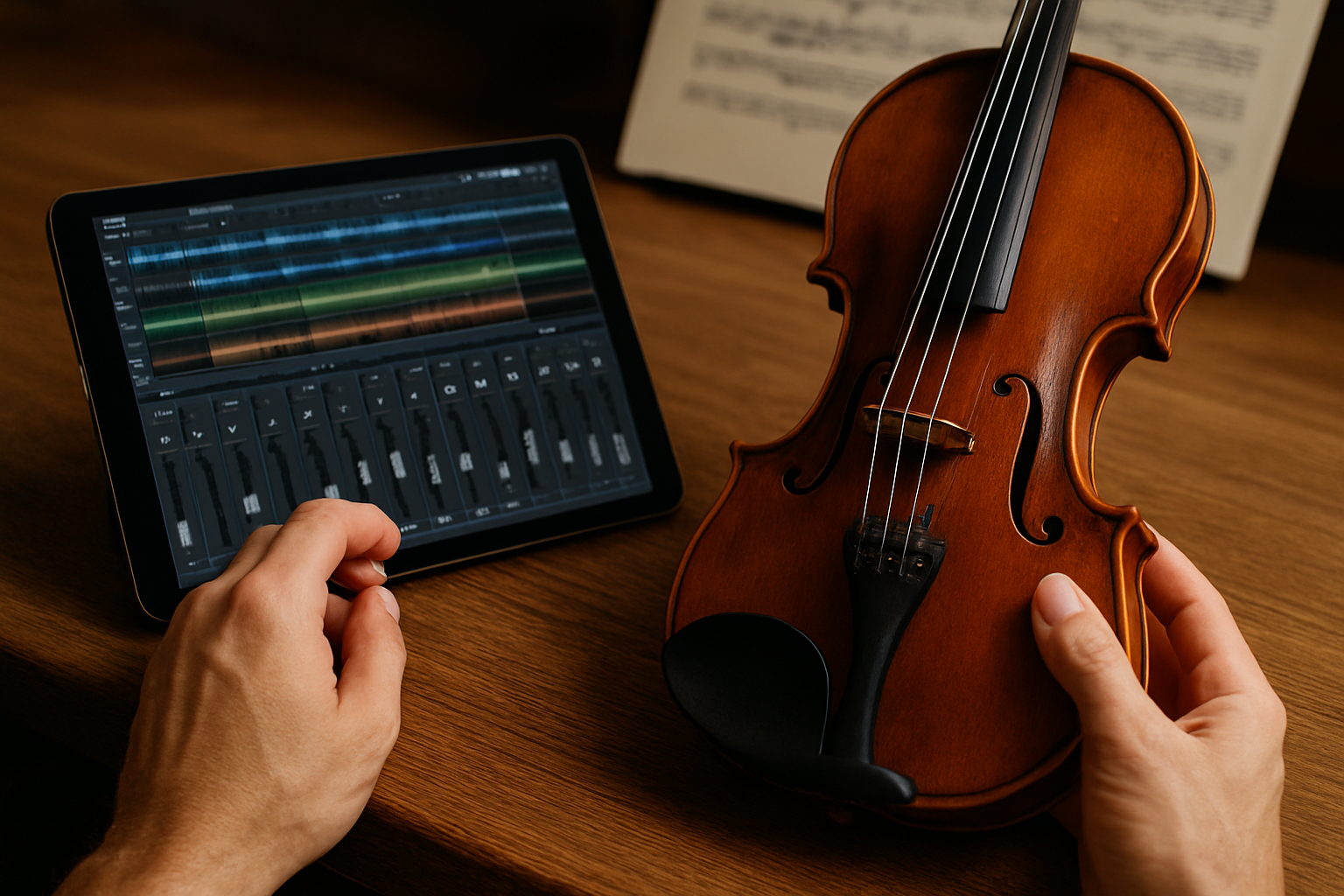
When Technology Becomes Timbre: Digital Tools Shaping Classical Sound
The storied realm of classical music, known for its timeless elegance and profound emotional depth, is undergoing a revolution. In recent years, digital technology has woven itself into the very fabric of classical sound, offering new dimensions to an age-old art form. From composition to concert performance, modern tools are redefining what is possible.
The Digital Symphony: Compositional Innovations
Composers today increasingly harness digital tools to expand their creative potential. Software like Sibelius and Finale allows composers to simulate orchestral sounds with remarkable accuracy, enabling them to experiment with complex arrangements and instrumentation at the click of a button. These platforms not only improve efficiency but also inspire creativity by offering a vast palette of sounds.
“Technology doesn’t just change how we write music, but what music we can conceive,” says Grammy-winning composer Eric Whitacre (MusicTech).
Performance in the Digital Age
The impact of technology goes beyond composition. Digital advancements are reshaping live performances, offering musicians a plethora of new possibilities. Electronic interfaces and MIDI-controlled instruments have made it possible for performers to incorporate previously unimaginable sounds into their repertoire. This fusion of classical and electronic music has given rise to a new genre known as “Electro-Classical.”
Virtual Reality (VR) and Augmented Reality (AR) are emerging as transformative tools in the classical music arena. VR and AR can create immersive concert experiences that engage audiences in novel ways, allowing them to virtually step inside an orchestra or relate more viscerally to the performance. This not only broadens access to live music but can also enhance audience understanding and appreciation.
The Global Stage: Accessibility and Collaboration
The internet and digital platforms have democratized classical music, providing composers and musicians unprecedented access to global audiences. Social media and streaming services like Spotify and Apple Music bring classical music to millions of listeners worldwide, breaking down geographical barriers and inviting new generations to explore the genre.
Additionally, platforms like YouTube and SoundCloud have fostered international collaboration. Musicians across continents can now work together virtually, sharing ideas and innovations as never before. As conductor Marin Alsop notes (NPR), “There are no boundaries anymore. We are all part of a global musical ecosystem.”
The interplay between technology and classical music signifies not just a change in how music is made and consumed, but an evolution in the very essence of the sound itself. As digital tools continue to develop, they promise to further enrich the timbre of classical music, ushering this iconic genre into a resonant future.