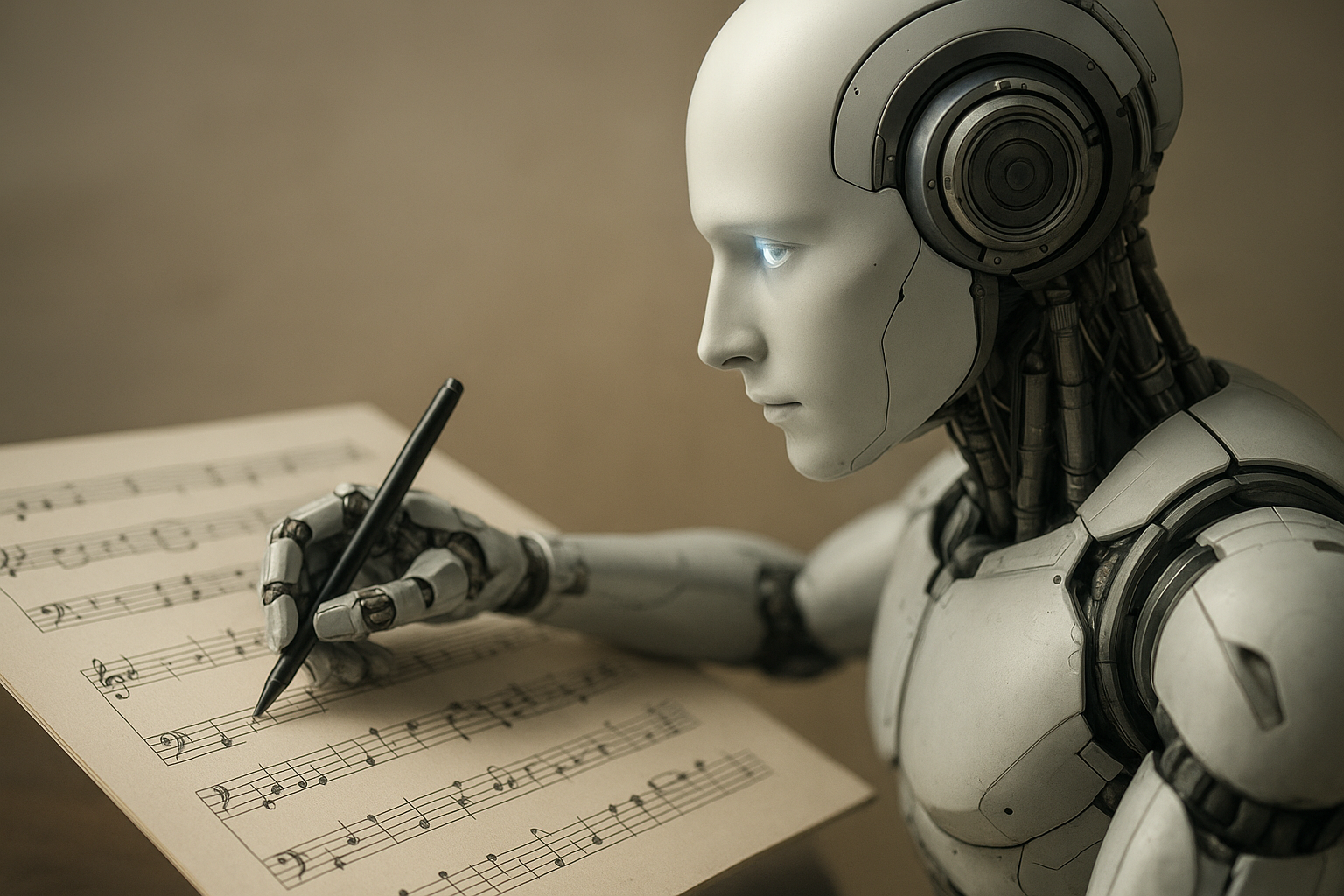
As artificial intelligence continues to weave itself into the fabric of modern society, its applications stretch beyond analytical tasks and into the creative realm. One burgeoning field of experimentation involves AI in the intricate domain of musical counterpoint—a technique where distinct melodic lines are juxtaposed, creating a rich tapestry of sound. Inspired by classical forms, digital minds are now composing polyphonic works, pushing the boundaries of what machines can achieve creatively.
The Art of Counterpoint
Counterpoint, a foundational component of Western music, refers to the relationship between voices that are harmonically interdependent yet independent in rhythm and contour. Johann Sebastian Bach, often hailed as the master of counterpoint, laid the groundwork with his intricate fugues and inventions. These works are characterized by multiple, independent melodic lines that come together to form a harmonious whole.
Incorporating counterpoint into AI compositions requires a nuanced understanding of musical theory and an ability to produce creative variations—challenges that are being addressed through advanced algorithms and machine learning.
AI Experiments in Polyphony
Leading the charge in these experiments are tech giants and dedicated startups alike. Google’s DeepMind, for instance, has been exploring the capabilities of AI in music composition through projects like AlphaGo Zero, repurposed here for the creative domain. By training neural networks on a vast repository of classical scores, these AIs learn not only the structure of counterpoint but also develop the ability to compose new, original music.
Other notable efforts include the OpenAI project, MuseNet, capable of generating four-minute musical compositions with ten different instruments. MuseNet’s designs use a deep learning model trained on a diverse dataset of classical compositions, drawing its inspiration from the likes of Beethoven and Brahms to synthesize unique polyphonic pieces.
Understanding AI Generated Counterpoint
The process behind AI-generated counterpoint involves several layers of complexity. Initially, AI systems are fed extensive databases of music characterized by sophisticated counterpoint. Through supervised learning, these systems analyze patterns, studying how melodies intertwine.
“We teach our AI to understand the fundamental building blocks of counterpoint—rhythm, harmony, and motif development,” explains Dr. Emily Cho, Chief Scientist at PolyMelody Labs, a startup focused on AI compositions.
As AI systems become more adept at understanding these elements, they transition from mere replication to innovation. By employing reinforcement learning, they attempt creative deviations, evaluated based on how well they adhere to prescribed musical rules while still exerting artistic freedom.
Polyphony Beyond Music: Broader Cultural Impacts
While AI-generated counterpoint itself is an exciting development, the broader implications of digital polyphony are significant. They extend into the creation of complex literature and art forms that rely on multiple intersecting narratives or design elements.
- Literature: Projects are underway where AI mimics the structures of polyphonic storytelling, crafting tales with intertwining plots and multiple voice perspectives.
- Visual Arts: Algorithms are being designed to produce art that mirrors the layered complexity of counterpoint through overlapping visual themes and styles.
Debates Around AI Creativity
The advancement of AI in creative fields raises questions about the nature of creativity itself. Scholars and artists debate whether AI can truly create, or merely imitate. According to Dr. Alan Turing’s seminal paper, Computing Machinery and Intelligence, the question parallels his exploration of whether machines can think, reframed as whether they can compose or innovate.
Critics argue that without human-enriched experiences or emotions, AI creations lack the authenticity and depth of human art. Yet, proponents point to AI’s ability to introduce novel, unexpected elements, akin to the deliberate experimentation found in groundbreaking human art.
The Future Ahead
The trajectory of AI in polyphonic composition and beyond promises to reshape the artistic landscape. The fusion of human and machine creativity might produce a new era of art—one that combines objective precision with subjective beauty. As AI continues its foray into the domain of counterpoint and creativity, it beckons us to reconsider the boundaries of artistic expression and to embrace a future where digital and human creativity coexist and flourish.