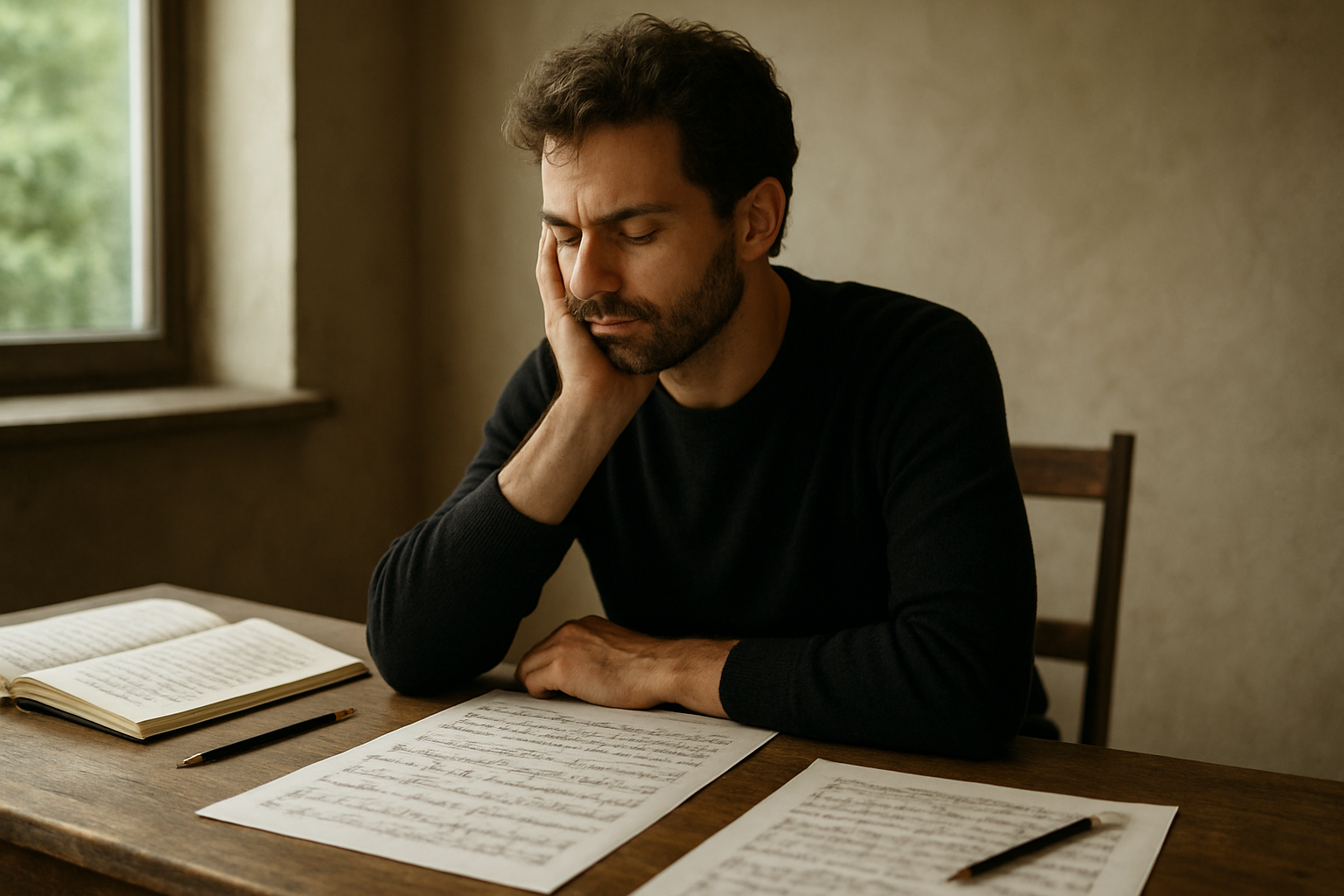
Why Composers Need Silence – The Forgotten Half of the Creative Process
The role of silence in the creative process of composers is an often overlooked but essential aspect. Just as notes and rhythms create the structure of music, silence provides the space to breathe, reflect, and innovate. In this article, we explore the reasons why silence is crucial for composers and how it serves as the other half of the creative process.
The Symphony of Silence
Silence is more than just the absence of sound; it’s a powerful tool that composers use to enhance their creativity. The practice of engaging with silence can lead to profound musical insights and breakthroughs. Leonard Bernstein once said,
“Silence is the ultimate canvas on which musicians paint their masterpieces.”
This metaphor highlights how integral silence is in shaping a composer’s work.
The Science Behind Silence
Research has shown that silence can significantly impact brain function, promoting deep reflection and creativity. A study published in Frontiers in Human Neuroscience describes how silence can stimulate the growth of new brain cells in the hippocampus, a region associated with memory and emotion. This growth may explain why a silent environment can lead to novel compositions and fresh ideas.
Enhancing Creativity
For a composer, creativity is not merely about generating myriad notes; it is about creating a harmonious structure and finding inspiration in unlikely places. Silence offers a blank slate, free from distracting stimuli, allowing the mind to wander and explore new possibilities. Free from the noise, composers can perceive internal sounds that guide them towards authentic musical expression.
Fostering Emotional Depth
Music is a conveyance of emotions, and silence allows composers to tap into their emotional reservoir. Reflecting in silence gives composers the space to internalize their feelings and translate them into music notes that speak to the listener’s soul. Silence provides the calm necessary for self-exploration and emotional depth in musical creation.
The Timing of Silence
For composers, knowing when to embrace silence is as crucial as using the right notes. This timing can ultimately determine the impact of a piece. John Cage, a pioneer of experimental music, famously utilized silence in his work 4’33”, illustrating that silence itself can be music. Cage stated,
“I have nothing to say, I am saying it, and that is poetry.”
Cage’s philosophy underscores that the appropriate integration of silence and sound creates profound musical experiences.
Silence as a Breathing Space
Composers, much like other artists, are susceptible to burnout from continuous creativity. Silence serves as a breathing space that helps prevent mental exhaustion. It provides a retreat from the demands of composition, allowing composers to renew their energy and enthusiasm. Composer Claude Debussy also championed silence, noting,
“Music is the space between the notes.”
This perspective stresses how significant rest and pause are in maintaining the vitality of a composer’s work.
Practical Ways to Embrace Silence
- Meditation and Mindfulness: Composers can incorporate meditation practices to create inner silence and focus. Mindfulness allows composers to clear mental clutter and be present in their creative process.
- Intentional Breaks: Scheduling regular breaks during composition can help maintain a healthy balance between sound and silence.
- Silent Retreats: Participating in silent retreats can immerse composers in a completely tranquil environment, fostering deep introspection.
Modern Challenges and Silence
In today’s world, where distractions are ever-present with technology and social media, finding silence can be particularly challenging. Yet, for composers, intentionally seeking quiet is critical to the creative process. It’s essential to create environments where silence can flourish, whether it’s a quiet studio space or noise-cancelling headphones shutting out the external world.
The Paradox of Silence and Sound
Silence is often seen as the antithesis of sound, but for composers, it’s a vital component of music itself. Silence allows the listener to grasp the nuances and emotional undercurrents of a piece. Thus, composers must learn to navigate this paradox, skillfully weaving silence into sound to enhance the listener’s experience.
Ultimately, silence is not merely a void. It’s a powerful precursor to sound, an essential half of the artistic palette for composers. Embracing silence allows composers to listen to the music within, fostering an environment ripe for creativity, reflection, and innovation, fulfilling their role not just as musicians, but as artists of silence and sound.