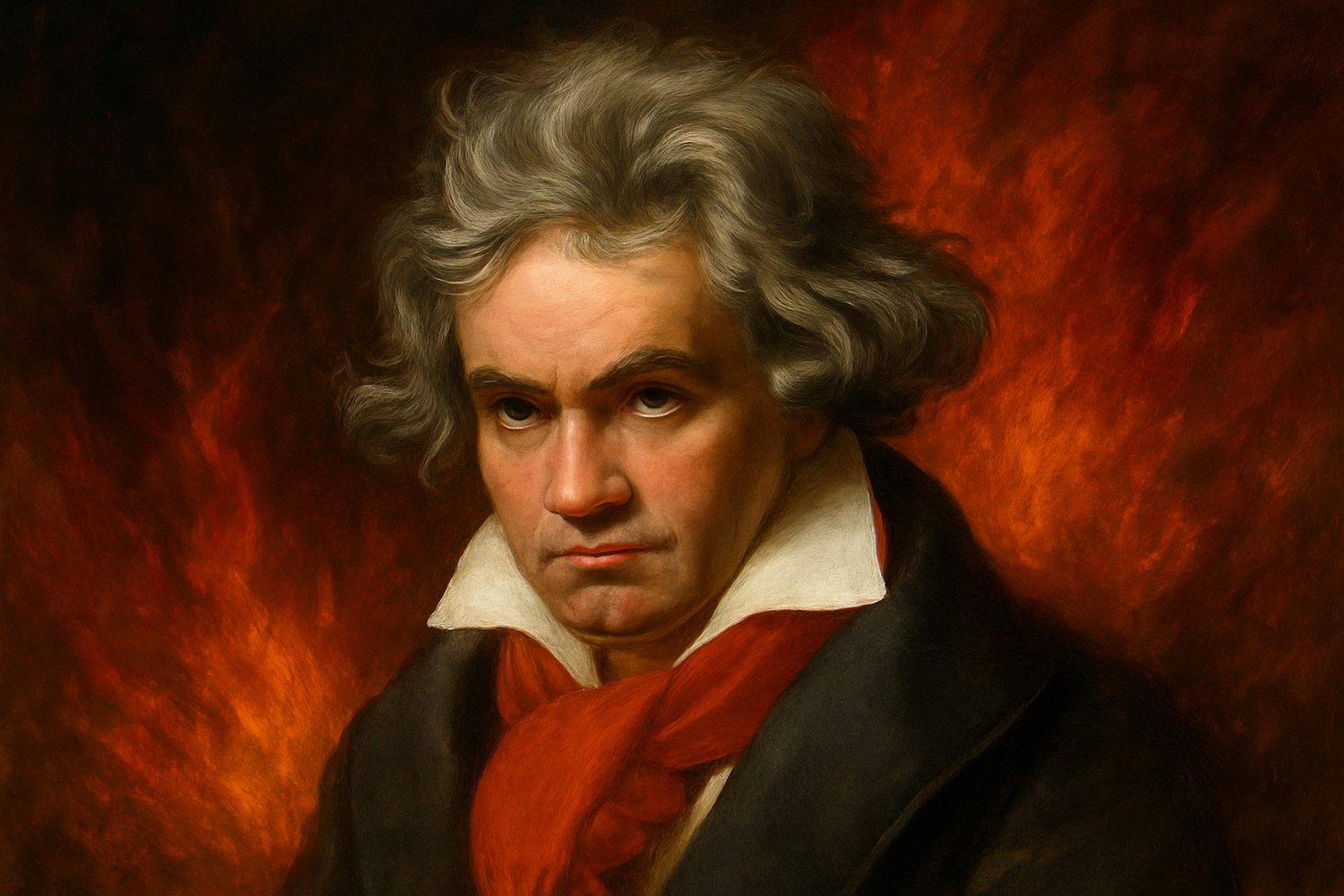
Beethoven’s Spiritual Volcano – The Fire Beneath the Late Quartets
The late string quartets of Ludwig van Beethoven, composed during the last years of his life, stand as both a monumental achievement in Western music and a deep exploration into the human spirit. These works, considered revolutionary and transcendental, were written at a time when Beethoven was completely deaf and facing personal and health challenges. They reflect an inner spiritual tumult akin to a dormant volcano, churning with complexity and emotional depth.
Beethoven’s Journey to the Late Quartets
By the time Beethoven embarked upon his late quartets, his life was marked by profound transformations. He had long moved beyond the stylistic innovations of his earlier works. The late quartets include:
- Op. 127 in E-flat major
- Op. 130 in B-flat major
- Op. 131 in C-sharp minor
- Op. 132 in A minor
- Op. 133 – the “Grosse Fuge”
- Op. 135 in F major
Yet, the striking factor was not merely their innovative composition but the spiritual contemplation that defined their substance. Beethoven’s deeply personal turmoil and spiritual reflections are practically audible. Musicologist Joseph Kerman describes these quartets as “an unbroken line from desperate struggle to spiritual breakthrough.”
Influences and Inspirations
Beethoven’s life during the composition of these quartets was resplendent with both physical and existential challenges. His increasing deafness had stripped tangible musical experience, leaving only his intellectual vision and inner ear. Adding to this was his turbulent personal life, exemplified by legal battles over the custody of his nephew Karl and the persistent ailments plaguing him.
Beethoven’s interest in the philosophical and literary movements of the time infused his work with a deeper existential essence. His affinity for the works of Johann Wolfgang von Goethe, Friedrich Schiller, and Immanuel Kant provided an expansive emotional palette from which he bravely drew.
The Spirit of Experimentation
Contrary to fulfilling the expectations of his contemporaries, Beethoven embarked on an audacious path of structural and harmonic innovation. The Grosse Fuge, originally the final movement of Op. 130, is a shining example of his rebellious spirit. It serves as a testament to Beethoven’s relentless pursuit of evolving musical forms, characterized by extreme complexity and an uncompromising sense of resolution.
“This is not music for bringing the weary soul tranquil peace, but music that compels attention, that makes the hearer witness the birth of an entire new order,” writes Maynard Solomon in his comprehensive biography of Beethoven.
Inner Struggle and Transcendence
The late quartets stand as mythic narratives—each note meticulously crafted to illustrate his internal battleground. For instance, the Adagio of Op. 132, described as a “Holy Song of Thanksgiving from a Convalescent to the Deity,” is a deeply spiritual journey. Its ethereal quality is a reflection of Beethoven’s gratitude after surviving a serious illness, enveloping the listener in its meditative serenity before rising into exuberant relief.
The Legacy of the Late Quartets
Although initially baffling to audiences and players alike, these quartets have, over time, become cornerstones of chamber music repertory. Their success is measured by their ability to continually unveil profound depths to new generations of listeners and musicians. “They seem to me eternal,” noted Igor Stravinsky about them, highlighting their perpetual modernity.
In their timeless nature, the late quartets resonate as powerful testaments to human endurance and resilience. Beethoven’s musical form, like the spirit beneath a volcano, reveals both devastation and rebirth. His late works speak eloquently about the creative spirit’s ability to transcend personal hardship, forever altering the landscape of musical understanding.
The complexity, obscurity, and spiritual insight of these quartets leave a legacy akin to whispers from an ancient god—complex, mysterious, and filled with knowledge beyond its time. Beethoven transformed personal tribulation into artwork that speaks profoundly to the continuity of human inquiry and art’s potential to mirror the furious inner dialogues of the human soul.
Conclusion
The late string quartets of Ludwig van Beethoven not only epitomize a pinnacle of musical genius but also encompass the breadth of human spiritual endeavor under the most arduous circumstances. Emerging from the struggles that Beethoven faced, these works stand as reverberating echoes of a soul that refused to be silent, thus providing a model of resilience and inspiration that continues to ignite passionate discourse among musicians and scholars alike. They confirm Beethoven’s belief, as quoted in a letter to a friend, that “Music is the one incorporeal entrance into the higher world of knowledge which comprehends mankind but which mankind cannot comprehend.”