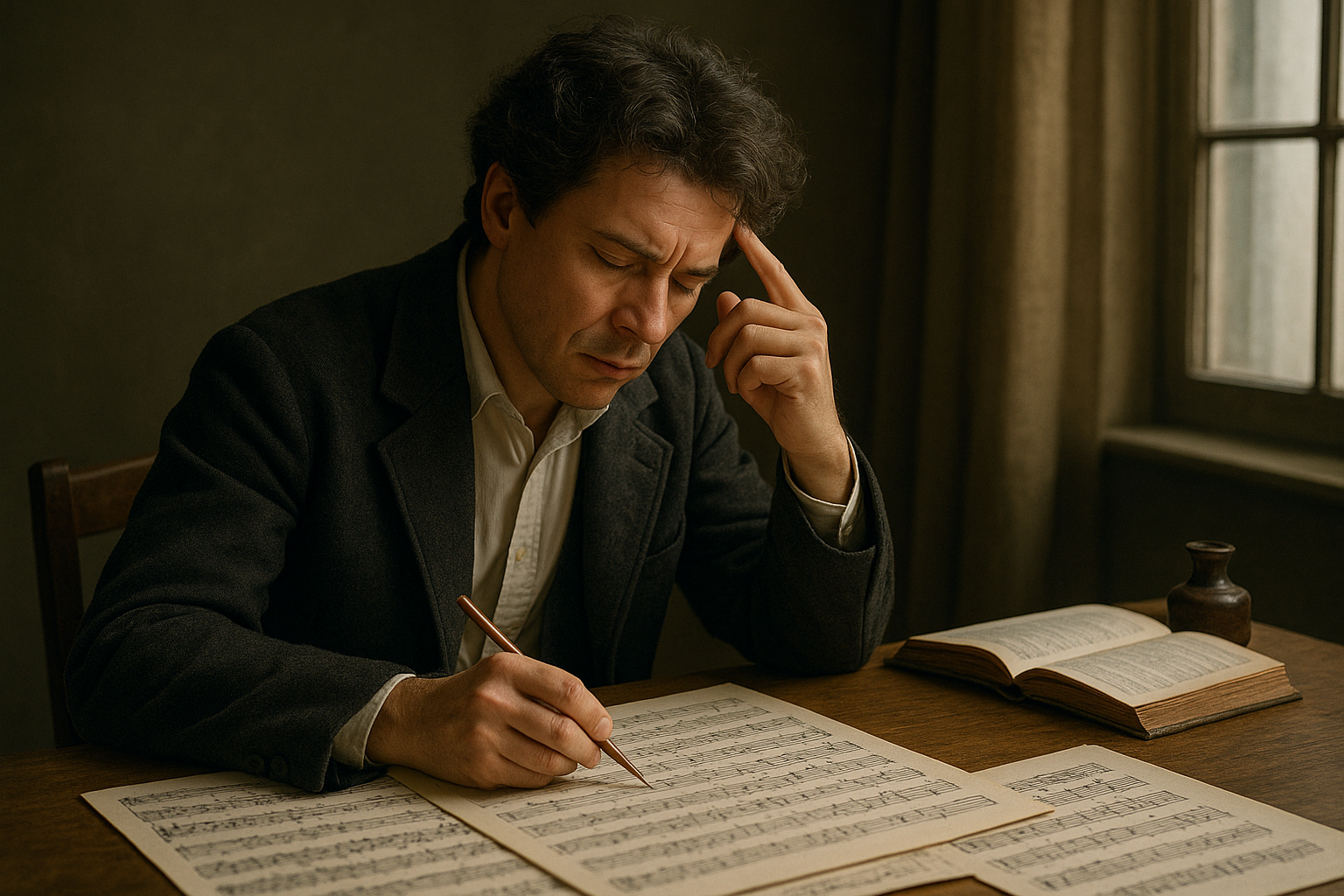
The world of music is a vast ocean of sound that resonates with the deepest parts of the human experience. At the heart of this melodious journey lies tonality, a musical system characterized by the organization of pitches and chords that form the foundation of a composition. The harmonic pilgrimage of composers is a rich, enlightening journey where they delve into tonality to seek truths about the human condition and the cosmos at large.
The Essence of Tonality
Tonality serves as the backbone of Western music tradition, guiding listeners through a structured auditory experience. The concept is rooted in the relationships between notes and chords centered around a tonic or keynote. According to music theorist Carl Dahlhaus, “tonality is the product of the interaction between a tonal center and the relationships it generates” (Studies on Tonal Theory).
Tonal music, deeply embedded in the Western classical canon, creates a sense of expectation and resolution. This sensation of anticipation, tension, and release is what composers have historically used to convey profound emotions and narratives, making the quest for truth through tonality a journey as old as music itself.
Pilgrimage Through the Centuries
- The Baroque Era: During the Baroque period, composers like J.S. Bach explored the possibilities of tonality through intricate counterpoint and harmonic progressions. Bach’s Well-Tempered Clavier stands as a monumental testament to the expressive potential of tonal music, where each prelude and fugue explores a unique emotional landscape through precise harmonic language.
- The Classical Period: As music evolved into the Classical period, figures like Wolfgang Amadeus Mozart and Ludwig van Beethoven expanded tonal boundaries. Beethoven’s Symphony No. 9 in D minor, Op. 125, commonly known as the “Choral Symphony,” uses a tonal framework to navigate themes of struggle and triumph, culminating in the universally uplifting “Ode to Joy,” a profound statement on unity and brotherhood.
- The Romantic Premier: The Romantic era witnessed composers stretching the limits of tonality. Franz Schubert’s harmonic innovations in Winterreise and Richard Wagner’s dramatic chromaticism in Tristan und Isolde represented a yearning for emotional depth and transcendence. Wagner’s use of the “Tristan chord” is often cited as a significant step towards the dissolution of traditional tonality.
“The emotional power of music is fundamentally reliant on its tonal framework, which not only structures our listening experience but also our emotional responses.” — Leonard Meyer, Emotion and Meaning in Music
Modern Reflections and Tonal Expansion
As the 20th century dawned, the harmonic voyage took on revolutionary dimensions. Composers like Arnold Schoenberg began to question and even reject traditional tonality, leading to the development of the twelve-tone serialism technique. Schoenberg’s approach was revolutionary, seeking truth not within the comfortable confines of a tonal center but in its absence, creating a new realm of musical expression.
Contrastingly, other composers found ways to reinterpret tonality to reflect modern concerns. Igor Stravinsky’s neoclassicism reintegrated tonal principles while infusing them with contemporary vitality, as seen in his ballet, The Firebird. Stravinsky himself professed, “I do not only obey rules, I create them,” underscoring how tonality is both a structure and a springboard for innovation (Encyclopaedia Britannica).
Philosophical Dimensions of Tonality
Tonality, for many composers, is a philosophical voyage as much as a musical one. It represents a search for meaning and a reflection on the human state. So profound is its impact that music theorist Leonard B. Meyer postulated that tonality affects listeners both intellectually and emotionally. He wrote, “Tonality endows a piece of music with a sense of time and place, creating a musical ‘home’ for the listener” (Leonard B. Meyer).
Conclusion: Continued Exploration
The harmonic pilgrimage is an ongoing journey. Modern composers continue to explore tonality in ways that reflect contemporary issues. Artists such as Arvo Pärt use minimalist tonal approaches to evoke profound spirituality, while composers like John Adams employ a blend of tonality and innovation in works such as Shaker Loops to resonate with a modern audience.
Ultimately, the pilgrimage through tonality illuminates how composers strive to articulate complex realities and emotional truths. As music evolves, the interplay of tradition and innovation ensures that this quest remains eternally vibrant, promising new horizons for both creators and listeners alike.
“Music is the shorthand of emotion.” — Leo Tolstoy
Through the symphonies, operas, and contemporary compositions, the harmonic pilgrimage manifests as an exploration of the depths of tonal possibilities, perpetually seeking and revealing truth through the universal language of music.