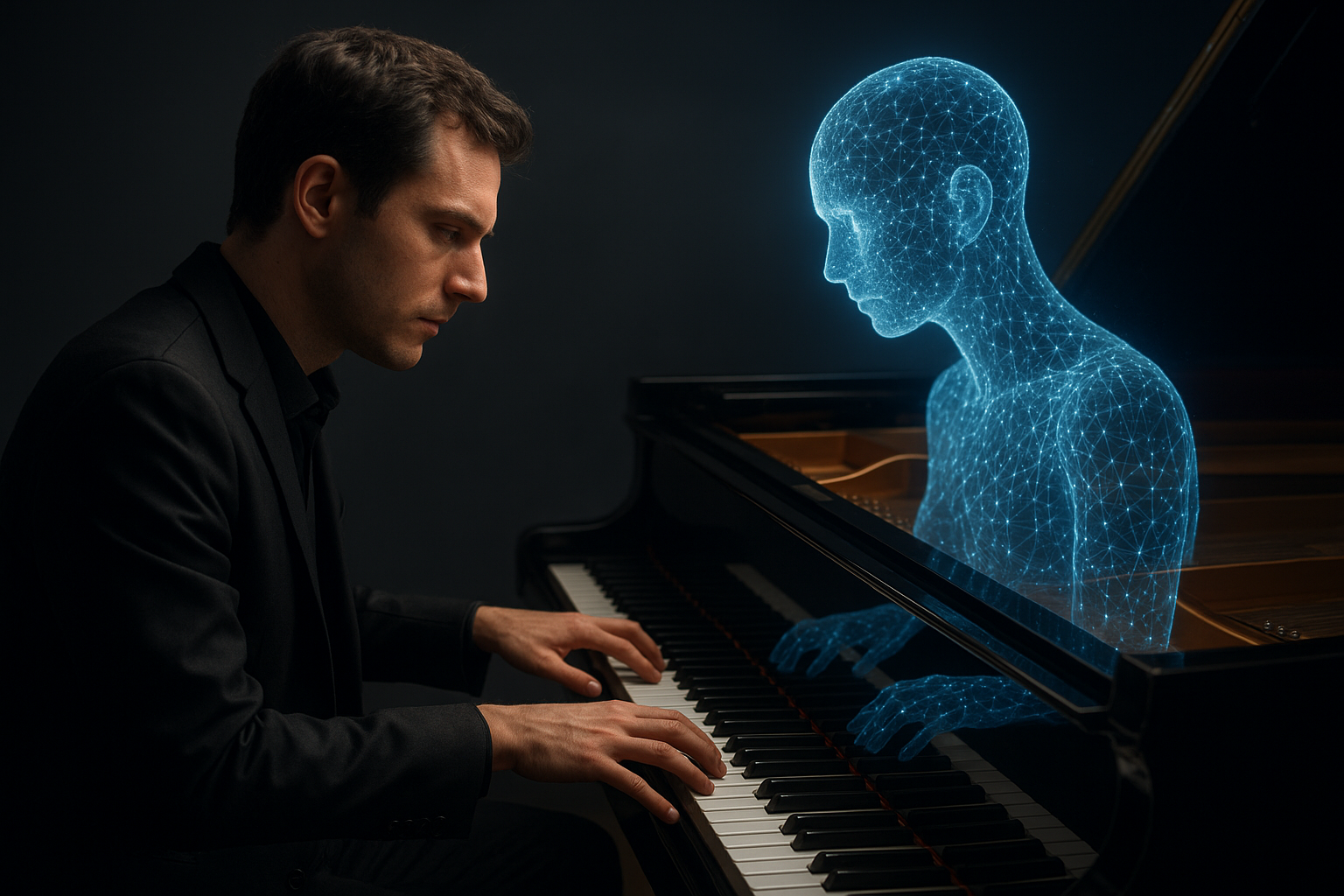
As artificial intelligence (AI) continues to weave itself into the fabric of arts and culture, a pivotal question emerges: can AI achieve true interpretive depth? This inquiry isn’t just about AI’s ability to mimic human creativity, but rather if it can reach the profound levels of understanding and expression that define human artistry.
AI’s capability to generate, analyze, and interpret artistic pieces has grown exponentially. With systems like OpenAI’s GPT-3 and DALL-E, the digital realm has witnessed remarkable feats—poems, paintings, and even symphonies crafted by algorithms. However, the question of interpretive depth extends beyond mechanical output to the realm of emotional resonance and human-like understanding.
The Anatomy of Interpretation
Interpretive depth involves a complex interplay of cultural context, emotional intelligence, and personal worldview. Roger Ebert, a renowned film critic, noted that “It’s not what a movie is about, it’s how it is about it.” (Source) This observation underlines the essence of artistic interpretation as not merely data processing but as a nuanced engagement with the infinite subtleties of human experience.
Current AI systems, as advanced as they are, primarily operate on algorithms that lack the lived experience that shapes human perception. The ability to understand irony, subtlety, and deeply rooted cultural symbols remains largely nascent for machines.
AI’s Contributions and Limitations
Simon Colton, a British computational creativity researcher, suggests that AI’s role in art is not to replace human creativity but to augment it. He states, “AI can help artists by providing new kinds of paints to work with.” (Source) AI excels in pattern recognition and can certainly illuminate new pathways for exploration that might otherwise remain unseen by the human eye.
- Pattern Recognition: AI can analyze vast datasets to identify trends and patterns that may inspire artists.
- New Perspectives: By generating unexpected combinations, AI can challenge human preconceptions.
The Future of AI in the Arts
As AI continues to evolve, its potential to develop a form of non-human interpretive depth becomes an intriguing possibility. If AI can learn to appreciate context and foster an understanding of emotions and cultural nuances, it might transcend its current limitations.
The journey of AI in achieving true interpretive depth will likely involve collaboration with human creators, who can provide the emotional and contextual frameworks that machines currently lack. As AI tools become more sophisticated, they have the potential to enrich the tapestry of human creativity rather than mimic it.
“The real question is not whether machines think but whether men do.” – B.F. Skinner