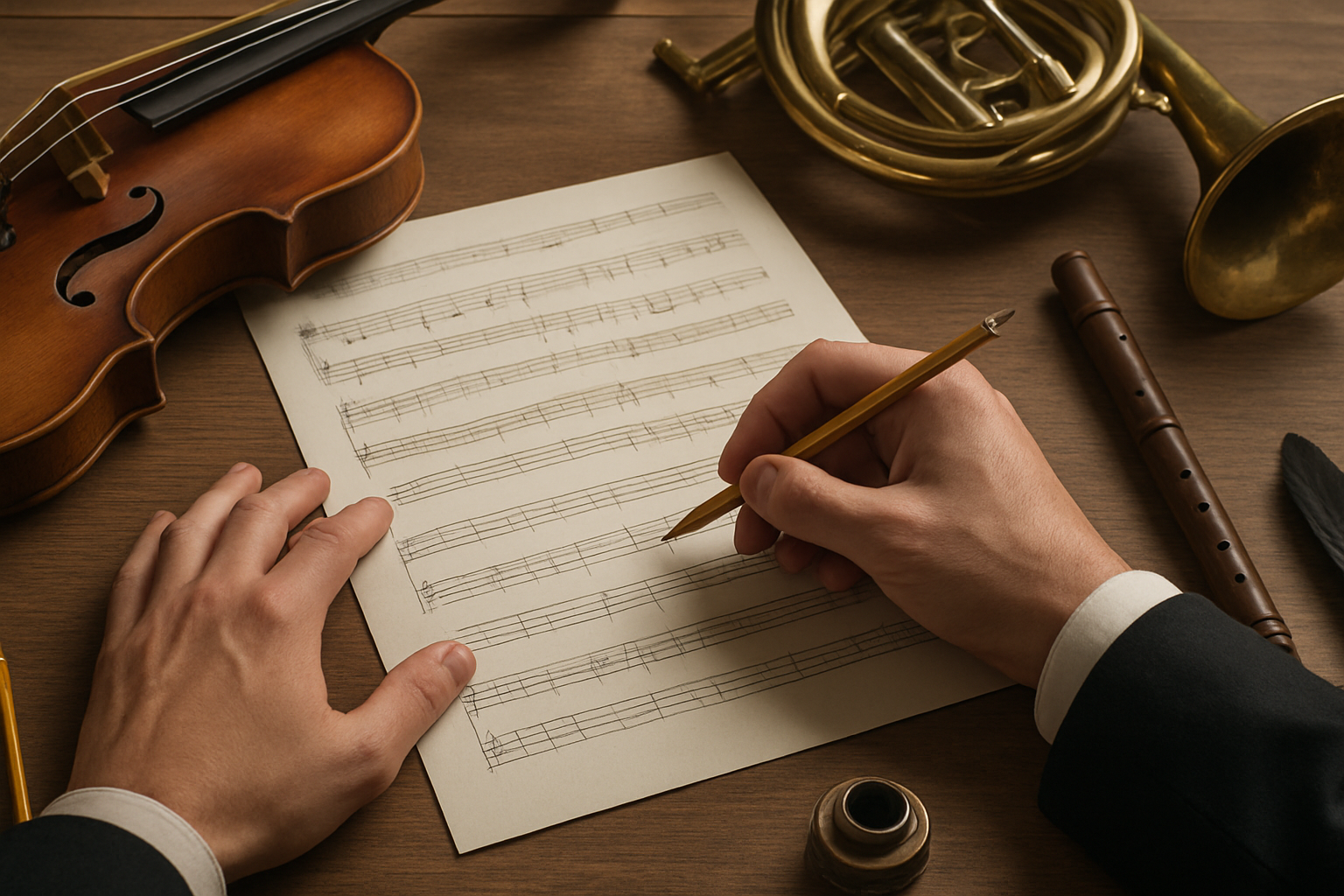
Creating a classical composition is much like painting a rich, immersive landscape with sound. Just as a painter layers hues and tones, a composer layers sonic textures to evoke emotion and a sense of place.
Understanding how to design these sound worlds is essential for any composer eager to craft pieces that captivate and resonate with listeners. Below, we explore some key principles to consider when designing sonic texture within classical music.
The Importance of Sonic Texture
Sonic texture in music refers to how the tempo, melody, and harmony are interwoven. It is crucial for creating an emotional landscape and guiding the listener’s journey through a piece. As Leonard Bernstein aptly put it, “The best way to ‘think’ a piece of music is through its texture.”
Exploring Textural Density
- Monophonic Texture: Simple yet powerful, this involves a single line of melody without any harmonic support. It resonates with the purity found in Gregorian chants.
- Polyphonic Texture: Involves multiple, independent melodies occurring simultaneously. Think of J.S. Bach’s fugues, where each voice is distinct yet harmoniously interwoven.
- Homophonic Texture: This style features a primary melody supported by chords, common in many classical symphonies and operas.
- Heterophonic Texture: Here, variations of the same melody are played simultaneously, offering a more complex listening experience.
Painting With Instrumental Timbre
The choice of instruments greatly affects the texture of a piece. As Claude Debussy once remarked,
“Music is the space between the notes.”
The spaces created by distinct timbres can define the mood and clarity of your composition.
- Experiment with Unconventional Instrument Combinations: Combining unusual instruments can highlight distinctive timbres and textures.
- Utilize Instrument Roles Effectively: Strings may carry the emotive thread, while woodwinds brighten the sonic landscape. Percussion can add unexpected depth and complexity.
Sonic Space and Dynamics
Dynamics also play a pivotal role in enriching the sonic texture. Carefully consider the use of crescendos, decrescendos, and silence to add drama and shape to the musical narrative.
Crafting classical sound worlds through texture is an art form that offers endless possibilities for creative expression. By exploring different textures and the diverse timbres available through an orchestra, composers can unlock the true potential of their musical storytelling.
For composers looking to bring their pieces to life, understanding these elements is not simply beneficial; it’s transformative.