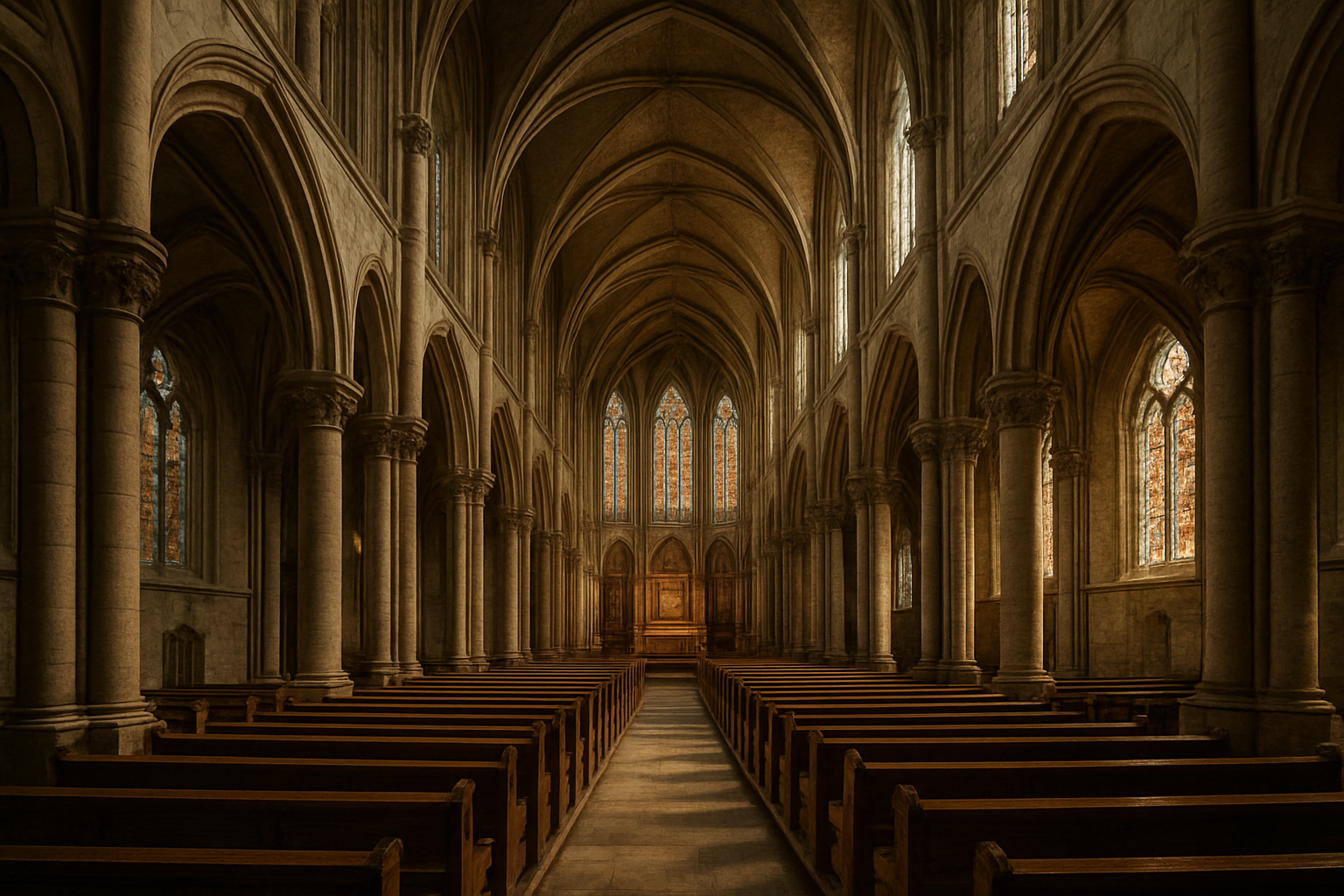
The world of classical music is often compared to grand architectural structures. Like the soaring ceilings and intricate designs of cathedrals, classical compositions are built with precision and reverence. These majestic creations, scored on paper, echo through time, connecting us with the minds of the music architects. This intricate process of musical construction goes beyond mere notes, transforming them into profound experiences akin to walking through a vast, echoing cathedral.
The Foundations: The Tonal Blueprint
Every grand work, whether cathedrals of stone or symphonies of sound, begins with a solid foundation. In music, this is provided by tonality. The tonal center acts much like a foundation stone, anchoring the entire structure. Johann Sebastian Bach, a master of tonal architecture, often used the interplay of harmonies to create resounding structures.
“I was obliged to be industrious. Whoever is equally industrious will succeed equally well.” – Johann Sebastian Bach
Bach’s industrious approach to the use of counterpoint offers clear parallels to the architectural buttresses of cathedrals, where each line of music supports another, crafting an intricate web of sound.
Structure: Musical Blueprints and Form
Just as architects use blueprints, composers rely on musical forms to give shape to their creations. Forms such as sonata-allegro, minuet and trio, and rondo serve as the structural templates upon which melodies and harmonies are built.
- Sonata Form: Often used in the first movements of symphonies, it consists of three main sections: exposition, development, and recapitulation. Ludwig van Beethoven revolutionized this form, using it to convey a narrative journey.
- Fugue: A compositional technique that builds complex structures with interwoven melodies. Bach’s “The Art of Fugue” remains a testament to the complexity and architectural beauty that can be achieved through mastery of form.
- Symphony: A full-scale architectural undertaking, symphonies are akin to musical cathedrals themselves. They encompass a wide range of emotions and themes, demonstrating the vast potential of orchestral architecture.
The Building Blocks: Themes and Motifs
At the core of classical music’s architectural brilliance lies the thematic material—small melodic fragments that composers craft into grand edifices. Just as stained glass pieces combine to depict biblical stories, motifs unite to tell musical narratives.
Take Ludwig van Beethoven‘s Symphony No. 5. The iconic four-note motif (“da-da-da-DUM”) serves as the cornerstone, recurring throughout and structuring the work. These motifs are akin to the repeated patterns and structures in Gothic cathedrals, such as rose windows or elaborate stone carvings.
The Ornamentation: Dynamics and Expression
Ornamentation in music, much like the embellishments of a cathedral, adds emotional depth and complexity. Dynamics (the volume changes in music) and expressions (how notes are played) create contrast and interest.
- Crescendo and Decrescendo: Gradual increases and decreases in volume parallel the rising arches and descending vaults in cathedrals, guiding listeners through a transformative journey.
- Articulation: Techniques such as staccato and legato offer texture and motion, much like the intricate carvings on cathedral columns that tell their own stories.
Unity and Diversity: The Role of the Orchestra
In the orchestral realm, composers arrange a plethora of instruments to achieve a rich, sonorous harmony, akin to the interplay between light and shadow in a cathedral. Each instrument’s voice contributes to the overall tapestry, whether through the resonant strings that provide warmth or the clarion call of brass that commands attention.
Understated yet essential is the role of wind instruments, often highlighted in great cathedrals by the sound of the organ. Composers like Wolfgang Amadeus Mozart mastered this interplay, weaving together textures and colors with a deft hand.
In the words of Leonard Bernstein during his offering on the “Unanswered Question: “
“Music can name the unnameable and communicate the unknowable.” – Leonard Bernstein
The Nuanced Acoustics: Harmony and Resonance
Acoustics, the final pillar of musical architecture, play a significant role in both cathedrals and symphonies. Just as the stone arches and domes of a cathedral shape the flow of sound waves, so do the harmonies within a composition determine its resonance.
- Chord Progressions: These provide stability or create tension, much like the support beams and arcs within physical architecture. Romantic composers like Franz Schubert and Frédéric Chopin leveraged harmonies to evoke profound emotional landscapes.
- Overtones: Natural resonances that contribute richness to a piece, akin to sunlight filtering through a cathedral’s stained glass. The use of overtones in music enhances the sonic tapestry, infusing it with an ethereal quality.
Conclusion: The Everlasting Edifice
In the silence that follows the final note of a symphony, there lingers a profound realization of having traversed a mighty edifice—a musical cathedral built by the greats of classical composition. As listeners, we are privileged participants, inhabitants for a time of these vast, sonorous spaces.
The legacy of composers like Bach, Beethoven, and Mozart lives on, echoing through concert halls just as cathedrals have for centuries stood testament to human ingenuity and spirit. These sound architects have crafted structures that, rather than remaining as stone and mortar, have the power to transcend time and space, existing perpetually in the hearts and minds of those who listen.
Such is the silent architecture of melody – a testament to the enduring power of music to build and rebuild, time and again, the towering cathedrals of the soul.