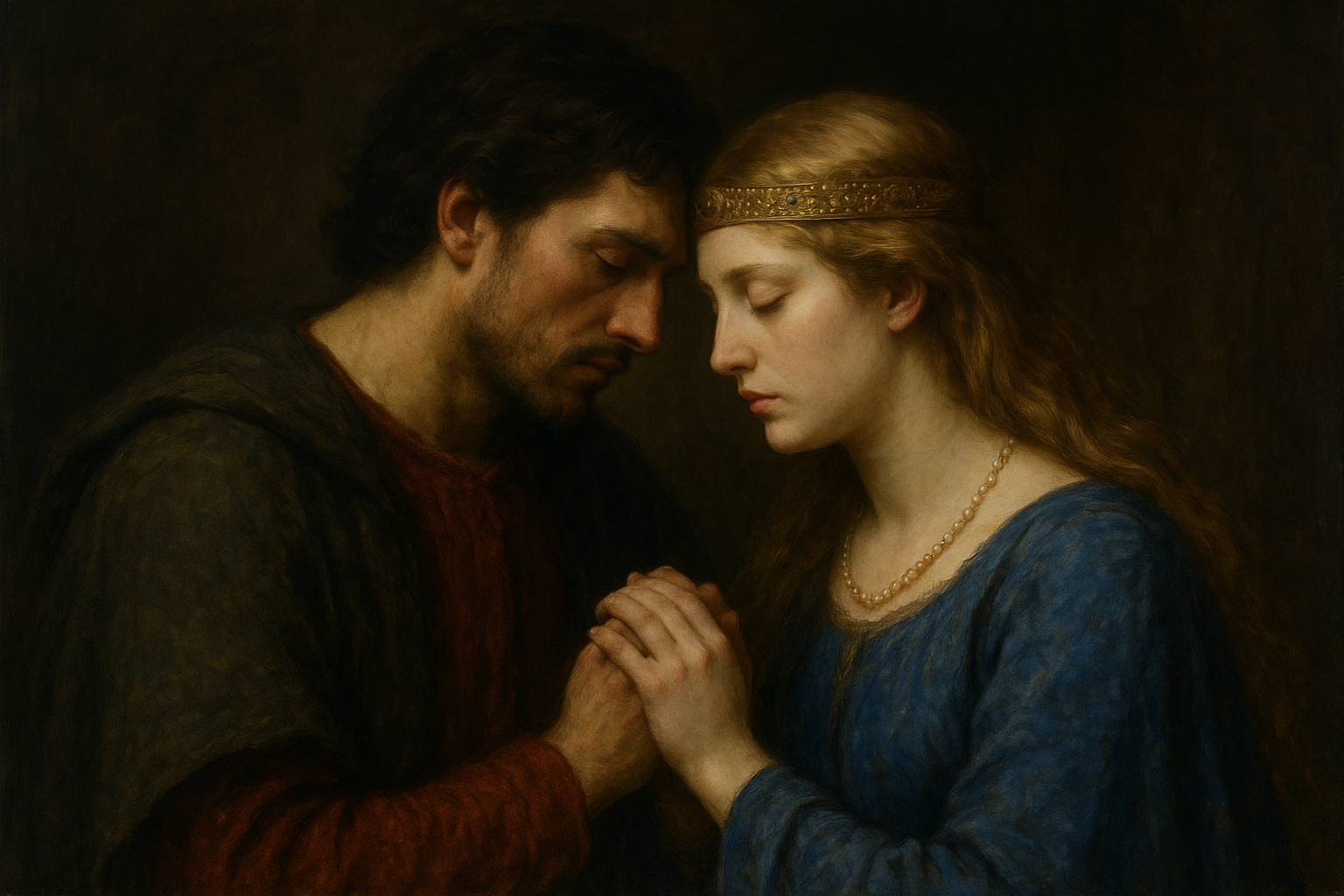
Tristan und Isolde: Wagner’s Revolutionary Harmony and the ‘Tristan Chord’
Richard Wagner’s opera Tristan und Isolde is often hailed as a pivotal moment in the history of Western music, primarily due to its groundbreaking approach to harmony. At the heart of this transformation is the famous ‘Tristan Chord,’ a musical moment that forever changed the landscape of classical music.
The Genesis of Tristan und Isolde
Composed between 1857 and 1859, Tristan und Isolde is a dramatization of the medieval romance between Tristan, a Cornish knight, and Isolde, an Irish princess. Wagner, already known for his ambitious and expansive operas, pushed the boundaries of musical storytelling in Tristan, utilizing music to evoke a world of deep psychological and emotional complexity.
According to Encyclopaedia Britannica, Wagner’s desire to create a more profound emotional experience led him to experiment wildly with harmonic language. This experimentation is most vividly embodied in the ‘Tristan Chord.’
The Tristan Chord: A Breakdown
The ‘Tristan Chord’ appears in the opera’s prelude and comprises four notes: F, B, D♯, and G♯. This chord is neither a straightforward major nor minor chord but suspends resolution, creating a profound sense of longing and tension. In the context of Tristan und Isolde, this tension echoes the unfulfilled yearning that defines the lovers’ tragic romance.
“The chord is remarkable because it is the first instance of atonal harmony in a functional tonal context,” notes Classical Music Magazine.
- F: The root note that establishes the foundation.
- B: Adds a dissonant tension, suggesting movement.
- D♯: Intensifies the discord, elevating the complexity.
- G♯: Offers a chromatic pull, resolving nowhere as it enhances suspense.
The Impact on Music
The ‘Tristan Chord’ didn’t merely serve as a novel harmonic tool; it laid the groundwork for future composers to explore new harmonic territories. The chord’s ambiguity and unresolved nature questioned the very principles of traditional harmony established in the classical era. It anticipated many of the developments in late 19th and early 20th-century music, leading to the avant-garde explorations of composers like Arnold Schoenberg and Igor Stravinsky.
Schoenberg, the father of twelve-tone music, considered Wagner a significant influence, particularly because Wagner’s work “broke the tyranny of tonality,” as described in The Schubertline.
Enduring Legacy
Today, the ‘Tristan Chord’ continues to be analyzed and revered for its innovative approach. It stands as a symbol of a critical transition in music from Romantic expressiveness toward Modernist abstraction. Wagner’s use of leitmotifs, or recurring musical themes, further solidified his position as a pioneer, influencing how music could tell the story in an operatic context.
A performance of Tristan und Isolde is often seen as both a technical and emotional challenge for any opera company, a testament to its complexity and depth. The opera’s orchestration and vocal demands are immense, requiring a profound understanding of Wagner’s musical vision.
Conclusion
In sum, Tristan und Isolde and its exemplary ‘Tristan Chord’ mark a watershed moment in music history. By challenging and ultimately expanding the vocabulary of harmony, Wagner paved the way for an era of musical exploration and innovation. For composers, musicians, and audiences alike, the legacy of Tristan und Isolde endures, embodying the perpetual human quest for expression and understanding through music.
As Richard Wagner himself suggested, music is a “magic key” that opens the door to human emotions and consciousness. Indeed, with the introduction of the ‘Tristan Chord,’ Wagner unlocked that door, inviting us into a world of unparalleled emotional depth and complexity.