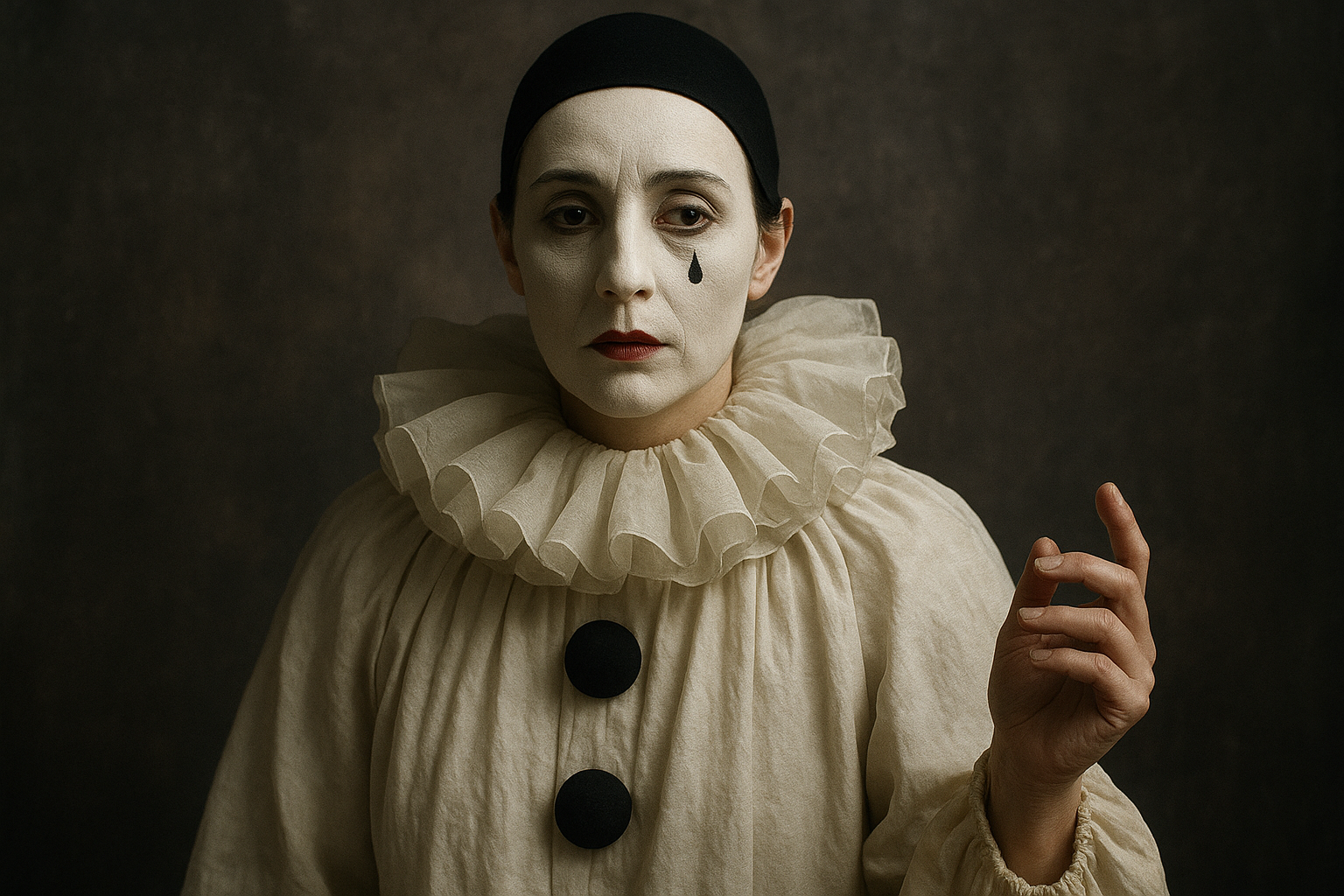
Exploring Pierrot Lunaire: Schoenberg’s Expressionism and Sprechstimme
Arnold Schoenberg’s Pierrot Lunaire, a landmark in 20th-century music, stands as a quintessential example of expressionism—a movement that sought to convey the deep, often chaotic, inner emotions of the human mind. Composed in 1912, Pierrot Lunaire is a cycle of 21 songs written for voice and chamber ensemble, based on poems by Albert Giraud. At its core, the work explores themes of madness, alienation, and fantasy, all through the eyes of the moonstruck Pierrot, a figure rooted deep in the tradition of the commedia dell’arte.
The Character of Pierrot
Pierrot, the melancholy clown, has been an enduring symbol in art and music, representing the complexities of human emotion and the tragicomic interplay of personal narratives. Schoenberg’s Pierrot deviates from traditional depictions by diving deep into the psychological and surreal facets of the character.
Expressionism in Music
Expressionism, prominent in early 20th-century art and literature, was characterized by the distortion of reality to evoke moods or ideas. In music, expressionism eschews traditional forms and structures, focusing instead on atonality and unconventional harmonies. Schoenberg was at the forefront of this movement, a pioneer of atonal music and later, dodecaphony. As Schoenberg himself remarked, “My works are twelve-tone compositions, not particularly easy to understand; where supported by poetry, they are easier to perceive and less readily accepted.”
Sprechstimme: The Voice of Madness
One of the defining characteristics of Pierrot Lunaire is its use of sprechstimme, a vocal technique that’s neither spoken nor sung. Mary E. Davis in the Journal of the American Musicological Society describes it as a “cross between speech and song,” allowing for an exaggerated emotional and psychological expression in the performance.
The enigmatic quality of sprechstimme contributes to the fragmented and nightmarish atmosphere of the work, blurring lines between elocution and melody.
The Legacy of Pierrot Lunaire
With Pierrot Lunaire, Schoenberg has influenced countless artists beyond the realm of music, with its haunting aesthetics resonating through to modernist and post-modernist artistic expressions. The work remains a cornerstone in the study of how music can serve as a vessel for intense emotional and psychological exploration.
As scholars continue to dissect the nuances and innovations of Schoenberg’s work, Pierrot Lunaire remains an iconic piece illustrating the transformative power of music guided by the principles of expressionism. It challenges its audience to confront discomfort, emotion, and the vast potential of avant-garde artistry.