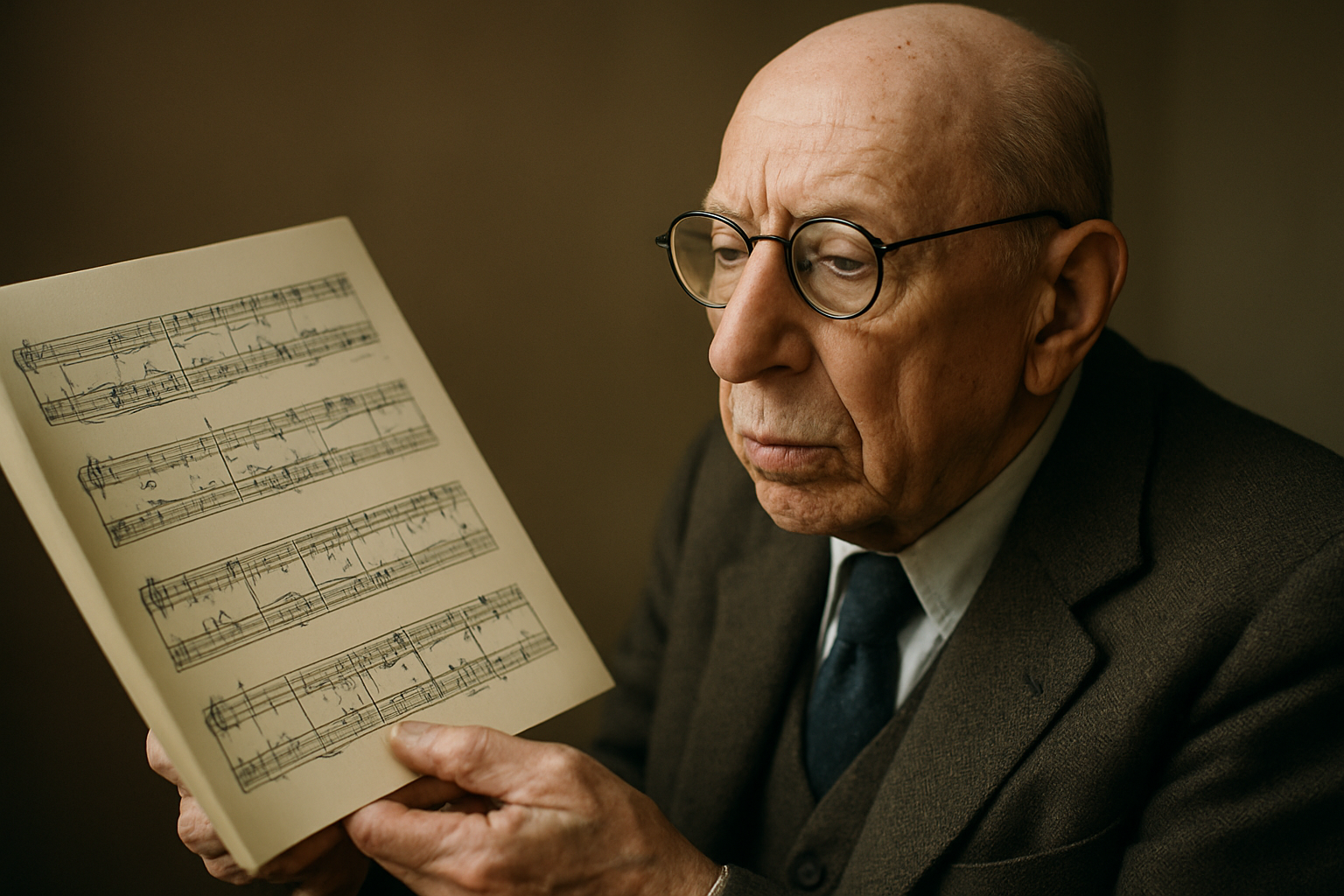
Stravinsky’s Neoclassicism: Analysis of Pulcinella‘s Score
Igor Stravinsky’s ballet Pulcinella, composed in 1920, marks a pivotal moment in the composer’s career, heralding his shift towards neoclassicism. This piece, which premiered in Paris, reflects Stravinsky’s inventive intellect and his engagement with musical forms of the past, introducing his audience to a revitalized interpretation of traditional styles.
Historical Context
Commissioned by the famous impresario Sergei Diaghilev, Pulcinella was initially conceived as a reimagining of works attributed to the Italian composer Giovanni Battista Pergolesi. However, Stravinsky’s approach went beyond mere pastiche.
“Stravinsky had the audacity to reinterpret eighteenth-century music with the keenest appreciation for its value and a modern twist, bringing the elements into juxtaposition.”
Musical Analysis
- Thematic Material: Stravinsky utilizes melodies that evoke the Baroque and Classical styles, yet his orchestration and rhythmic alterations introduce playful modern dissonances. This effect respects the source material while simultaneously transforming it.
- Instrumentation and Orchestration: Stravinsky’s choice of a small chamber orchestra allows for clarity and transparency. Throughout Pulcinella, he assigns expressive solo lines to various instruments, echoing the structural balances typical of earlier musical forms.
- Rhythmic Transformations: The score is notable for Stravinsky’s exploration of syncopation and meter changes, something absent in original Baroque compositions. Such rhythmic vitality adds an unexpected liveliness to the work.
Legacy and Impact
Pulcinella paved the way for subsequent neoclassical works by Stravinsky, demonstrating an enduring fascination with revisiting and reconstructing musical canons. According to Richard Taruskin in his article for Journal of the American Musicological Society, “Stravinsky’s neoclassicism became a fulcrum through which the modern mastery of form was articulated.” This duality—honoring tradition while pushing the boundaries of innovation—has defined much of Stravinsky’s influence on 20th-century music.
The success of Pulcinella reinforced Stravinsky’s status as a leading figure in contemporary music and as a pioneer of the neoclassical movement. His adept synthesis of past and present musical ideas not only captivated audiences but also inspired composers who followed, establishing a new paradigm within the evolving landscape of classical music.