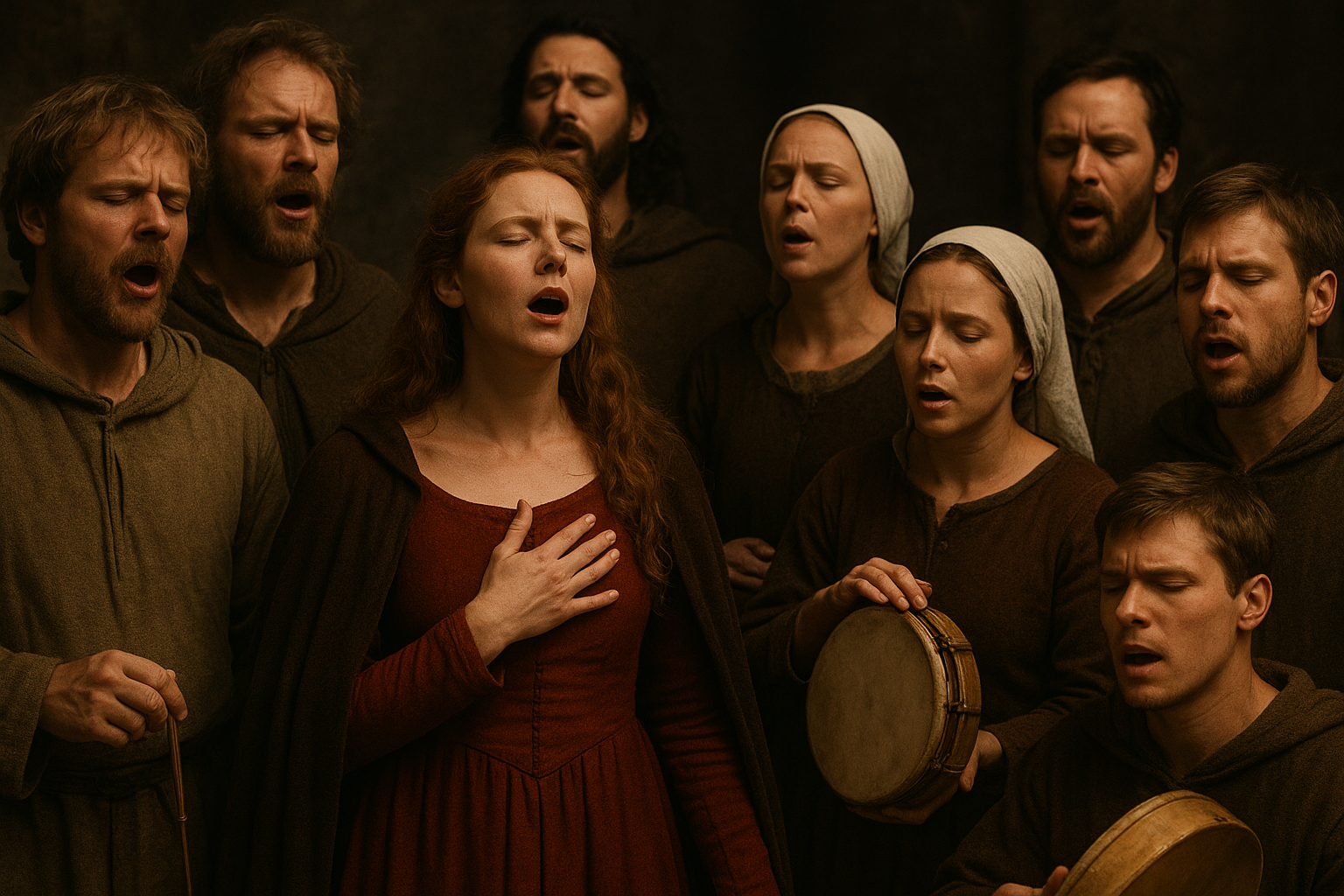
Carmina Burana: Orff’s Primal Rhythms and Medieval Poetry
Carl Orff’s Carmina Burana stands as a powerful union of twentieth-century musical innovation and medieval poetry. Premiering in 1937, this scenic cantata draws its text from a bawdy collection of 24 lyrical poems found in the 13th-century manuscript, Codex Buranus, or the Carmina Burana.
The Origins of Carmina Burana
The original Carmina Burana is a manuscript compiled by itinerant scholars and clerics with texts written in Latin, Old High German, and Provençal. It covers a wide array of themes, from the joys of spring and the fickleness of fortune to carnal pleasures.
The famous opening and closing movement, “O Fortuna,” has achieved great popularity, its powerful choral motif often used in film and television to convey intense emotion and grandeur. The haunting power of the piece lies in its relentless depiction of Fortune’s wheel, an ever-turning cycle of prosperity and adversity:
O Fortuna, velut luna, statu variabilis, semper crescis aut decrescis;
– Carmina Burana, “O Fortuna” (Translation: “O Fortune, like the moon, you are changeable, ever waxing and waning”)
Carl Orff’s Composition
A hallmark of Orff’s composition style in Carmina Burana is his emphasis on rhythm and simplicity. Rather than resorting to complex harmonies and counterpoint, Orff’s score bursts with primal energy, utilizing strong, insistent percussive elements. His music unitizes simple, repetitive motifs that mirror the raw and direct emotion of the medieval poetry.
Orff said of his creation, “the thinking behind my work was to present the power of sound running through speech.” His keen focus on rhythm led to what has been described as a “singing symphony,” where the chorus plays an equal role with the orchestra, propelling the entire cantata with visceral power.
Lasting Legacy
Carmina Burana has left an indelible mark on music culture worldwide. The colossal energy of its live performances ensures its continual popularity. Each rendition invites listeners on a sensory journey, bridging the gap between the mystique of the Middle Ages and the dynamism of modern music.
The piece’s pervasive influence can be heard not just in the concert hall but in modern media, as “O Fortuna” finds its dramatic way into diverse settings, proving the timeless appeal of Orff’s primal fusion of sound and poetry.
For further insights, explore this Wikipedia article which provides a comprehensive overview of both the manuscript and Orff’s musical adaptation.