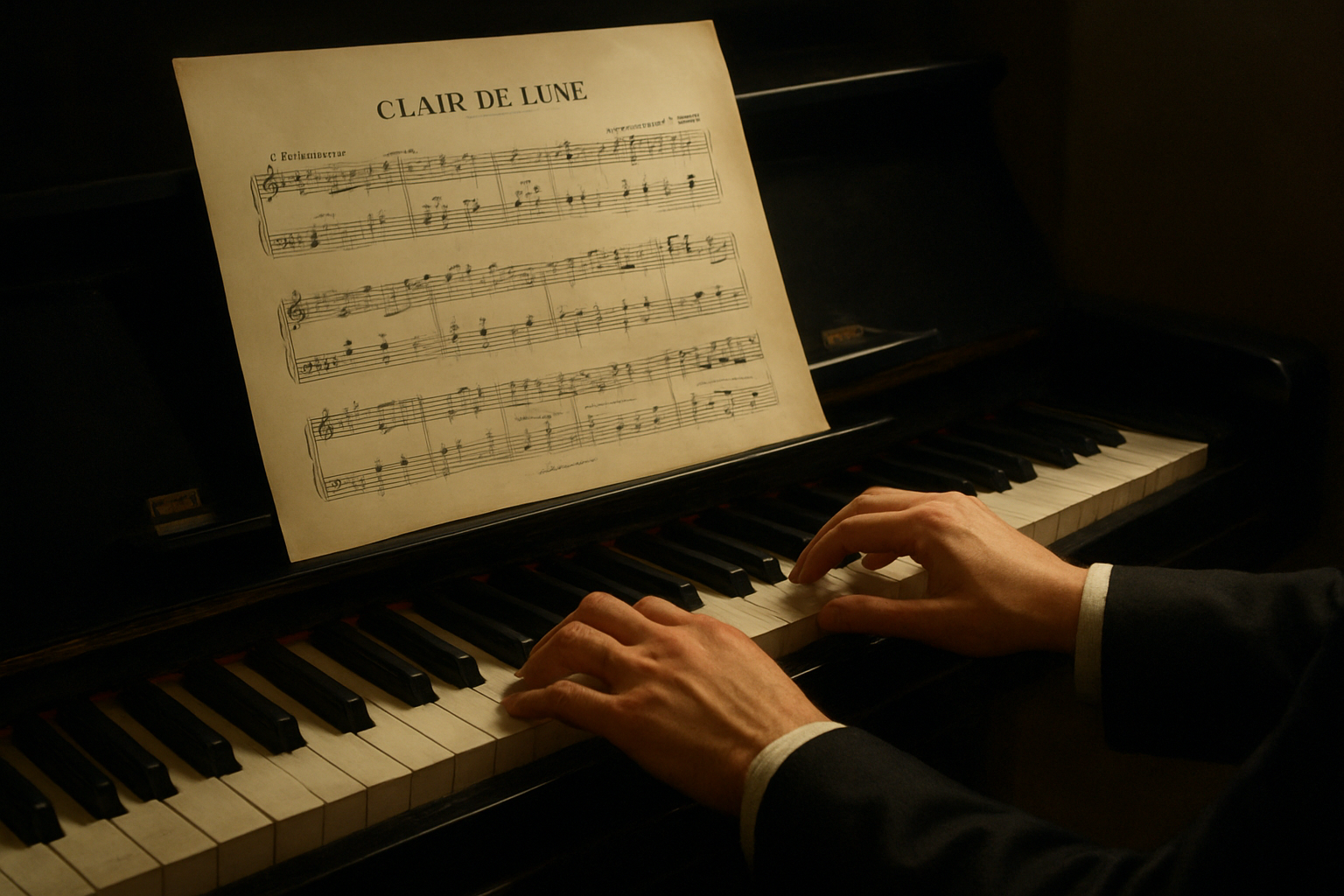
Clair de Lune: Analyzing Debussy’s Masterpiece of Impressionist Piano
Claude Debussy’s Clair de Lune, translating to “Light of the Moon,” is one of the most renowned pieces of piano music ever written. This masterpiece encapsulates the essence of the Impressionist movement in music, showcasing Debussy’s innovative approach to composition and harmony.
The Origins of Clair de Lune
Composed in 1890 and later revised in 1905, Clair de Lune is the third movement of Debussy’s Suite Bergamasque. The suite was inspired by Paul Verlaine’s poem Clair de Lune, which is part of his collection Fêtes galantes. Verlaine’s poem captures an air of melancholy and mystery, aligning perfectly with the tonal color and emotional depth of Debussy’s composition.
“Your soul is a chosen landscape / Where charming masqueraders and dancers are promenading / Playing the lute and dancing and almost / Sad beneath their fantastic disguises.” — Paul Verlaine
Impressionist Techniques in Clair de Lune
Debussy’s Clair de Lune exemplifies several key characteristics of Impressionist music:
- Nontraditional Scales: Debussy often used whole-tone scales, pentatonic scales, and modal harmonies to evoke a sense of ambiguity and exploration. These scales contribute to the dream-like quality of the piece.
- Tone Color: The piece emphasizes timbre and texture, using the piano’s range and sustain pedal to create lush, atmospheric effects. This approach reflects Debussy’s desire to ‘paint’ with sound.
- Rhythmic Freedom: The use of rubato and fluid time signatures allows the music to flow organically, resembling the shifting and ephemeral nature of moonlight.
Structural and Harmonic Analysis
Clair de Lune is in the key of D♭ major and follows an ABA ternary form. This relatively simple structure is enriched by Debussy’s novel harmonic language:
- Section A: The opening section introduces the main theme with gentle, cascading arpeggios. The harmony here is delicate, with extended chords creating a sense of wonder and introspection.
- Section B: The middle section moves to a more passionate and intense character, utilizing richer textures and dynamic contrasts to build emotional tension.
- Return of Section A: The piece concludes by revisiting the serene mood of the opening, bringing the listener back to the tranquil and illuminated landscape.
Impact and Legacy
The serene beauty and introspective character of Clair de Lune have cemented it as a staple of both classical and popular culture. It has been featured in numerous films, from Ocean’s Eleven to Twilight, and continues to be a favorite among pianists and audiences alike.
Debussy’s work marked a departure from the Romantic tradition, paving the way for modern music’s exploration of new tonal possibilities. His influence can be seen in the works of later composers such as Maurice Ravel, Olivier Messiaen, and even jazz musicians who admire his innovative harmonies and textures.
Conclusion
Claude Debussy’s Clair de Lune remains a masterpiece of Impressionist music, encapsulating the spirit of its time while continuing to inspire and captivate listeners worldwide. Its delicate interplay of harmony, melody, and rhythm captures the ethereal beauty of moonlight, inviting us to explore the rich emotional landscape it reveals.
For further detailed information, you can explore more about the piece and its analysis provided by musicologists here.