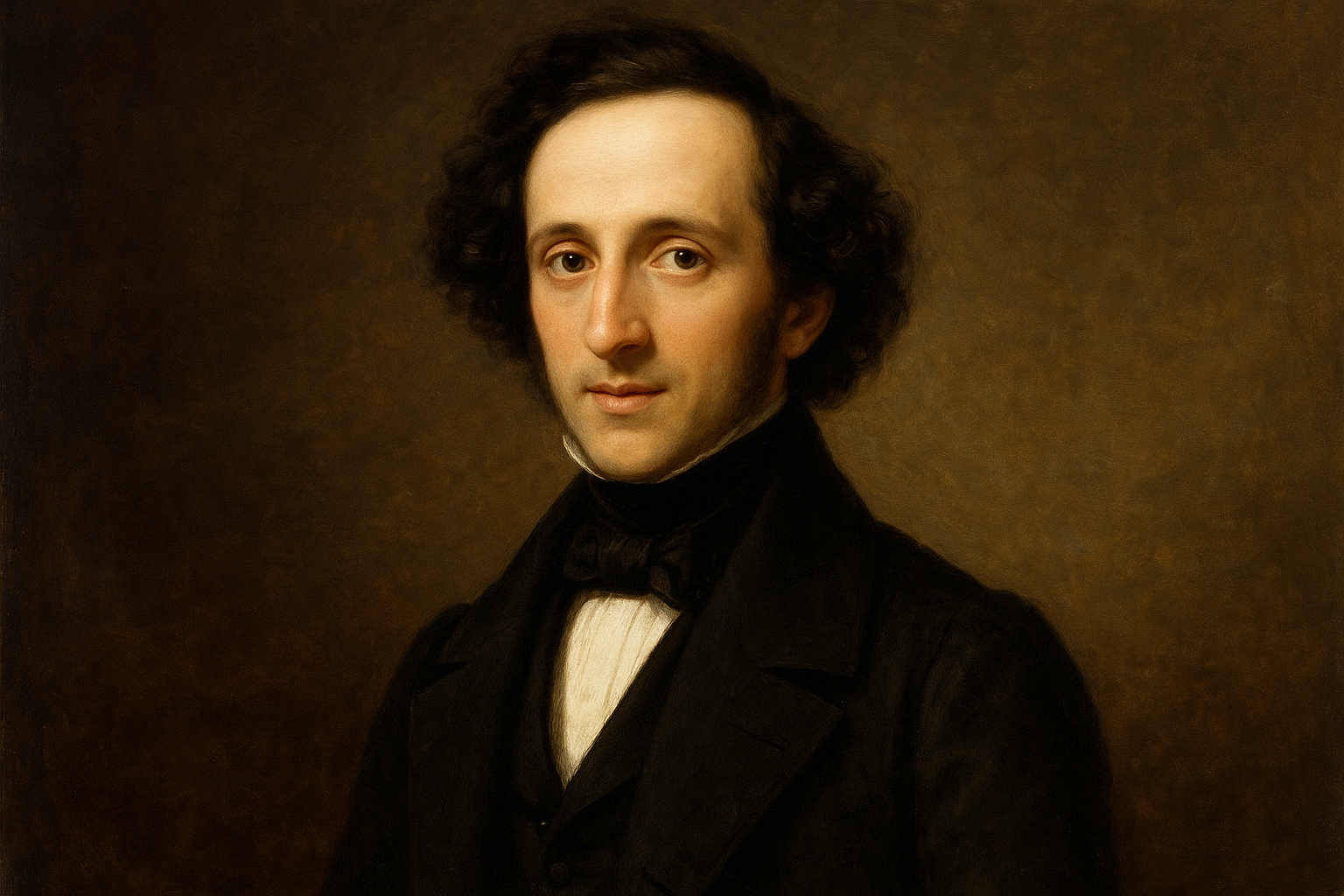
Felix Mendelssohn, a towering figure in the Romantic era of music, is often celebrated for his profound role in rekindling the works of Johann Sebastian Bach and shaping the contours of Romanticism. This article explores Mendelssohn’s pivotal influence in resurrecting Bach’s legacy and his contributions to the Romantic style, which forged a bridge between the classical traditions and the expressive imperatives of 19th-century music.
The Early Life of Mendelssohn
Born in Hamburg on February 3, 1809, Felix Mendelssohn was a child prodigy whose talents quickly overshadowed his contemporaries. By the age of 12, Mendelssohn had composed four operas and 12 symphonies for strings, demonstrating a rare musical acuity that set the stage for his future exploits. Growing up in a well-educated and affluent family, Mendelssohn had access to a wide array of cultural and intellectual resources that would profoundly shape his artistic outlook.
The Bach Revival: The Performance of the “St. Matthew Passion”
One of Mendelssohn’s most significant contributions to the musical world was his role in the revival of interest in the works of Johann Sebastian Bach, a composer whose genius had been largely overlooked for decades. In 1829, Mendelssohn orchestrated a performance of Bach’s “St. Matthew Passion” in Berlin, marking the first such event since Bach’s death in 1750. This performance was a landmark in music history, catalyzing a renewed appreciation for Bach’s works.
“The credit of reviving Bach belongs to Mendelssohn, who performed the St. Matthew Passion in 1829 and thereby won a hearing for the master.” — Harold C. Schonberg, The Lives of the Great Composers
This event was crucial not only in bringing Bach’s works back into public consciousness but also in inspiring a generation of composers who would look to Bach’s contrapuntal genius as a wellspring of inspiration. The performance was met with an overwhelming reception, igniting a Bach revival which still resonates in today’s classical music repertoire.
The Influence of Bach on Mendelssohn’s Work
Mendelssohn’s reverence for Bach is evident in his own compositions, where the influences are omnipresent yet woven with his unique style. His “Organ Sonatas” and “Fugal” compositions showcase his deep understanding of counterpoint, directly inspired by Bach. Moreover, Mendelssohn’s choral works, such as the “Elijah” and “St. Paul” oratorios, are steeped in Bachian tradition, echoing the structural and thematic depth found in Bach’s own monumental oeuvre.
- Organ Sonatas: These works mirror the complexity and rigor of Bach’s organ compositions, serving both as homage and innovation.
- The Oratorios: By using the sacred and oratorial form, Mendelssohn pays direct tribute to Bach’s legacy.
Forging the Romantic Style
While deeply influenced by Bach, Mendelssohn was also a pioneer in crafting the Romantic style, blending classical precision with the burgeoning expressiveness of his time. His music is characterized by lyrical melodies, intricate harmonies, and emotional depth, which would come to define the Romantic movement.
Blending Classical and Romantic Elements
Mendelssohn’s work masterfully integrates the formal structures of classical music with the expressive flavors of Romanticism. For instance, his “Violin Concerto in E Minor” exemplifies this synthesis through its seamless flow, departure from traditional concerto form, and emotive impact.
“The greatest pleasure I know is to do a good action by stealth, and to have it found out by accident.” — Felix Mendelssohn
This reflects Mendelssohn’s philosophy of creating music that, while innovative, maintains a foundation of classical integrity—a key aspect that secured his place as a bridge between eras.
The Lieder ohne Worte (Songs Without Words)
Mendelssohn’s “Songs Without Words” is another hallmark of his Romantic leanings. Composed over several decades, these piano pieces encapsulate the expressive power of music beyond the realm of lyrics. This collection remains a testament to Mendelssohn’s ability to evoke profound emotion through instrumental music alone.
- Expressive Intention: Each piece tells a story or explores an emotion, utilizing Mendelssohn’s gift for melody.
- Romantic Aesthetic: The absence of words is a declaration that music itself can communicate the nuances of the human experience more effectively than text.
Mendelssohn’s Legacy and Influence
Mendelssohn’s influence extended far beyond his compositions. As a conductor, he was instrumental in elevating the Leipzig Gewandhaus Orchestra to one of the premier orchestras in Europe. His commitment to musical education led to the founding of the Leipzig Conservatory, which became a beacon for aspiring musicians across the globe.
Furthermore, Mendelssohn’s aesthetic informed and inspired the works of eminent contemporaries and successors such as Richard Wagner, Johannes Brahms, and Robert Schumann. His ability to balance emotion with formality demonstrated that the Romantic spirit could coexist harmoniously with classical valor.
Conclusion
Felix Mendelssohn stands as a quintessential figure in 19th-century music, whose rediscovery of Bach and pioneering of Romanticism left an indelible mark on the cultural landscape. Mendelssohn’s works, from his choral masterpieces to his lyrical piano compositions, continue to enchant audiences worldwide, a testament to his extraordinary vision and enduring legacy.
In understanding Mendelssohn’s contributions, one appreciates not only his genius but also his pivotal role in shaping a bridge to the future of music. His journey through the annals of music was more than mere revival; it was a reinvention, a testament to the timelessness of great art.