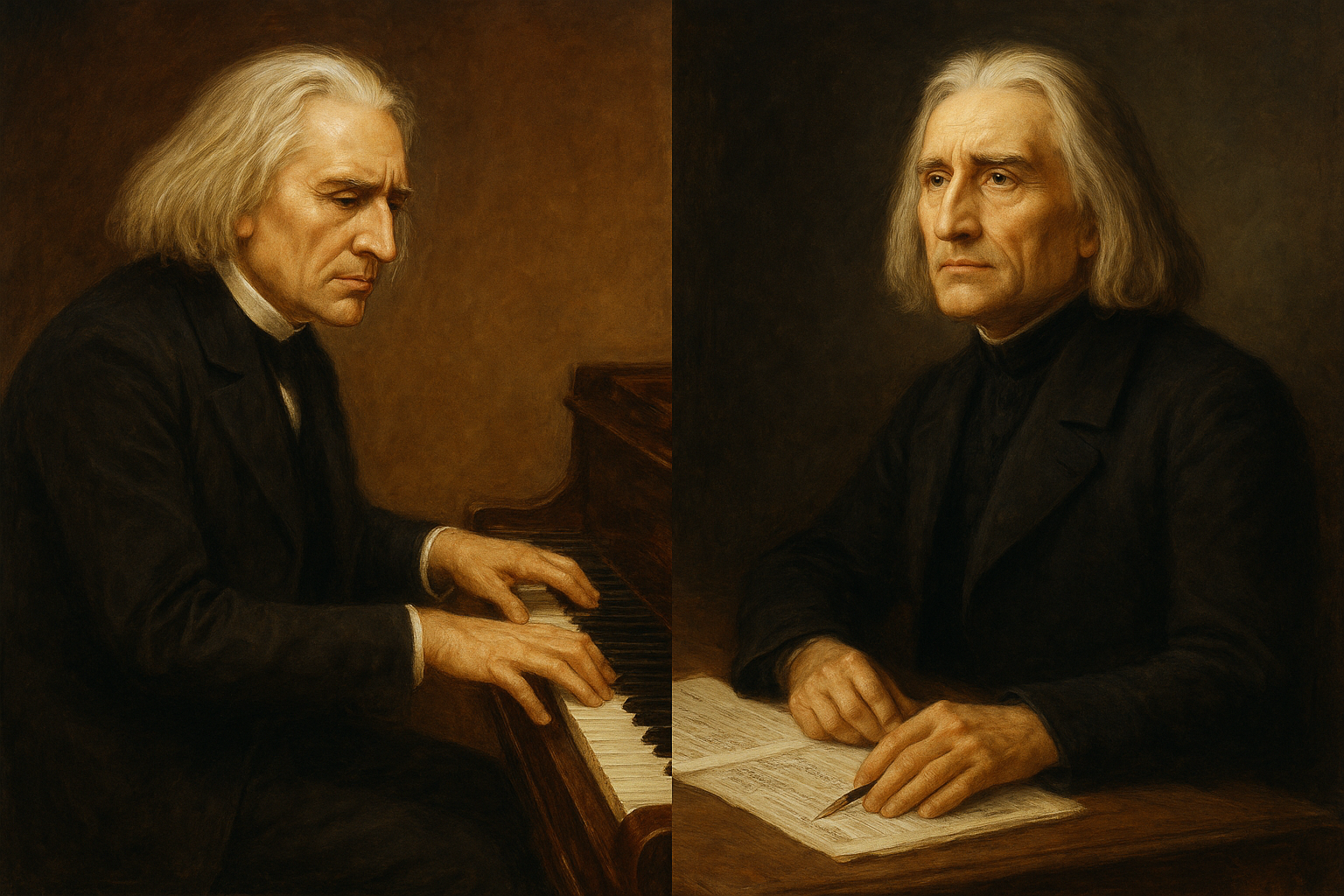
Franz Liszt, a name synonymous with piano mastery and innovation, remains an enigmatic figure in the realm of classical music. Known both for his technical prowess as a virtuous pianist and as a radical composer whose works pushed boundaries, Liszt’s dual legacy continues to influence the world of music. This article delves into these two facets of Liszt’s genius, exploring how his talents as a performer and composer have cemented his place in musical history.
The Virtuoso: A Revolutionary Performer
Franz Liszt’s prowess as a pianist was legendary, transforming the expectations of what was possible with the instrument. Born in 1811 in the Austrian Empire (modern-day Hungary), Liszt exhibited prodigious talent from an early age. His performances were characterized by an unprecedented level of skill and showmanship, which captivated audiences across Europe.
- Unparalleled Technique: Liszt’s technique was considered unparalleled, combining speed, precision, and dramatic flair. His practice regimen was intense, reportedly involving hours of daily practice to master techniques that seemed superhuman.
- Trailblazer: Liszt popularized the modern solo piano recital format. Previously, concerts typically consisted of multiple artists performing; Liszt, however, would command the stage for an entire evening.
- Showmanship: He had a magnetic stage presence and would often transfix audiences. His performances were not just about technical skill; they were theatrical events that engaged listeners on an emotional level.
As one contemporary noted, his performances were not just concerts but transformative experiences:
“He was all sunshine, invigoration, and revelation; he had no dark corners visible; such as they appeared in Beethoven, Schubert, and the composers of the North,” (Britannica).
The Visionary Composer: A Breaker of Boundaries
Beyond his virtuosic performances, Liszt was an innovative composer and one of the principal architects of the musical romanticism that defined the 19th century. His compositions pushed the boundaries of what was musically acceptable at the time, challenging conventional norms and introducing a new intensity and emotive power to orchestral and piano music.
- Symphonic Poems: Liszt is credited with inventing the symphonic poem, a form of orchestral music that seeks to illustrate a poem, short story, novel, or painting. His works in this genre, such as “Les Préludes,” combined thematic unity and emotional narrative in groundbreaking ways.
- Piano Innovations: His piano compositions, including the “Transcendental Études” and “Hungarian Rhapsodies”, expanded the expressiveness of the piano as he explored new textures and harmonies, influencing future composers like Debussy and Ravel.
- Harmony and Structure: Liszt’s innovative uses of harmonics and structure can be seen in his later works, such as the “Sonata in B minor,” which defied traditional sonata form by merging multiple movements into a continuous whole.
Sigmund Lebert, a German music publisher, once remarked on Liszt’s role as a composer:
“Liszt is like a comet in the musical world; his ideas are luminous and reach beyond the scope of ordinary human imagination” (Music Academy Online).
The Enduring Legacy of Liszt
Liszt’s dual legacy as a virtuoso performer and innovative composer continues to inspire musicians today. His ability to evoke profound emotion through music and his unyielding commitment to pushing artistic boundaries reflect a deep understanding and passion for his art. Throughout his life, Liszt received numerous honors, including being made an honorary canon of the third order of Saint Francis in 1865. Despite being a revered figure, he never ceased to challenge the artistic status quo.
His body of work stands as a testament to the possibilities of music as both a technical discipline and a profound mode of expression. As contemporary pianists and composers draw inspiration from his work, Liszt’s influence remains a guiding light in the ever-evolving landscape of classical music. His contributions remind us of the transformative power of music, which transcends time and continues to resonate with audiences worldwide.
Liszt once said:
“My sole ambition as an artist is to hurl my javelin into the infinite space of the future.”
His legacy truly embodies this vision, forever altering the course of musical history and inspiring generations to come.