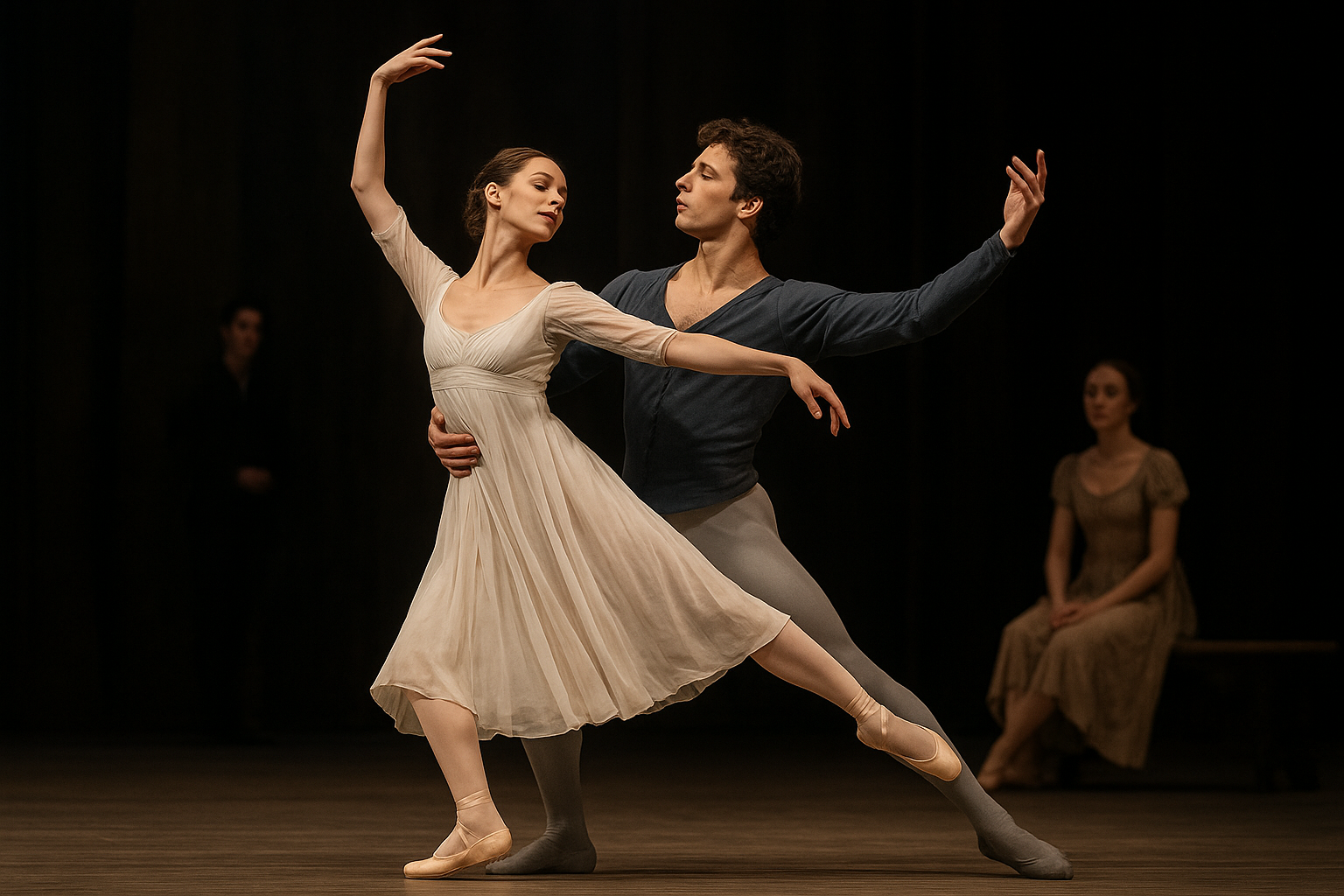
Prokofiev’s Ironic Wit: The Ballet Romeo and Juliet and Beyond
Sergei Prokofiev, one of the central figures of 20th-century music, is celebrated for his exuberant compositions that seamlessly blend melodicism with an acerbic wit. Nowhere is this more evident than in his masterful ballet Romeo and Juliet. This piece, alongside his other works, serves as a testament to his skill in encapsulating the human experience with irony and sensitivity.
The Genesis of Romeo and Juliet
Romeo and Juliet was composed during a turbulent period in Prokofiev’s life. Commissioned in 1934 and intended for the Kirov Theatre, it faced a complex journey to the stage. Despite initial reluctance from Soviet authorities and disputes over its choreography, it finally premiered at the Brno National Theatre in Czechoslovakia in 1938. Prokofiev’s determination to breathe new life into this Shakespearean classic showcases his innovative spirit and resilience.
“The aim was not only to bring the characters emotionally to life in the dancing but to convey them more graphically to the audience when they appeared together, especially in the pas de deux.” – Sergei Prokofiev
The Irony in Prokofiev’s Musical Language
One of the most striking aspects of Prokofiev’s work is his use of irony—a stylistic feature that can be both humorous and poignant. In Romeo and Juliet, Prokofiev utilizes unexpected rhythms and dissonant harmonies to reflect the tragic and often contradictory nature of the story. This technique, according to musicologist Richard Taruskin, offers a dual perspective: the conventional beauty of ballet is juxtaposed with modern, sometimes jarring elements.
Prokofiev’s ability to inject irony into his compositions does not detract from the emotional weight of the narrative. Instead, it enhances it, providing a deeper, more nuanced understanding of the tragic romance. It is this signature that allows Prokofiev to maintain a delicate balance between comedy and tragedy, both onstage in Romeo and Juliet and beyond.
Beyond Romeo and Juliet: Prokofiev’s Enduring Legacy
Prokofiev’s oeuvre extends far beyond Romeo and Juliet, yet his capacity for irony and wit permeates his entire body of work. His Piano Concerto No. 3 is renowned for its virtuosic demands coupled with a playful, satirical spirit, while his Symphony No. 1 “Classical” showcases a humorous take on classical conventions.
- Piano Concerto No. 3: Prokofiev himself premiered this work in Chicago in 1921. Lauded for its elegance and complexity, it demonstrates his exceptional ability to merge traditional forms with modern idiosyncrasies.
- Symphony No. 1 “Classical”: Composed in 1916-17, this symphony is a tribute to the classical style of Haydn, yet its playfulness and modern edge make it uniquely Prokofiev.
His chamber works, too, are rich with his trademark irony. The String Quartet No. 2 embodies folk themes with a sardonic edge, exemplifying how Prokofiev could manipulate musical forms to reveal unexpected depths.
Prokofiev’s Influence on Modern Composers
The scope of Prokofiev’s impact on the musical world is vast. Contemporary composers have often drawn from his innovative spirit and bold integration of divergent styles. His works continue to inspire due to their timeless capacity to resonate on multiple levels. In exploring human emotions, Prokofiev reveals a trajectory from laughter to tears, often within the same movement, inviting both performers and audiences to engage deeply with his music.
Today, his ballet Romeo and Juliet remains a staple in dance companies around the world, beloved for its lyrical beauty and emotional complexity. The Ballet’s distinct themes—such as the poignant “Montagues and Capulets”—have also penetrated popular culture, proving Prokofiev’s enduring relevance.
Conclusion
Sergei Prokofiev’s gift for irony and wit is as crucial to his legacy as his melodic genius. His works, both in the ballet world and beyond, offer a master class in the power of music to capture the subtleties of the human spirit. Through his bold compositions, he invites us to see the humor in tragedy and the depth in lightness. As we continue to explore his rich repertoire, Prokofiev’s artistry stands as a reminder of the eternal dance between irony and sincerity.
For more about Sergei Prokofiev and his works, visit Biography and Classic FM.