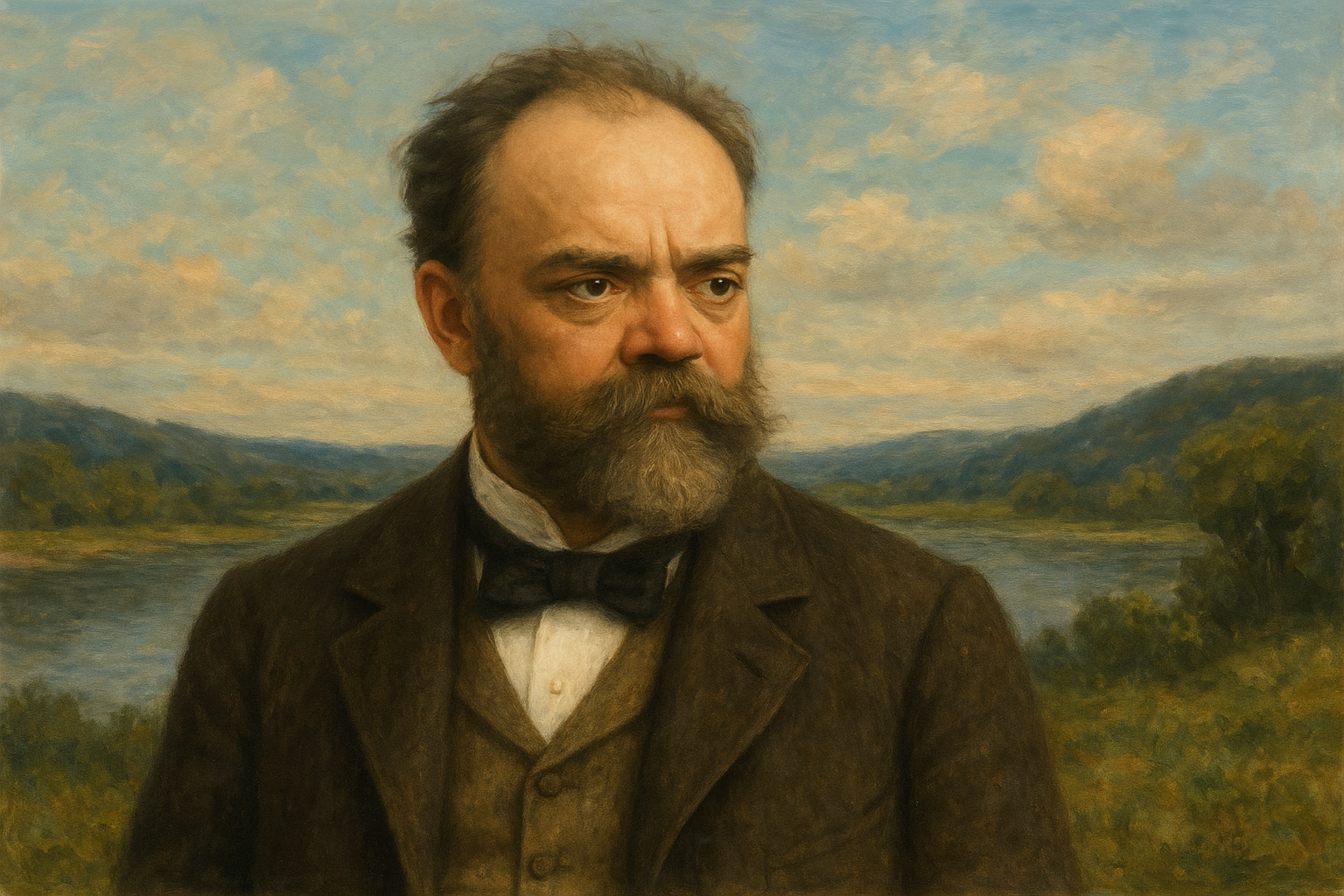
Dvořák’s New World: Finding American Echoes in European Form
Antonín Dvořák’s Symphony No. 9 in E Minor, “From the New World”, composed during his time in the United States, stands as a striking fusion of European symphonic form and American musical themes. This masterpiece not only reflects Dvořák’s profound understanding of Western classical music but also his deep curiosity and appreciation for the diverse soundscape of America.
A Symphony Born in America
Dvořák composed this symphony in 1893 while he was the director of the National Conservatory of Music of America in New York City. It was during this period that he became exposed to, and fascinated by, the musical expressions of African American and Native American cultures. The symphony debuted at Carnegie Hall on December 16, 1893, and was met with immediate acclaim.
“I am convinced that the future music of this country must be founded on what are called the Negro melodies. These can be the foundation of a serious and original school of composition, to be developed in the United States.” — Antonín Dvořák
This quote underscores Dvořák’s vision for American music, where he saw untapped potential in these ‘new’ melodies that, he believed, provided a rich vein of cultural and musical material.
Blending Styles and Cultures
The symphony is celebrated for its diverse influences, prominently incorporating elements of traditional American musical idioms into the classical European symphonic structure. The second movement, often referred to as the “Largo”, introduces a melancholic English horn solo that echoes spirituals of African American origin, such as “Swing Low, Sweet Chariot”. The third movement recalls the rhythmic intensity of Native American dance, emphasizing Dvořák’s skill in seamlessly blending indigenous American themes with classical forms.
- The first movement, marked “Adagio – Allegro molto”, evokes the vigors of America’s landscapes, with its lush and wide-ranging themes.
- The fourth movement returns to a robust and energetic climax, incorporating motifs from earlier movements, echoing European classical traditions while embracing new American influences.
Legacy and Influence
Dvořák’s New World Symphony transcends its own time, setting the stage for a burgeoning American musical identity. His belief in the potential of American musical motifs encouraged composers like William Grant Still and George Gershwin to explore and develop what became uniquely American soundscapes.
Today, the symphony continues to be celebrated worldwide. It exemplifies not only Dvořák’s masterful compositional prowess but also represents a cross-cultural bridge, reminding us of music’s power to transcend borders and bring together seemingly disparate worlds.